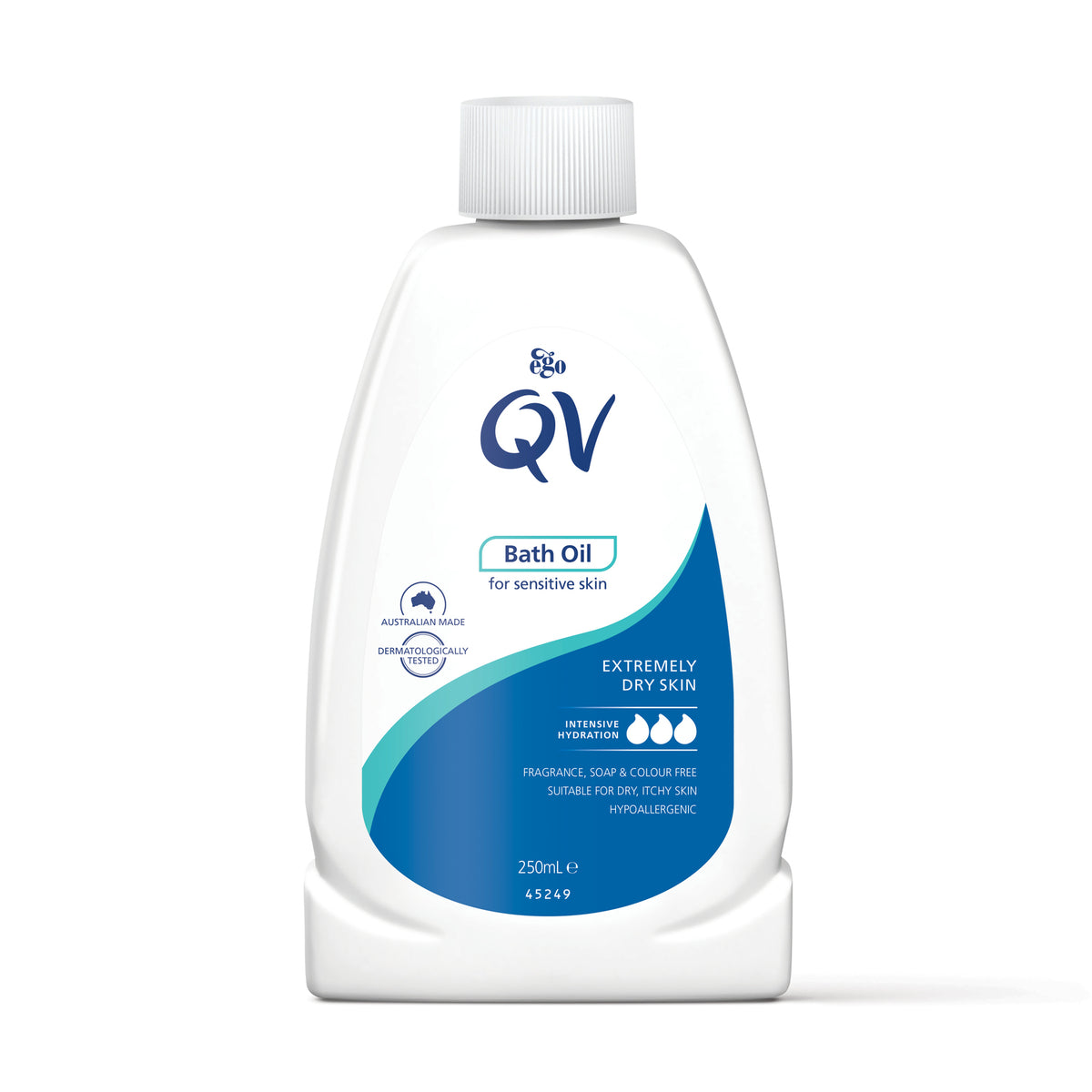
QV Bath Oil
QV Bath Oil
- ✔️ Soothes dry, itchy skin caused by eczema and psoriasis
- ✔️ Soap-free and fragrance-free formula suits sensitive skin
- ✔️ Light liquid paraffin locks in moisture during bathing
- ✔️ Suitable for adults and children with chronic dry skin
- ✔️ Supports daily emollient routines recommended by the NHS
Price Checker
 Lowest price guarantee
 Includes FREE private prescription


Couldn't load pickup availability
Is QV Bath Oil for Dry Skin Right for You?
If you live with dry, itchy, or sensitive skin, finding a bath routine that actually helps — rather than making things worse — can feel like a constant battle. QV bath oil for dry skin is a soap-free, fragrance-free emollient bath additive designed to replenish moisture while you soak. It works gently enough for everyday use and is widely used by people managing conditions such as eczema, psoriasis, and ichthyosis. You can browse our full range of skin care products if you're looking for a broader routine to support your skin health.
Dry skin — clinically known as xerosis — affects millions of people in the UK. The NHS notes that emollients are a cornerstone of managing dry and itchy skin conditions, and bath additives like QV Bath Oil form an important part of that approach. At just £4.80, this product offers an accessible, no-fuss way to incorporate emollient therapy into your daily routine.
How Does QV Bath Oil Work to Moisturise Skin?
QV Bath Oil works through a straightforward but clinically meaningful mechanism. Its active ingredient, light liquid paraffin, disperses through bath water and coats the skin's surface as you soak. This creates a thin occlusive film that helps seal moisture into the outer layers of the skin — the stratum corneum — reducing what dermatologists call transepidermal water loss (TEWL).
- Light liquid paraffin disperses evenly through warm bath water
- The oil coats the skin surface during bathing, forming a protective barrier
- After patting dry, a residual film remains on the skin to lock in hydration
- Regular use helps restore the skin's natural lipid barrier over time
It's worth noting that the water temperature matters. Hot baths can actually strip the skin of its natural oils, so lukewarm water is always recommended when using emollient bath additives.
Who Should Use QV Bath Oil?
QV Bath Oil is suitable for a wide range of people, from young children to older adults. It's particularly useful for anyone whose skin struggles to retain moisture — whether that's due to a diagnosed skin condition or simply naturally dry skin that worsens in cold weather.
- Adults and children with eczema (atopic dermatitis)
- People with psoriasis or ichthyosis
- Those with contact dermatitis or sensitive, reactive skin
- Anyone experiencing general dry skin, especially during winter months
It is free from soap, fragrance, and lanolin, making it a good option for people who react to common irritants found in standard bath products. If you're also managing skin-related conditions alongside other health concerns, our creams and ointments collection includes a range of complementary topical treatments.
How Does QV Bath Oil Compare to Other Emollient Bath Additives?
| Feature | QV Bath Oil | Oilatum Bath Emollient |
|---|---|---|
| Active ingredient | Light liquid paraffin | Light liquid paraffin 63.4% |
| Fragrance-free | Yes | Yes |
| Suitable for children | Yes (with supervision) | Yes (from 6 months) |
| Approximate price | £4.80 | £5.50–£8.00 |
Is QV Bath Oil Safe to Store and Use Long-Term?
QV bath oil for dry skin is considered safe for long-term daily use as part of an ongoing emollient regimen. Store it below 25°C, away from direct sunlight, and keep it out of reach of children. Do not use it past the expiry date printed on the packaging.
One important safety point: bath oils make bath surfaces extremely slippery. Always use a non-slip bath mat and take care when getting in and out of the bath. This applies to all users, but is especially important for elderly individuals and young children. If you have any concerns about using this product alongside other treatments, speak to your pharmacist before starting.
This product is a medicine. Speak to your doctor or pharmacist before using if you have an underlying medical condition or are taking other medicines.
QV Bath Oil specifications
| Treatment category | Emollient / Dry skin treatment |
| Mechanism of action | Occlusive emollient — forms a protective film to reduce transepidermal water loss |
| Effective for | Dry skin, eczema, psoriasis, ichthyosis, dermatitis |
| Suitable for | Adults and children (use with supervision in young children) |
| Active ingredient | Light liquid paraffin |
| UK classification | General Sale List (GSL) |
| Drug class | Emollient |
| Preparation | Bath oil (liquid) |
| Route of administration | Topical (added to bath water) |
Specifications of QV Bath Oil
What Is QV Bath Oil and What Is It Used For?
QV Bath Oil is an over-the-counter emollient bath additive used to soothe, soften, and moisturise dry, itchy, and sensitive skin. Its active ingredient is light liquid paraffin, an occlusive agent that helps the skin retain water by forming a protective layer on the skin's surface. It is used as part of the management of chronic dry skin conditions including eczema (atopic dermatitis), psoriasis, ichthyosis, and contact dermatitis.
The NHS recommends emollients — including bath additives — as a first-line treatment for dry skin conditions. They work best when used consistently and as part of a broader skincare routine that may also include leave-on moisturisers. QV Bath Oil is soap-free and fragrance-free, which makes it less likely to irritate already sensitive skin.
What Do You Need to Know Before Using QV Bath Oil?
Before using QV Bath Oil, it's important to be aware of the following contraindications and warnings:
- Do not use if you are allergic to light liquid paraffin or any other ingredient in the product
- Take extreme care when getting in and out of the bath — bath oils make surfaces very slippery and increase the risk of falls
- Always use a non-slip bath mat when using this product
- Supervise children and elderly individuals closely during use
- Avoid getting the product in your eyes; if contact occurs, rinse thoroughly with water
- Do not use on broken, infected, or severely inflamed skin without first consulting a GP
- Emollient products can soak into fabric and create a fire hazard — wash clothing and bedding regularly and keep away from naked flames
Regarding drug interactions, no significant interactions with other medicines have been identified for topically applied emollient bath additives. However, if you are using other topical treatments such as corticosteroid creams, apply them separately after bathing and patting the skin dry — do not mix them into the bath water.
- No known interactions with oral or topical medicines when used as directed
- Do not combine with other bath additives unless advised by a healthcare professional
How Should You Use QV Bath Oil?
Using QV Bath Oil correctly makes a real difference to how effective it is. Follow these steps each time you bathe:
- Fill the bath with warm (not hot) water — hot water can worsen dry skin
- Add one to three capfuls of QV Bath Oil to the bath water
- Swirl the water gently to disperse the oil evenly
- Soak in the bath for 10 to 20 minutes
- Carefully step out of the bath using a non-slip mat — the surface will be slippery
- Pat your skin gently dry with a soft towel — do not rub
- Apply any leave-on emollient or prescribed topical treatment while the skin is still slightly damp
| Indication | Age Group | Dose | Frequency |
|---|---|---|---|
| Dry skin / eczema | Adults | 2–3 capfuls per bath | Once daily or as needed |
| Dry skin / eczema | Children (over 12 months) | 1–2 capfuls per bath | Once daily or as needed |
| Psoriasis / ichthyosis | Adults | 2–3 capfuls per bath | Once daily |
If you're building a complete dry skin routine, you might also find it helpful to explore our baby and toddler range for age-appropriate emollient options for younger children.
What Are the Possible Side Effects of QV Bath Oil?
QV Bath Oil is generally very well tolerated. Serious side effects are rare. That said, as with any skincare product, some people may experience a reaction — particularly those with highly sensitive skin.
Common side effects:
- Mild skin irritation or redness at the site of application
- Temporary stinging sensation if used on broken or cracked skin
Less common side effects:
- Allergic contact dermatitis (rash, itching, or swelling) — stop use immediately if this occurs
- Folliculitis (inflammation of hair follicles) with prolonged or excessive use
The most significant risk associated with bath oils is not a skin reaction — it's the slip hazard they create in the bath. This is a well-documented safety concern highlighted by the NHS and the MHRA. Always use a non-slip mat and take your time.
How Should You Store QV Bath Oil?
Correct storage helps maintain the product's quality and safety. Follow these guidelines:
- Store below 25°C in a cool, dry place
- Keep away from direct sunlight and heat sources
- Keep the cap tightly closed when not in use
- Store out of reach and sight of children
- Do not use after the expiry date printed on the bottle
- Do not store in the bathroom if it is frequently very hot and steamy — a bedroom or linen cupboard is preferable
If you notice any change in the product's colour, smell, or consistency, do not use it and dispose of it safely. For guidance on disposing of medicines, visit your local pharmacy. You can also explore our wider skin care range for complementary products to support your daily routine.
References
Written and reviewed by our qualified team
Your safety and success are our highest priorities. Our medical team rigorously evaluates every product and piece of advice we provide, ensuring you receive only the most effective, science-backed solutions available.
Frequently Asked Questions
Where can I buy QV Bath Oil online in the UK?
You can buy QV Bath Oil online in the UK from Cured Pharmacy, a GPhC-registered online pharmacy, for just £4.80. It is available without a prescription as an over-the-counter emollient bath additive. No consultation is required — simply add it to your basket and it will be dispatched directly to your door.
How does QV Bath Oil work on dry skin?
QV Bath Oil contains light liquid paraffin, which disperses through bath water and coats the skin's surface as you soak. This creates an occlusive film that reduces transepidermal water loss — the process by which moisture escapes through the outer skin layers. With regular use, this helps restore the skin's natural barrier function and reduces dryness and itching over time.
How do I use QV Bath Oil step by step?
Add one to three capfuls to a warm (not hot) bath, swirl to disperse, and soak for 10 to 20 minutes. Step out carefully using a non-slip mat — the bath surface will be slippery — then pat your skin gently dry with a soft towel. Apply any leave-on moisturiser or prescribed topical treatment while your skin is still slightly damp to maximise absorption.
Is QV Bath Oil safe for babies and young children?
QV Bath Oil is generally considered suitable for children with dry or sensitive skin, but you should speak to your GP or pharmacist before using it on infants under 12 months. Always use a non-slip bath mat and supervise young children closely throughout bath time, as the water and bath surfaces will be very slippery. You can also browse our baby and toddler range for age-appropriate skincare options.
Can I use QV Bath Oil if I have eczema?
Yes — QV bath oil for dry skin is commonly used as part of an eczema management routine to help rehydrate and soothe dry, inflamed skin. The NHS recommends emollient bath additives as a key component of eczema care, used alongside leave-on emollients and, where prescribed, topical corticosteroids. It is soap-free and fragrance-free, which reduces the risk of triggering a flare.
What is the correct dose of QV Bath Oil for adults?
For adults, the recommended dose is two to three capfuls added to a standard-sized bath of warm water. You should soak for around 10 to 20 minutes to allow the emollient to coat the skin effectively. Do not exceed the recommended amount — using more does not improve results and may make the bath surface more hazardous.
What are the side effects of QV Bath Oil?
Side effects are uncommon but may include mild skin irritation, temporary stinging on broken skin, or — rarely — an allergic reaction such as a rash or itching. If you notice any signs of an allergic reaction, stop using the product immediately and seek advice from a pharmacist or GP. The most significant safety concern with all bath oils is the slip hazard they create in the bath.
Does QV Bath Oil make the bath slippery?
Yes — like all bath oils, QV Bath Oil makes the bath surface, your skin, and the surrounding floor significantly more slippery. This is a well-documented safety concern highlighted by the NHS and the MHRA. Always use a non-slip bath mat inside and outside the bath, and take extra care when getting in and out, particularly for elderly users and young children.
Can I use QV Bath Oil for psoriasis?
Yes, QV Bath Oil can be used as part of a psoriasis skincare routine to help soften and hydrate dry, scaly skin. The NHS recommends emollients — including bath additives — as a supportive measure for psoriasis management, though they are typically used alongside other prescribed treatments. Always follow your GP's or dermatologist's advice regarding your full treatment plan.
How long can I use QV Bath Oil for?
QV Bath Oil can be used as part of a long-term daily skincare routine for chronic dry skin conditions — there is no defined maximum duration of use. Emollients are generally recommended for ongoing, regular use rather than short-term treatment. If your skin condition does not improve or worsens over time, speak to your GP or pharmacist to review your routine.
What are the alternatives to QV Bath Oil?
Alternatives include other emollient bath additives such as Oilatum Bath Emollient, Balneum Bath Oil, and Aveeno Dermexa Bath and Shower Oil. Each contains slightly different ingredients and concentrations, so the best choice depends on your skin type and any known sensitivities. Your pharmacist can help you compare options — you can also explore our creams and ointments collection for complementary leave-on emollients.
Can I use QV Bath Oil in the shower instead of the bath?
QV Bath Oil is specifically formulated as a bath additive and is most effective when used in a full bath, where the skin can soak in the emollient-enriched water for an extended period. Using it in the shower is less effective because the contact time with the skin is much shorter. If you prefer showers, speak to your pharmacist about alternative emollient wash products designed for shower use.
Is QV Bath Oil suitable for sensitive skin?
Yes — QV Bath Oil is formulated without soap, fragrance, or lanolin, making it particularly suitable for people with sensitive or reactive skin. These are among the most common irritants found in standard bath products, and their absence significantly reduces the risk of triggering a reaction. It is also free from colour additives, which can be a concern for some individuals with contact sensitivities.
What are the latest recommendations on using bath oils for eczema?
Current NHS guidance continues to recommend emollient bath additives as part of eczema management, though a 2018 clinical trial (the BATHE trial) suggested that bath additives may offer limited additional benefit over leave-on emollients alone in children. Despite this, many dermatologists and GPs still recommend them as a useful part of a broader emollient routine, particularly for adults. Always follow the advice of your own healthcare team regarding your individual treatment plan.
Can QV Bath Oil be used during pregnancy?
Light liquid paraffin applied topically is not known to be harmful during pregnancy, and emollient bath additives are commonly used by pregnant women experiencing dry or itchy skin. However, as with any product used during pregnancy, it is always sensible to check with your midwife, GP, or pharmacist before starting a new skincare product. Take particular care with the slip hazard in the bath, as balance can be affected during pregnancy.
Written and reviewed by our qualified team

Reviewed by:
Tarun Kumar
Superintendent/ Clinical Lead
📖 Find out more about our team of medical content authors and how we ensure the accuracy of our content with our content guidelines.
Content last updated: 14 Sep 2026
Other popular options


We’re a safe and
regulated UK service

Lowest Price Guarantee

We're convinced you won't find your treatment cheaper, but if you do we'll refund the difference.
Find out more
100% discreet packaging

Discreet, unbranded packaging for every order.
Find out more

Need help?
Talk to our friendly experts now


How our service works

Service setup

Discreet packaging

Express delivery