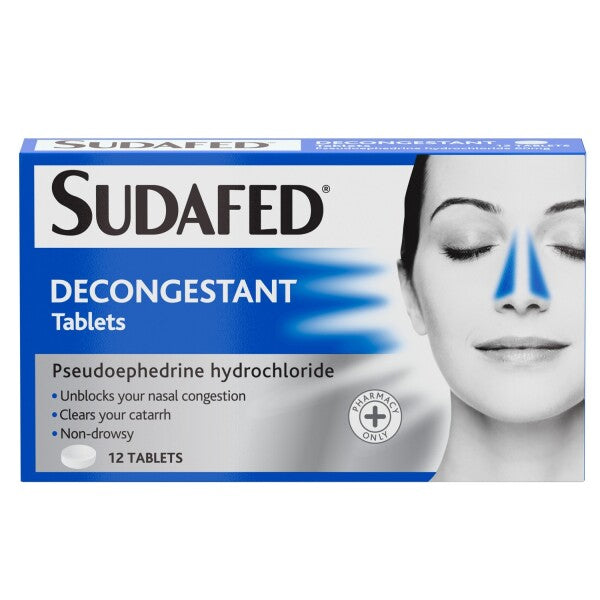
Sudafed Decongestant - 12 Tablets
Sudafed Decongestant - 12 Tablets
- ✔️ Relieves nasal congestion caused by colds, flu, and sinusitis
- ✔️ Contains pseudoephedrine hydrochloride 60mg per tablet
- ✔️ Systemic action clears sinus and nasal passage congestion
- ✔️ Suitable for adults and young people aged 12 and over
- ✔️ Convenient 12-tablet pack for short-term congestion relief
Price Checker
 Lowest price guarantee
 Includes FREE private prescription


Couldn't load pickup availability
What Are Sudafed Decongestant Tablets?
If you've ever had a cold that leaves your nose completely blocked, you'll know how miserable it can be. Sudafed decongestant tablets are a well-established over-the-counter medicine designed to relieve that uncomfortable nasal stuffiness quickly. Each tablet contains 60mg of pseudoephedrine hydrochloride, a sympathomimetic decongestant that works directly on the blood vessels inside your nasal passages. The NHS recognises nasal congestion as one of the most common symptoms of colds and flu, and decongestants like pseudoephedrine are among the recommended short-term options for relief. You can browse our full range of cold and flu products if you need additional support alongside this medicine.
This pack contains 12 tablets, making it a practical option to keep at home during the winter months. It's sold as a pharmacy medicine in the UK, meaning it's available without a prescription but is subject to certain restrictions — more on those below.
How Do Sudafed Decongestant Tablets Work?
Pseudoephedrine works by stimulating alpha-adrenergic receptors in the walls of blood vessels within the nasal mucosa. This causes vasoconstriction — essentially, the blood vessels narrow — which reduces swelling of the nasal lining and allows air to pass through more freely. The result? You can breathe through your nose again.
- Pseudoephedrine binds to adrenergic receptors in nasal blood vessel walls
- Vasoconstriction reduces mucosal swelling and fluid accumulation
- Nasal airway opens, relieving the sensation of blockage
- Effect typically begins within 30 minutes of taking a tablet
Unlike topical nasal sprays, pseudoephedrine is taken orally, so it acts systemically. This means it can also relieve congestion in the sinuses and Eustachian tubes, which is why some people find it helpful when congestion causes ear pressure or sinus discomfort.
Who Should Use Sudafed Decongestant Tablets?
These tablets are suitable for adults and children aged 12 and over who are experiencing nasal congestion. They're most commonly used for symptoms associated with:
- The common cold
- Influenza (flu)
- Sinusitis
- Allergic rhinitis (hay fever-related congestion)
If your congestion is linked to seasonal allergies, you might also want to explore our allergy and hay fever range for complementary treatments. That said, Sudafed is not appropriate for everyone — people with high blood pressure, heart conditions, or hyperthyroidism should avoid it. Always read the label carefully before use.
How Do Sudafed Decongestant Tablets Compare to Nasal Sprays?
| Feature | Sudafed Decongestant Tablets | Xylometazoline Nasal Spray |
|---|---|---|
| Active ingredient | Pseudoephedrine hydrochloride 60mg | Xylometazoline hydrochloride |
| Route of administration | Oral (swallowed) | Intranasal (sprayed) |
| Onset of action | Approximately 30 minutes | Within minutes |
| Maximum duration of use | Up to 7 days | Up to 7 days |
| Suitable for sinus congestion | Yes (systemic action) | Primarily nasal passages only |
How Should You Store Sudafed Decongestant Tablets?
Store your sudafed decongestant tablets below 25°C in a dry place, away from direct sunlight. Keep them out of reach and sight of children at all times. Do not use the tablets after the expiry date printed on the packaging — if in doubt, return them to your local pharmacy for safe disposal.
Check the packaging for any signs of damage before use. If the blister pack has been tampered with or the tablets appear discoloured, do not take them.
This product is a medicine. Speak to your doctor or pharmacist before using if you have an underlying medical condition or are taking other medicines.
Sudafed Decongestant 12 Tablets specifications
| Treatment category | Nasal decongestant |
| Mechanism of action | Sympathomimetic — alpha-adrenergic agonist causing nasal vasoconstriction |
| Effective for | Nasal congestion due to colds, flu, sinusitis, and allergic rhinitis |
| Suitable for | Adults and children aged 12 and over |
| Active ingredient | Pseudoephedrine hydrochloride 60mg |
| Pack size | 12 tablets |
| Strength | 60mg per tablet |
| UK classification | Pharmacy (P) medicine |
| Drug class | Sympathomimetic decongestant |
| Preparation | Tablet |
| Route of administration | Oral |
Specifications of Sudafed Decongestant 12 Tablets
What Is Sudafed Decongestant and What Is It Used For?
Sudafed Decongestant 12 Tablets contain pseudoephedrine hydrochloride 60mg as the active ingredient. This medicine is used to relieve nasal congestion — that blocked, stuffy feeling in your nose — caused by colds, flu, sinusitis, and hay fever. It belongs to a class of medicines called sympathomimetics, which work by narrowing blood vessels in the nasal lining to reduce swelling and open up the airways. The NHS lists decongestants as a recognised short-term treatment option for nasal congestion associated with upper respiratory tract infections.
It is an oral tablet taken by mouth, and it acts systemically, meaning it can help with congestion throughout the nasal passages and sinuses — not just at the point of application like a nasal spray would.
What Do You Need to Know Before Using Sudafed Decongestant?
Before taking these tablets, it's important to check whether they are suitable for you. Do not take Sudafed Decongestant if any of the following apply:
- You have high blood pressure (hypertension)
- You have heart disease or a history of heart problems
- You have hyperthyroidism (overactive thyroid)
- You have glaucoma (raised pressure in the eye)
- You have difficulty urinating due to an enlarged prostate
- You are taking or have taken monoamine oxidase inhibitors (MAOIs) within the last 14 days
- You are pregnant or breastfeeding — consult your doctor first
- You are under 12 years of age
- You have phenylketonuria (PKU)
The following medicines may interact with pseudoephedrine. Tell your pharmacist or doctor if you are taking:
- MAOIs or tricyclic antidepressants
- Antihypertensive medicines (blood pressure treatments)
- Beta-blockers
- Other sympathomimetic medicines (including some cold and flu remedies)
- Digoxin or cardiac glycosides
How Should You Use Sudafed Decongestant?
Always use this medicine exactly as described on the label or as directed by your pharmacist. Do not exceed the stated dose. Here's how to take it correctly:
- Check the packaging to confirm you are not contraindicated
- Swallow one tablet whole with a glass of water
- Do not crush or chew the tablet
- Take every four to six hours as needed
- Do not take more than four tablets in any 24-hour period
- Do not use for more than seven consecutive days without medical advice
| Age Group | Dose | Frequency | Maximum per 24 hours |
|---|---|---|---|
| Adults and children 12+ | 1 tablet (60mg) | Every 4–6 hours | 4 tablets (240mg) |
| Children under 12 | Not suitable | — | — |
| Elderly patients | Use with caution — seek pharmacist advice | Every 4–6 hours | 4 tablets (240mg) |
What Are the Possible Side Effects of Sudafed Decongestant?
Like all medicines, Sudafed Decongestant can cause side effects, although not everyone experiences them. If you're concerned about any reaction, stop taking the tablets and speak to your pharmacist or GP. You can also find additional support through our ear, nose and throat range if you need alternative options.
Common side effects (may affect up to 1 in 10 people):
- Difficulty sleeping (insomnia)
- Headache
- Dry mouth
- Feeling restless or anxious
- Increased heart rate (palpitations)
Less common side effects (may affect up to 1 in 100 people):
- Nausea
- Skin rash or itching
- Raised blood pressure
- Urinary retention (difficulty passing urine)
- Hallucinations (rare, particularly in children)
Stop taking the tablets and seek immediate medical attention if you experience chest pain, severe dizziness, difficulty breathing, or a severe allergic reaction (swelling of the face, lips, or throat).
How Should You Store Sudafed Decongestant?
Correct storage helps maintain the medicine's effectiveness and keeps it safe for use. If you need other medicines stored safely at home, our pain relief range also comes with clear storage guidance on each product.
- Store below 25°C in a cool, dry place
- Keep away from direct sunlight and moisture
- Keep out of reach and sight of children
- Do not use after the expiry date on the packaging
- Do not dispose of medicines via wastewater or household waste — return to a pharmacy
References
Written and reviewed by our qualified team
Your safety and success are our highest priorities. Our medical team rigorously evaluates every product and piece of advice we provide, ensuring you receive only the most effective, science-backed solutions available.
Frequently Asked Questions
Where can I buy Sudafed Decongestant tablets online in the UK?
You can buy Sudafed Decongestant 12 Tablets directly from Cured Pharmacy, a UK GPhC-registered online pharmacy. No prescription is needed, as it is classified as a Pharmacy (P) medicine. Simply add it to your basket and complete a short health questionnaire to confirm suitability before checkout.
How do Sudafed Decongestant tablets work in the body?
Sudafed contains pseudoephedrine hydrochloride, which acts as a sympathomimetic agent by stimulating alpha-adrenergic receptors in the nasal blood vessel walls. This causes vasoconstriction — the vessels narrow — which reduces swelling of the nasal mucosa and opens up the airway. The effect is systemic, meaning it can also help relieve congestion in the sinuses and Eustachian tubes.
How do I take Sudafed Decongestant tablets step by step?
Swallow one tablet (60mg) whole with a full glass of water — do not crush or chew it. Take it every four to six hours as needed, but never more than four tablets in a 24-hour period. If your symptoms persist beyond seven days, stop taking the tablets and consult your GP or pharmacist.
What is the correct dose of Sudafed Decongestant for adults?
The recommended adult dose is one 60mg tablet taken every four to six hours, up to a maximum of four tablets (240mg) in any 24-hour period. This applies to adults and young people aged 12 and over. Elderly patients should use with caution and seek pharmacist advice before starting treatment.
When is the best time to take Sudafed Decongestant tablets?
Take Sudafed when your congestion symptoms are at their most troublesome — many people find it most useful during the day when they need to breathe clearly for work or daily activities. Because pseudoephedrine can cause insomnia, it's generally advisable to avoid taking a dose close to bedtime. If night-time congestion is a problem, speak to your pharmacist about suitable alternatives.
What are the side effects of Sudafed Decongestant tablets?
Common side effects include difficulty sleeping, headache, dry mouth, restlessness, and increased heart rate. Less commonly, you may experience nausea, raised blood pressure, or a skin rash. If you develop chest pain, severe dizziness, or signs of an allergic reaction such as facial swelling, stop taking the tablets immediately and seek urgent medical attention.
How do I manage side effects of Sudafed Decongestant?
For mild side effects like headache or dry mouth, staying well hydrated and taking the tablet with food may help. If insomnia is a problem, avoid taking your last dose within four to six hours of bedtime. For any side effects that feel severe or persistent, stop the medicine and speak to your pharmacist or GP promptly.
Who should not take Sudafed Decongestant tablets?
Sudafed is not suitable for people with high blood pressure, heart disease, hyperthyroidism, glaucoma, or an enlarged prostate. It must not be taken by anyone currently using or who has used MAOIs within the past 14 days. Children under 12, pregnant women, and breastfeeding mothers should also avoid this medicine unless a doctor has specifically advised otherwise.
Can I take Sudafed Decongestant if I have high blood pressure?
No — Sudafed Decongestant is contraindicated in people with hypertension (high blood pressure) because pseudoephedrine can raise blood pressure further. If you have high blood pressure and need congestion relief, speak to your GP or pharmacist about safer alternatives. Saline nasal rinses or steam inhalation may be appropriate non-medicated options.
What happens if I miss a dose of Sudafed Decongestant?
If you miss a dose, simply take the next one when you need it — there is no need to double up. Never take two doses at once to compensate for a missed one, and always ensure you stay within the maximum of four tablets in 24 hours. This medicine is taken as needed rather than on a strict schedule, so missing a dose is unlikely to cause any problems.
Can I take Sudafed Decongestant with other cold and flu medicines?
Be careful — many combination cold and flu remedies already contain a decongestant such as pseudoephedrine or phenylephrine. Taking Sudafed alongside these products could result in you exceeding the safe dose. Always check the ingredients of any other cold remedy you are using, and ask your pharmacist if you are unsure. You can browse our cold and flu range for products that can be safely used together.
How long can you take Sudafed Decongestant for?
Sudafed Decongestant tablets should not be used for more than seven consecutive days without consulting a doctor or pharmacist. Using decongestants for longer than recommended can lead to rebound congestion — where symptoms return and worsen once you stop the medicine. If your congestion has not improved after a week, it's important to seek medical advice to rule out an underlying cause such as sinusitis or a bacterial infection.
Is Sudafed Decongestant suitable for children?
Sudafed Decongestant 60mg tablets are only suitable for adults and young people aged 12 and over. They must not be given to children under 12. If you need congestion relief for a younger child, speak to your pharmacist or GP about age-appropriate alternatives. Our baby and toddler range includes products specifically formulated for younger children.
What are the alternatives to Sudafed Decongestant tablets?
Alternatives include topical nasal decongestant sprays containing xylometazoline or oxymetazoline, which act more quickly but are also limited to seven days' use. Saline nasal rinses and steam inhalation are non-medicated options that can help loosen congestion without the risk of side effects. If your congestion is allergy-related, antihistamines or corticosteroid nasal sprays may be more appropriate — explore our allergy and hay fever range for options.
What does the latest research say about pseudoephedrine for nasal congestion?
Pseudoephedrine has been used as a nasal decongestant for decades and remains one of the most studied oral decongestants available. Clinical evidence consistently supports its effectiveness in reducing nasal airway resistance in adults with congestion due to colds and allergic rhinitis. The NHS and BNF continue to recognise it as an appropriate short-term treatment option when used within the recommended dose and duration guidelines.
Written and reviewed by our qualified team

Reviewed by:
Tarun Kumar
Superintendent/ Clinical Lead
📖 Find out more about our team of medical content authors and how we ensure the accuracy of our content with our content guidelines.
Content last updated: 14 Sep 2026
Other popular options


We’re a safe and
regulated UK service

Lowest Price Guarantee

We're convinced you won't find your treatment cheaper, but if you do we'll refund the difference.
Find out more
100% discreet packaging

Discreet, unbranded packaging for every order.
Find out more

Need help?
Talk to our friendly experts now


How our service works

Service setup

Discreet packaging

Express delivery