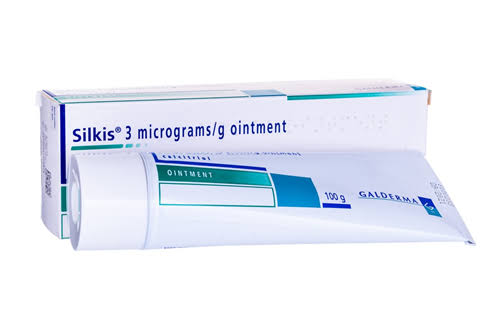
Silkis Ointment 3mcg 100g (Calcitriol)
Silkis Ointment 3mcg 100g (Calcitriol)
- ✔️ Targets psoriasis plaques by slowing abnormal skin cell turnover
- ✔️ Steroid-free formula suitable for sensitive skin areas
- ✔️ Visible improvement in plaques typically within 4–6 weeks
- ✔️ Active calcitriol works directly without skin conversion
- ✔️ Licensed for adults with mild to moderate plaque psoriasis
Price Checker
 Lowest price guarantee
 Includes FREE private prescription


Couldn't load pickup availability
What Is Calcitriol Ointment for Psoriasis?
Silkis Ointment 3mcg/g contains calcitriol, the biologically active form of vitamin D3. It is a prescription-only topical treatment licensed for mild to moderate chronic plaque psoriasis in adults. If you have been living with the discomfort of raised, scaly skin patches, you will know how much psoriasis can affect your daily life — and finding a treatment that genuinely works matters. Silkis is one of the established options your dermatologist or GP may prescribe as part of your skin care plan. You can explore our wider range of skin care products if you are looking for complementary support alongside your prescribed treatment.
Manufactured by Galderma, Silkis Ointment comes in a 100g tube and delivers 3 micrograms of calcitriol per gram of ointment. It is applied directly to affected skin areas twice daily. Unlike some other topical treatments, it does not contain corticosteroids, which makes it a useful option for patients who need a steroid-free approach or who are treating sensitive body areas.
How Does Silkis Ointment Work on Skin?
Psoriasis is driven by an abnormally rapid turnover of skin cells — keratinocytes — combined with localised inflammation. Calcitriol targets both of these processes. Here is how it works:
- Calcitriol binds to vitamin D receptors (VDRs) found on the surface of keratinocytes in the skin.
- This binding slows down the excessive proliferation of skin cells that leads to the build-up of thick, scaly plaques.
- It promotes normal cell differentiation, helping skin cells mature properly rather than accumulating in layers.
- It modulates local immune responses, reducing the inflammatory signals that cause redness and irritation around plaques.
Because calcitriol is the active, end-stage form of vitamin D3, it does not require conversion in the skin to become effective — unlike some other vitamin D analogues. This means it gets to work directly at the site of application.
Who Should Use Silkis Ointment?
Silkis Ointment is specifically licensed for adults aged 18 and over with mild to moderate chronic plaque psoriasis. It is particularly useful for patients who:
- Have been diagnosed with plaque psoriasis by a GP or dermatologist
- Require a steroid-free topical option, for example when treating areas prone to skin thinning
- Have not responded adequately to emollients or other first-line treatments alone
- Are looking for a treatment that can be used on the body (excluding the face and mucous membranes)
It is not suitable for children, and caution is needed in patients with known disorders of calcium metabolism. Always follow your prescriber's guidance on which areas of skin to treat.
How Does Silkis Ointment Compare to Calcipotriol?
| Feature | Silkis Ointment (Calcitriol 3mcg/g) | Dovonex Ointment (Calcipotriol 50mcg/g) |
|---|---|---|
| Active ingredient | Calcitriol (active vitamin D3) | Calcipotriol (vitamin D3 analogue) |
| Requires skin conversion? | No — already in active form | Yes — converted locally in skin |
| Suitable for sensitive areas | Generally better tolerated on sensitive skin | May cause more irritation on sensitive areas |
| Contains corticosteroid? | No | No |
How Should You Store Silkis Ointment?
Store calcitriol ointment psoriasis treatment — Silkis Ointment — below 25°C. Do not refrigerate or freeze the tube, as this can alter the consistency of the ointment. Keep it out of the sight and reach of children, and store it in its original packaging to protect it from light. Once opened, use within the period indicated on the packaging. If you are browsing other topical options, our creams and ointments collection includes a range of dermatological products available online.
This product is a medicine. Speak to your doctor or pharmacist before using if you have an underlying medical condition or are taking other medicines.
Silkis Ointment 3mcg 100g (Calcitriol) specifications
| Treatment category | Dermatology — Psoriasis |
| Active ingredient | Calcitriol 3 micrograms per gram |
| Mechanism of action | Vitamin D receptor agonist; inhibits keratinocyte proliferation and modulates skin immune response |
| Suitable for | Adults aged 18 and over with mild to moderate chronic plaque psoriasis |
| Pack size | 100g tube |
| Strength | 3mcg/g (3 micrograms per gram) |
| UK classification | Prescription Only Medicine (POM) |
| Drug class | Vitamin D analogue (topical) |
| Preparation | Ointment |
| Route of administration | Topical (cutaneous) |
| Brand | Silkis (Galderma) |
Specifications of Silkis Ointment 3mcg 100g (Calcitriol)
What Is Silkis Ointment and What Is It Used For?
Silkis Ointment contains calcitriol 3 micrograms per gram as its active ingredient. Calcitriol is the naturally occurring, biologically active form of vitamin D3 in the human body. When applied to the skin, it helps to normalise the rapid cell turnover and inflammation that characterise plaque psoriasis. The NHS describes psoriasis as a long-term skin condition that causes skin cells to build up and form scales and dry, itchy patches — and topical vitamin D analogues like calcitriol are among the recommended first-line treatments for mild to moderate disease.
Silkis Ointment is used specifically for mild to moderate chronic plaque psoriasis in adults. It is applied to the affected areas of skin on the body — not the face — twice daily. It is a prescription-only medicine in the UK, meaning you will need a valid prescription from a GP or dermatologist before it can be dispensed.
What Do You Need to Know Before Using Silkis Ointment?
Before starting treatment, make sure your prescriber is aware of your full medical history. There are certain situations where Silkis Ointment should not be used or should be used with caution.
Do not use Silkis Ointment if you:
- Are allergic to calcitriol or any other ingredient in the ointment
- Have hypercalcaemia (raised calcium levels in the blood)
- Have hypercalciuria (raised calcium levels in the urine)
- Have a known disorder of calcium or phosphate metabolism
- Are pregnant or breastfeeding, unless specifically advised by your doctor
- Are under 18 years of age
Use with caution if you:
- Are taking thiazide diuretics (water tablets), which can raise calcium levels
- Are taking calcium supplements or high-dose vitamin D supplements
- Are taking digoxin or other cardiac glycosides, as hypercalcaemia can increase their toxicity
- Have widespread psoriasis requiring treatment of large body surface areas
Do not apply to the face, eyes, lips, or mucous membranes. Avoid applying to skin folds unless specifically directed by your prescriber. Wash hands thoroughly after each application to avoid inadvertent transfer to sensitive areas.
How Should You Use Silkis Ointment?
Always use Silkis Ointment exactly as your prescriber has told you. The following steps reflect the standard guidance from the product's licensed information:
- Wash and dry your hands before applying the ointment.
- Apply a thin layer of Silkis Ointment directly to the affected psoriasis plaques only — avoid surrounding healthy skin where possible.
- Gently rub the ointment in until it is absorbed.
- Wash your hands thoroughly after application.
- Apply twice daily — once in the morning and once in the evening.
- Do not cover the treated area with an occlusive dressing unless your doctor has specifically instructed you to do so.
| Indication | Age Group | Dose | Frequency |
|---|---|---|---|
| Mild to moderate plaque psoriasis | Adults (18+) | Thin layer; max 30g per day; max 35% body surface area | Twice daily (morning and evening) |
| Not licensed | Under 18 | Not applicable | Not applicable |
What Are the Possible Side Effects of Silkis Ointment?
Like all medicines, Silkis Ointment can cause side effects, although not everyone experiences them. If you are concerned about any reaction, speak to your pharmacist or GP promptly. You can also find general guidance on managing skin conditions through our skin care section.
Common side effects (may affect up to 1 in 10 people):
- Skin irritation at the application site (burning, stinging, or itching)
- Skin redness (erythema) around treated areas
- Dry skin or peeling at the site of application
Less common side effects (may affect up to 1 in 100 people):
- Worsening of psoriasis
- Skin rash or dermatitis
- Hypercalcaemia (raised blood calcium) — particularly with excessive use; symptoms include nausea, fatigue, increased thirst, and muscle weakness
- Hypercalciuria (raised calcium in urine)
If you develop symptoms suggestive of hypercalcaemia, stop using the ointment and contact your GP immediately. This risk is higher if you exceed the maximum daily dose of 30g or treat more than 35% of your body surface area.
How Should You Store Silkis Ointment?
Correct storage helps maintain the effectiveness and safety of your ointment. Follow these instructions:
- Store below 25°C — do not refrigerate or freeze
- Keep in the original tube and packaging to protect from light
- Keep out of the sight and reach of children
- Do not use after the expiry date printed on the tube and carton
- Do not dispose of medicines via wastewater or household waste — return unused ointment to your pharmacy
If you are managing multiple skin conditions alongside your psoriasis, our creams and ointments collection may have additional products to support your routine, always under the guidance of your healthcare team.
References
Written and reviewed by our qualified team
Your safety and success are our highest priorities. Our medical team rigorously evaluates every product and piece of advice we provide, ensuring you receive only the most effective, science-backed solutions available.
Frequently Asked Questions
Where can I buy Silkis Ointment online in the UK?
You can order Silkis Ointment 3mcg 100g from Cured Pharmacy, a GPhC-registered online pharmacy. Because it is a prescription-only medicine (POM), you will need a valid UK prescription before it can be dispensed. Our pharmacists review every prescription carefully before your order is processed and dispatched.
How does calcitriol ointment work for psoriasis?
Calcitriol binds to vitamin D receptors on skin cells, slowing down the abnormally rapid cell turnover that causes psoriasis plaques to form. It also reduces localised inflammation, which helps to ease the redness and irritation around affected areas. Because calcitriol is already in its active form, it does not need to be converted by the skin before it can take effect.
How do I apply Silkis Ointment step by step?
Wash and dry your hands, then apply a thin layer of ointment directly to the psoriasis plaques twice daily — once in the morning and once in the evening. Gently rub it in until absorbed, then wash your hands again immediately afterwards. Avoid the face, eyes, and mucous membranes, and do not use occlusive dressings unless your doctor has specifically advised it.
What is the maximum amount of Silkis Ointment I can use each day?
The maximum recommended daily dose is 30g, and you should not treat more than 35% of your total body surface area at any one time. Exceeding these limits significantly increases the risk of hypercalcaemia — raised calcium levels in the blood — which can cause symptoms such as nausea, fatigue, and muscle weakness. Always follow your prescriber's instructions carefully.
How long does it take for Silkis Ointment to show results?
Many patients begin to notice an improvement in their psoriasis plaques within 4 to 6 weeks of consistent twice-daily use. Your prescriber will typically review your response to treatment at around 6 to 8 weeks to assess whether to continue, adjust, or change your therapy. Results can vary depending on the severity and location of your psoriasis.
What are the common side effects of Silkis Ointment?
The most frequently reported side effects are mild skin irritation, burning, stinging, or itching at the site of application. Some people also experience localised redness or dry, peeling skin. These effects are usually mild and tend to settle as your skin adjusts to the treatment, but speak to your pharmacist if they persist or worsen.
Can Silkis Ointment cause raised calcium levels?
Yes — if used in amounts exceeding the recommended maximum dose of 30g per day, or applied to a very large area of skin, calcitriol can be absorbed systemically and raise blood calcium levels (hypercalcaemia). Symptoms include increased thirst, frequent urination, nausea, fatigue, and muscle weakness. If you experience any of these, stop using the ointment and contact your GP promptly.
Who is eligible to use Silkis Ointment?
Silkis Ointment is licensed for adults aged 18 and over who have been diagnosed with mild to moderate chronic plaque psoriasis. It is not suitable for children, and it should be used with caution — or avoided — in patients with calcium metabolism disorders, hypercalcaemia, or hypercalciuria. Pregnant or breastfeeding women should only use it under direct medical supervision.
What happens if I miss a dose of Silkis Ointment?
If you forget to apply Silkis Ointment at your usual time, apply it as soon as you remember — unless it is nearly time for your next scheduled application. In that case, simply skip the missed dose and carry on with your regular twice-daily routine. Do not apply a double amount to make up for a missed application.
Can I use Silkis Ointment on my face or scalp?
No — Silkis Ointment is not licensed for use on the face, and it must not be applied near the eyes, lips, or mucous membranes. For scalp psoriasis, your GP or dermatologist may recommend a different formulation or product specifically designed for that area. Always follow your prescriber's guidance on which body areas to treat.
What are the alternatives to Silkis Ointment for psoriasis?
Other topical vitamin D analogues include calcipotriol (available as Dovonex) and combination products such as Dovobet or Enstilar, which contain both calcipotriol and the corticosteroid betamethasone. Topical corticosteroids alone, coal tar preparations, and dithranol are also used for plaque psoriasis. Your dermatologist or GP is best placed to advise which option suits your individual situation. You can also explore our skin care range for supportive products.
Can I use Silkis Ointment during pregnancy?
Silkis Ointment is not recommended during pregnancy unless your doctor has specifically assessed the risks and benefits and advised you to use it. Calcitriol can be absorbed through the skin, and its safety in pregnancy has not been fully established. Always inform your prescriber if you are pregnant, planning a pregnancy, or breastfeeding before starting treatment.
How long can I use Silkis Ointment for?
The duration of treatment should be determined by your prescriber, who will review your response at regular intervals — typically at 6 to 8 weeks. Long-term continuous use should be monitored, particularly to check for any effects on calcium levels. Silkis Ointment is generally used as part of a broader psoriasis management plan rather than as an indefinite standalone treatment.
Does Silkis Ointment interact with other medicines?
Yes — certain medicines can interact with calcitriol. Thiazide diuretics (water tablets) and calcium or vitamin D supplements can increase the risk of hypercalcaemia when used alongside Silkis Ointment. Digoxin and other cardiac glycosides may also be affected, as raised calcium levels can increase their toxicity. Always tell your prescriber and pharmacist about all medicines, supplements, and vitamins you are taking.
What are the latest findings on calcitriol ointment for psoriasis?
Calcitriol has been used as a topical psoriasis treatment for several decades, and its efficacy and tolerability are well established in clinical literature. Research has consistently shown it to be effective for mild to moderate plaque psoriasis, with a generally good tolerability profile — particularly on sensitive skin areas — compared to some other vitamin D analogues. If you are interested in broader skin health support, our vitamins and supplements collection includes products that may complement your overall wellbeing.
Written and reviewed by our qualified team

Reviewed by:
Tarun Kumar
Superintendent/ Clinical Lead
📖 Find out more about our team of medical content authors and how we ensure the accuracy of our content with our content guidelines.
Content last updated: 14 Sep 2026
Other popular options


We’re a safe and
regulated UK service

Lowest Price Guarantee

We're convinced you won't find your treatment cheaper, but if you do we'll refund the difference.
Find out more
100% discreet packaging

Discreet, unbranded packaging for every order.
Find out more

Need help?
Talk to our friendly experts now


How our service works

Service setup

Discreet packaging

Express delivery