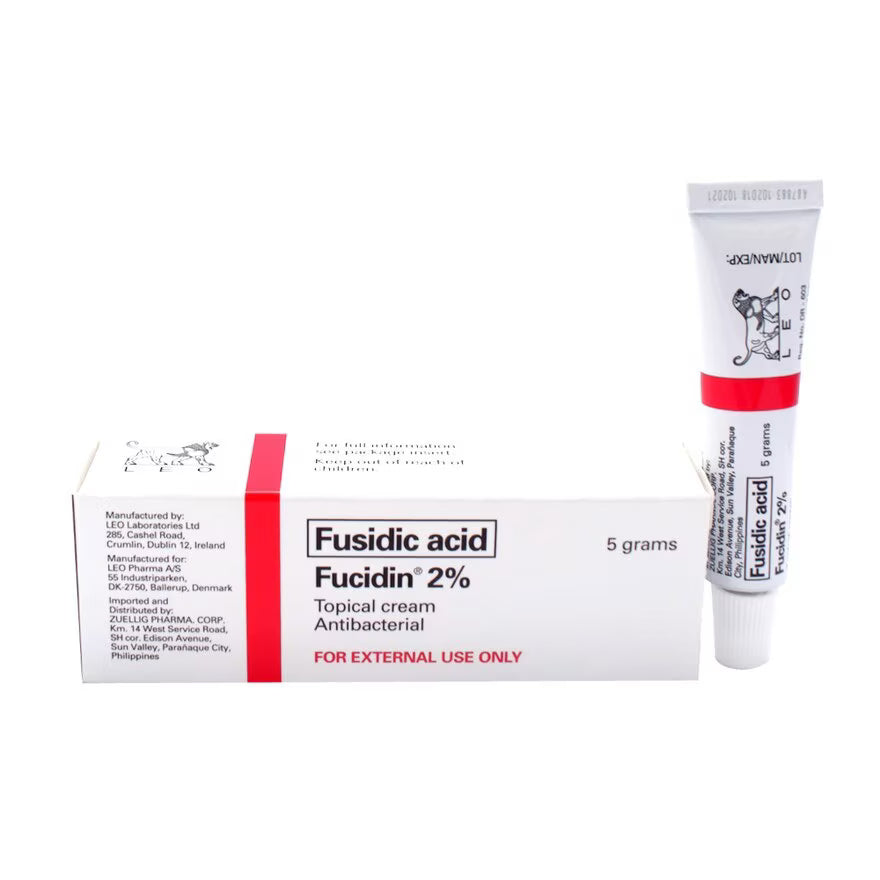
Fucidin Cream (15g)
Fucidin Cream (15g)
- ✔️ Targets bacterial skin infections including impetigo and infected eczema
- ✔️ Contains fusidic acid 2%, effective against Staphylococcus aureus
- ✔️ Visible improvement typically seen within 2 to 3 days of use
- ✔️ Suitable for adults and children with localised skin infections
- ✔️ Topical application means treatment acts directly at the infection site
Price Checker
 Lowest price guarantee
 Includes FREE private prescription


Couldn't load pickup availability
What Is Fucidin Cream and How Does It Treat Skin Infections?
Fucidin cream is a topical antibiotic treatment containing fusidic acid 2% as its active ingredient. It is used to treat bacterial skin infections caused by susceptible organisms, most commonly Staphylococcus aureus. Whether you're dealing with a patch of impetigo on your child's face or a small area of infected eczema, this cream targets the bacteria directly at the source. It's one of the most widely recognised topical antibiotics available in the UK, and you can find it alongside other creams and ointments at Cured Pharmacy.
Manufactured by LEO Pharma, Fucidin cream has been used clinically for decades. It is available in a 15g or 30g tube and is suitable for adults and children when used correctly. As with any antibiotic, it should only be used when genuinely needed — unnecessary use contributes to antibiotic resistance, which is a growing public health concern in the UK.
How Does Fucidin Cream Work Against Bacteria?
Fusidic acid, the active ingredient in Fucidin cream, works by interfering with bacterial protein synthesis. Specifically, it inhibits elongation factor G (EF-G), a protein essential for bacteria to produce the proteins they need to survive and replicate. Without this process, bacteria cannot multiply — and the infection gradually clears.
- Fusidic acid penetrates the skin to reach the site of infection
- It binds to EF-G, blocking the translocation step of protein synthesis
- Bacteria are unable to replicate and begin to die off
- The immune system clears remaining bacteria as the skin heals
It is particularly effective against Staphylococcus aureus, including some strains that are resistant to other antibiotics. However, it is not effective against all bacteria, so it's important to use it only for confirmed or strongly suspected bacterial infections.
Who Should Use Fucidin Cream and Is It Right for You?
Fucidin cream is suitable for adults and children with localised bacterial skin infections. It is commonly recommended for the following conditions:
- Impetigo — a highly contagious superficial skin infection common in children
- Infected eczema — where broken skin has become colonised by bacteria
- Infected cuts, grazes, or minor wounds
- Folliculitis — infection of the hair follicles
It is not suitable for fungal infections, viral infections such as cold sores, or large areas of broken skin without medical supervision. If you're unsure whether your skin condition is bacterial, speak to a pharmacist or GP before starting treatment. You might also want to explore our skin care range for complementary products to support your skin health.
How Does Fucidin Cream Compare to Other Topical Antibiotics?
| Feature | Fucidin Cream | Mupirocin (Bactroban) |
|---|---|---|
| Active ingredient | Fusidic acid 2% | Mupirocin 2% |
| Primary use | Skin infections, infected eczema | Impetigo, nasal decolonisation |
| Formulation | Cream (water-based) | Ointment or nasal ointment |
| UK availability | Prescription / pharmacy | Prescription only |
How Should You Store Fucidin Cream and Is It Safe Long-Term?
Store fucidin cream below 25°C, away from direct heat and sunlight. Keep the tube tightly closed when not in use, and always store it out of reach of children. Do not use the cream after the expiry date printed on the packaging.
Long-term or repeated use of any topical antibiotic carries a risk of promoting antibiotic resistance and may cause sensitisation of the skin. For this reason, treatment courses are typically limited to 5–7 days. If your symptoms have not improved after this time, consult your GP rather than continuing to apply the cream independently.
This product is a medicine. Speak to your doctor or pharmacist before using if you have an underlying medical condition or are taking other medicines.
Fucidin Cream specifications
| Treatment category | Topical antibiotic |
| Mechanism of action | Inhibits bacterial protein synthesis via EF-G inhibition |
| Effective against | Staphylococcus aureus and other susceptible bacteria |
| Suitable for | Adults and children (under medical supervision for infants) |
| Active ingredient | Fusidic acid 2% |
| Pack sizes | 15g, 30g |
| Strengths | 2% w/w |
| UK classification | Pharmacy (P) / Prescription Only Medicine (POM) depending on indication |
| Drug class | Fusidane antibiotic |
| Preparation | Cream |
| Route of administration | Topical (cutaneous) |
Specifications of Fucidin Cream
What Is Fucidin Cream and What Is It Used For?
Fucidin cream is a topical antibiotic medicine containing fusidic acid 2% w/w. It is used to treat bacterial infections of the skin caused by susceptible organisms, particularly Staphylococcus aureus. Common conditions it is prescribed or recommended for include impetigo, infected eczema, infected cuts and grazes, and folliculitis. It works locally on the skin rather than being absorbed into the bloodstream in significant amounts, which makes it a targeted option for superficial infections.
What Do You Need to Know Before Using Fucidin Cream?
Before applying fucidin cream, read the following carefully. There are situations where this medicine should not be used or should be used with caution.
Do not use Fucidin cream if you:
- Are allergic to fusidic acid, sodium fusidate, or any other ingredient in the cream
- Have a fungal or viral skin infection — this cream will not treat these
- Need to apply it to large areas of broken or damaged skin without medical advice
- Are applying it near the eyes without specific medical guidance
Use with caution and speak to a pharmacist or GP if you:
- Are pregnant or breastfeeding
- Are treating a young infant or newborn
- Have previously had a skin reaction to any topical antibiotic
- Have been using the cream for longer than 7 days without improvement
Drug interactions:
- Topical fusidic acid has no significant known interactions with other medicines when used as directed on the skin
- If you are also taking systemic antibiotics, inform your prescriber to avoid overlapping antibiotic coverage
How Should You Use Fucidin Cream Correctly?
Always use Fucidin cream exactly as directed by your pharmacist or as described in the patient information leaflet. Do not apply more than recommended, and do not use it for longer than advised.
- Wash your hands thoroughly before and after application (unless treating the hands themselves)
- Clean the affected area gently with mild soap and water, then pat dry
- Apply a small amount of cream to the infected area and spread gently
- Do not cover with an airtight dressing unless advised by a healthcare professional
- Apply at regular intervals as directed — typically two to three times daily
- Complete the full course of treatment, even if the skin looks better before it ends
| Indication | Age Group | Dose | Frequency |
|---|---|---|---|
| Impetigo / skin infection | Adults | Small amount to affected area | 2–3 times daily for 5–7 days |
| Infected eczema | Adults & children | Small amount to affected area | 2–3 times daily for up to 7 days |
| Minor wound infection | Adults & children | Small amount to affected area | 2–3 times daily for 5 days |
If you are looking for additional support for wound care or minor injuries, our first aid range includes a variety of products to help manage minor skin injuries safely.
What Are the Possible Side Effects of Fucidin Cream?
Like all medicines, Fucidin cream can cause side effects, although not everyone experiences them. Most side effects are mild and affect the skin at the site of application.
Common side effects:
- Mild burning or stinging sensation on application
- Redness or irritation at the application site
- Itching or skin discomfort
Less common side effects:
- Contact dermatitis — an allergic skin reaction causing rash or blistering
- Eczematous reactions — worsening of existing eczema
- Skin sensitisation with prolonged use
Stop using the cream and seek medical advice if you develop signs of a severe allergic reaction, such as widespread rash, swelling, or difficulty breathing. These reactions are rare but require prompt attention.
How Should You Store Fucidin Cream?
- Store below 25°C in a cool, dry place
- Keep away from direct sunlight and heat sources
- Keep the tube tightly closed after each use
- Store out of the sight and reach of children
- Do not use after the expiry date printed on the tube or carton
- Do not dispose of medicines via wastewater or household waste — return unused medicines to your pharmacy
If you are managing a skin condition alongside other health concerns, you may also find our athletes foot and fungal infections range helpful — though remember that Fucidin cream is not suitable for fungal conditions and a different treatment would be needed.
References
Written and reviewed by our qualified team
Your safety and success are our highest priorities. Our medical team rigorously evaluates every product and piece of advice we provide, ensuring you receive only the most effective, science-backed solutions available.
Frequently Asked Questions
Where can I buy Fucidin cream online in the UK?
You can buy Fucidin cream online from Cured Pharmacy, a GPhC-registered UK online pharmacy. It is available subject to a short suitability assessment completed at checkout. Browse our full range of creams and ointments for related topical treatments.
How does Fucidin cream work on a skin infection?
Fucidin cream contains fusidic acid, which inhibits bacterial protein synthesis by blocking elongation factor G (EF-G). This stops bacteria from replicating, allowing your immune system and the skin's natural healing process to clear the infection. It is particularly effective against Staphylococcus aureus, the most common cause of superficial skin infections.
How do I apply Fucidin cream step by step?
Wash your hands, then clean and dry the affected area gently. Apply a small amount of cream directly to the infected skin and rub in lightly. Wash your hands again after application unless the hands themselves are being treated.
How long does Fucidin cream take to work?
Most people notice visible improvement within 2 to 3 days of starting treatment. You should complete the full course — usually 5 to 7 days — even if the skin appears to have cleared up sooner. Stopping early can allow bacteria to return and may contribute to antibiotic resistance.
What is the correct dose of Fucidin cream for adults?
For adults, apply a small amount of Fucidin cream to the affected area two to three times daily. Treatment should not normally exceed 7 days without medical review. Always follow the instructions provided by your pharmacist or the patient information leaflet.
Can I use Fucidin cream on my child?
Fucidin cream can be used in children, including for conditions like impetigo, but should be used under the guidance of a pharmacist or GP, especially in infants. The dose and frequency are generally the same as for adults — a small amount applied two to three times daily. Always seek professional advice before treating young children with any antibiotic.
What are the side effects of Fucidin cream?
Common side effects include mild stinging, redness, or itching at the application site. Less commonly, contact dermatitis or skin sensitisation may occur, particularly with prolonged use. If you develop a widespread rash, swelling, or any sign of a severe allergic reaction, stop using the cream and seek medical advice immediately.
How do I manage side effects of Fucidin cream?
Mild irritation usually settles on its own as your skin adjusts to the treatment. If stinging or redness is bothersome, try applying the cream after gently moisturising the surrounding skin. If side effects persist or worsen, stop using the cream and speak to your pharmacist or GP.
Who is eligible to use Fucidin cream?
Fucidin cream is suitable for adults and children with localised bacterial skin infections caused by susceptible organisms. It is not suitable for people with known hypersensitivity to fusidic acid, or for treating fungal or viral infections. Pregnant or breastfeeding women should consult a GP before use.
What happens if I miss a dose of Fucidin cream?
If you forget to apply Fucidin cream at your usual time, apply it as soon as you remember. If it is nearly time for your next application, skip the missed dose and continue as normal. Do not apply a double amount to make up for a missed application.
What is the difference between Fucidin cream and Fucidin ointment?
Fucidin cream is water-based and absorbs more readily into the skin, making it better suited to moist, weeping, or inflamed areas. Fucidin ointment has a greasier, occlusive base that may be more appropriate for dry or scaly skin. Both contain fusidic acid 2% as the active ingredient.
Can I use Fucidin cream during pregnancy or breastfeeding?
Fucidin cream should only be used during pregnancy or breastfeeding if a doctor considers it necessary. While topical absorption is minimal, it is always best to seek professional advice before using any medicine during pregnancy. Avoid applying the cream to the breast area if breastfeeding.
How long can you use Fucidin cream for?
Treatment with Fucidin cream should not normally exceed 7 days. Prolonged use increases the risk of antibiotic resistance and skin sensitisation. If your infection has not improved after a week, consult your GP rather than continuing to self-treat.
What are the alternatives to Fucidin cream?
Alternatives to Fucidin cream include mupirocin (Bactroban), which is a prescription-only topical antibiotic also used for impetigo. For mild infections, antiseptic creams may be considered, though they are less targeted. Your pharmacist can advise on the most appropriate option for your specific condition. You can also explore our skin care range for supportive products.
What does the latest research say about fusidic acid resistance?
Antibiotic resistance to fusidic acid is a recognised and growing concern, particularly with repeated or prolonged use of topical formulations. UK guidance recommends limiting treatment courses to 5–7 days and avoiding use as a preventative measure. Using fucidin cream only when clinically indicated helps preserve its effectiveness for future patients.
Written and reviewed by our qualified team

Reviewed by:
Tarun Kumar
Superintendent/ Clinical Lead
📖 Find out more about our team of medical content authors and how we ensure the accuracy of our content with our content guidelines.
Content last updated: 14 Sep 2026
Other popular options


We’re a safe and
regulated UK service

Lowest Price Guarantee

We're convinced you won't find your treatment cheaper, but if you do we'll refund the difference.
Find out more
100% discreet packaging

Discreet, unbranded packaging for every order.
Find out more

Need help?
Talk to our friendly experts now


How our service works

Service setup

Discreet packaging

Express delivery