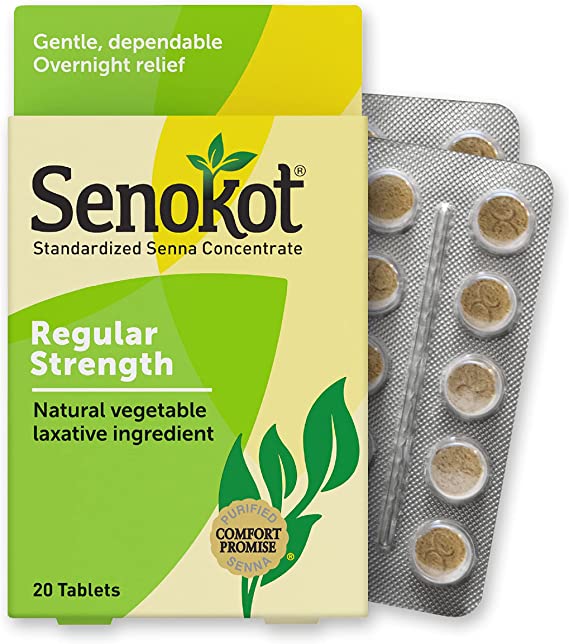
Senokot Constipation Relief – 20 Senna Fruit Tablets
Senokot Constipation Relief – 20 Senna Fruit Tablets
- ✔️ Relieves occasional constipation gently within 8–12 hours
- ✔️ Stimulant laxative action encourages natural bowel movement
- ✔️ Suitable for adults and young people aged 12 and over
- ✔️ Compact 20-tablet pack ideal for home use or travel
- ✔️ Active senna fruit extract derived from a natural plant source
Price Checker
 Lowest price guarantee
 Includes FREE private prescription


Couldn't load pickup availability
Are Senna Tablets for Constipation Right for You?
Constipation is something most people experience at some point — and it can be genuinely uncomfortable. Whether it is brought on by a change in diet, reduced activity, travel, or simply not drinking enough water, that sluggish, bloated feeling is hard to ignore. Senokot Constipation Relief tablets offer a well-established, over-the-counter option for adults and children aged 12 and over who need gentle, reliable relief. Each pack contains 20 tablets, making it a practical choice to keep at home or pop in your bag when you are heading away. You can browse the full range of constipation treatments at Cured Pharmacy if you want to compare your options before deciding.
Senokot has been used in the UK for decades. The active ingredient — senna fruit dry extract — is derived from the dried fruit of the Cassia senna plant, and it works as a stimulant laxative. It is classified as a General Sale List (GSL) medicine in the UK, meaning it is available without a prescription, though you should still read the label carefully and use it as directed.
How Do Senokot Senna Tablets Work in the Body?
Senna works by stimulating the nerve endings in the lining of the large intestine. This triggers rhythmic muscle contractions — known as peristalsis — that push stool along the bowel and towards the rectum. The result is a bowel movement, typically within 8 to 12 hours of taking the tablet.
- Sennosides (the active compounds in senna) are converted by gut bacteria into their active form in the colon.
- They stimulate the enteric nervous system, increasing bowel motility.
- They also reduce water reabsorption from the colon, softening the stool slightly.
- The combined effect produces a natural-feeling bowel movement without the need for suppositories or enemas.
Because the action takes place in the large intestine rather than the stomach, senna does not interfere with the digestion or absorption of food and nutrients in the small bowel.
Who Is Senokot Suitable For?
Senokot is designed for short-term relief of occasional constipation. It is not intended as a long-term solution, and it is not a substitute for dietary changes or increased fluid intake. That said, it suits a wide range of people who need a reliable, fast-acting option.
- Adults experiencing occasional constipation due to diet, travel, or lifestyle changes.
- Young people aged 12 and over (not suitable for children under 12 without medical advice).
- People who prefer a tablet form over liquid laxatives.
- Travellers who need a compact, easy-to-carry constipation remedy — check out the travel health range at Cured Pharmacy for more essentials.
It is not suitable for people with bowel obstruction, inflammatory bowel disease, or unexplained abdominal pain. Pregnant or breastfeeding women should speak to their GP or midwife before use.
How Does Senokot Compare to Other Laxative Types?
| Feature | Senokot Senna Tablets | Ispaghula Husk (e.g. Fybogel) |
|---|---|---|
| Laxative type | Stimulant | Bulk-forming |
| Onset of action | 8–12 hours | 12–72 hours |
| Suitable for short-term use | Yes | Yes |
| Form | Tablet | Powder/granules (drink) |
How Should You Store Senokot Senna Tablets?
Senna tablets for constipation should be stored below 25°C in a dry place, away from direct sunlight and out of the reach and sight of children. Do not use the tablets after the expiry date printed on the pack. If you are unsure whether a product is still suitable to use, your pharmacist can advise you. If you are managing other digestive concerns alongside constipation, you may also find it helpful to explore the IBS and cramps range for complementary products.
This product is a medicine. Speak to your doctor or pharmacist before using if you have an underlying medical condition or are taking other medicines.
Senokot Constipation Relief – 20 Senna Fruit Tablets specifications
| Treatment category | Constipation relief |
| Mechanism of action | Stimulant laxative — stimulates bowel peristalsis via sennosides |
| Effective | Within 8–12 hours |
| Suitable for | Adults and children aged 12 and over |
| Active ingredient | Senna fruit dry extract (sennosides) |
| Pack size | 20 tablets |
| UK classification | General Sale List (GSL) |
| Drug class | Stimulant laxative |
| Preparation | Film-coated tablet |
| Route of administration | Oral |
Specifications of Senokot Constipation Relief – 20 Senna Fruit Tablets
What Is Senokot and What Is It Used For?
Senokot Constipation Relief tablets contain senna fruit dry extract as the active ingredient. Senna is a stimulant laxative that has been used medicinally for centuries and is well recognised in UK clinical practice. These tablets are used to relieve occasional constipation in adults and young people aged 12 and over. They are not intended for the management of chronic constipation, which requires medical assessment.
Constipation is defined by the NHS as passing fewer than three stools per week, or passing stools that are hard, dry, and difficult to pass. It is extremely common and often resolves with dietary changes, increased fluid intake, and physical activity. When those measures are not enough, a short course of a stimulant laxative such as senna can help restore normal bowel function.
What Do You Need to Know Before Using Senokot Tablets?
Before taking Senokot, it is important to check whether it is appropriate for you. Do not take these tablets if any of the following apply:
- You are under 12 years of age.
- You have a bowel obstruction or suspected bowel obstruction.
- You have severe abdominal pain, nausea, or vomiting of unknown cause.
- You have been diagnosed with inflammatory bowel disease (such as Crohn's disease or ulcerative colitis).
- You are allergic to senna or any other ingredient in the tablet.
- You have a rare hereditary condition such as galactose intolerance (check the full PIL for excipients).
Speak to your doctor or pharmacist before use if you are pregnant, breastfeeding, elderly, or have a history of kidney or liver problems. Regarding drug interactions, senna may affect the absorption of other medicines if taken simultaneously. Known interactions to be aware of include:
- Digoxin and other cardiac glycosides — prolonged use of senna can cause electrolyte imbalance (particularly low potassium), which may increase the risk of toxicity.
- Diuretics — combined use may worsen electrolyte disturbances.
- Anticoagulants such as warfarin — diarrhoea caused by senna may affect INR; monitor closely.
- Other laxatives — avoid combining stimulant laxatives without medical advice.
How Should You Use Senokot Senna Tablets?
Always read the patient information leaflet supplied with the pack before taking Senokot. Follow these steps for correct use:
- Take 2 tablets at bedtime with a full glass of water.
- Do not crush or chew the tablets — swallow them whole.
- Allow 8 to 12 hours for the tablets to take effect.
- Do not take more than the recommended dose in any 24-hour period.
- If you have not had a bowel movement after 3 days, stop use and consult your pharmacist or GP.
- Do not use for more than 7 consecutive days without medical advice.
| Age Group | Dose | Frequency | Maximum Duration |
|---|---|---|---|
| Adults and children aged 12+ | 2 tablets | Once daily at bedtime | 7 days |
| Children under 12 | Not recommended | — | — |
What Are the Possible Side Effects of Senokot Tablets?
Like all medicines, Senokot can cause side effects, although not everyone experiences them. If you are also dealing with digestive discomfort beyond constipation, it may be worth exploring the indigestion range at Cured Pharmacy for additional support.
Common side effects (may affect up to 1 in 10 people):
- Abdominal cramps or discomfort
- Loose stools or diarrhoea
- Flatulence
- Nausea
Less common side effects (may affect up to 1 in 100 people):
- Discolouration of urine (harmless — may appear pink or red-brown)
- Skin reactions such as rash or urticaria (stop use and seek advice)
- Electrolyte imbalance with prolonged use (low potassium, low sodium)
- Melanosis coli — a harmless darkening of the bowel lining seen with long-term stimulant laxative use
Stop taking Senokot and seek medical attention if you develop severe abdominal pain, rectal bleeding, or signs of an allergic reaction such as swelling of the face, lips, or throat.
How Should You Store Senokot Senna Tablets?
- Store below 25°C in a dry place.
- Keep away from direct sunlight and moisture.
- Keep out of the sight and reach of children.
- Do not use after the expiry date printed on the pack.
- Do not dispose of medicines via wastewater or household waste — return unused tablets to your pharmacy for safe disposal.
If you are travelling and need to manage your digestive health on the go, it is worth checking the diarrhoea treatments available at Cured Pharmacy too, so you are prepared for any eventuality.
References
Written and reviewed by our qualified team
Your safety and success are our highest priorities. Our medical team rigorously evaluates every product and piece of advice we provide, ensuring you receive only the most effective, science-backed solutions available.
Frequently Asked Questions
Where can I buy senna tablets for constipation online in the UK?
You can buy Senokot senna tablets for constipation directly from Cured Pharmacy, a GPhC-registered online pharmacy. Simply add the pack to your basket and choose your preferred delivery option. We offer fast, discreet delivery across the UK, so you can get the relief you need without leaving home. Browse the full constipation range at Cured Pharmacy for more options.
How do senna tablets work in the body?
Senna contains naturally occurring compounds called sennosides, which are converted by gut bacteria into their active form in the large intestine. These active compounds stimulate the nerve endings in the bowel wall, triggering muscle contractions that push stool towards the rectum. The process also reduces water reabsorption from the colon, which helps soften the stool and makes it easier to pass. Most people notice the effect within 8 to 12 hours of taking the tablet.
How do I take Senokot senna tablets step by step?
Taking Senokot correctly is straightforward. Follow these steps:
- Take 2 tablets at bedtime.
- Swallow them whole with a full glass of water — do not crush or chew.
- Allow 8 to 12 hours for the effect to occur.
- Do not take more than 2 tablets in any 24-hour period.
If you have not had a bowel movement within 3 days, stop use and speak to your pharmacist or GP.
What is the best time to take Senokot tablets?
The recommended time to take Senokot is at bedtime. Because senna typically works within 8 to 12 hours, taking it in the evening means you are likely to have a bowel movement the following morning — which fits naturally into most people's routines. Avoid taking it with other medicines at the same time unless your pharmacist has confirmed it is safe to do so.
What are the common side effects of Senokot senna tablets and how do I manage them?
The most common side effects are abdominal cramps, loose stools, and flatulence. These are generally mild and resolve once you stop taking the tablets. If you experience diarrhoea, make sure you stay well hydrated by drinking plenty of water. If cramping is severe or side effects persist beyond a day or two after stopping, contact your pharmacist or GP for advice.
Who should not take Senokot senna tablets?
Senokot is not suitable for children under 12 years of age. It should also be avoided by anyone with a bowel obstruction, inflammatory bowel disease (such as Crohn's disease or ulcerative colitis), or unexplained severe abdominal pain. People who are pregnant or breastfeeding should consult their GP or midwife before use. Always read the full patient information leaflet before taking any medicine.
What is the correct dose of Senokot for adults?
The standard adult dose is 2 tablets taken once daily at bedtime. This applies to adults and young people aged 12 and over. Do not exceed 2 tablets in any 24-hour period. If you feel you need a higher dose to achieve a bowel movement, speak to your pharmacist rather than increasing the dose yourself, as this may indicate an underlying issue that needs assessment.
How long can you take Senokot senna tablets for?
Senokot should not be used for more than 7 consecutive days without seeking medical advice. Stimulant laxatives are intended for short-term, occasional use only. Using them long-term without supervision can lead to dependence, electrolyte imbalances, and a condition called melanosis coli (harmless darkening of the bowel lining). If your constipation is persistent or recurring, your GP can help identify the underlying cause and recommend a longer-term management plan.
What happens if I miss a dose of Senokot?
If you forget to take your dose at bedtime, simply take it the following evening as normal. Do not double up by taking two doses at once to make up for a missed one. Because Senokot is used on an as-needed basis for occasional constipation rather than as a daily scheduled medicine, missing a single dose is unlikely to cause any problems.
Can I take Senokot if I am pregnant?
Constipation is very common during pregnancy, but you should not take Senokot without first speaking to your GP or midwife. The NHS advises that bulk-forming laxatives such as ispaghula husk are generally considered the first-line option during pregnancy. Stimulant laxatives like senna are sometimes used in pregnancy under medical supervision, but the decision should always be made with a healthcare professional.
Are Senokot senna tablets suitable for children?
Senokot senna tablets are not recommended for children under 12 years of age. If your child is experiencing constipation, speak to your GP or pharmacist, who can recommend an age-appropriate treatment. For babies and toddlers, dietary changes and increased fluid intake are usually the first approach — you can also explore the baby and toddler range at Cured Pharmacy for relevant products.
Can Senokot interact with other medicines I am taking?
Yes, senna can interact with certain medicines. The most clinically significant interactions involve digoxin and other cardiac glycosides, where electrolyte imbalance caused by prolonged senna use can increase the risk of toxicity. Senna may also interact with diuretics and anticoagulants such as warfarin. If you are taking any regular prescription medicines, always check with your pharmacist before starting Senokot.
What are the alternatives to Senokot senna tablets for constipation?
There are several types of laxative available over the counter in the UK. Bulk-forming laxatives (e.g. ispaghula husk / Fybogel) work by increasing stool bulk and are often recommended as a first-line option. Osmotic laxatives (e.g. lactulose, Movicol) draw water into the bowel to soften stools. Stimulant laxatives like senna act more quickly and are useful when faster relief is needed. Your pharmacist can help you choose the most appropriate option based on your symptoms and medical history.
Is it safe to take Senokot senna tablets while travelling?
Yes, Senokot is a convenient option for travel-related constipation, which is very common due to changes in diet, routine, and hydration. The compact 20-tablet pack is easy to carry in hand luggage or a travel bag. Make sure you store the tablets correctly — below 25°C and away from direct sunlight — especially in warm climates. You can find more travel health essentials in the travel range at Cured Pharmacy.
What does the latest research say about senna as a laxative?
Senna has a long and well-documented history of clinical use as a stimulant laxative. It remains listed in the British National Formulary (BNF) as a recommended treatment for constipation and is widely used in palliative care settings to counteract opioid-induced constipation. Current NHS guidance supports its short-term use for occasional constipation in adults and children aged 12 and over, with the consistent recommendation that it should not be used long-term without medical supervision.
Written and reviewed by our qualified team

Reviewed by:
Tarun Kumar
Superintendent/ Clinical Lead
📖 Find out more about our team of medical content authors and how we ensure the accuracy of our content with our content guidelines.
Content last updated: 14 Sep 2026
Other popular options


We’re a safe and
regulated UK service

Lowest Price Guarantee

We're convinced you won't find your treatment cheaper, but if you do we'll refund the difference.
Find out more
100% discreet packaging

Discreet, unbranded packaging for every order.
Find out more

Need help?
Talk to our friendly experts now


How our service works

Service setup

Discreet packaging

Express delivery