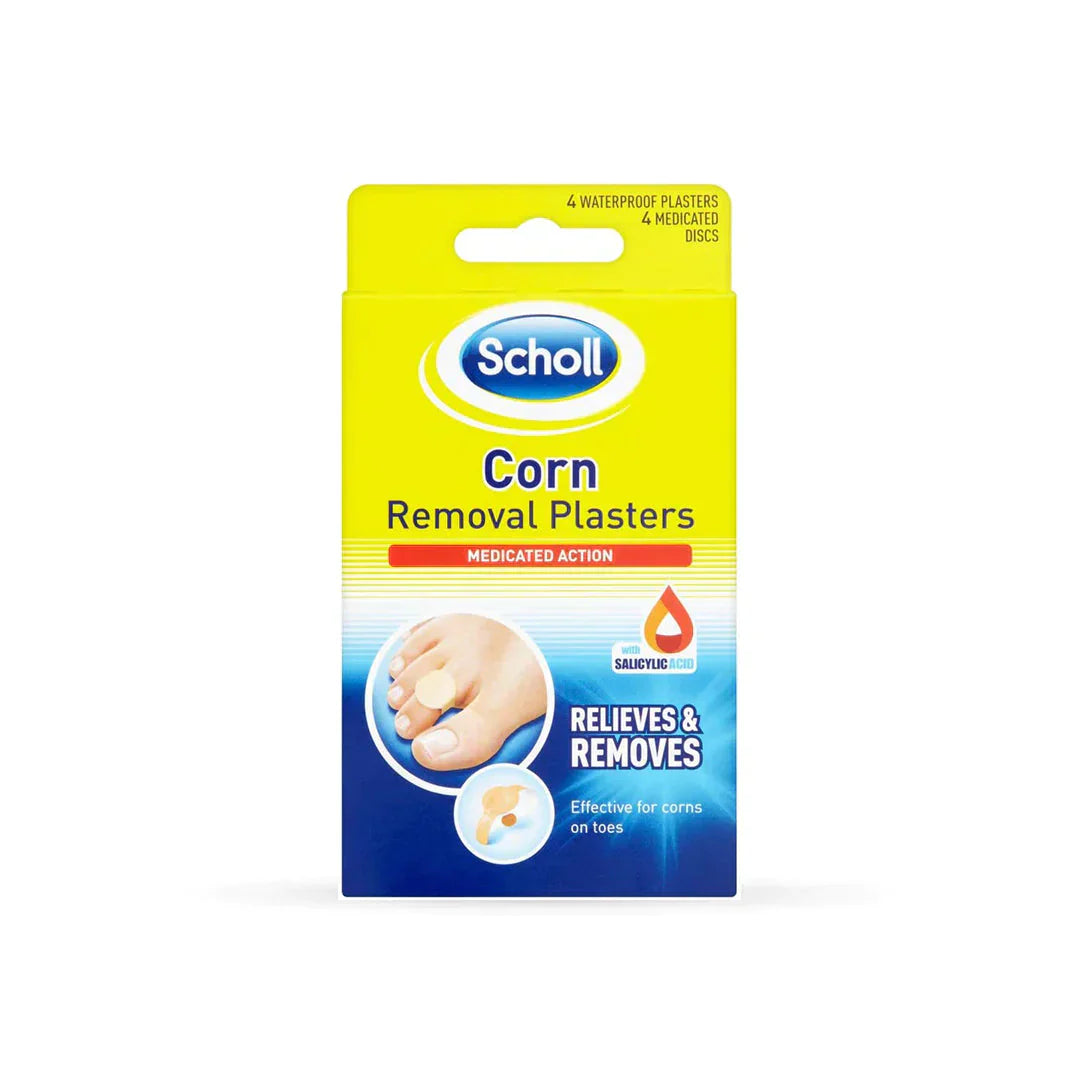
Scholl Corn Removal Plasters
Scholl Corn Removal Plasters
- ✔️ Targets painful foot corns with salicylic acid 40%
- ✔️ Softens and removes hardened corn tissue gradually
- ✔️ Cushioned pad reduces pressure pain during treatment
- ✔️ Suitable for adults with healthy skin and no diabetes
- ✔️ Simple peel-and-apply plaster — no mess, no fuss
Price Checker
 Lowest price guarantee
 Includes FREE private prescription


Couldn't load pickup availability
What Are Corn Removal Plasters and Do They Really Work?
Corns are small, hardened areas of thickened skin that develop on the feet — usually on the tops or sides of toes, or on the sole — in response to repeated friction or pressure. They can be surprisingly painful for something so small. If you've ever winced putting on shoes in the morning, you'll know exactly what we mean. Corn removal plasters from Scholl offer a straightforward, at-home solution that has been trusted by people across the UK for decades. Available from Cured Pharmacy for just £3.49, they're one of the most accessible treatments for this common foot complaint. For a broader range of foot health products, browse our foot care collection.
Corns are not the same as calluses, though the two are often confused. A corn typically has a hard central core that presses into deeper skin layers, causing that characteristic sharp or aching pain. The NHS notes that corns and calluses are caused by skin rubbing against something — usually ill-fitting footwear — over a prolonged period. Scholl Corn Removal Plasters target this hardened tissue directly using a clinically recognised active ingredient.
How Do Scholl Corn Removal Plasters Work?
The active ingredient in these plasters is salicylic acid at a concentration of 40%. Salicylic acid is a well-established keratolytic agent — meaning it works by breaking down the protein structure (keratin) that makes up hardened skin. Here's what happens when you apply the plaster:
- The medicated pad sits directly against the corn, delivering salicylic acid to the thickened tissue.
- Salicylic acid softens and loosens the hardened skin cells over time.
- The dead skin becomes easier to remove gently after soaking the foot.
- Repeated applications gradually reduce the size and depth of the corn.
The adhesive plaster also acts as a cushion, helping to reduce the pressure on the corn while treatment is ongoing — so you get some pain relief alongside the active treatment. That dual action is what makes these plasters particularly practical for everyday use.
Who Should Use Scholl Corn Removal Plasters?
These plasters are suitable for most healthy adults who have a confirmed corn on their foot. They're particularly useful if you want to treat a corn at home without a GP or podiatry appointment. That said, they're not appropriate for everyone.
- Adults aged 18 and over with a clearly identified corn on the foot or toe.
- People with intact, healthy skin around the affected area.
- Those who have ruled out other skin conditions such as verrucas or infected skin.
- Individuals who are not diabetic and do not have circulatory problems or peripheral neuropathy.
If you're unsure whether what you have is a corn, a verruca, or something else entirely, it's always worth checking with a pharmacist first. Verrucas and corns can look similar but require different treatments.
How Do Scholl Corn Removal Plasters Compare to Other Corn Treatments?
| Feature | Scholl Corn Removal Plasters | Salicylic Acid Corn Paint/Gel |
|---|---|---|
| Active ingredient | Salicylic acid 40% | Salicylic acid (variable %) |
| Application method | Adhesive plaster — stays in place | Liquid applied with brush or dropper |
| Cushioning effect | Yes — built-in padding | No |
| Ease of use | Simple peel-and-apply | Requires careful application to avoid healthy skin |
Are Scholl Corn Removal Plasters Suitable for Sensitive Skin?
If you have sensitive skin, you should take care when using any product containing salicylic acid. The plaster should be applied only to the corn itself — not to the surrounding healthy skin — to minimise the risk of irritation. People with known salicylate sensitivity should avoid this product entirely. If you experience significant redness, burning, or peeling beyond the treated area, remove the plaster and consult your pharmacist. You might also find it helpful to explore our skin care collection for complementary products to support skin health during treatment.
Store the plasters below 25°C in a dry place, away from direct sunlight and out of reach of children. Do not use on broken, infected, or inflamed skin.
This product is a medicine. Speak to your doctor or pharmacist before using if you have an underlying medical condition or are taking other medicines.
Scholl Corn Removal Plasters specifications
| Treatment category | Foot care / Corn treatment |
| Active ingredient | Salicylic acid 40% |
| Mechanism of action | Keratolytic — softens and breaks down hardened skin |
| Route of administration | Topical (cutaneous) |
| Preparation | Medicated adhesive plaster |
| Suitable for | Adults aged 18 and over with healthy skin and no diabetes or circulatory conditions |
| UK classification | General Sale List (GSL) |
| Brand | Scholl |
Specifications of Scholl Corn Removal Plasters
What Are Scholl Corn Removal Plasters and What Are They Used For?
Scholl Corn Removal Plasters are medicated adhesive plasters designed to treat corns on the feet. Each plaster contains salicylic acid 40% as the active ingredient — a keratolytic medicine that softens thickened, hardened skin so it can be gently removed. They are used to relieve the pain and discomfort caused by corns, and to gradually eliminate the corn itself with repeated use. The NHS describes corns as areas of hard, thickened skin that can be painful when pressed, and notes that they are most commonly caused by ill-fitting shoes or abnormal gait.
What Do You Need to Know Before Using Scholl Corn Removal Plasters?
Before applying these plasters, it's important to check that they are appropriate for you. Do not use Scholl Corn Removal Plasters if any of the following apply:
- You have diabetes, peripheral arterial disease, or poor circulation — salicylic acid can cause serious skin damage in these groups.
- You have peripheral neuropathy (reduced sensation in the feet).
- The skin around the corn is broken, infected, inflamed, or irritated.
- You are allergic to salicylic acid or any other ingredient in the plaster.
- You are pregnant or breastfeeding — seek pharmacist advice before use.
- The affected person is under 12 years of age.
- You are unsure whether the lesion is a corn, verruca, or other skin condition.
There are no significant known drug interactions with topically applied salicylic acid at this concentration when used as directed. However, if you are using other topical medicines on the same area of skin, speak to your pharmacist before combining treatments. If you're managing a long-term skin condition, our creams and ointments collection may also be of interest.
How Should You Use Scholl Corn Removal Plasters?
Follow these steps carefully to get the most from your treatment and to protect the healthy skin around the corn:
- Wash and thoroughly dry the affected foot before applying the plaster.
- Peel the backing from the plaster to expose the medicated pad.
- Centre the medicated pad directly over the corn — avoid covering healthy surrounding skin.
- Press the adhesive edges firmly to secure the plaster in place.
- Leave the plaster on for up to 48 hours.
- After removing the plaster, soak the foot in warm water for 5–10 minutes.
- Gently rub the softened skin with a pumice stone or foot file.
- Dry the foot and reapply a fresh plaster if the corn remains.
| Indication | Age Group | Application | Frequency |
|---|---|---|---|
| Foot corn | Adults 18+ | One plaster per corn | Every 48 hours, up to 12 weeks |
| Foot corn | 12–17 years (with adult supervision) | One plaster per corn | Seek pharmacist advice first |
| Foot corn | Under 12 years | Not recommended | Seek GP advice |
What Are the Possible Side Effects of Scholl Corn Removal Plasters?
Like all medicines, Scholl Corn Removal Plasters can cause side effects, although not everyone will experience them. Salicylic acid is generally well tolerated when applied correctly to the corn only.
Common side effects:
- Mild skin irritation or redness around the treated area.
- Peeling or flaking of the skin at the application site.
- Temporary stinging or burning sensation on application.
Less common side effects:
- Maceration (softening and whitening) of healthy skin if the plaster is misapplied.
- Contact dermatitis — an allergic skin reaction causing itching, swelling, or blistering.
- Signs of skin infection such as increased pain, warmth, pus, or swelling — seek medical advice promptly if these occur.
If you experience a severe allergic reaction — including difficulty breathing, swelling of the face or throat, or widespread rash — remove the plaster immediately and call 999 or go to your nearest A&E. For general pain relief while managing a corn, you may also find our pain relief collection useful.
How Should You Store Scholl Corn Removal Plasters?
- Store below 25°C in a cool, dry place.
- Keep away from direct sunlight and sources of heat.
- Keep out of the sight and reach of children.
- Do not use after the expiry date printed on the packaging.
- Do not store in a bathroom or near moisture, as this may affect the adhesive.
- Dispose of used plasters safely in household waste — do not flush.
References
Written and reviewed by our qualified team
Your safety and success are our highest priorities. Our medical team rigorously evaluates every product and piece of advice we provide, ensuring you receive only the most effective, science-backed solutions available.
Frequently Asked Questions
Where can I buy Scholl Corn Removal Plasters online in the UK?
You can buy Scholl Corn Removal Plasters directly from Cured Pharmacy online for just £3.49, with fast UK delivery. They are a General Sale List (GSL) medicine, so no prescription is needed. They are also widely available in UK pharmacies, supermarkets, and health retailers.
How do Scholl Corn Removal Plasters work in the body?
The plasters contain salicylic acid 40%, which acts as a keratolytic — it breaks down the keratin protein that makes up the hardened skin of a corn. Over repeated applications, the thickened tissue softens and can be gently rubbed away, reducing the size and discomfort of the corn. The adhesive pad also cushions the corn to reduce pressure pain during treatment.
How do I use Scholl Corn Removal Plasters step by step?
Start by washing and drying your foot thoroughly. Peel the backing from the plaster and apply the medicated pad directly over the corn, pressing the edges down firmly. Leave it in place for up to 48 hours, then remove, soak your foot in warm water, and gently file away the softened skin before reapplying a fresh plaster if needed.
How long does it take for corn removal plasters to work?
Most corns begin to respond within the first week or two of consistent treatment, with smaller corns sometimes resolving sooner. Larger or deeper corns may take several weeks of repeated applications. If there is no improvement after 12 weeks, stop use and consult your GP or a podiatrist.
Are Scholl Corn Removal Plasters safe for people with diabetes?
No — people with diabetes should not use salicylic acid corn plasters without first consulting their GP or podiatrist. Diabetes can impair circulation and sensation in the feet, significantly increasing the risk of skin damage, ulceration, and infection from keratolytic treatments. The NHS advises people with diabetes to seek professional foot care for any foot problems.
Can children use Scholl Corn Removal Plasters?
Scholl Corn Removal Plasters are not recommended for children under 12 years of age. For children aged 12 to 17, use should only be considered under adult supervision and after seeking pharmacist advice. If a younger child has a corn or hard skin lesion, speak to your GP before using any medicated treatment.
What are the side effects of Scholl Corn Removal Plasters?
The most commonly reported side effects are mild skin irritation, redness, and peeling around the treated area — particularly if the plaster overlaps healthy skin. Less commonly, some people experience maceration (whitening and softening) of surrounding skin or a contact allergic reaction. If you notice significant pain, swelling, or signs of infection, remove the plaster and seek medical advice promptly.
Can I use Scholl Corn Removal Plasters on a verruca?
No — corn removal plasters are formulated specifically for corns and should not be used on verrucas, warts, moles, birthmarks, or any other skin lesion. Verrucas are caused by the human papillomavirus (HPV) and require different treatment. If you are unsure whether you have a corn or a verruca, ask your pharmacist for guidance before starting any treatment.
How do I know if I have a corn or a callus?
Corns are smaller than calluses and have a hard, defined central core that can press into deeper skin layers, causing sharp or aching pain. Calluses are broader, flatter areas of thickened skin that are usually less painful. The NHS notes that corns typically appear on the tops and sides of toes, while calluses tend to form on the soles of the feet. If you're unsure, a pharmacist can help you identify the lesion.
What are the alternatives to Scholl Corn Removal Plasters?
Alternatives include salicylic acid corn paints or gels (which require more careful application), non-medicated cushioning pads that protect the corn without treating it, and professional podiatry treatment for persistent or painful corns. You can explore related products in our foot care collection. For severe or recurring corns, a podiatrist can debride the corn safely and advise on footwear changes.
How long can I keep using Scholl Corn Removal Plasters?
You can use the plasters for up to 12 weeks in total. If the corn has not resolved within this time, it is advisable to stop treatment and seek advice from a pharmacist, GP, or podiatrist. Prolonged use beyond the recommended period without professional guidance is not advised, as it may cause unnecessary skin damage.
Can I use Scholl Corn Removal Plasters while pregnant?
If you are pregnant or breastfeeding, you should speak to your pharmacist or GP before using any salicylic acid product, including corn plasters. Although topical absorption is generally low at this concentration, it is always best to seek professional advice before using medicated products during pregnancy. Non-medicated cushioning pads may be a safer short-term option.
What should I do if the corn becomes infected?
Stop using the plaster immediately if you notice signs of infection — such as increased pain, warmth, swelling, redness spreading beyond the corn, or any discharge. Do not attempt to treat an infected corn at home with salicylic acid. Contact your GP or visit a walk-in clinic, as you may need antibiotic treatment. People with diabetes should seek urgent medical attention for any foot infection.
Do Scholl Corn Removal Plasters interact with other medicines?
There are no significant known drug interactions with topically applied salicylic acid at 40% concentration when used as directed on intact skin. However, if you are applying other topical medicines to the same area — such as steroid creams or antifungal treatments — speak to your pharmacist before combining them. You can browse our athletes foot and fungal infections collection if you are also managing a fungal skin condition.
What is the latest research on salicylic acid for corn treatment?
Salicylic acid remains the most widely recommended first-line topical treatment for corns in UK clinical guidance, including NHS recommendations. It has a well-established safety and efficacy profile when used correctly on appropriate patients. Research continues to support its keratolytic mechanism, and it is consistently included in podiatry and pharmacy guidelines as an effective over-the-counter option for uncomplicated corns in healthy adults.
Written and reviewed by our qualified team

Reviewed by:
Tarun Kumar
Superintendent/ Clinical Lead
📖 Find out more about our team of medical content authors and how we ensure the accuracy of our content with our content guidelines.
Content last updated: 14 Sep 2026
Other popular options


We’re a safe and
regulated UK service

Lowest Price Guarantee

We're convinced you won't find your treatment cheaper, but if you do we'll refund the difference.
Find out more
100% discreet packaging

Discreet, unbranded packaging for every order.
Find out more

Need help?
Talk to our friendly experts now


How our service works

Service setup

Discreet packaging

Express delivery