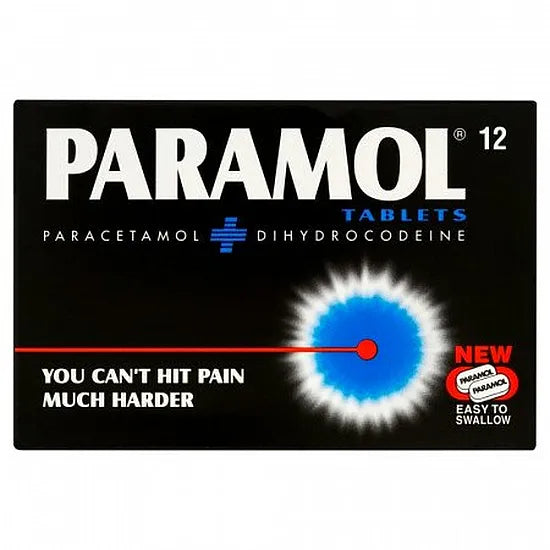
Paramol Tablets (12)
Paramol Tablets (12)
- ✔️ Relieves moderate pain including headaches, dental pain and migraines
- ✔️ Dual-action formula combines paracetamol with dihydrocodeine tartrate
- ✔️ Effective for period pain when standard paracetamol is insufficient
- ✔️ Reduces fever associated with colds, flu and infections
- ✔️ Convenient 12-tablet pack suitable for adults and over-12s
Price Checker
 Lowest price guarantee
 Includes FREE private prescription


Couldn't load pickup availability
What Are Paramol Tablets and How Do They Relieve Pain?
Paramol tablets are a dual-action over-the-counter analgesic containing two active ingredients: paracetamol 500 mg and dihydrocodeine tartrate 7.46 mg per tablet. This combination is designed to tackle moderate pain that hasn't responded adequately to paracetamol or ibuprofen alone. Whether you're dealing with a persistent headache, dental pain, muscular aches, or period pain, Paramol offers a step up in relief without requiring a prescription. You can browse our full range of pain relief products if you'd like to compare your options before deciding.
Each pack contains 12 tablets, making it a practical choice to keep at home for those occasions when everyday pain becomes harder to manage. At £8.79, it's an accessible option for adults and young people aged 12 and over who need something a little stronger than standard paracetamol.
How Do Paramol Tablets Work to Reduce Pain?
The two active ingredients in Paramol work through different but complementary mechanisms, which is why the combination tends to be more effective than either ingredient used alone.
- Paracetamol works centrally in the brain to inhibit the production of prostaglandins — chemical messengers that sensitise nerve endings to pain. It also helps to reduce fever by acting on the hypothalamus, the brain's temperature-regulating centre.
- Dihydrocodeine tartrate is a mild opioid analgesic. It binds to opioid receptors in the central nervous system, reducing the perception of pain and altering the emotional response to it.
- Together, these two mechanisms provide a broader and more sustained analgesic effect than paracetamol alone.
It's worth noting that dihydrocodeine is a prodrug that is partially metabolised in the liver. Individual responses can vary depending on your metabolism, which is why some people find it more effective than others.
Who Is Paramol Suitable For?
Paramol is suitable for adults and adolescents aged 12 years and over who are experiencing moderate pain that has not been adequately controlled by paracetamol or ibuprofen alone. It's particularly useful for:
- Headaches and migraines
- Dental pain
- Period pain (dysmenorrhoea)
- Muscular and rheumatic pain
- Fever associated with colds or flu
It is not suitable for children under 12, pregnant women (especially in the third trimester), or people with certain medical conditions such as respiratory depression or liver disease. If you're managing period pain alongside other symptoms, our women's health range includes additional products that may help.
How Do Paramol Tablets Compare to Standard Paracetamol?
| Feature | Paramol Tablets | Standard Paracetamol 500 mg |
|---|---|---|
| Active ingredients | Paracetamol 500 mg + Dihydrocodeine 7.46 mg | Paracetamol 500 mg only |
| Pain level targeted | Moderate pain | Mild to moderate pain |
| Suitable age | 12 years and over | Varies by product (some from 6 years) |
| Risk of dependence | Yes (dihydrocodeine component) | No |
How Should You Store Paramol Tablets?
Store Paramol tablets below 25°C in a dry place, away from direct sunlight. Keep them out of the reach and sight of children at all times. Do not use the tablets after the expiry date printed on the packaging — if in doubt, return them to your local pharmacy for safe disposal.
This product is a medicine. Speak to your doctor or pharmacist before using if you have an underlying medical condition or are taking other medicines.
Paramol Tablets (12) specifications
| Treatment category | Analgesic / Antipyretic |
| Mechanism of action | Prostaglandin synthesis inhibition (paracetamol) + opioid receptor agonism (dihydrocodeine) |
| Effective for | Moderate pain, headache, migraine, dental pain, period pain, fever |
| Suitable for | Adults and adolescents aged 12 years and over |
| Active ingredient | Paracetamol 500 mg, Dihydrocodeine tartrate 7.46 mg |
| Pack size | 12 tablets |
| UK classification | Pharmacy (P) medicine |
| Drug class | Opioid analgesic combination |
| Preparation | Tablet |
| Route of administration | Oral |
Specifications of Paramol Tablets (12)
What Is Paramol and What Is It Used For?
Paramol tablets are an over-the-counter combination analgesic used to relieve moderate pain and reduce fever. Each tablet contains paracetamol 500 mg and dihydrocodeine tartrate 7.46 mg. They are indicated for the short-term relief of pain including headache, migraine, toothache, period pain, muscular pain, and rheumatic pain, as well as fever. Paramol is classified as a Pharmacy (P) medicine in the UK, meaning it is available without a prescription but must be sold under the supervision of a pharmacist.
What Do You Need to Know Before Using Paramol?
Before taking Paramol, it's important to check whether it is appropriate for you. Do not take Paramol if any of the following apply:
- You are allergic to paracetamol, dihydrocodeine, or any other ingredient in the tablets
- You have severe liver or kidney disease
- You have respiratory depression or obstructive airways disease
- You are under 12 years of age
- You are pregnant, particularly in the third trimester
- You are breastfeeding
- You have a known history of opioid dependence
- You are a known "ultra-rapid metaboliser" of CYP2D6 (a genetic variation affecting dihydrocodeine metabolism)
The following medicines may interact with Paramol. Always tell your pharmacist or doctor about everything you are taking:
- Monoamine oxidase inhibitors (MAOIs) — do not take within 14 days of stopping an MAOI
- Other opioid analgesics or sedatives — increased risk of CNS depression
- Other paracetamol-containing products — risk of paracetamol overdose
- Warfarin and other anticoagulants — regular use of paracetamol may enhance anticoagulant effect
- Metoclopramide or domperidone — may increase the rate of paracetamol absorption
How Should You Use Paramol Tablets?
Always take Paramol exactly as directed on the label or as advised by your pharmacist. Swallow the tablets whole with a glass of water. Do not crush or chew them.
- Check the pack to confirm you are not allergic to any ingredients.
- Take two tablets with a full glass of water.
- Allow at least four hours before taking your next dose.
- Do not take more than eight tablets in any 24-hour period.
- Do not use for more than three days without seeking medical advice.
- Do not take alongside any other paracetamol-containing product.
| Indication | Age Group | Dose | Frequency |
|---|---|---|---|
| Moderate pain / Fever | Adults and adolescents 12+ | 2 tablets | Every 4–6 hours (max 8 tablets/24 hrs) |
| Children under 12 | Under 12 years | Not suitable — do not use | |
What Are the Possible Side Effects of Paramol?
Like all medicines, Paramol can cause side effects, although not everyone experiences them. If you're managing ongoing discomfort alongside other conditions, it may be worth exploring our IBS and cramps range for complementary options.
Common side effects (may affect up to 1 in 10 people):
- Nausea
- Constipation
- Dizziness or light-headedness
- Drowsiness
Less common side effects (may affect up to 1 in 100 people):
- Vomiting
- Headache
- Skin rash or itching
- Dry mouth
- Sweating
- Mood changes
Serious side effects are rare but can include severe allergic reactions (anaphylaxis), liver damage (with overdose), and respiratory depression. Stop taking Paramol and seek immediate medical attention if you develop difficulty breathing, swelling of the face or throat, or signs of a severe skin reaction.
Do not drive or operate machinery if Paramol makes you feel drowsy. Alcohol should be avoided while taking this medicine, as it increases the risk of side effects including liver damage and excessive sedation.
How Should You Store Paramol Tablets?
- Store below 25°C in a dry place away from direct heat and sunlight
- Keep out of the reach and sight of children
- Do not use after the expiry date printed on the packaging
- Do not store in a bathroom or near a sink — moisture can degrade the tablets
- Return unused or expired tablets to your local pharmacy for safe disposal — do not put them in household waste or flush them down the toilet
If you have any further questions about taking Paramol safely, speak to your pharmacist. You can also find additional support through our cold and flu range if your pain is associated with a viral illness.
References
Written and reviewed by our qualified team
Your safety and success are our highest priorities. Our medical team rigorously evaluates every product and piece of advice we provide, ensuring you receive only the most effective, science-backed solutions available.
Frequently Asked Questions
Where can I buy Paramol tablets online in the UK?
You can buy Paramol Tablets (12) directly from Cured Pharmacy, a GPhC-registered UK online pharmacy, for £8.79. They are available as a Pharmacy (P) medicine, meaning no prescription is needed but they are sold under pharmacist supervision. Simply add them to your basket and complete a short health questionnaire at checkout.
How do Paramol tablets work in the body?
Paramol tablets contain two active ingredients that work together. Paracetamol reduces pain and fever by inhibiting prostaglandin synthesis in the brain, while dihydrocodeine tartrate — a mild opioid — binds to opioid receptors in the central nervous system to reduce the perception of pain. The combination provides broader relief than either ingredient alone, making it suitable for moderate pain that hasn't responded to standard paracetamol.
How do I take Paramol tablets step by step?
Take two Paramol tablets with a full glass of water. Wait at least four hours before taking your next dose, and never exceed eight tablets in any 24-hour period. Do not take them alongside any other paracetamol-containing product, and avoid alcohol while using this medicine.
What is the correct dose of Paramol tablets for adults?
The recommended adult dose is two tablets every four to six hours as needed for pain relief. The maximum dose is eight tablets in 24 hours. Paramol should not be used for more than three consecutive days without medical advice, due to the risk of dependence associated with the dihydrocodeine component.
Can I take Paramol tablets for period pain?
Yes, Paramol is indicated for period pain (dysmenorrhoea) and can be particularly helpful when standard paracetamol or ibuprofen hasn't provided enough relief. The dual-action formula targets both the pain signal and the body's response to it. If you experience severe or recurring period pain, it's worth speaking to your GP, and you may also find useful products in our women's health range.
What are the side effects of Paramol tablets and how do I manage them?
The most common side effects include nausea, constipation, dizziness, and drowsiness. Taking Paramol with food can help reduce nausea, and staying well hydrated supports bowel regularity. If drowsiness occurs, avoid driving or operating machinery. Stop taking the tablets and seek medical advice if you experience any serious or unexpected symptoms.
Who is eligible to take Paramol tablets?
Paramol is suitable for adults and adolescents aged 12 years and over who have moderate pain not adequately controlled by standard paracetamol or ibuprofen. It is not suitable for children under 12, pregnant or breastfeeding women, people with liver or kidney disease, or those with a history of opioid dependence. Always complete the pharmacy health check before purchasing.
What happens if I miss a dose of Paramol?
If you miss a dose, simply take it as soon as you remember — provided at least four hours have passed since your last dose. Never double up to make up for a missed dose. Paramol is taken as needed for pain rather than on a strict schedule, so missing a dose is generally not a concern as long as you stay within the maximum daily limit.
Can I take Paramol tablets with other medicines?
Do not take Paramol with other paracetamol-containing products, as this significantly increases the risk of paracetamol overdose and liver damage. Avoid combining it with MAOIs, other opioids, sedatives, or alcohol. If you are taking warfarin or other anticoagulants, speak to your pharmacist before use, as regular paracetamol use can affect how these medicines work.
How long can you take Paramol tablets for?
Paramol should only be used for short-term pain relief — no more than three consecutive days without seeking medical advice. Prolonged use of dihydrocodeine carries a real risk of physical dependence and tolerance. If your pain persists beyond three days, consult your GP to identify the underlying cause and explore appropriate longer-term management.
Are Paramol tablets safe to take during pregnancy?
Paramol tablets are not recommended during pregnancy, particularly in the third trimester. The dihydrocodeine component can cause neonatal withdrawal symptoms and respiratory depression in newborns if used close to delivery. If you need pain relief during pregnancy, speak to your GP or midwife who can advise on the safest option for you and your baby.
Can I drink alcohol while taking Paramol tablets?
No — you should avoid alcohol while taking Paramol. Alcohol combined with paracetamol increases the risk of liver damage, and combining alcohol with dihydrocodeine enhances sedation and the risk of respiratory depression. Even small amounts of alcohol can amplify these effects, so it's safest to abstain completely during treatment.
What are the alternatives to Paramol tablets?
Alternatives for moderate pain include ibuprofen, co-codamol (paracetamol with codeine), or naproxen, depending on the type and cause of your pain. For milder pain, standard paracetamol or aspirin may be sufficient. You can explore a wide selection of options in our pain relief collection to find the most appropriate product for your needs.
Can Paramol tablets cause dependence or addiction?
Yes — the dihydrocodeine in Paramol carries a risk of dependence, particularly with prolonged or excessive use. This is why it is recommended only for short-term use of up to three days. If you find yourself needing to take Paramol regularly or in increasing amounts, speak to your GP as soon as possible for further assessment and support.
What is the latest guidance on using opioid-containing OTC medicines like Paramol?
The MHRA and NHS have both highlighted concerns about the misuse and dependence potential of over-the-counter opioid-containing medicines, including those with dihydrocodeine. Current guidance recommends limiting use to the shortest possible duration and the lowest effective dose. Pharmacists are required to counsel patients on the risks of dependence when supplying these products, and sales are monitored to prevent misuse.
Written and reviewed by our qualified team

Reviewed by:
Tarun Kumar
Superintendent/ Clinical Lead
📖 Find out more about our team of medical content authors and how we ensure the accuracy of our content with our content guidelines.
Content last updated: 14 Sep 2026
Other popular options


We’re a safe and
regulated UK service

Lowest Price Guarantee

We're convinced you won't find your treatment cheaper, but if you do we'll refund the difference.
Find out more
100% discreet packaging

Discreet, unbranded packaging for every order.
Find out more

Need help?
Talk to our friendly experts now


How our service works

Service setup

Discreet packaging

Express delivery