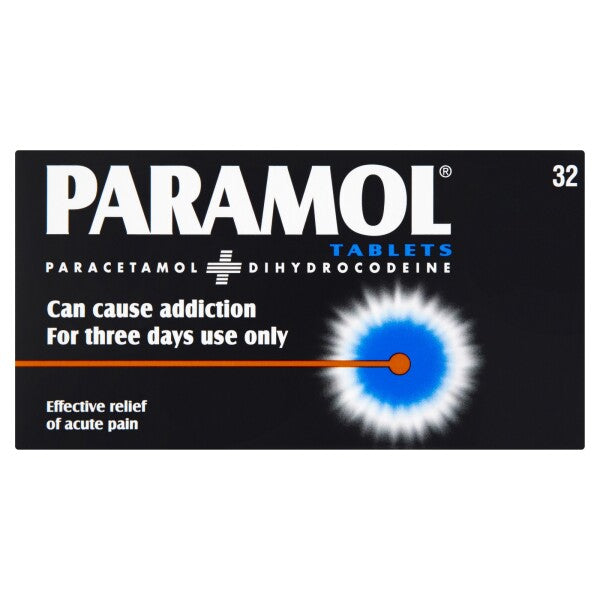
Paramol - 32 Tablets
Paramol - 32 Tablets
- ✔️ Combines paracetamol and dihydrocodeine for stronger pain relief
- ✔️ Effective for headache, migraine, toothache, and period pain
- ✔️ Starts working within 30 to 60 minutes of taking
- ✔️ Suitable for adults and young people aged 12 and over
- ✔️ Convenient 32-tablet pack for ongoing pain management at home
Price Checker
 Lowest price guarantee
 Includes FREE private prescription


Couldn't load pickup availability
What Are Paramol Tablets and How Do They Relieve Pain?
Paramol tablets are a dual-action, over-the-counter analgesic containing two active ingredients: paracetamol 500 mg and dihydrocodeine tartrate 7.46 mg per tablet. This combination makes them suitable for mild to moderate pain that hasn't responded adequately to paracetamol or ibuprofen alone. Whether you're dealing with a persistent headache, a migraine, dental pain, or general muscular discomfort, Paramol offers a step up in relief without requiring a prescription. You can explore the full range of options in our pain relief collection if you're comparing products.
Each pack contains 32 tablets, making it a practical choice to keep at home for those occasions when everyday pain becomes harder to manage. Because Paramol contains dihydrocodeine — a mild opioid — it is only available through pharmacies and requires a short suitability check before purchase. This is a standard safety measure, not something to be alarmed by.
How Does Paramol Work to Relieve Pain and Fever?
The two ingredients in Paramol work through different but complementary mechanisms, which is why the combination tends to be more effective than either ingredient on its own.
- Paracetamol works centrally in the brain to inhibit the production of prostaglandins — chemical messengers that signal pain and raise body temperature. This is why it's effective for both pain relief and reducing fever.
- Dihydrocodeine is a mild opioid analgesic. It binds to opioid receptors in the central nervous system, reducing the perception of pain signals travelling to the brain.
- Together, these two mechanisms provide a synergistic effect — meaning the combined relief is greater than you'd get from either ingredient used separately.
- Onset of action is typically within 30 to 60 minutes of taking the tablets orally.
Who Is Paramol Suitable For?
Paramol is intended for adults and young people aged 12 and over who are experiencing mild to moderate pain. It's particularly useful when standard single-ingredient painkillers haven't provided enough relief. That said, it's not appropriate for everyone — and it's important to check suitability before use.
Paramol may be suitable if you:
- Are aged 12 or over (adults and adolescents)
- Have mild to moderate pain such as headache, migraine, toothache, or period pain
- Have a fever that needs managing alongside pain
- Have not found adequate relief from paracetamol or ibuprofen alone
How Does Paramol Compare to Standard Paracetamol Tablets?
| Feature | Paramol Tablets | Standard Paracetamol 500 mg |
|---|---|---|
| Active ingredients | Paracetamol 500 mg + Dihydrocodeine 7.46 mg | Paracetamol 500 mg only |
| Pain level addressed | Mild to moderate pain | Mild pain |
| Dependence risk | Yes (opioid component) | No |
| Pharmacy-only sale | Yes | No (general sale) |
How Should You Store Paramol Tablets and Who Should Avoid Them?
Store Paramol below 25°C in a dry place, away from direct sunlight. Keep the tablets in their original packaging and out of reach of children at all times. Do not use after the expiry date printed on the pack.
Paramol tablets are not suitable for people with severe liver or kidney impairment, respiratory depression, or those taking monoamine oxidase inhibitors (MAOIs). If you are pregnant, breastfeeding, or managing a long-term health condition, always speak to your pharmacist or GP before starting any new medicine. You might also find it helpful to browse our cold and flu collection if fever management is your primary concern alongside pain.
This product is a medicine. Speak to your doctor or pharmacist before using if you have an underlying medical condition or are taking other medicines.
Paramol 32 Tablets specifications
| Treatment category | Pain relief, fever management |
| Active ingredient | Paracetamol 500 mg, Dihydrocodeine tartrate 7.46 mg |
| Mechanism of action | Prostaglandin inhibition (paracetamol); opioid receptor agonism (dihydrocodeine) |
| Effective for | Headache, migraine, toothache, period pain, fever, general pain |
| Suitable for | Adults and young people aged 12 and over |
| Pack size | 32 tablets |
| UK classification | Pharmacy (P) medicine |
| Drug class | Analgesic combination (opioid + non-opioid) |
| Preparation | Film-coated tablet |
| Route of administration | Oral |
Specifications of Paramol 32 Tablets
What Is Paramol and What Is It Used For?
Paramol is a combination analgesic tablet used to relieve mild to moderate pain and to reduce fever. It contains two active ingredients — paracetamol 500 mg and dihydrocodeine tartrate 7.46 mg — which work together to provide more effective pain relief than paracetamol alone. It is indicated for conditions including headache, migraine, dental pain, period pain, rheumatic pain, and muscular aches. It can also help manage the discomfort associated with colds and flu, including fever.
What Do You Need to Know Before Using Paramol?
Before taking Paramol, it's important to check whether it is appropriate for you. Do not take Paramol if any of the following apply:
- You are allergic to paracetamol, dihydrocodeine, or any other ingredient in the tablet
- You have severe liver disease or severe kidney disease
- You have a condition causing breathing difficulties (respiratory depression)
- You are currently taking or have taken monoamine oxidase inhibitors (MAOIs) within the last 14 days
- You are under 12 years of age
- You have a head injury or raised intracranial pressure
- You have a known opioid dependency
Speak to your pharmacist or GP before taking Paramol if you are pregnant, breastfeeding, have liver or kidney problems, suffer from asthma, or have a history of substance misuse. Paramol contains an opioid — taking it regularly, even at the recommended dose, can lead to physical dependence. Use it only for short-term pain relief.
Known drug interactions — do not take Paramol alongside:
- Other medicines containing paracetamol (risk of overdose)
- Other opioid analgesics or sedatives (increased CNS depression)
- Alcohol (enhanced sedative effect)
- MAOIs (risk of serious adverse reactions)
- Anticoagulants such as warfarin (paracetamol may enhance anticoagulant effect with regular use)
- Metoclopramide or domperidone (may alter paracetamol absorption)
How Should You Use Paramol Correctly?
- Read the patient information leaflet inside the pack before taking Paramol.
- Swallow the tablets whole with a full glass of water.
- Do not crush or chew the tablets.
- Take the lowest effective dose for the shortest time necessary.
- Leave at least 4 hours between doses.
- Do not take more than 8 tablets in any 24-hour period.
- Do not take for more than 3 days without speaking to a doctor.
| Age Group | Dose | Frequency | Maximum in 24 hours |
|---|---|---|---|
| Adults and young people aged 16+ | 2 tablets | Every 4–6 hours | 8 tablets |
| Young people aged 12–15 | 1–2 tablets | Every 6 hours | 4 tablets |
| Children under 12 | Not suitable — do not use | ||
If you are managing pain alongside other symptoms such as digestive discomfort, you may find our IBS and cramps collection helpful for additional support.
What Are the Possible Side Effects of Paramol?
Like all medicines, Paramol can cause side effects, although not everyone experiences them. The dihydrocodeine component is responsible for most of the opioid-related effects listed below.
Common side effects:
- Nausea
- Constipation
- Dizziness or light-headedness
- Drowsiness or sedation
- Headache (particularly with prolonged use — medication overuse headache)
Less common side effects:
- Vomiting
- Dry mouth
- Sweating
- Skin rash or itching
- Difficulty urinating
- Mood changes
Stop taking Paramol and seek immediate medical attention if you develop signs of a serious allergic reaction, such as swelling of the face, lips, or throat, difficulty breathing, or a severe skin reaction. Liver damage is possible in overdose — never exceed the stated dose, and avoid alcohol while taking this medicine.
How Should You Store Paramol Safely?
- Store below 25°C in a dry place away from direct heat and sunlight
- Keep in the original blister packaging until use
- Keep out of sight and reach of children
- Do not use after the expiry date printed on the pack
- Do not dispose of medicines via wastewater or household waste — return unused tablets to your pharmacy
If you're looking for additional health products to support your wellbeing, take a look at our vitamins and supplements collection for immune and general health support.
References
Written and reviewed by our qualified team
Your safety and success are our highest priorities. Our medical team rigorously evaluates every product and piece of advice we provide, ensuring you receive only the most effective, science-backed solutions available.
Frequently Asked Questions
Where can I buy Paramol tablets online in the UK?
You can buy Paramol 32 Tablets online from Cured Pharmacy, a GPhC-registered UK online pharmacy. Because Paramol contains dihydrocodeine, a short eligibility check is required before your order is dispatched. This ensures the product is appropriate and safe for you to use. Visit our pain relief collection to browse and order.
How do Paramol tablets work in the body?
Paramol contains paracetamol, which reduces pain and fever by inhibiting prostaglandin synthesis in the brain, and dihydrocodeine, a mild opioid that binds to receptors in the central nervous system to reduce pain perception. The two ingredients complement each other, providing stronger relief than either would alone. Onset of action is typically within 30 to 60 minutes of taking the tablets.
What is the correct dose of Paramol for adults?
Adults aged 16 and over should take 2 tablets every 4 to 6 hours as needed, with a maximum of 8 tablets in any 24-hour period. Young people aged 12 to 15 should take 1 to 2 tablets every 6 hours, with a maximum of 4 tablets in 24 hours. Always leave at least 4 hours between doses and do not exceed the stated maximum.
Can I take Paramol for a migraine?
Yes, Paramol is indicated for migraine relief and can be effective when taken at the first sign of an attack. However, using any painkiller more than 10 to 15 days per month can cause medication overuse headache, which makes migraines worse over time. If your migraines are frequent, speak to your GP about longer-term management options.
What are the side effects of Paramol tablets?
Common side effects include nausea, constipation, dizziness, and drowsiness — most of which are related to the dihydrocodeine component. Less commonly, you may experience vomiting, dry mouth, sweating, or skin itching. If you develop signs of a serious allergic reaction such as facial swelling or difficulty breathing, stop taking Paramol immediately and seek urgent medical help.
Who should not take Paramol tablets?
Paramol is not suitable for children under 12, people with severe liver or kidney disease, those with respiratory depression, or anyone taking MAOIs. It should also be avoided by people with a known opioid dependency or a history of substance misuse. Pregnant or breastfeeding women should consult a doctor or pharmacist before use.
Can Paramol cause dependence or addiction?
Yes — Paramol contains dihydrocodeine, which is an opioid, and regular use can lead to physical dependence even at the recommended dose. This is why Paramol should only be used for short-term pain relief, ideally no longer than 3 days without medical advice. If you find you need it regularly, speak to your GP about alternative pain management strategies.
How does Paramol compare to standard paracetamol?
Standard paracetamol contains only one active ingredient and is suitable for mild pain, whereas Paramol combines paracetamol with dihydrocodeine for moderate pain that hasn't responded to paracetamol alone. The trade-off is that Paramol carries a risk of opioid-related side effects and dependence that standard paracetamol does not. For mild pain, standard paracetamol is usually the first choice.
What happens if I take too many Paramol tablets?
Taking too many Paramol tablets is a medical emergency. Paracetamol overdose can cause serious liver damage, which may not be immediately apparent — symptoms can be delayed by up to 24 hours. If you or someone else has taken too many tablets, call 999 or go to your nearest A&E immediately, even if you feel well.
Can I drink alcohol while taking Paramol?
No — you should avoid alcohol while taking Paramol. Alcohol increases the sedative effects of dihydrocodeine, which can cause excessive drowsiness and impair your ability to drive or operate machinery. Alcohol can also increase the risk of liver damage associated with paracetamol, particularly if you drink regularly or in large amounts.
Can I take Paramol if I am pregnant or breastfeeding?
Paramol is not recommended during pregnancy or breastfeeding without medical advice. Dihydrocodeine can pass into breast milk and may cause breathing difficulties in a newborn. If you need pain relief during pregnancy, speak to your midwife or GP — paracetamol alone is generally considered the safest option for short-term use.
What is the best time to take Paramol for pain relief?
Take Paramol as soon as pain begins, rather than waiting for it to become severe — this tends to give better results. For migraine specifically, taking it at the very first sign of an attack is most effective. Always ensure you have eaten something beforehand if you are prone to nausea, as taking it on an empty stomach can worsen this side effect.
How long can I use Paramol for?
Paramol should not be used for more than 3 consecutive days without speaking to a doctor or pharmacist. Prolonged use increases the risk of physical dependence on the dihydrocodeine component and can also lead to medication overuse headache. If your pain persists beyond 3 days, seek medical advice to identify and treat the underlying cause.
What are the alternatives to Paramol for pain relief?
Alternatives include standard paracetamol for mild pain, ibuprofen for inflammatory pain, or co-codamol (which contains a higher dose of codeine) for more significant pain under medical supervision. The right choice depends on the type and severity of your pain, as well as any other medicines you are taking. Browse our first aid collection for a wider range of pain management options.
What are the latest findings on dihydrocodeine-paracetamol combinations?
Clinical evidence continues to support the use of paracetamol-opioid combinations for moderate pain where single-ingredient analgesics are insufficient, though guidelines increasingly emphasise using the lowest effective dose for the shortest duration to minimise dependence risk. The NHS and MHRA both advise caution with opioid-containing OTC products and recommend pharmacist oversight at point of sale. Always follow current guidance from your pharmacist or GP when using combination analgesics.
Written and reviewed by our qualified team

Reviewed by:
Tarun Kumar
Superintendent/ Clinical Lead
📖 Find out more about our team of medical content authors and how we ensure the accuracy of our content with our content guidelines.
Content last updated: 14 Sep 2026
Other popular options


We’re a safe and
regulated UK service

Lowest Price Guarantee

We're convinced you won't find your treatment cheaper, but if you do we'll refund the difference.
Find out more
100% discreet packaging

Discreet, unbranded packaging for every order.
Find out more

Need help?
Talk to our friendly experts now


How our service works

Service setup

Discreet packaging

Express delivery