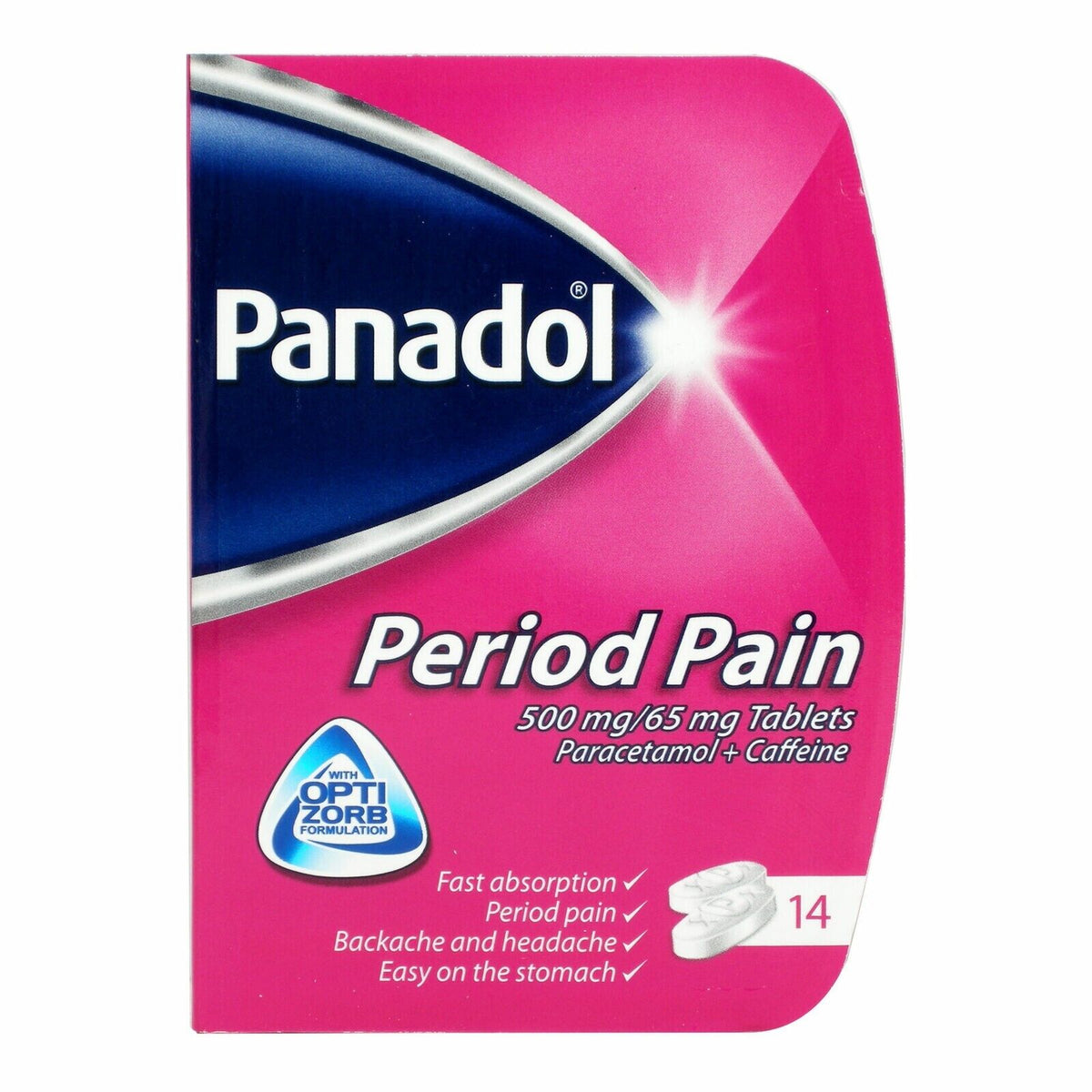
Panadol Period Pain
Panadol Period Pain
- ✔️ Relieves menstrual cramps and lower abdominal period pain
- ✔️ Contains 500mg paracetamol, NHS-recommended for period pain
- ✔️ Gentle on the stomach — suitable for those who cannot take ibuprofen
- ✔️ Works within 30 to 60 minutes of taking a dose
- ✔️ Suitable for adults and young people aged 16 and over
Price Checker
 Lowest price guarantee
 Includes FREE private prescription


Couldn't load pickup availability
What Is Panadol Period Pain and Does It Work?
Period pain affects a huge number of people who menstruate. In fact, it is one of the most common reasons women reach for an over-the-counter painkiller each month. Panadol period pain is a trusted, clinically established option that contains 500mg of paracetamol per tablet — the same active ingredient recommended by the NHS for mild to moderate pain relief. It is specifically marketed for menstrual discomfort, making it easy to identify on the shelf when you need it most. You can find it alongside other options in our pain relief collection.
Each pack contains tablets designed for short-term use during your period. The product is available over the counter without a prescription, which means you can order it quickly and conveniently. At just £2.99, it is an accessible choice for managing monthly discomfort without breaking the bank.
How Does Panadol Period Pain Work to Relieve Cramps?
Paracetamol, the active ingredient in this product, works centrally — meaning it acts on the brain and nervous system rather than at the site of inflammation. Here is a simple breakdown of the mechanism:
- Paracetamol inhibits the synthesis of prostaglandins in the central nervous system, reducing the pain signals sent to the brain.
- It raises the pain threshold, so the cramping sensation feels less intense.
- It also has a mild antipyretic (fever-reducing) effect, which can help if your period is accompanied by a temperature or general malaise.
- Unlike ibuprofen, it does not work as an anti-inflammatory at standard doses, but it is gentler on the stomach for many people.
The result? Noticeable relief from menstrual cramps, lower abdominal pain, and associated headaches — typically within 30 to 60 minutes of taking a dose.
Who Should Use Panadol Period Pain Tablets?
This product is suitable for adults and young people aged 16 and over who experience regular menstrual pain. It is particularly useful if you:
- Experience mild to moderate period cramps each cycle
- Cannot tolerate ibuprofen or anti-inflammatory medicines due to stomach sensitivity
- Are looking for a well-recognised, branded paracetamol option
- Need fast-acting relief without a prescription
It is not suitable for children under 16 for this indication. If your period pain is severe, persistent, or getting worse over time, speak to your GP — it could indicate an underlying condition such as endometriosis or fibroids. For broader women's health support, browse our women's health collection.
How Does Panadol Period Pain Compare to Ibuprofen-Based Alternatives?
| Feature | Panadol Period Pain (Paracetamol) | Nurofen Period Pain (Ibuprofen) |
|---|---|---|
| Active ingredient | Paracetamol 500mg | Ibuprofen 200mg |
| Anti-inflammatory action | No | Yes |
| Suitable for sensitive stomachs | Generally yes | Take with food; may irritate stomach |
| Suitable during pregnancy | Paracetamol preferred (seek advice) | Avoid from 20 weeks onwards |
Is Panadol Period Pain Safe to Store and Use Long-Term?
Panadol period pain tablets should be stored below 25°C in a dry place, away from direct sunlight and out of reach of children. Always check the expiry date before use — expired paracetamol should be returned to a pharmacy for safe disposal, not thrown in household waste.
This product is intended for short-term use during menstruation. It is not designed for daily, long-term use. If you find yourself needing pain relief for more than three consecutive days, or if your symptoms are worsening, consult your GP or pharmacist. Overuse of paracetamol — even at recommended doses taken too frequently — can lead to medication-overuse headache and, in overdose situations, serious liver damage.
This product is a medicine. Speak to your doctor or pharmacist before using if you have an underlying medical condition or are taking other medicines.
Panadol Period Pain specifications
| Treatment category | Period pain / Menstrual pain relief |
| Mechanism of action | Central inhibition of prostaglandin synthesis; raises pain threshold |
| Effective for | Menstrual cramps, lower abdominal pain, period-associated headache |
| Suitable for | Adults and young people aged 16 and over |
| Active ingredient | Paracetamol 500mg per tablet |
| Pack sizes | 12 tablets |
| Strengths | 500mg paracetamol |
| UK classification | General Sale List (GSL) |
| Drug class | Analgesic / Antipyretic |
| Preparation | Film-coated tablet |
| Route of administration | Oral |
Specifications of Panadol Period Pain
What Is Panadol Period Pain and What Is It Used For?
Panadol Period Pain is an over-the-counter analgesic tablet containing paracetamol 500mg as its active ingredient. It is indicated for the relief of menstrual pain (dysmenorrhoea), including lower abdominal cramps, back pain associated with menstruation, and period-related headaches. The NHS recommends paracetamol as a first-line option for mild to moderate pain, making this a well-supported choice for monthly discomfort. It is classified as a General Sale List (GSL) medicine in the UK, meaning it can be purchased without a prescription.
What Do You Need to Know Before Using Panadol Period Pain?
Before taking this medicine, read the following carefully. There are situations where paracetamol may not be appropriate, and it is important to be aware of them.
Do not take Panadol Period Pain if you:
- Are allergic to paracetamol or any other ingredient in the tablet
- Already take other medicines containing paracetamol (including cold and flu remedies)
- Have severe liver disease or severe kidney impairment
- Are under 16 years of age for this specific indication
Speak to your pharmacist or GP before use if you:
- Have liver or kidney problems (even mild ones)
- Regularly drink alcohol — paracetamol and alcohol together increase liver risk
- Are pregnant or breastfeeding — paracetamol is generally considered safe in pregnancy at the lowest effective dose, but always seek advice first
- Have phenylketonuria or glucose-6-phosphate dehydrogenase deficiency
Known drug interactions:
- Warfarin — regular use of paracetamol may enhance the anticoagulant effect; monitor INR closely
- Other paracetamol-containing products — taking these together risks accidental overdose
- Metoclopramide and domperidone — may increase the rate of paracetamol absorption
- Cholestyramine — may reduce paracetamol absorption if taken simultaneously
How Should You Use Panadol Period Pain Correctly?
Always follow the dosage instructions on the pack or as directed by your pharmacist. Do not exceed the stated dose. If you are unsure, ask your pharmacist before taking.
- Take 2 tablets with a full glass of water.
- Swallow the tablets whole — do not crush or chew them.
- Wait at least 4 hours before taking your next dose.
- Do not take more than 4 doses (8 tablets) in any 24-hour period.
- Do not take for more than 3 days without speaking to a doctor or pharmacist.
| Indication | Age Group | Dose | Frequency |
|---|---|---|---|
| Menstrual pain | Adults and young people 16+ | 2 tablets (1000mg) | Every 4–6 hours; max 8 tablets/24 hrs |
| Menstrual pain | Under 16 | Not recommended for this product | — |
If you are also managing other symptoms such as bloating or cramping unrelated to your period, you may find our IBS and cramps collection helpful for additional support options.
What Are the Possible Side Effects of Panadol Period Pain?
Paracetamol is generally well tolerated at recommended doses. However, side effects can still occur. Stop taking the tablets and seek medical advice if you notice anything unusual.
Common side effects (may affect up to 1 in 10 people):
- Nausea
- Feeling generally unwell
Less common or rare side effects:
- Skin rash or itching
- Allergic reactions including swelling of the face, lips, or throat (seek emergency help immediately)
- Blood disorders (very rare — such as thrombocytopenia or agranulocytosis)
- Liver damage — this is a serious risk if the recommended dose is exceeded, even slightly
If you accidentally take too much paracetamol, go to your nearest A&E immediately, even if you feel well. Overdose symptoms may not appear for 24 hours but liver damage can still occur.
How Should You Store Panadol Period Pain Safely?
Correct storage helps maintain the effectiveness and safety of the tablets. For other health products that also require careful storage, explore our vitamins and supplements collection for guidance on keeping medicines in good condition.
- Store below 25°C in a dry place
- Keep away from direct sunlight and moisture
- Keep out of the sight and reach of children
- Do not use after the expiry date printed on the pack
- Do not dispose of medicines via household waste — return unused tablets to your pharmacy
References
- https://www.nhs.uk/medicines/paracetamol-for-adults/
- https://www.nhs.uk/conditions/period-pain/
- https://www.nhs.uk/medicines/paracetamol-for-adults/side-effects-of-paracetamol/
- https://www.nhs.uk/medicines/paracetamol-for-adults/who-can-and-cannot-take-paracetamol/
- https://www.nhs.uk/medicines/paracetamol-for-adults/taking-paracetamol-with-other-medicines-and-herbal-supplements/
- https://bnf.nice.org.uk/drugs/paracetamol/
Written and reviewed by our qualified team
Your safety and success are our highest priorities. Our medical team rigorously evaluates every product and piece of advice we provide, ensuring you receive only the most effective, science-backed solutions available.
Frequently Asked Questions
Where can I buy Panadol Period Pain online in the UK?
You can buy Panadol Period Pain online from Cured Pharmacy, a GPhC-registered UK online pharmacy. It is available without a prescription as a General Sale List medicine. Simply add it to your basket and it will be dispatched directly to your door.
How does Panadol Period Pain work in the body?
Panadol Period Pain contains paracetamol 500mg, which works by inhibiting prostaglandin synthesis in the central nervous system, raising your pain threshold. It does not reduce inflammation at the site of cramping, but it is effective at reducing the perception of menstrual pain. Most people notice relief within 30 to 60 minutes of taking a dose.
How do I use Panadol Period Pain step by step?
Take 2 tablets with a full glass of water, swallowing them whole. Wait at least 4 hours before taking your next dose, and do not exceed 8 tablets in any 24-hour period. If your pain is not controlled after 3 days, speak to your pharmacist or GP.
What is the correct dose of Panadol Period Pain for adults?
The recommended adult dose is 2 tablets (1000mg paracetamol) every 4 to 6 hours as needed. You must not take more than 4 doses — that is 8 tablets — in any 24-hour period. Always leave at least 4 hours between doses to avoid accidental overdose.
What is the best time to take Panadol Period Pain?
For best results, take Panadol Period Pain at the first sign of menstrual pain rather than waiting until the pain becomes severe. Taking it early in the pain cycle means you are less likely to need higher or more frequent doses. Some people find taking it with a light snack helps reduce any mild stomach discomfort.
What are the side effects of Panadol Period Pain and how do I manage them?
Side effects are uncommon at recommended doses but may include nausea, skin rash, or in rare cases allergic reactions. If you experience swelling of the face, lips, or throat, stop taking the tablets and seek emergency medical help immediately. Taking the tablets with a small amount of food can help if you feel nauseous.
Who should not take Panadol Period Pain?
Do not take this product if you are allergic to paracetamol, have severe liver or kidney disease, or are already taking other medicines containing paracetamol. It is not recommended for those under 16 years of age for this indication. Always check with your pharmacist if you are unsure whether it is suitable for you.
Can I take Panadol Period Pain if I am pregnant?
Paracetamol is generally considered the preferred painkiller during pregnancy when used at the lowest effective dose for the shortest time, but you should always seek advice from your GP or midwife before taking any medicine while pregnant. The NHS advises caution and recommends using paracetamol only when necessary during pregnancy. Do not self-medicate without professional guidance.
What happens if I miss a dose of Panadol Period Pain?
If you miss a dose, take it as soon as you remember — provided at least 4 hours have passed since your last dose. Never take a double dose to make up for a missed one, as this increases the risk of exceeding the safe daily limit. Simply continue with your normal dosing schedule.
Can I take Panadol Period Pain with other medicines?
You should not take Panadol Period Pain alongside any other product containing paracetamol, including cold and flu remedies, as this can lead to accidental overdose. If you take warfarin, regular paracetamol use may affect your INR, so speak to your GP. Always tell your pharmacist about all medicines you are currently taking before starting a new one.
How long can I take Panadol Period Pain for?
Panadol Period Pain is intended for short-term use only — typically no more than 3 consecutive days without medical advice. If your period pain persists beyond this or is getting worse each cycle, it is important to speak to your GP, as this could indicate an underlying condition such as endometriosis. Long-term daily use of paracetamol without medical supervision is not recommended.
What are alternatives to Panadol Period Pain?
Ibuprofen-based products such as Nurofen Period Pain are a common alternative and may be more effective for some people because ibuprofen also reduces inflammation. However, ibuprofen is not suitable for everyone — particularly those with stomach ulcers, asthma triggered by NSAIDs, or kidney problems. Browse our pain relief collection to compare available options.
Is Panadol Period Pain suitable for teenagers?
Panadol Period Pain is indicated for adults and young people aged 16 and over. For those under 16, a different paracetamol product with age-appropriate dosing should be used — speak to a pharmacist for guidance. Never give adult-dose paracetamol products to children without professional advice.
Does Panadol Period Pain help with back pain during a period?
Yes — paracetamol is effective for mild to moderate lower back pain associated with menstruation, not just abdominal cramps. The NHS lists back pain as one of the common symptoms of period pain that paracetamol can help manage. If your back pain is severe or radiating, speak to your GP to rule out other causes.
What are the latest recommendations on paracetamol for period pain?
The NHS continues to recommend paracetamol as a first-line option for mild to moderate period pain, particularly for those who cannot tolerate anti-inflammatory medicines. Some clinical guidance also suggests that NSAIDs like ibuprofen may provide slightly greater relief for dysmenorrhoea due to their anti-inflammatory action, but paracetamol remains a safe and well-tolerated choice. If you also experience symptoms like bloating or cramping outside of your period, our IBS and cramps collection may offer additional support.
Written and reviewed by our qualified team

Reviewed by:
Tarun Kumar
Superintendent/ Clinical Lead
📖 Find out more about our team of medical content authors and how we ensure the accuracy of our content with our content guidelines.
Content last updated: 14 Sep 2026
Other popular options


We’re a safe and
regulated UK service

Lowest Price Guarantee

We're convinced you won't find your treatment cheaper, but if you do we'll refund the difference.
Find out more
100% discreet packaging

Discreet, unbranded packaging for every order.
Find out more

Need help?
Talk to our friendly experts now


How our service works

Service setup

Discreet packaging

Express delivery