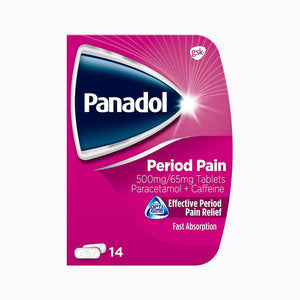
Panadol Period Pain - 14 Tablets
Panadol Period Pain - 14 Tablets
- ✔️ Relieves menstrual cramps, backache, and period headache
- ✔️ Contains paracetamol 500mg — clinically established analgesic
- ✔️ Starts working within 30 to 60 minutes of taking a dose
- ✔️ Suitable for adults and young people aged 16 and over
- ✔️ Gentle on the stomach — no anti-inflammatory irritation risk
Price Checker
 Lowest price guarantee
 Includes FREE private prescription


Couldn't load pickup availability
What Are Panadol Period Pain Tablets?
Period pain affects a huge number of people who menstruate — in fact, it is one of the most common reasons women visit their GP or reach for an over-the-counter remedy. Panadol period pain tablets are a trusted, clinically established option for managing the discomfort that comes with your monthly cycle. Each pack contains 14 film-coated tablets, making it a convenient size to keep in your bag or medicine cabinet. At just £3.19, it offers accessible relief without the need for a prescription. If you are looking for a broader range of options, our pain relief collection covers a wide variety of analgesics to suit different needs.
The active ingredient is paracetamol 500mg per tablet — a well-established analgesic that has been used safely for decades. It is specifically indicated for the relief of menstrual (period) pain, but it also helps with associated symptoms like headache, backache, and general aching that often accompany your period.
How Do Panadol Period Pain Tablets Work?
Paracetamol works primarily within the central nervous system. It inhibits the synthesis of prostaglandins — chemical messengers that sensitise pain receptors and contribute to the cramping sensation during menstruation. By reducing prostaglandin activity in the brain, paracetamol raises your pain threshold so that the discomfort feels less intense.
- Paracetamol is absorbed through the gastrointestinal tract after oral ingestion.
- It reaches peak plasma concentration within 30–60 minutes.
- It acts centrally to inhibit prostaglandin synthesis in the brain and spinal cord.
- It does not significantly inhibit peripheral prostaglandins, which is why it causes less stomach irritation than NSAIDs like ibuprofen.
This mechanism makes paracetamol particularly suitable for people who cannot tolerate anti-inflammatory medicines, such as those with a history of stomach ulcers or asthma triggered by NSAIDs.
Who Is Panadol Period Pain Suitable For?
These tablets are designed for adults and young people aged 16 and over who experience menstrual pain. They are also appropriate for anyone who needs short-term relief from mild to moderate pain, including headache and backache that often coincide with a period. That said, they are not suitable for everyone.
- Adults and young people aged 16 years and over.
- People who cannot take NSAIDs due to stomach sensitivity or asthma.
- Those seeking a non-drowsy, everyday analgesic for period-related discomfort.
- Individuals who need a paracetamol-based option without caffeine or codeine additives.
They are not suitable for children under 16, people with severe liver or kidney disease, or those who regularly consume large amounts of alcohol. Always read the label carefully before use.
How Do Panadol Period Pain Tablets Compare to Alternatives?
| Feature | Panadol Period Pain (Paracetamol 500mg) | Nurofen Period Pain (Ibuprofen 200mg) |
|---|---|---|
| Active ingredient | Paracetamol 500mg | Ibuprofen 200mg |
| Mechanism | Central prostaglandin inhibition | Peripheral + central NSAID action |
| Suitable for stomach sensitivity | Yes | Take with food; may irritate stomach |
| Suitable for asthma (NSAID-sensitive) | Generally yes | Caution — may trigger bronchospasm |
How Should You Store Panadol Period Pain Tablets?
Store your panadol period pain tablets below 25°C in a dry place, away from direct sunlight and moisture. Keep them in the original packaging so you can always check the expiry date and dosage instructions. As with all medicines, store them out of the sight and reach of children.
If you are managing other aspects of your health alongside period pain — such as digestive discomfort or bloating — you might also find our IBS and cramps collection useful for complementary products.
This product is a medicine. Speak to your doctor or pharmacist before using if you have an underlying medical condition or are taking other medicines.
Panadol Period Pain 14 Tablets specifications
| Treatment category | Period pain relief / Analgesic |
| Mechanism of action | Central prostaglandin synthesis inhibition |
| Effective for | Menstrual pain, headache, backache, mild to moderate pain |
| Suitable for | Adults and young people aged 16 and over |
| Active ingredient | Paracetamol 500mg per tablet |
| Pack size | 14 tablets |
| Strength | 500mg |
| UK classification | General Sale List (GSL) |
| Drug class | Analgesic / Antipyretic |
| Preparation | Film-coated tablet |
| Route of administration | Oral |
Specifications of Panadol Period Pain 14 Tablets
What Is Panadol Period Pain and What Is It Used For?
Panadol Period Pain 14 Tablets are an over-the-counter analgesic containing paracetamol 500mg per tablet. They are indicated for the relief of menstrual (period) pain — medically known as dysmenorrhoea — as well as associated symptoms including headache, backache, and general bodily aching that can accompany menstruation. Paracetamol is one of the most widely used and well-studied pain-relief medicines available in the UK, recommended by the NHS as a first-line option for mild to moderate pain.
These tablets are not a hormonal treatment and do not affect your menstrual cycle. They simply help manage the pain while it is present. For broader support with women's health concerns, you may also wish to explore our women's health collection.
What Do You Need to Know Before Using Panadol Period Pain?
Before taking these tablets, it is important to check whether they are appropriate for you. Do not take them if any of the following apply:
- You are allergic to paracetamol or any other ingredient in the tablet.
- You have severe liver disease or severe kidney disease.
- You are already taking another medicine that contains paracetamol — this is a common and serious risk of accidental overdose.
- You regularly drink more than 3 units of alcohol per day.
- You are under 16 years of age.
Speak to your pharmacist or GP before taking these tablets if you have liver or kidney problems, are malnourished, or weigh less than 50kg, as your safe dose may be lower.
Known drug interactions to be aware of include:
- Warfarin and other anticoagulants — regular use of paracetamol may enhance the anticoagulant effect.
- Other paracetamol-containing products — including cold and flu remedies, which often contain paracetamol without it being obvious from the brand name.
- Metoclopramide or domperidone — these can increase the rate of paracetamol absorption.
- Cholestyramine — may reduce paracetamol absorption if taken within one hour.
How Should You Use Panadol Period Pain?
Always follow the dosage instructions on the pack or as directed by your pharmacist. Taking more than the recommended dose does not provide faster or greater relief — it significantly increases the risk of serious liver damage.
- Check the pack to confirm you are not already taking another paracetamol-containing product.
- Swallow 2 tablets whole with a full glass of water.
- Do not crush or chew the tablets.
- Wait at least 4 hours before taking your next dose.
- Do not take more than 4 doses (8 tablets) in any 24-hour period.
- If pain persists beyond 3 days, consult your GP.
| Indication | Age Group | Dose | Frequency |
|---|---|---|---|
| Period pain / headache / backache | Adults and young people 16+ | 2 tablets (1,000mg) | Every 4–6 hours, max 4 times daily |
| Not recommended | Under 16 years | — | — |
What Are the Possible Side Effects of Panadol Period Pain?
Paracetamol is generally very well tolerated when taken at the recommended dose. Serious side effects are rare but can occur, particularly if the dose is exceeded. If you notice any unusual symptoms after taking these tablets, stop use and seek medical advice.
Common side effects (may affect up to 1 in 10 people):
- Nausea (feeling sick)
- General malaise in sensitive individuals
Less common or rare side effects:
- Skin rash, itching, or hives — stop taking and seek advice if this occurs.
- Low blood pressure (hypotension) — particularly with intravenous forms, but rarely reported with oral use.
- Blood disorders such as thrombocytopenia (low platelet count) — very rare.
- Serious liver damage — this occurs with overdose, not at recommended doses.
If you experience any signs of an allergic reaction — such as swelling of the face, lips, or throat, or difficulty breathing — seek emergency medical attention immediately.
How Should You Store Panadol Period Pain?
- Store below 25°C in a dry place.
- Keep away from direct sunlight and moisture.
- Store in the original packaging to retain dosage information and expiry date.
- Keep out of the sight and reach of children.
- Do not use after the expiry date printed on the pack.
- Do not dispose of medicines via wastewater or household waste — return unused tablets to your pharmacy.
If you are also managing other health concerns alongside period pain, such as associated bloating or digestive discomfort, our IBS and cramps collection may offer additional support products worth exploring.
References
- https://www.nhs.uk/medicines/paracetamol-for-adults/
- https://www.nhs.uk/conditions/period-pain/
- https://www.nhs.uk/medicines/paracetamol-for-adults/side-effects-of-paracetamol/
- https://www.nhs.uk/medicines/paracetamol-for-adults/who-can-and-cannot-take-paracetamol/
- https://www.nhs.uk/medicines/paracetamol-for-adults/how-and-when-to-take-paracetamol/
- https://bnf.nice.org.uk/drugs/paracetamol/
Written and reviewed by our qualified team
Your safety and success are our highest priorities. Our medical team rigorously evaluates every product and piece of advice we provide, ensuring you receive only the most effective, science-backed solutions available.
Frequently Asked Questions
Where can I buy Panadol Period Pain tablets online in the UK?
You can buy Panadol Period Pain 14 Tablets directly from Cured Pharmacy, a GPhC-registered UK online pharmacy, for £3.19. No prescription is needed as these are a General Sale List medicine. They are also stocked in most UK pharmacies and supermarkets. For a wider selection of analgesics, browse our pain relief collection.
How do Panadol Period Pain tablets work in the body?
Each tablet contains paracetamol 500mg, which works by inhibiting prostaglandin synthesis in the central nervous system. Prostaglandins are chemical messengers that amplify pain signals, particularly during menstruation when they cause uterine contractions. By reducing their activity in the brain, paracetamol raises your pain threshold and makes cramps feel less severe. It is absorbed within 30 to 60 minutes of taking a dose.
How many Panadol Period Pain tablets should I take at once?
The recommended dose for adults and young people aged 16 and over is 2 tablets (1,000mg paracetamol) taken together. You should leave at least 4 hours between doses and never take more than 8 tablets in any 24-hour period. Taking more than the recommended dose does not improve pain relief and significantly increases the risk of liver damage.
What is the best time to take Panadol Period Pain tablets?
For best results, take panadol period pain tablets at the first sign of menstrual discomfort rather than waiting until the pain becomes severe. Paracetamol works more effectively when taken early in the pain cycle. If your periods are predictable, some people find it helpful to take a dose shortly before pain typically begins, though you should always follow the dosage instructions on the pack.
Can I take Panadol Period Pain tablets with ibuprofen?
Paracetamol and ibuprofen have different mechanisms of action and can generally be taken together for short-term pain relief in adults, as they do not interact directly with each other. However, you should always check with your pharmacist before combining any medicines. Never take Panadol Period Pain alongside any other product that already contains paracetamol, as this risks accidental overdose.
Are Panadol Period Pain tablets safe to take during pregnancy?
Paracetamol has historically been considered the first-choice painkiller during pregnancy when used at the lowest effective dose for the shortest possible time. However, guidance has evolved and the NHS advises consulting your GP or midwife before taking any medicine during pregnancy. Do not self-medicate with panadol period pain tablets during pregnancy without professional advice, particularly in the third trimester.
What are the side effects of Panadol Period Pain tablets?
At the recommended dose, paracetamol is one of the safest over-the-counter medicines available and side effects are uncommon. Rare reactions can include skin rash, nausea, or allergic responses such as swelling or difficulty breathing — if any of these occur, stop taking the tablets and seek medical advice immediately. Serious liver damage is associated with overdose, not with correct use.
How long does it take for Panadol Period Pain tablets to start working?
Paracetamol is typically absorbed through the gut and reaches peak blood concentration within 30 to 60 minutes of taking an oral dose. Most people notice a meaningful reduction in period pain within this window. Taking the tablets with a small amount of food or water can help if you have a sensitive stomach, though food does not significantly delay absorption.
Who should not take Panadol Period Pain tablets?
These tablets are not suitable for children under 16, people with severe liver or kidney disease, or anyone who is allergic to paracetamol. You should also avoid them if you are already taking another paracetamol-containing product, such as a cold and flu remedy. People who drink more than 3 units of alcohol daily should seek pharmacist advice before use, as alcohol increases the risk of paracetamol-related liver damage.
What happens if I accidentally take too many Panadol Period Pain tablets?
Paracetamol overdose is a medical emergency. Even if you feel well initially, an overdose can cause serious and potentially fatal liver damage that may not become apparent for several days. If you think you have taken too much, go to your nearest A&E department or call 999 immediately — do not wait for symptoms to appear. Always keep medicines out of reach of children.
What are the alternatives to Panadol Period Pain tablets?
The main over-the-counter alternative is an NSAID such as ibuprofen (e.g. Nurofen Period Pain), which may be more effective for prostaglandin-driven cramping as it acts both centrally and peripherally. Mefenamic acid is a prescription NSAID sometimes used for severe dysmenorrhoea. If over-the-counter options are not providing adequate relief, speak to your GP about other management strategies. You can also explore our women's health collection for related products.
Can I take Panadol Period Pain tablets every month during my period?
Yes, it is generally safe to use paracetamol for short-term pain relief during your period each month, provided you follow the recommended dose and do not exceed the maximum daily amount. However, if you find yourself relying on painkillers every cycle, it is worth speaking to your GP, as there may be an underlying cause such as endometriosis or fibroids that warrants investigation. Long-term daily use of paracetamol beyond short courses should always be discussed with a healthcare professional.
Can I take Panadol Period Pain tablets if I have asthma?
Paracetamol does not inhibit peripheral prostaglandins in the same way NSAIDs do, so it is generally considered safer for people with aspirin- or NSAID-sensitive asthma. That said, a small number of people with asthma may still react to paracetamol, so if you have any concerns, check with your GP or pharmacist before use. Always read the patient information leaflet carefully.
What does the latest research say about paracetamol for period pain?
Current clinical evidence, including NHS guidance, supports paracetamol as a first-line option for mild to moderate dysmenorrhoea, particularly for those who cannot tolerate NSAIDs. Some studies suggest NSAIDs may provide slightly greater pain reduction for primary dysmenorrhoea due to their direct anti-prostaglandin action, but paracetamol remains a well-evidenced, widely recommended choice. Your pharmacist can help you decide which option is most appropriate for your individual circumstances.
Does Panadol Period Pain contain any caffeine or codeine?
No — Panadol Period Pain tablets contain only paracetamol 500mg as the active ingredient. They do not contain caffeine, codeine, or any other added analgesic compounds. This makes them a straightforward option if you want to avoid stimulants or opioid-based ingredients. If you are unsure whether a product is right for you, our pain relief collection includes a range of alternatives with different formulations.
Written and reviewed by our qualified team

Reviewed by:
Tarun Kumar
Superintendent/ Clinical Lead
📖 Find out more about our team of medical content authors and how we ensure the accuracy of our content with our content guidelines.
Content last updated: 14 Sep 2026
Other popular options


We’re a safe and
regulated UK service

Lowest Price Guarantee

We're convinced you won't find your treatment cheaper, but if you do we'll refund the difference.
Find out more
100% discreet packaging

Discreet, unbranded packaging for every order.
Find out more

Need help?
Talk to our friendly experts now


How our service works

Service setup

Discreet packaging

Express delivery