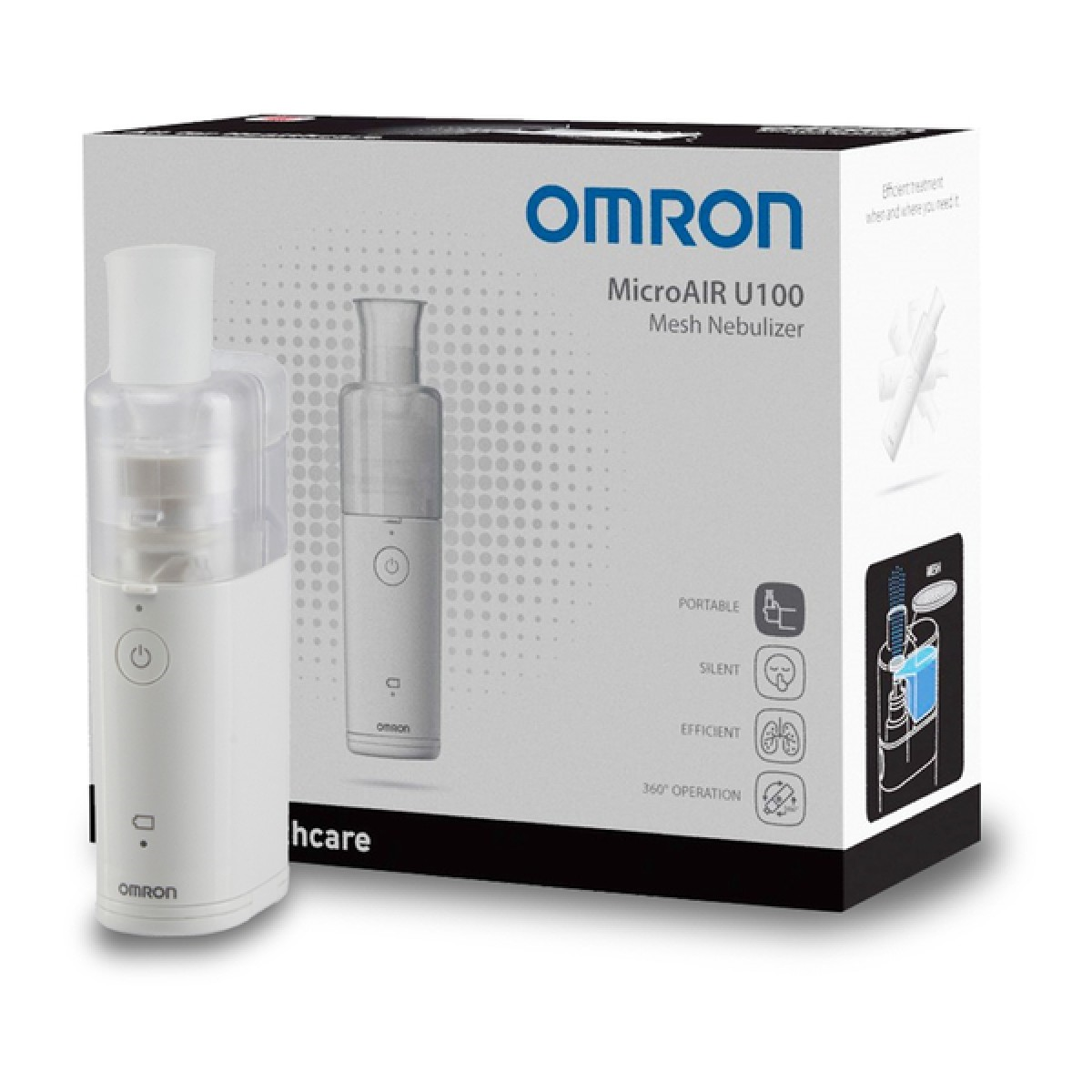
OMRON U100 Micro Air Mesh Nebuliser
Price Checker
 Lowest price guarantee
 Includes FREE private prescription


Couldn't load pickup availability
What Is a Mesh Nebuliser and How Can It Help You?
If you or someone in your family lives with asthma, COPD, or another respiratory condition, getting medication deep into the airways quickly really matters. The mesh nebuliser technology in the Omron U100 Micro Air does exactly that — converting liquid medication into a fine, breathable mist that travels directly to the lungs. Unlike older compressor-based devices, this unit is whisper-quiet, lightweight, and compact enough to slip into a bag. Whether you're managing a long-term condition or dealing with an acute flare-up, having a reliable nebuliser at home can make a real difference to your day-to-day comfort. You can also explore our wider range of electrical health and diagnostic devices if you're looking to build a more complete home health toolkit.
The Omron U100 is a Class IIa medical device, CE-marked and designed for home and clinical use. It weighs just 79 grams without batteries, making it genuinely portable. The device runs on both mains power and AA batteries, so you're never caught short whether you're at home or travelling.
How Does the Omron U100 Micro Air Nebuliser Work?
The core of this device is its vibrating mesh plate — a micro-perforated membrane that vibrates at high frequency to push liquid medication through thousands of tiny holes, producing a consistent aerosol particle size. Smaller particles penetrate deeper into the bronchial tree, which is exactly where they need to go for conditions like asthma or COPD.
- Liquid medication is placed in the medication cup
- The mesh plate vibrates at ultrasonic frequency, atomising the liquid
- A fine aerosol mist is produced with a mean mass median diameter (MMAD) suitable for lower airway deposition
- You inhale the mist slowly and steadily through the mouthpiece or mask
- Medication reaches the bronchioles and alveoli directly, bypassing the digestive system entirely
This delivery method is particularly efficient. Residual medication volume is very low, meaning less waste compared to jet nebulisers. The nebulisation rate is approximately 0.3 ml per minute, and a typical 2 ml dose takes around 6–7 minutes to deliver.
Who Should Use the Omron U100 Micro Air Nebuliser?
This device is suitable for adults and children who require inhaled medication but cannot use a standard inhaler effectively — for example, during a severe flare-up, or for very young children and elderly patients who struggle with inhaler technique. It is also used by people who need higher doses of bronchodilators than a standard inhaler can deliver.
- Adults and children with asthma who need nebulised bronchodilators or corticosteroids
- People with COPD requiring regular nebulised therapy
- Patients with cystic fibrosis or bronchiectasis on prescribed nebulised antibiotics or mucolytics
- Elderly patients or young children who cannot coordinate inhaler use
Always use this device with medications prescribed or recommended by your GP or respiratory specialist. It is not a substitute for emergency treatment — if you are having a severe asthma attack, call 999 immediately.
How Does the Omron U100 Compare to a Standard Compressor Nebuliser?
| Feature | Omron U100 Mesh Nebuliser | Standard Compressor Nebuliser |
|---|---|---|
| Noise level | Very quiet (mesh vibration) | Louder (air compressor motor) |
| Size and weight | 79 g, pocket-sized | Larger, tabletop unit |
| Power source | Mains or AA batteries | Mains only (most models) |
| Nebulisation speed | ~0.3 ml/min | ~0.2–0.4 ml/min (varies) |
| Residual volume | Very low | Higher residual waste |
Is the Omron U100 Suitable for Travel and Long-Term Use?
Yes — the battery-operated function and compact design make the Omron U100 mesh nebuliser an excellent choice for people who travel frequently or need to nebulise away from home. It fits easily into hand luggage and does not require a power socket. The device is built for durability, with a long service life when cleaned and maintained correctly according to the manufacturer's instructions.
For long-term respiratory management, it's worth pairing your nebuliser with other supportive measures. If your respiratory symptoms are linked to allergies, you might also find our allergy and hay fever range helpful for managing triggers alongside your inhaled therapy.
This product is a medicine delivery device. Speak to your doctor or pharmacist before using if you have an underlying medical condition or are taking other medicines.
Omron U100 Micro Air Mesh Nebuliser specifications
| Treatment category | Respiratory / Inhalation therapy |
| Mechanism of action | Vibrating mesh plate atomises liquid medication into fine aerosol particles |
| Effective for | Asthma, COPD, bronchiectasis, cystic fibrosis (with prescribed medication) |
| Suitable for | Adults and children (with appropriate mask) |
| Active ingredient | N/A — device only; compatible with prescribed nebuliser solutions |
| UK classification | Class IIa Medical Device |
| Preparation | Liquid nebuliser solution (not included) |
| Route of administration | Inhalation (oral or nasal via mask/mouthpiece) |
| Weight | 79 g (without batteries) |
| Power source | 2 × AA batteries or AC adaptor |
| Nebulisation rate | Approximately 0.3 ml/min |
Specifications of Omron U100 Micro Air Mesh Nebuliser
What Is the Omron U100 Micro Air Nebuliser and What Is It Used For?
The Omron U100 Micro Air is a portable mesh nebuliser designed to deliver inhaled liquid medications directly to the lungs. It is used to manage a range of respiratory conditions where inhaled therapy is required. The NHS recognises nebulisers as an important tool for people who cannot use standard inhalers effectively, particularly during acute exacerbations or for those with severe or complex respiratory disease.
Common conditions for which nebulised therapy may be prescribed or recommended include:
- Asthma — to deliver bronchodilators such as salbutamol or ipratropium bromide
- Chronic obstructive pulmonary disease (COPD)
- Bronchiectasis — often requiring nebulised saline or antibiotics
- Cystic fibrosis — for mucolytics and inhaled antibiotics
- Croup or severe respiratory infections in children (under medical supervision)
This device does not contain any medication itself. You will need a separate prescription or pharmacist recommendation for the appropriate nebuliser solution.
What Do You Need to Know Before Using the Omron U100 Nebuliser?
Before using this device, read the manufacturer's instructions carefully. There are some important contraindications and precautions to be aware of:
- Do not use this device if it is damaged or if any components are cracked or broken
- Do not use near flammable gases or oxygen-enriched environments
- Do not use with oily or suspension-based medications unless specifically confirmed as compatible by your prescriber
- Do not leave the device unattended while in use, particularly with children
- If you have a severe asthma attack, do not rely on a nebuliser alone — call 999 immediately
- Consult your GP before use if you are pregnant, breastfeeding, or have a cardiac condition
Regarding medication interactions — the device itself does not interact with medicines, but the medications you use in it may. Always check with your pharmacist or GP about potential interactions between your nebulised medication and any other medicines you take. If you're managing multiple conditions, our ear, nose and throat range may also be relevant to your respiratory health needs.
- Salbutamol may interact with beta-blockers — seek medical advice
- Ipratropium bromide should be used with caution in patients with glaucoma or urinary retention
- Always inform your prescriber of all medicines you are currently taking
How Should You Use the Omron U100 Micro Air Nebuliser?
Using the device correctly ensures you get the full benefit of your medication. Follow these steps each time:
- Wash your hands thoroughly before handling the device or medication
- Assemble the nebuliser cup, mouthpiece or mask, and tubing as shown in the instruction manual
- Pour the prescribed liquid medication into the medication cup — do not exceed the maximum fill line
- Connect the device to the power source (batteries or mains adaptor)
- Switch the device on and wait for the mist to appear
- Place the mouthpiece in your mouth (or apply the mask over the nose and mouth for children or elderly users) and breathe in slowly and deeply
- Continue until the medication cup is empty or the mist stops — typically 6–10 minutes
- Switch off the device and disassemble for cleaning immediately after use
| User Group | Accessory | Typical Session Duration | Frequency |
|---|---|---|---|
| Adults | Mouthpiece | 6–10 minutes | As prescribed |
| Children | Paediatric mask | 6–10 minutes | As prescribed by GP |
| Elderly patients | Adult mask | 6–10 minutes | As prescribed |
What Are the Possible Side Effects of Using the Omron U100 Nebuliser?
The device itself does not cause side effects. However, the medications delivered through it may. Side effects vary depending on which medication you are using. Always read the patient information leaflet for your specific nebuliser solution.
Common side effects (related to nebulised bronchodilators):
- Throat irritation or dryness
- Mild cough during or after nebulisation
- Tremor or shakiness (particularly with salbutamol)
- Increased heart rate (tachycardia)
- Headache
Less common side effects:
- Nausea
- Dizziness
- Muscle cramps
- Paradoxical bronchospasm (worsening of breathing) — stop use and seek medical advice immediately if this occurs
If you experience chest pain, a rapid or irregular heartbeat, or a significant worsening of your breathing during nebulisation, stop immediately and seek urgent medical attention.
How Should You Store the Omron U100 Micro Air Nebuliser?
Proper storage keeps the device hygienic and extends its working life. Follow these guidelines:
- Store in a cool, dry place away from direct sunlight and heat sources
- Keep out of reach of children when not in use
- Ensure all components are completely dry before storing to prevent mould or bacterial growth
- Store in the carry case provided to protect the mesh plate from damage
- Remove batteries if the device will not be used for an extended period
- Do not store with medication already in the cup
For patients managing multiple health conditions at home, it's worth keeping your home health devices organised alongside other essentials. Our first aid range includes storage solutions and other home health essentials that complement your respiratory care routine.
References
- https://www.nhs.uk/conditions/nebuliser/
- https://www.nhs.uk/conditions/asthma/treatment/
- https://www.nhs.uk/conditions/chronic-obstructive-pulmonary-disease-copd/treatment/
- https://www.nhs.uk/conditions/bronchiectasis/treatment/
- https://www.nhs.uk/conditions/cystic-fibrosis/treatment/
- https://www.nice.org.uk/guidance/ng80
Written and reviewed by our qualified team
Your safety and success are our highest priorities. Our medical team rigorously evaluates every product and piece of advice we provide, ensuring you receive only the most effective, science-backed solutions available.
Frequently Asked Questions
Where can I buy the Omron U100 Micro Air Mesh Nebuliser online in the UK?
You can buy the Omron U100 Micro Air Mesh Nebuliser directly from Cured Pharmacy, a GPhC-registered online pharmacy in the UK. It is available over the counter without a prescription as a Class IIa medical device. Simply add it to your basket and it will be dispatched to your door.
How does the Omron U100 mesh nebuliser work?
The Omron U100 uses a vibrating mesh plate with thousands of micro-perforations to convert liquid medication into a fine aerosol mist. This mist is inhaled through a mouthpiece or mask, delivering medication directly to the airways and lungs. The mesh technology produces consistently small particle sizes, which helps medication reach deeper into the bronchial tree compared to some older nebuliser types.
How do I use the Omron U100 nebuliser step by step?
Wash your hands, then assemble the medication cup, mouthpiece or mask, and connect to power. Add your prescribed liquid medication to the cup, switch the device on, and breathe in slowly and steadily through the mouthpiece until the mist stops — usually 6–10 minutes. After each use, disassemble and clean all components thoroughly to prevent contamination.
What medications can I use in the Omron U100 nebuliser?
The Omron U100 is compatible with most standard aqueous nebuliser solutions, including salbutamol, ipratropium bromide, budesonide, and isotonic saline. You should only use medications that have been prescribed or recommended by your GP or respiratory specialist. Do not use oily preparations or suspensions unless your prescriber has confirmed compatibility with this device.
Is the Omron U100 nebuliser suitable for children?
Yes, the Omron U100 can be used for children when fitted with a paediatric mask attachment, which allows the mist to be delivered via a face mask rather than a mouthpiece. Always use the device under adult supervision and only with medications prescribed by your child's GP or paediatrician. If your child has a respiratory condition, our baby and toddler range may also have supportive products relevant to their care.
How quiet is the Omron U100 compared to a compressor nebuliser?
The Omron U100 is significantly quieter than traditional compressor nebulisers because it uses a vibrating mesh rather than a pressurised air motor. This makes it much more suitable for use at night, in shared spaces, or for children who may be unsettled by loud machinery. Many users describe it as near-silent during operation.
Can I use the Omron U100 nebuliser while travelling?
Yes — the Omron U100 is specifically designed with portability in mind. It runs on two AA batteries as well as a mains adaptor, so you can use it anywhere without needing a power socket. It weighs just 79 grams without batteries and comes with a carry case, making it compact enough for hand luggage. Always carry a letter from your GP if you are travelling by air with nebuliser medication.
How do I clean the Omron U100 nebuliser after use?
After every use, disassemble the medication cup, mouthpiece, and mask and rinse them under clean running water. Allow all parts to air dry completely on a clean surface before reassembling or storing. The mesh plate is delicate — never use a brush or abrasive cloth on it. Refer to the full cleaning and disinfection schedule in the manufacturer's instruction manual for weekly deep-cleaning guidance.
What is the difference between a mesh nebuliser and a compressor nebuliser?
A mesh nebuliser uses a vibrating micro-perforated membrane to atomise medication, producing a quieter, more compact, and faster device with lower residual medication waste. A compressor nebuliser uses a motorised air pump to force air through a liquid medication chamber, which tends to be louder, heavier, and requires a mains power supply. For home and travel use, mesh nebulisers are generally more convenient.
Who is eligible to use the Omron U100 nebuliser?
The Omron U100 is suitable for adults and children who require inhaled medication for respiratory conditions such as asthma, COPD, bronchiectasis, or cystic fibrosis. It is particularly useful for patients who cannot use a standard pressurised metered-dose inhaler (pMDI) effectively. Always consult your GP or respiratory nurse before starting nebulised therapy at home to ensure it is appropriate for your condition.
How long does a nebuliser session take with the Omron U100?
A typical nebulisation session with the Omron U100 takes approximately 6–10 minutes for a standard 2 ml medication dose, based on the device's nebulisation rate of around 0.3 ml per minute. The exact duration will vary slightly depending on the volume of medication used and the viscosity of the solution. Your GP or respiratory team will advise on the appropriate dose volume for your condition.
What should I do if my breathing gets worse during nebulisation?
If your breathing worsens during a nebuliser session — a rare reaction known as paradoxical bronchospasm — stop using the device immediately and seek urgent medical advice. If you are experiencing a severe asthma attack or cannot breathe, call 999 without delay. Do not continue nebulisation if you feel your symptoms are deteriorating rather than improving.
How long can I use the Omron U100 nebuliser for?
The Omron U100 is built for long-term, repeated use and has a substantial service life when maintained correctly. The mesh plate and medication cup components may need replacing over time — Omron recommends following the replacement schedule in the instruction manual. There is no fixed time limit on how long you can use the device, provided it is functioning correctly and your nebulised therapy remains clinically appropriate as reviewed by your GP.
What are the alternatives to the Omron U100 nebuliser?
Alternatives include other mesh nebulisers such as the Pari Trek S or PARI eFlow, as well as traditional jet compressor nebulisers for home use. For mild-to-moderate asthma, your GP may recommend a spacer device used with a standard pMDI inhaler as a simpler and lower-cost option. The right choice depends on your condition, medication, and lifestyle — speak to your respiratory nurse or pharmacist for personalised advice. You can also browse our electrical health and diagnostic range for other home health monitoring devices.
What are the latest guidelines on nebuliser use for asthma and COPD in the UK?
NICE guidelines (NG80 and NG115) recommend that nebulised therapy for asthma and COPD should generally be reserved for patients with severe disease or those who cannot use handheld inhalers effectively. The NHS advises that home nebulisers should only be used under the guidance of a respiratory specialist or GP, with regular review of whether nebulised therapy remains the most appropriate delivery method. Always follow the most up-to-date advice from your clinical team.
Written and reviewed by our qualified team

Reviewed by:
Tarun Kumar
Superintendent/ Clinical Lead
📖 Find out more about our team of medical content authors and how we ensure the accuracy of our content with our content guidelines.
Content last updated: 14 Sep 2026
Other popular options


We’re a safe and
regulated UK service

Lowest Price Guarantee

We're convinced you won't find your treatment cheaper, but if you do we'll refund the difference.
Find out more
100% discreet packaging

Discreet, unbranded packaging for every order.
Find out more

Need help?
Talk to our friendly experts now


How our service works

Service setup

Discreet packaging

Express delivery