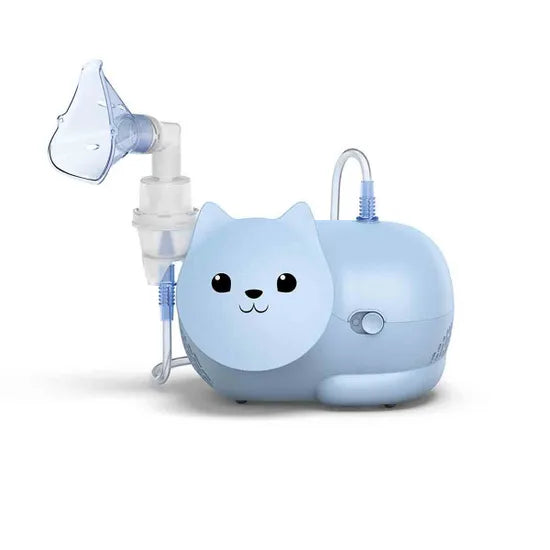
OMRON C303 Nami Cat Nebuliser For Kids
Price Checker
 Lowest price guarantee
 Includes FREE private prescription


Couldn't load pickup availability
Is the OMRON C303 Nami Cat the Right Nebuliser for Kids?
When your child is struggling to breathe, every second matters. Respiratory conditions like asthma, bronchiolitis, and croup are among the most common reasons children visit their GP in the UK, and for many families, a reliable home nebuliser can make a real difference to day-to-day management. The OMRON C303 Nami Cat is a nebuliser for kids designed with younger patients in mind — from its friendly cat-shaped design to its quiet motor that's less likely to frighten anxious children. Available at Cured Pharmacy for just £37.99, it's a practical, clinically appropriate choice for parents managing their child's respiratory health at home. You'll find it alongside other useful devices in our Electrical Health and Diagnostic collection.
Nebulisers are commonly recommended by GPs and paediatricians for children who struggle to use standard inhalers correctly. The NHS recognises that nebulisers can be particularly useful for young children who cannot coordinate the breath required for a metered-dose inhaler. The C303 is a compressor-type nebuliser, meaning it uses compressed air — rather than ultrasound — to aerosolise liquid medication into a fine, inhalable mist.
How Does the OMRON C303 Nami Cat Nebuliser Work?
Understanding the mechanism helps you use the device correctly and get the most from each treatment session. The C303 operates on a straightforward compressor principle:
- An electric compressor pumps air at a controlled pressure through a narrow tube.
- This pressurised air passes through the medication cup (nebuliser chamber), which contains the prescribed liquid medicine.
- The airflow breaks the liquid into tiny aerosol droplets — typically 1 to 5 microns in diameter — small enough to penetrate deep into the bronchial airways.
- The child inhales the mist through a child-sized mask or mouthpiece, breathing normally throughout the session.
- The medication is deposited directly onto the airway mucosa, where it acts locally with minimal systemic absorption.
This direct delivery method is one reason nebulisers are preferred for acute or severe respiratory episodes in children. The child simply breathes normally — no technique required — which makes it far more accessible than pressurised inhalers for toddlers and infants.
Who Should Use the OMRON C303 Nami Cat Nebuliser?
This device is intended for children who have been prescribed nebulised medication by a qualified healthcare professional. It is not a standalone treatment — it is a delivery device for liquid medicines your child's doctor has already recommended. That said, it's worth knowing who is most likely to benefit:
- Children with asthma who cannot use a standard inhaler and spacer effectively.
- Infants and toddlers with bronchiolitis or recurrent wheeze requiring nebulised bronchodilators.
- Children with cystic fibrosis who need regular nebulised mucolytics or antibiotics.
- Young patients with croup or other upper airway conditions where nebulised adrenaline or budesonide has been prescribed.
Always confirm with your child's GP or paediatrician before starting home nebuliser therapy. The NHS advises that nebulisers should only be used under medical supervision, with the correct medication, dose, and frequency clearly prescribed.
How Does the OMRON C303 Compare to Other Children's Nebulisers?
| Feature | OMRON C303 Nami Cat | OMRON C28P Children |
|---|---|---|
| Type | Compressor nebuliser | Compressor nebuliser |
| Child-friendly design | Yes — cat character design | Partial — standard casing |
| Noise level | Low (child-calming) | Moderate |
| Suitable age | Infants and above | All ages |
| Price (approx.) | £37.99 | £45–£55 |
Is the OMRON C303 Clinically Suitable and How Should It Be Stored?
The OMRON C303 Nami Cat nebuliser for kids is CE-marked and meets European medical device standards, making it appropriate for home use when prescribed medication is used correctly. Store the device in a cool, dry location away from direct sunlight and moisture. Keep all components — tubing, mask, and medication cup — clean and dry between uses to prevent bacterial contamination. Replace consumable parts (such as the filter and medication cup) according to the manufacturer's schedule, typically every six to twelve months depending on frequency of use. If your child also needs support managing allergy and hay fever symptoms alongside their respiratory condition, speak to your pharmacist about appropriate complementary treatments.
This product is a medical device. Speak to your doctor or pharmacist before using if your child has an underlying medical condition or is taking other medicines.
OMRON C303 Nami Cat Nebuliser For Kids specifications
| Treatment category | Respiratory / Inhalation therapy |
| Mechanism of action | Compressor-driven aerosolisation of liquid medication |
| Effective for | Asthma, bronchiolitis, cystic fibrosis, croup (with prescribed medication) |
| Suitable for | Children (infants and above) |
| Active ingredient | N/A — device only |
| UK classification | Medical device (CE-marked) |
| Device class | Compressor nebuliser |
| Route of administration | Inhalation (via mask or mouthpiece) |
| Pack contents | Nebuliser unit, tubing, child mask, adult mask, medication cup, air filter |
Specifications of OMRON C303 Nami Cat Nebuliser For Kids
What Is the OMRON C303 Nami Cat and What Is It Used For?
The OMRON C303 Nami Cat is a paediatric compressor nebuliser — a medical device that converts liquid medication into a fine inhalable mist for delivery directly into a child's airways. It is not a medicine itself. Rather, it is the vehicle through which prescribed liquid medicines — such as bronchodilators or corticosteroids — reach the lungs efficiently. The NHS recommends nebulisers for children who are unable to use inhalers correctly, particularly during acute episodes or for ongoing management of chronic respiratory conditions.
Common conditions for which a GP or paediatrician may recommend nebuliser therapy in children include asthma, bronchiolitis, cystic fibrosis, and recurrent wheeze. The C303's cat-shaped design and quieter motor are specifically intended to reduce anxiety in young children, encouraging cooperation during treatment sessions. It is available over the counter and does not require a prescription, though the medication used inside it always should be prescribed or recommended by a healthcare professional.
What Do You Need to Know Before Using the OMRON C303 Nami Cat?
Before using this device, there are important safety considerations to be aware of. The nebuliser itself carries few contraindications, but the medication placed inside it may have specific warnings. Always read the patient information leaflet for any medicine used in the device.
Do not use this nebuliser if:
- Your child has not been assessed by a GP or paediatrician for their respiratory condition.
- The device or any of its components are visibly damaged.
- You are unsure which medication or dose to use — always seek professional guidance first.
- The air filter is blocked or overdue for replacement, as this can affect aerosol particle size and medication delivery.
Warnings and precautions:
- Never mix medications in the nebuliser cup unless specifically instructed by a healthcare professional.
- Do not leave a child unattended during a nebuliser session.
- Ensure the mask fits snugly over the child's nose and mouth to maximise medication delivery.
- Clean and dry all components thoroughly after every use to prevent microbial contamination.
Medication interactions (device-related considerations):
- Interactions are dependent on the medication used, not the device itself.
- Salbutamol and ipratropium bromide are sometimes combined in nebuliser therapy — only do this if prescribed.
- Always inform your child's GP of all medicines they are taking before starting nebulised therapy.
How Should You Use the OMRON C303 Nami Cat Nebuliser?
Using the device correctly ensures your child receives the full prescribed dose. Follow these steps carefully each time:
- Wash your hands thoroughly before handling any components.
- Assemble the medication cup, attach the tubing to the compressor unit, and connect the child mask securely.
- Pour the prescribed liquid medication into the medication cup — do not overfill beyond the maximum fill line.
- Seat your child comfortably in an upright position, ideally sitting up straight to open the airways.
- Place the mask gently over your child's nose and mouth, ensuring a good seal.
- Switch on the compressor and encourage your child to breathe normally — slow, steady breaths are ideal.
- Continue until the medication cup is empty or the mist stops, typically 5–10 minutes.
- Switch off the device, disassemble, and clean all parts as per the manufacturer's instructions.
For children managing ongoing respiratory conditions, you may also find it helpful to explore our Baby and Toddler range for complementary health products suited to younger patients.
| Indication | Age Group | Medication (example) | Frequency |
|---|---|---|---|
| Acute asthma | All paediatric ages | Salbutamol (as prescribed) | As directed by GP |
| Bronchiolitis | Infants under 2 years | Hypertonic saline (if prescribed) | As directed by GP |
| Cystic fibrosis | All paediatric ages | Dornase alfa or tobramycin (as prescribed) | As directed by specialist |
What Are the Possible Side Effects of the OMRON C303 Nami Cat?
The nebuliser device itself does not cause pharmacological side effects. However, the medication delivered through it may. Side effects will vary depending on which medicine your child's doctor has prescribed. Common side effects associated with nebulised bronchodilators (such as salbutamol) include:
Common side effects (medication-related):
- Tremor or shakiness, particularly in the hands
- Increased heart rate (tachycardia)
- Headache
- Throat irritation or dry mouth
Less common side effects:
- Skin irritation or redness around the mask contact area
- Nausea in younger children
- Paradoxical bronchospasm (rare — worsening of breathing after inhalation; seek immediate medical attention)
If your child experiences any worsening of breathing, chest tightness, or an allergic reaction during or after nebuliser use, stop treatment immediately and contact 999 or your nearest A&E. For non-urgent concerns, your GP or pharmacist can advise on managing minor side effects. You can also browse our Ear, Nose and Throat range for supportive products that may help with associated upper airway symptoms.
How Should You Store the OMRON C303 Nami Cat Nebuliser?
- Store the device in a cool, dry place — avoid bathrooms or areas with high humidity.
- Keep away from direct sunlight and heat sources.
- Store all components (mask, tubing, medication cup) in the carry case provided when not in use.
- Replace the air filter every 6–12 months or as recommended by the manufacturer.
- Keep the device out of reach of children when not in use for treatment.
- Do not store liquid medication inside the medication cup between sessions — always use freshly prepared doses.
References
Written and reviewed by our qualified team
Your safety and success are our highest priorities. Our medical team rigorously evaluates every product and piece of advice we provide, ensuring you receive only the most effective, science-backed solutions available.
Frequently Asked Questions
Where can I buy the OMRON C303 Nami Cat nebuliser for kids in the UK?
You can buy the OMRON C303 Nami Cat nebuliser for kids online at Cured Pharmacy for £37.99, with fast UK delivery. It is available as an over-the-counter medical device and does not require a prescription. However, the medication used inside it should always be prescribed or recommended by your child's GP or paediatrician.
How does the OMRON C303 Nami Cat nebuliser work?
The OMRON C303 uses an electric compressor to push air through a liquid medication in the nebuliser cup, converting it into a fine aerosol mist. Your child inhales this mist through a mask or mouthpiece, delivering medication directly to the airways. This method is particularly effective for children who cannot coordinate the breath required for a standard inhaler.
How do I use the OMRON C303 Nami Cat nebuliser step by step?
Wash your hands, assemble the medication cup and tubing, and add the prescribed liquid medication. Place the child mask over your child's nose and mouth, switch on the compressor, and encourage normal breathing until the cup is empty — usually 5 to 10 minutes. Always follow the specific instructions provided by your child's healthcare professional for medication dose and frequency.
What age is the OMRON C303 nebuliser suitable for?
The OMRON C303 Nami Cat is designed specifically for children and comes with a paediatric mask suitable for use from infancy upwards. The child-friendly cat design and quieter motor help reduce anxiety in younger children during treatment. Always consult your child's GP or paediatrician before starting nebuliser therapy at home.
What medications can be used in the OMRON C303 nebuliser?
The OMRON C303 can be used with a range of liquid medications prescribed for respiratory conditions, including bronchodilators such as salbutamol and ipratropium bromide, as well as corticosteroids and mucolytics. Only use medications that your child's doctor has specifically prescribed for nebulisation — never add medications not intended for inhaled use. If you are unsure, speak to your pharmacist before proceeding.
How do I clean the OMRON C303 nebuliser after use?
After each treatment session, disassemble the medication cup, mask, and tubing, then rinse all parts with warm water and allow them to air dry completely before reassembly. Do not submerge the compressor unit in water. Refer to the manufacturer's instructions for full sterilisation guidance and recommended replacement schedules for the air filter and medication cup.
Is the OMRON C303 nebuliser suitable for children with asthma?
Yes, the OMRON C303 is commonly used for children with asthma who struggle to use a standard metered-dose inhaler and spacer correctly. The NHS recognises nebulisers as an appropriate delivery method for bronchodilator medication in children during acute asthma episodes or for ongoing management. Always follow your child's asthma action plan and seek medical advice before using a nebuliser at home.
What are the alternatives to the OMRON C303 nebuliser for children?
Alternatives include other compressor nebulisers such as the OMRON C28P, as well as mesh nebulisers like the OMRON MicroAIR U100, which are quieter and more portable. For mild to moderate asthma, your child's GP may recommend a metered-dose inhaler with a spacer device as a first-line option. Speak to your child's respiratory nurse or GP to determine the most suitable device for their specific condition and medication.
How long does a nebuliser session take with the OMRON C303?
A typical treatment session with the OMRON C303 takes approximately 5 to 10 minutes, depending on the volume of medication placed in the cup. Sessions should not be rushed — encourage your child to breathe calmly and normally throughout. Always follow the timing and frequency instructions given by your child's healthcare professional.
Can I use the OMRON C303 nebuliser for adults as well as children?
The OMRON C303 Nami Cat is primarily designed and marketed as a nebuliser for kids, but it does include an adult mask in the kit, making it technically usable by adults in a household setting. That said, if an adult requires regular nebuliser therapy, a device designed specifically for adult use may be more appropriate. Speak to your pharmacist or GP for personalised advice on the right device for your needs.
How often should I replace the parts of the OMRON C303 nebuliser?
The air filter should typically be replaced every 6 to 12 months, or sooner if it appears discoloured or blocked. The medication cup and mask should be inspected regularly for cracks or deterioration and replaced as needed. Always follow the replacement schedule outlined in the OMRON C303 user manual to ensure consistent medication delivery.
What should I do if my child's breathing gets worse during nebuliser treatment?
If your child's breathing worsens during or immediately after a nebuliser session — a rare reaction known as paradoxical bronchospasm — stop the treatment immediately and call 999 or go to your nearest A&E. Do not restart the session without speaking to a healthcare professional first. Always have your child's asthma action plan or emergency contact details to hand during treatment.
Is the OMRON C303 nebuliser noisy? Will it scare my child?
The OMRON C303 Nami Cat has been designed with a quieter motor compared to many standard compressor nebulisers, specifically to reduce the likelihood of frightening young children. Its cat character design also helps make the device feel less clinical and more approachable for toddlers and young children. Many parents find that introducing the device as a "cat machine" helps children engage positively with their treatment routine.
How long can my child use the OMRON C303 nebuliser for?
The duration of nebuliser therapy depends entirely on your child's medical condition and the treatment plan set by their GP or paediatrician — it is not determined by the device itself. Some children use nebulisers only during acute episodes, while others with chronic conditions such as cystic fibrosis may use them daily long-term. Regular reviews with your child's healthcare team will determine how long nebuliser therapy remains appropriate. You can also explore our Cold and Flu range for supportive products during respiratory illness episodes.
What is the latest guidance on using nebulisers for children with asthma in the UK?
NICE guideline NG80 (Asthma: diagnosis, monitoring and chronic asthma management) and NHS guidance recommend that nebulisers for children with asthma should be used under medical supervision, with inhaler and spacer devices preferred for routine management where possible. Nebulisers remain an important option for acute severe episodes or where inhaler technique is not achievable. Always follow the most up-to-date advice from your child's GP, paediatrician, or respiratory nurse, and browse our Electrical Health and Diagnostic collection for related devices.
Written and reviewed by our qualified team

Reviewed by:
Tarun Kumar
Superintendent/ Clinical Lead
📖 Find out more about our team of medical content authors and how we ensure the accuracy of our content with our content guidelines.
Content last updated: 14 Sep 2026
Other popular options


We’re a safe and
regulated UK service

Lowest Price Guarantee

We're convinced you won't find your treatment cheaper, but if you do we'll refund the difference.
Find out more
100% discreet packaging

Discreet, unbranded packaging for every order.
Find out more

Need help?
Talk to our friendly experts now


How our service works

Service setup

Discreet packaging

Express delivery