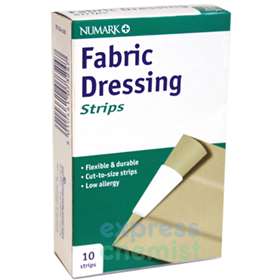
Numark Fabric Dressing Strips 10
- ✔️ Flexible fabric construction stays secure on joints and knuckles
- ✔️ Breathable material supports natural wound healing process
- ✔️ Individually wrapped strips maintain sterility until needed
- ✔️ Suitable for adults and children with minor cuts and grazes
- ✔️ Pack of 10 strips provides reliable everyday first aid cover
Price Checker
 Lowest price guarantee
 Includes FREE private prescription


Couldn't load pickup availability
What Are Fabric Plasters and How Do They Help?
Minor cuts, grazes, and small wounds are part of everyday life — whether you're in the kitchen, the garden, or out with the kids. Fabric plasters like the Numark Fabric Dressing Strips offer a simple, reliable way to protect those wounds while they heal. Each pack contains 10 individually wrapped strips, making them easy to keep in your first aid kit, handbag, or workplace. At just £0.94, they're one of the most cost-effective wound-care options available. You can browse the full range of first aid products at Cured Pharmacy if you need to stock up on other essentials too.
The NHS recommends covering minor wounds with a clean dressing to help prevent infection and support the natural healing process. Numark Fabric Dressing Strips are designed with a breathable fabric backing that flexes with your skin — ideal for joints like knuckles and elbows where standard plastic plasters tend to peel away quickly.
How Do Numark Fabric Dressing Strips Work?
These dressing strips work through a straightforward physical mechanism rather than any active pharmaceutical ingredient. Here's how they protect your wound:
- The absorbent wound pad sits directly over the injury, soaking up any minor bleeding or exudate.
- The fabric backing is breathable, allowing moisture vapour to escape — this helps maintain a moist wound environment without becoming waterlogged.
- The adhesive border bonds to the surrounding skin, holding the dressing securely in place even during movement.
- By forming a physical barrier, the strip reduces the risk of bacteria, dirt, and debris entering the wound.
Because the fabric material flexes naturally, it stays put on areas of the body that move frequently — something rigid plastic strips simply can't match.
Who Should Use Numark Fabric Dressing Strips?
These strips are suitable for a wide range of people dealing with minor, superficial wounds. They're not intended for deep lacerations, puncture wounds, or injuries that won't stop bleeding — those require urgent medical attention. For everyday minor injuries, though, they're a practical choice for:
- Adults and children with minor cuts, grazes, or abrasions
- People who work with their hands and need a flexible, durable dressing
- Parents looking for a reliable first aid staple at home
- Anyone who needs a compact, affordable wound dressing for travel or work
How Do Numark Fabric Strips Compare to Plastic Plasters?
| Feature | Numark Fabric Dressing Strips | Standard Plastic Plasters |
|---|---|---|
| Flexibility | High — moves with skin | Low — can crack or peel |
| Breathability | Yes — fabric allows airflow | Limited |
| Suitable for joints | Yes | Less suitable |
| Pack size | 10 strips | Varies |
Are Numark Fabric Dressing Strips Safe to Store at Home?
Yes — these strips are safe and straightforward to store. Keep them in their original packaging in a cool, dry place below 25°C, away from direct sunlight and moisture. Storing them correctly ensures the adhesive remains effective and the wound pad stays sterile until you need it. Check the expiry date periodically, especially if the pack has been sitting in a drawer for a while.
If you're building a home first aid kit, it's worth pairing these fabric plasters with other wound-care and skin care products to cover a range of minor injuries. Always check that the individual wrapper is intact before use — a damaged wrapper may mean the dressing is no longer sterile.
This product is a medical device. Speak to your doctor or pharmacist before using if you have an underlying medical condition or are taking other medicines.
Numark Fabric Dressing Strips 10 specifications
| Treatment category | Wound care / First aid |
| Mechanism of action | Physical barrier — protects wound from contamination and absorbs minor exudate |
| Effective for | Minor cuts, grazes, and abrasions |
| Suitable for | Adults and children |
| Active ingredient | None (non-medicated dressing) |
| Pack size | 10 strips |
| UK classification | General Sale / Medical Device |
| Preparation | Fabric adhesive dressing strip |
| Route of administration | Topical / External |
Specifications of Numark Fabric Dressing Strips 10
What Are Numark Fabric Dressing Strips and What Are They Used For?
Numark Fabric Dressing Strips are non-medicated, adhesive wound dressings designed to cover and protect minor cuts, grazes, and superficial abrasions. They are a general sale medical device — no prescription is needed. The fabric construction makes them more flexible than standard plastic plasters, which is particularly useful on areas of the body that bend and move regularly, such as fingers, knuckles, and elbows.
These strips are not a treatment for infection, deep wounds, or serious injuries. Their purpose is purely protective: to keep the wound clean, reduce the risk of contamination, and support the body's own natural healing process. The NHS advises that minor wounds should be cleaned and covered promptly to minimise infection risk.
What Do You Need to Know Before Using Numark Fabric Dressing Strips?
Before applying any wound dressing, it's important to assess the wound. These strips are suitable only for minor, superficial injuries. Do not use them if any of the following apply:
- The wound is deep, gaping, or will not stop bleeding after 10 minutes of firm pressure
- There are signs of infection — redness spreading beyond the wound edge, warmth, swelling, pus, or fever
- You have a known allergy to adhesive plasters or the materials used in fabric dressings
- The wound is a puncture injury, animal bite, or caused by a rusty or dirty object — seek medical advice
- The wound is on the face or near the eyes — seek professional assessment
Regarding interactions — as a non-medicated physical dressing, Numark Fabric Dressing Strips have no known drug interactions. However:
- If you are applying any topical cream or ointment to the wound area, allow it to absorb before applying the dressing
- People with diabetes or circulatory conditions should seek medical advice for any wound, however minor, as healing may be impaired
How Should You Use Numark Fabric Dressing Strips?
Correct application makes a real difference to how well the dressing stays in place and how effectively it protects the wound. Follow these steps carefully:
- Wash your hands thoroughly with soap and water before touching the wound or the dressing.
- Clean the wound gently under cool running water to remove any dirt or debris. Pat dry with a clean cloth or sterile gauze.
- If bleeding, apply gentle pressure with a clean pad until it stops.
- Open the individual wrapper carefully, avoiding touching the wound pad.
- Peel back the protective backing tabs on either side of the strip.
- Centre the absorbent pad directly over the wound without stretching the fabric.
- Press the adhesive edges firmly onto the surrounding dry skin.
- Check the dressing is secure and replace it if it becomes wet, dirty, or loose.
| Indication | Age Group | Application | Frequency |
|---|---|---|---|
| Minor cuts and grazes | Adults | 1 strip per wound | Change daily or when soiled/wet |
| Minor cuts and grazes | Children (supervised) | 1 strip per wound | Change daily or when soiled/wet |
What Are the Possible Side Effects of Numark Fabric Dressing Strips?
Because these are non-medicated dressings, systemic side effects are not expected. However, some people may experience localised reactions, particularly those with sensitive skin. If you notice any unusual skin response, remove the dressing and seek advice from your pharmacist. You can also explore creams and ointments that may help soothe minor skin irritation around wound sites.
-
Common side effects:
- Mild redness or irritation at the adhesive border when the plaster is removed
- Slight skin sensitivity after prolonged wear
-
Less common side effects:
- Contact dermatitis — an allergic reaction to the adhesive, presenting as itching, rash, or blistering around the plaster edges
- Maceration of the skin beneath the pad if the dressing is left in place too long without changing
If you develop a rash, significant swelling, or blistering around the dressing site, remove it immediately and consult your pharmacist or GP. These reactions, while uncommon, may indicate an adhesive allergy.
How Should You Store Numark Fabric Dressing Strips?
Proper storage keeps the dressings sterile and the adhesive effective. Follow these guidelines:
- Store below 25°C in a cool, dry location
- Keep away from direct sunlight and sources of heat or moisture
- Store in the original packaging until use
- Keep out of reach of young children
- Do not use if the individual wrapper is torn, damaged, or the expiry date has passed
- Do not store in a bathroom cabinet where humidity levels fluctuate
If you're putting together a complete home first aid kit, consider pairing these strips with other essentials from our pain relief range to manage discomfort alongside wound care.
References
Written and reviewed by our qualified team
Your safety and success are our highest priorities. Our medical team rigorously evaluates every product and piece of advice we provide, ensuring you receive only the most effective, science-backed solutions available.
Frequently Asked Questions
Where can I buy Numark Fabric Dressing Strips online in the UK?
You can buy Numark Fabric Dressing Strips 10 directly from Cured Pharmacy online for just £0.94, with no prescription required. They're available as part of our first aid collection, which includes a wide range of wound care and emergency essentials. Ordering online is quick and convenient, with delivery straight to your door.
How do fabric plasters work to protect a wound?
Fabric plasters work by forming a physical barrier over a minor wound, preventing dirt, bacteria, and debris from entering while the skin heals naturally. The absorbent pad at the centre soaks up any minor exudate, and the breathable fabric backing allows air to circulate around the wound. This combination helps maintain a clean environment without trapping excess moisture.
How do I apply Numark Fabric Dressing Strips step by step?
Start by washing your hands and cleaning the wound under cool running water, then pat it dry. Peel back the protective tabs on the dressing strip and centre the absorbent pad directly over the wound without touching it. Press the adhesive edges firmly onto the surrounding dry skin to secure the dressing in place.
How often should I change a fabric dressing strip?
You should change the dressing at least once a day, or sooner if it becomes wet, dirty, or starts to peel away from the skin. Leaving a dressing in place for too long without changing it can lead to skin maceration or increase the risk of infection. Regular changing also gives you the opportunity to check that the wound is healing as expected.
Are Numark Fabric Dressing Strips suitable for children?
Yes, fabric dressing strips are generally suitable for children dealing with minor cuts and grazes, provided an adult supervises the application. Always ensure the plaster is applied securely and check it regularly, as young children may try to remove it. If the wound is large, deep, or on the face, seek advice from a pharmacist or GP rather than using a standard plaster.
Can I use fabric plasters if I have sensitive skin?
If you have sensitive or allergy-prone skin, it's worth checking the adhesive materials before applying any plaster. Some people experience contact dermatitis — a localised allergic reaction — at the adhesive border, which can cause itching, redness, or blistering. If this happens, remove the dressing immediately and speak to your pharmacist about hypoallergenic alternatives.
What is the best time to apply a fabric dressing strip?
Apply a fabric dressing strip as soon as possible after a minor wound occurs, once any bleeding has stopped and the area has been cleaned and dried. Applying to a dry surface is important — moisture significantly reduces how well the adhesive bonds to the skin. Avoid applying immediately after bathing or swimming.
How long can I keep a fabric plaster on?
Most minor wounds benefit from being covered for the first few days of healing, with the dressing changed daily. Once the wound has closed and a scab has formed, you may not need to continue covering it — though this depends on the location and your personal preference. Never leave the same dressing on for more than 24 hours without checking the wound underneath.
What are the alternatives to fabric plasters for wound care?
Alternatives include standard plastic adhesive plasters, hydrocolloid dressings (which are particularly useful for blisters), sterile non-adhesive wound pads secured with medical tape, and island dressings for larger wounds. The right choice depends on the size, location, and nature of the wound — your pharmacist can advise on the most appropriate option for your situation.
Can I use Numark Fabric Dressing Strips on a blister?
Fabric dressing strips can be used to protect an intact blister from further friction and irritation, but they are not specifically designed for blister management. If the blister has burst, clean the area carefully and apply the dressing to protect the exposed skin. For recurring blisters, particularly on the feet, consider speaking to a pharmacist about specialist blister plasters.
Are Numark Fabric Dressing Strips waterproof?
Standard fabric dressing strips are breathable but are not fully waterproof — they will absorb water if submerged or exposed to prolonged moisture. If you need to shower or wash, try to keep the dressing dry where possible, or replace it immediately afterwards with a fresh strip. If you regularly need a waterproof option, look for specifically labelled waterproof plasters.
What should I do if a wound shows signs of infection?
Signs of wound infection include increasing redness, warmth, swelling, pus or discharge, and pain that worsens rather than improves. If you notice any of these, remove the dressing and seek advice from your pharmacist or GP promptly — do not attempt to treat an infected wound with a standard plaster alone. The NHS recommends seeking medical attention for any wound that does not begin to heal within a few days.
Who is eligible to use Numark Fabric Dressing Strips?
These strips are suitable for most adults and children with minor, superficial wounds. People with diabetes, peripheral vascular disease, or compromised immune systems should seek medical advice before self-managing any wound, even a minor one, as their healing may be impaired. If you're unsure whether a wound is suitable for self-care, your pharmacist is a great first point of contact.
Do Numark Fabric Dressing Strips contain latex?
Product-specific latex content should be confirmed by checking the packaging or contacting Numark directly, as formulations can vary between batches. If you have a known latex allergy, always check the materials list before applying any adhesive dressing. Your pharmacist can help you identify a latex-free alternative if needed.
What are the latest recommendations for minor wound care in the UK?
Current NHS guidance recommends cleaning minor wounds under cool running water, applying gentle pressure to stop bleeding, and covering with a clean dressing such as fabric plasters to reduce infection risk. Antiseptic creams are not routinely recommended for clean minor wounds, as they can sometimes delay healing. You can find further wound care and skin care products at Cured Pharmacy to support recovery.
Written and reviewed by our qualified team

Reviewed by:
Tarun Kumar
Superintendent/ Clinical Lead
📖 Find out more about our team of medical content authors and how we ensure the accuracy of our content with our content guidelines.
Content last updated: 14 Sep 2026
Other popular options


We’re a safe and
regulated UK service

Lowest Price Guarantee

We're convinced you won't find your treatment cheaper, but if you do we'll refund the difference.
Find out more
100% discreet packaging

Discreet, unbranded packaging for every order.
Find out more

Need help?
Talk to our friendly experts now


How our service works

Service setup

Discreet packaging

Express delivery