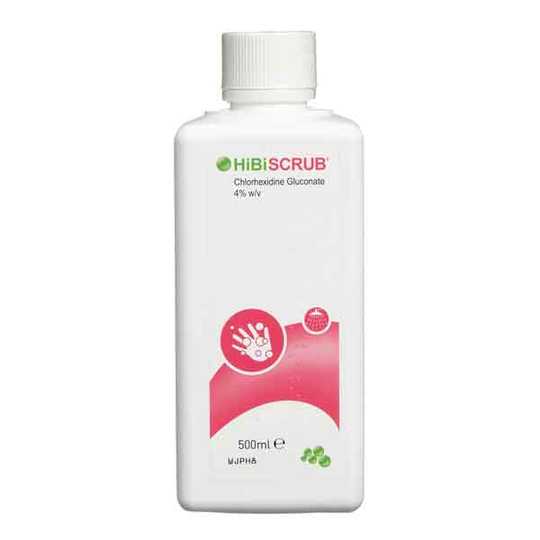
Hibiscrub Antibacterial Skin Cleanser - 500ml (NOW AS HIBIWASH)
Hibiscrub Antibacterial Skin Cleanser - 500ml (NOW AS HIBIWASH)
- ✔️ Contains chlorhexidine gluconate 4% w/v for broad-spectrum antibacterial action
- ✔️ Residual antibacterial effect continues working hours after rinsing
- ✔️ Clinically used for pre-operative skin preparation and MRSA decolonisation
- ✔️ Effective against gram-positive and gram-negative bacteria including MRSA
- ✔️ 500ml bottle suitable for home pre-operative preparation protocols
Price Checker
 Lowest price guarantee
 Includes FREE private prescription


Couldn't load pickup availability
What Is Hibiscrub Antibacterial Skin Cleanser?
If you've searched for Hibiscrub recently and noticed it's now labelled as Hibiwash, don't worry — the product is exactly the same. The hibiscrub antibacterial skin cleanser has simply been rebranded, with no change to its formulation or clinical effectiveness. It remains one of the most widely used chlorhexidine-based skin washes in the UK, trusted by healthcare professionals and patients alike for decades. You can find it here at Cured Pharmacy for just £10.99 per 500ml bottle, available without a prescription.
The active ingredient is chlorhexidine gluconate 4% w/v — a well-established antiseptic agent with a broad spectrum of antibacterial activity. It's used in hospitals, GP surgeries, and at home for a range of skin cleansing purposes. Whether you've been advised to use it before a surgical procedure or you need a reliable antiseptic wash for everyday hygiene, this product is a practical, clinically backed option. If you're also looking for other skin care products to support your routine, Cured Pharmacy stocks a wide range.
How Does Hibiwash Work to Kill Bacteria?
Chlorhexidine gluconate works by targeting the outer membrane of bacterial cells. Here's what happens when you apply it:
- It binds to the negatively charged surface of bacterial cell membranes.
- This disrupts the membrane's integrity, causing the cell contents to leak out.
- The bacteria are unable to function and die as a result.
- Crucially, chlorhexidine has a residual effect — it continues to work on the skin surface even after rinsing, providing ongoing protection.
This residual action is one reason it's preferred for pre-operative skin preparation. It's effective against a broad range of gram-positive and gram-negative bacteria, including some strains of MRSA. It does not, however, have significant activity against bacterial spores or most viruses.
Who Should Use This Antibacterial Skin Wash?
This product is suitable for adults and older children who need a reliable antiseptic skin cleanser. It's particularly useful in the following situations:
- Pre-operative skin preparation, as directed by a surgical or medical team.
- Hygienic hand disinfection in clinical or care settings.
- Management of skin conditions where bacterial colonisation is a concern, such as infected eczema — always under medical guidance.
- General antiseptic cleansing where a standard soap is insufficient.
It is not suitable for use on newborns, premature infants, or individuals with a known allergy to chlorhexidine. People with sensitive skin should perform a patch test before widespread use. If you're unsure whether this product is right for you, speak to your pharmacist before purchasing.
How Does Hibiwash Compare to Other Antiseptic Washes?
| Feature | Hibiwash (Chlorhexidine 4%) | Povidone-Iodine Scrub |
|---|---|---|
| Active ingredient | Chlorhexidine gluconate 4% w/v | Povidone-iodine 7.5% |
| Residual antibacterial effect | Yes — persists after rinsing | Minimal residual effect |
| Suitable for iodine allergy | Yes | No |
| Pre-operative use | Yes, widely recommended | Yes, but less preferred in many trusts |
Is Hibiwash Safe to Store at Home?
Yes, storing this product at home is straightforward. Keep it below 25°C, away from direct sunlight, and out of reach of children. Do not freeze the product. Once opened, check the expiry date on the bottle and do not use it beyond that date. The 500ml bottle is a practical size for home use, particularly if you've been advised to use it as part of a pre-operative preparation protocol.
If you're managing a skin condition alongside using this wash, you might also find our creams and ointments collection useful for complementary topical treatments. Always check with your GP or pharmacist before combining products on affected skin.
This product is a medicine. Speak to your doctor or pharmacist before using if you have an underlying medical condition or are taking other medicines.
Hibiscrub Antibacterial Skin Cleanser 500ml (now as Hibiwash) specifications
| Treatment category | Antiseptic skin cleanser |
| Mechanism of action | Disrupts bacterial cell membranes via chlorhexidine gluconate |
| Effective against | Broad-spectrum gram-positive and gram-negative bacteria, including MRSA |
| Suitable for | Adults and older children; pre-operative preparation; hygienic hand disinfection |
| Active ingredient | Chlorhexidine gluconate 4% w/v |
| Pack size | 500ml |
| Strength | 4% w/v |
| UK classification | General Sale List (GSL) |
| Drug class | Antiseptic / Disinfectant |
| Preparation | Liquid skin wash |
| Route of administration | Topical (external use only) |
Specifications of Hibiscrub Antibacterial Skin Cleanser 500ml (now as Hibiwash)
What Is Hibiwash and What Is It Used For?
Hibiwash — previously known as Hibiscrub — is a topical antibacterial skin cleanser containing chlorhexidine gluconate 4% w/v. It is used for hygienic and surgical hand disinfection, pre-operative skin preparation, and general antiseptic cleansing of the skin. It is not a treatment for infection in the traditional sense; rather, it reduces the bacterial load on the skin surface to lower the risk of infection spreading or developing. It is available over the counter and does not require a prescription.
Healthcare professionals frequently recommend it to patients ahead of planned surgical procedures, and it is also used in clinical environments for hand hygiene. Some dermatologists may recommend it for patients with recurrent skin infections or conditions such as infected eczema, though this should always be under medical supervision. If you're managing a wound or skin concern alongside this product, our first aid collection includes a range of complementary products.
What Do You Need to Know Before Using Hibiwash?
Before using this product, read the following contraindications and warnings carefully:
- Do not use if you have a known allergy or hypersensitivity to chlorhexidine or any other ingredient in the formulation.
- Do not apply to the eyes, ears, or mucous membranes — chlorhexidine can cause serious damage to these tissues.
- Do not use on newborns or premature infants.
- Avoid use on large areas of broken, damaged, or burned skin without medical advice.
- Do not use in body cavities or on the brain, meninges, or middle ear.
- Avoid contact with the genital area unless specifically directed by a healthcare professional.
In terms of interactions, chlorhexidine gluconate used topically has no clinically significant systemic drug interactions when used as directed. However, be aware of the following:
- Chlorhexidine is incompatible with anionic surfactants (found in some soaps) — rinse thoroughly before applying.
- Do not mix with other antiseptic agents unless advised by a healthcare professional.
How Should You Use Hibiwash Correctly?
Always follow the instructions provided with the product or those given by your healthcare team. Here is a general guide for use:
- Wet the skin or hands thoroughly with water.
- Apply a small amount of Hibiwash directly to the skin or hands.
- Lather gently and work into the skin for the recommended contact time (typically 1–2 minutes for surgical scrubbing).
- Rinse thoroughly with clean water.
- Pat dry with a clean towel or sterile gauze.
- For pre-operative whole-body washing, follow your surgical team's specific protocol — this often involves washing the night before and on the morning of surgery.
| Indication | Age Group | Dose | Frequency |
|---|---|---|---|
| Hygienic hand wash | Adults | Small amount (approx. 5ml) | As required |
| Surgical hand disinfection | Adults | Sufficient to cover hands and forearms | Before each surgical procedure |
| Pre-operative body wash | Adults | As directed by surgical team | Night before and morning of surgery |
| Antiseptic skin cleansing | Older children (under medical guidance) | Small amount as directed | As advised by healthcare professional |
What Are the Possible Side Effects of Hibiwash?
Like all medicines, Hibiwash can cause side effects, although not everyone will experience them. Most side effects are mild and localised to the area of application.
Common side effects:
- Skin dryness
- Mild redness or irritation at the application site
- Itching or a mild burning sensation
Less common side effects:
- Contact dermatitis (an inflammatory skin reaction)
- Skin peeling or flaking with prolonged use
- Photosensitivity (increased sensitivity to sunlight) in rare cases
Serious allergic reactions to chlorhexidine, including anaphylaxis, have been reported, though these are rare. Signs include sudden swelling of the face or throat, difficulty breathing, or a widespread rash. If you experience any of these symptoms, stop use immediately and call 999 or go to your nearest A&E. The NHS provides guidance on recognising and responding to anaphylaxis, which is worth familiarising yourself with if you have a history of allergic reactions.
How Should You Store Hibiwash?
Correct storage helps maintain the product's effectiveness and safety. Follow these guidelines:
- Store below 25°C in a cool, dry place.
- Keep away from direct sunlight and heat sources.
- Do not freeze.
- Keep the bottle tightly closed when not in use.
- Keep out of the sight and reach of children.
- Do not use after the expiry date printed on the bottle.
- Do not dispose of medicines via wastewater or household waste — return unused product to your pharmacy for safe disposal.
If you're building a home first aid kit or looking for other hygiene and health essentials, our skin care collection has a range of products to support everyday health needs.
References
Written and reviewed by our qualified team
Your safety and success are our highest priorities. Our medical team rigorously evaluates every product and piece of advice we provide, ensuring you receive only the most effective, science-backed solutions available.
Frequently Asked Questions
Where can I buy Hibiscrub antibacterial skin cleanser online in the UK?
You can buy Hibiscrub antibacterial skin cleanser — now sold as Hibiwash — directly from Cured Pharmacy online for £10.99 per 500ml bottle. It is available without a prescription and can be ordered for home delivery. No GP referral is needed for this over-the-counter product.
What is the difference between Hibiscrub and Hibiwash?
Hibiwash is simply the new commercial name for Hibiscrub — the formulation is identical, with chlorhexidine gluconate 4% w/v as the active ingredient. The rebrand is a marketing change only and does not affect the product's clinical properties or how you use it. If you were previously prescribed or recommended Hibiscrub, Hibiwash is the direct replacement.
How does chlorhexidine gluconate work as an antiseptic?
Chlorhexidine gluconate binds to the outer membrane of bacterial cells and disrupts their structural integrity, causing the cell contents to leak out and the bacteria to die. It is effective against a broad range of gram-positive and gram-negative bacteria. One of its key advantages is its residual effect — it continues to work on the skin surface for several hours after rinsing.
How do I use Hibiwash step by step?
Wet the skin with water, apply a small amount of Hibiwash, lather gently, and leave in contact with the skin for 1–2 minutes before rinsing thoroughly. For pre-operative whole-body washing, follow your surgical team's specific protocol, which typically involves washing the night before and on the morning of surgery. Pat dry with a clean towel after rinsing.
What is the correct dose of Hibiwash for hand washing?
For hygienic hand washing, approximately 5ml (a small palmful) is sufficient to cover both hands. For surgical hand disinfection, use enough product to cover the hands and forearms and work it in for the recommended contact time. Always follow the instructions provided with the product or those given by your healthcare team.
When is the best time to use Hibiwash before surgery?
Most surgical teams recommend using Hibiwash the night before your operation and again on the morning of surgery, following a specific washing protocol. Your surgical team will give you precise instructions tailored to your procedure. Do not apply moisturisers, lotions, or deodorants after washing on the day of surgery, as these can reduce the product's effectiveness.
What are the side effects of Hibiwash?
The most common side effects are mild skin dryness, redness, and irritation at the site of application. Less commonly, some people develop contact dermatitis, which causes a more pronounced inflammatory skin reaction. Rarely, serious allergic reactions including anaphylaxis have been reported — stop use immediately and seek emergency medical help if you experience swelling of the face or throat, difficulty breathing, or a widespread rash.
How do I manage skin dryness caused by Hibiwash?
If you notice skin dryness after using Hibiwash, apply an unperfumed moisturiser to the affected area after the product has been rinsed off and the skin is dry. Avoid applying moisturiser immediately before using Hibiwash, as this can reduce its antibacterial effectiveness. If dryness is severe or persistent, speak to your pharmacist or GP — you may find our creams and ointments collection helpful for suitable emollients.
Is Hibiwash suitable for children?
Hibiwash is not recommended for use on newborns or premature infants due to the risk of skin absorption and potential toxicity. For older children, use should only be undertaken under the guidance of a healthcare professional. Always keep the product out of reach of children and avoid contact with their eyes, ears, and mouth.
Who is eligible to use Hibiwash?
Hibiwash is suitable for adults and older children who require antiseptic skin cleansing, hygienic hand disinfection, or pre-operative skin preparation. It is not suitable for people with a known allergy to chlorhexidine, newborns, or those with large areas of broken or damaged skin without medical supervision. If you have sensitive skin or a history of skin allergies, perform a patch test before widespread use.
Can I use Hibiwash on my face or near my eyes?
No — Hibiwash must not be applied to the face, near the eyes, ears, or mucous membranes. Chlorhexidine gluconate can cause serious and potentially permanent damage to the eyes and inner ear if it comes into contact with these areas. If accidental contact occurs, rinse immediately with plenty of clean water and seek medical advice.
What are the alternatives to Hibiwash for antiseptic skin cleansing?
Alternatives include povidone-iodine-based surgical scrubs, which are used in some clinical settings but lack the residual antibacterial effect of chlorhexidine. For minor wound care at home, antiseptic creams or sprays containing ingredients such as cetrimide may be appropriate. Browse our first aid collection for a range of antiseptic options suited to different needs.
How long can you use Hibiwash for?
For pre-operative use, Hibiwash is typically used for a short, defined course as instructed by your surgical team — usually just one or two days. For hygienic hand washing in clinical settings, it can be used regularly as part of an infection control protocol. Prolonged daily use on large body areas outside of a clinical recommendation should be discussed with your GP or pharmacist.
Does Hibiwash kill MRSA?
Chlorhexidine gluconate, the active ingredient in Hibiwash, has demonstrated activity against MRSA (meticillin-resistant Staphylococcus aureus) in clinical studies. The NHS uses chlorhexidine-based washes as part of MRSA decolonisation protocols in hospital settings. However, Hibiwash is not a treatment for MRSA infection — it is used to reduce bacterial colonisation on the skin surface as part of a broader management plan.
What are the latest findings on chlorhexidine for pre-operative skin preparation?
Clinical evidence continues to support chlorhexidine gluconate as a first-line agent for pre-operative skin preparation, with studies showing it reduces surgical site infection rates more effectively than povidone-iodine in many settings. NICE and NHS infection prevention guidelines recommend chlorhexidine-based products for pre-operative decolonisation. Always follow your surgical team's specific protocol, as recommendations may vary depending on the type of surgery.
Written and reviewed by our qualified team

Reviewed by:
Tarun Kumar
Superintendent/ Clinical Lead
📖 Find out more about our team of medical content authors and how we ensure the accuracy of our content with our content guidelines.
Content last updated: 14 Sep 2026
Other popular options


We’re a safe and
regulated UK service

Lowest Price Guarantee

We're convinced you won't find your treatment cheaper, but if you do we'll refund the difference.
Find out more
100% discreet packaging

Discreet, unbranded packaging for every order.
Find out more

Need help?
Talk to our friendly experts now


How our service works

Service setup

Discreet packaging

Express delivery