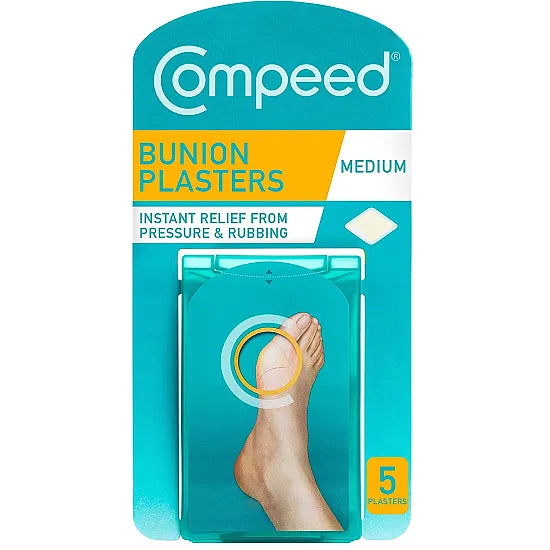
Compeed Bunion Plasters - 5 Hydrocolloid Plasters
Compeed Bunion Plasters - 5 Hydrocolloid Plasters
- ✔️ Cushions bunion pain with hydrocolloid gel technology
- ✔️ Reduces friction between bunion and footwear instantly
- ✔️ Stays in place for up to five days per plaster
- ✔️ Slim, discreet fit inside most everyday shoes
- ✔️ Helps prevent blisters forming over the bunion site
Price Checker
 Lowest price guarantee
 Includes FREE private prescription


Couldn't load pickup availability
What Are Bunion Plasters and Do They Actually Work?
If you've ever winced putting on shoes in the morning, you'll know exactly how disruptive a bunion can be. A bunion — medically known as hallux valgus — is a bony deformity at the base of the big toe, causing the joint to protrude and rub painfully against footwear. It's a surprisingly common condition, affecting people of all ages, though it tends to be more prevalent in women. Bunion plasters offer a practical, non-invasive way to manage that daily discomfort without needing to reach for stronger interventions straight away. The Compeed Bunion Plasters (pack of 5) are a well-established option in the UK, available from our foot care collection at Cured Pharmacy for just £7.99.
Each plaster in this pack uses hydrocolloid gel technology — the same type of material used in wound care dressings — to create a moist, cushioned environment directly over the bunion. Rather than simply sticking a layer of padding on top, the hydrocolloid actively conforms to the shape of your foot, reducing friction and absorbing pressure from shoes throughout the day.
How Does the Hydrocolloid Technology in These Plasters Work?
Hydrocolloid dressings have been used in clinical wound management for decades. In the context of bunion care, the mechanism is slightly different — here, the goal is protection and pain relief rather than wound healing. Here's how it works in practice:
- The hydrocolloid gel layer absorbs moisture from the skin surface, helping the plaster mould closely to the contours of the bunion.
- A cushioning effect is created between the bony prominence and the inner surface of your shoe, reducing the mechanical friction that causes pain.
- The outer layer acts as a barrier, protecting the skin from further rubbing and preventing blisters from forming over the bunion site.
- The plaster stays flexible as you move, so it doesn't bunch up or shift position during walking.
The result is a plaster that works with your foot rather than against it — staying in place through normal daily activity, including light exercise and showering.
Who Should Consider Using Compeed Bunion Plasters?
These plasters are suitable for most adults who experience discomfort from a bunion during everyday activities. They're particularly useful if you're on your feet for long periods, wear close-fitting shoes, or find that your bunion becomes sore and red by the end of the day. That said, they're a management tool — not a cure. They won't correct the underlying bony deformity, but they can make life considerably more comfortable while you explore longer-term options.
- Adults with mild to moderate bunion pain aggravated by footwear
- People who want to avoid or delay surgical intervention
- Those prone to blistering over the bunion area
- Individuals looking for a discreet, wearable solution inside shoes
How Do Compeed Bunion Plasters Compare to Foam Bunion Pads?
| Feature | Compeed Bunion Plasters | Standard Foam Bunion Pads |
|---|---|---|
| Technology | Hydrocolloid gel | Foam padding |
| Adhesion | Self-adhesive, multi-day wear | Often requires separate adhesive or sock to hold in place |
| Moisture management | Absorbs moisture, maintains skin integrity | Minimal moisture management |
| Discreetness | Slim profile, wearable in most shoes | Bulkier, may not fit in all footwear |
Are Compeed Bunion Plasters Suitable for Sensitive or Diabetic Skin?
If you have diabetes, peripheral vascular disease, or any condition affecting circulation or sensation in your feet, you should speak to your GP or podiatrist before using bunion plasters of any kind. The NHS advises that people with diabetes take particular care with foot health, as reduced sensation can mean skin damage goes unnoticed. Similarly, if the skin over your bunion is broken, infected, or inflamed, do not apply a plaster — seek medical advice first. For general skin sensitivity, the hydrocolloid material is generally well tolerated, but patch testing on a small area first is a sensible precaution. If you're managing other skin concerns alongside foot discomfort, you might also find our skin care collection useful for complementary products.
This product is a medicine. Speak to your doctor or pharmacist before using if you have an underlying medical condition or are taking other medicines.
Compeed Bunion Plasters - 5 Hydrocolloid Plasters specifications
| Treatment category | Foot care / bunion protection |
| Mechanism of action | Hydrocolloid gel cushioning and friction reduction |
| Effective for | Bunion pain, friction blisters over bunion site |
| Suitable for | Adults with bunion discomfort; not for broken or infected skin |
| Active ingredient | Hydrocolloid gel (medical device — no pharmacological active ingredient) |
| Pack size | 5 plasters |
| UK classification | Medical device (CE marked) |
| Preparation | Adhesive hydrocolloid plaster |
| Route of administration | Topical / cutaneous |
Specifications of Compeed Bunion Plasters - 5 Hydrocolloid Plasters
What Are Compeed Bunion Plasters and What Are They Used For?
Compeed Bunion Plasters are hydrocolloid medical device plasters designed specifically to cushion and protect the bony prominence caused by a bunion (hallux valgus). They are used to reduce friction between the bunion and footwear, helping to relieve pain and prevent blisters during everyday activities such as walking and standing. They do not treat the underlying structural deformity but provide meaningful symptomatic relief for mild to moderate bunion discomfort. Each pack contains 5 individually wrapped plasters shaped to fit the bunion area at the base of the big toe.
What Do You Need to Know Before Using Compeed Bunion Plasters?
Before applying these plasters, it's important to check that they are appropriate for your situation. There are certain circumstances where use is not recommended without professional guidance.
Do not use Compeed Bunion Plasters if:
- The skin over the bunion is broken, blistered, infected, or inflamed
- You have an open wound or ulcer in the application area
- You have a known allergy to hydrocolloid dressings or any component of the plaster
- You are a child — these plasters are intended for adult use
Use with caution and seek advice first if:
- You have diabetes mellitus — the NHS highlights that people with diabetes are at higher risk of foot complications and should have any foot concerns assessed by a healthcare professional
- You have peripheral arterial disease or poor circulation in your feet
- You have peripheral neuropathy (reduced sensation in the feet)
- You are pregnant — while topical plasters carry minimal systemic risk, it is always sensible to check with your midwife or GP
Drug interactions:
- No pharmacological drug interactions are known, as this is a medical device with no active pharmaceutical ingredient
- If you are using topical creams or ointments on the same area, apply these separately and allow the skin to dry fully before applying the plaster
How Should You Use Compeed Bunion Plasters?
Correct application makes a real difference to how well these plasters perform. Follow these steps for the best result:
- Wash and thoroughly dry the skin around the bunion before application.
- Remove the plaster from its individual wrapper and peel away the protective backing.
- Centre the plaster directly over the bunion, with the cushioned hydrocolloid side facing the skin.
- Press firmly from the centre outwards, smoothing down all edges to ensure full adhesion.
- Warm the plaster gently with your hand for 30–60 seconds — body heat helps activate the adhesive.
- Leave the plaster in place until it begins to peel naturally at the edges; do not remove it prematurely.
- To remove, gently lift one edge and peel back slowly in the direction of hair growth to minimise skin irritation.
| Indication | Age Group | Number of Plasters | Frequency of Change |
|---|---|---|---|
| Bunion pain and friction | Adults (18+) | 1 plaster per bunion | Replace when edges begin to lift (typically every 2–5 days) |
| Bunion blister prevention | Adults (18+) | 1 plaster per affected area | Replace as above; do not apply over an open blister |
If you're also dealing with foot fungal issues alongside bunion discomfort, it's worth exploring our athletes foot and fungal infections range for complementary treatment options.
What Are the Possible Side Effects of Compeed Bunion Plasters?
As a medical device rather than a medicine, Compeed Bunion Plasters have a low side effect profile. Most people use them without any problems. However, as with any adhesive product applied to skin, reactions can occasionally occur.
Common side effects (may affect some users):
- Mild redness or skin irritation at the edges of the plaster after removal
- Temporary skin maceration (softening and whitening) under the plaster due to moisture retention — this is normal and resolves once the plaster is removed
Less common side effects:
- Allergic contact dermatitis — itching, rash, or swelling at the application site
- Skin stripping or minor abrasion if the plaster is removed too quickly or forcefully
If you notice signs of an allergic reaction — such as spreading redness, significant swelling, or blistering — remove the plaster immediately and consult your pharmacist or GP. For general pain management alongside your bunion care, our pain relief collection includes options that may help with associated discomfort.
How Should You Store Compeed Bunion Plasters?
- Store below 25°C in a cool, dry place
- Keep away from direct sunlight and sources of heat
- Do not store in a bathroom or humid environment, as moisture can affect adhesive performance
- Keep out of the reach and sight of children
- Do not use after the expiry date printed on the packaging
- Keep each plaster in its individual sealed wrapper until ready to use
References
Written and reviewed by our qualified team
Your safety and success are our highest priorities. Our medical team rigorously evaluates every product and piece of advice we provide, ensuring you receive only the most effective, science-backed solutions available.
Frequently Asked Questions
Where can I buy Compeed Bunion Plasters online in the UK?
You can buy Compeed Bunion Plasters directly from Cured Pharmacy for £7.99 per pack of 5, with fast UK delivery. They are also stocked in some high street pharmacies and supermarkets, though availability can vary. Ordering online is often the most convenient option, especially if you need them delivered to your door.
How do Compeed Bunion Plasters work on the foot?
Compeed Bunion Plasters use hydrocolloid gel technology to form a cushioned, protective layer directly over the bunion. The gel absorbs moisture from the skin and conforms to the shape of the bony prominence, reducing friction between the bunion and the inside of your shoe. This cushioning effect helps relieve pain and prevents blisters from forming during everyday activity.
How do I apply Compeed Bunion Plasters correctly?
Start by washing and drying the skin around the bunion thoroughly, then peel the backing from the plaster and centre it over the bunion with the gel side facing the skin. Press firmly from the centre outwards, smoothing all edges down, and hold in place for 30–60 seconds to activate the adhesive with body heat. Leave the plaster in place until the edges begin to lift naturally — do not remove it early.
How long do Compeed Bunion Plasters stay on for?
Compeed Bunion Plasters are designed for multi-day wear and typically stay in place for 2–5 days depending on activity levels and footwear. They are water-resistant, so you can shower while wearing them without the plaster losing adhesion. Replace the plaster when the edges begin to peel away from the skin.
Can I wear Compeed Bunion Plasters inside shoes all day?
Yes — these plasters are specifically designed to be worn discreetly inside shoes during normal daily activities, including walking and standing for extended periods. Their slim, flexible profile means they move with your foot rather than bunching up or shifting. Most people find them comfortable enough to forget they're wearing one.
Are Compeed Bunion Plasters suitable for people with diabetes?
People with diabetes should consult their GP, podiatrist, or pharmacist before using bunion plasters of any kind. The NHS advises that diabetes can affect circulation and sensation in the feet, meaning skin damage may go unnoticed and heal more slowly. A healthcare professional can advise on the safest approach to managing bunion discomfort alongside your diabetes care.
What are the side effects of Compeed Bunion Plasters?
Side effects are uncommon but can include mild redness or skin irritation at the plaster edges after removal, and temporary skin softening (maceration) under the plaster — both of which resolve quickly. In rare cases, an allergic contact reaction may occur, presenting as itching, rash, or swelling; if this happens, remove the plaster and seek pharmacist advice. These plasters are a medical device, not a medicine, so systemic side effects are not expected.
Can I use Compeed Bunion Plasters on broken or blistered skin?
No — you should not apply Compeed Bunion Plasters over broken skin, open blisters, wounds, or infected areas. Doing so could trap bacteria and delay healing. If the skin over your bunion is already broken, clean the area and allow it to heal before using a plaster, or seek advice from your pharmacist or GP about appropriate wound care.
How many plasters come in a pack of Compeed Bunion Plasters?
Each pack of Compeed Bunion Plasters contains 5 individually wrapped hydrocolloid plasters. Given that each plaster can last several days, a single pack provides a reasonable supply for ongoing bunion management. If you use them regularly, it's worth keeping a spare pack at home — you can browse our full foot care collection for restocking.
What are the alternatives to Compeed Bunion Plasters?
Alternatives include foam bunion pads, gel toe separators, bunion sleeves, and silicone bunion guards — all of which aim to reduce friction and pressure on the joint. For persistent or worsening bunion pain, a GP referral to a podiatrist or orthopaedic surgeon may be appropriate to discuss longer-term options including orthotics or surgery. The NHS provides guidance on bunion treatment options on their website.
How long can I keep using Compeed Bunion Plasters?
There is no strict limit on how long you can use bunion plasters, as they are a symptomatic management tool rather than a treatment with a defined course. However, if your bunion pain is worsening, not improving, or significantly affecting your quality of life despite using plasters, it's worth speaking to your GP or a podiatrist. Ongoing or severe bunion deformity may benefit from more targeted interventions.
Do Compeed Bunion Plasters actually reduce bunion size?
No — Compeed Bunion Plasters do not reduce the size of a bunion or correct the underlying bony deformity. They are designed purely to cushion the area, reduce friction, and relieve pain during daily activities. Correcting a bunion structurally requires either specialist orthotics or, in more severe cases, surgical intervention.
Are Compeed Bunion Plasters waterproof?
Compeed Bunion Plasters are water-resistant, meaning they can withstand showering and light moisture exposure without losing adhesion. They are not designed for prolonged submersion such as swimming, which may cause the edges to lift prematurely. For best results, pat the plaster dry gently after showering rather than rubbing it.
What is the latest research on hydrocolloid plasters for bunion pain?
Hydrocolloid dressings have a well-established evidence base in wound care and blister management, and their cushioning properties are widely recognised in podiatric practice for reducing friction-related foot pain. While large-scale randomised controlled trials specifically on bunion plasters are limited, clinical consensus supports their use as a first-line conservative measure for mild to moderate bunion discomfort. The NHS recommends conservative management — including padding and appropriate footwear — as the first step in bunion care.
Can I use pain relief alongside Compeed Bunion Plasters?
Yes — if your bunion is causing significant pain, you can use over-the-counter pain relief such as paracetamol or ibuprofen alongside the plasters, provided these are appropriate for you. Our pain relief collection includes a range of options suitable for musculoskeletal discomfort. Always check with your pharmacist if you are unsure which pain relief is right for your circumstances.
Written and reviewed by our qualified team

Reviewed by:
Tarun Kumar
Superintendent/ Clinical Lead
📖 Find out more about our team of medical content authors and how we ensure the accuracy of our content with our content guidelines.
Content last updated: 14 Sep 2026
Other popular options


We’re a safe and
regulated UK service

Lowest Price Guarantee

We're convinced you won't find your treatment cheaper, but if you do we'll refund the difference.
Find out more
100% discreet packaging

Discreet, unbranded packaging for every order.
Find out more

Need help?
Talk to our friendly experts now


How our service works

Service setup

Discreet packaging

Express delivery