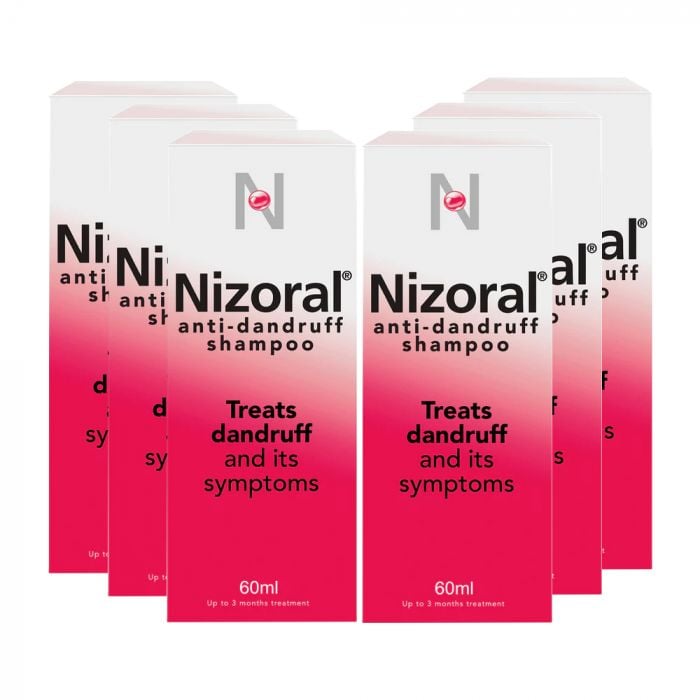
Nizoral Anti-Dandruff Shampoo - 60ml
- ✔️ Targets Malassezia yeast — the root cause of dandruff
- ✔️ Contains clinically active ketoconazole 2% antifungal
- ✔️ Treats and prevents seborrhoeic dermatitis of the scalp
- ✔️ Reduces flaking, itching, and scaling within 2–4 weeks
- ✔️ Suitable for adults and young people aged 12 and over
Price Checker
 Lowest price guarantee
 Includes FREE private prescription


Couldn't load pickup availability
What Is Nizoral Anti-Dandruff Shampoo and Does It Work?
Dandruff affects roughly half of all adults at some point in their lives, and for many people it can be persistent, embarrassing, and frustrating to manage. Nizoral anti-dandruff shampoo is a clinically proven, medicated shampoo containing ketoconazole 2% — an antifungal active ingredient that targets the root cause of dandruff rather than simply masking the flakes. Available over the counter in a convenient 60ml size, it is one of the most widely recommended options for people dealing with moderate to severe dandruff or seborrhoeic dermatitis of the scalp. If you are looking for a reliable, pharmacist-recommended solution, you can explore our full range of hair care products at Cured Pharmacy.
Dandruff is primarily caused by an overgrowth of a naturally occurring yeast called Malassezia on the scalp. This yeast feeds on sebum (the scalp's natural oil) and, in susceptible individuals, triggers an inflammatory response that leads to the characteristic flaking, itching, and scaling. Nizoral works directly against this fungal trigger, which is why it tends to be more effective than cosmetic anti-dandruff shampoos for persistent cases.
How Does Nizoral Anti-Dandruff Shampoo Work on the Scalp?
The active ingredient, ketoconazole 2%, belongs to a class of medicines called imidazole antifungals. It works by interfering with the synthesis of ergosterol — a vital component of fungal cell membranes. Without ergosterol, the fungal cell membrane becomes permeable and the organism cannot survive. Here is a step-by-step breakdown of the mechanism:
- Ketoconazole inhibits the enzyme lanosterol 14α-demethylase, which is essential for ergosterol production in fungi.
- Without ergosterol, the Malassezia cell membrane loses structural integrity.
- Fungal cells become unable to replicate and eventually die off.
- With the fungal load reduced, the scalp's inflammatory response calms, and flaking and itching diminish.
Because ketoconazole acts on a pathway specific to fungi, it does not harm human scalp cells in the same way, making it well tolerated for most people when used as directed.
Who Should Use Nizoral Anti-Dandruff Shampoo?
Nizoral is suitable for adults and children over 12 years of age who are experiencing dandruff or seborrhoeic dermatitis of the scalp. It is particularly useful for people who have not found adequate relief from standard cosmetic anti-dandruff shampoos. That said, it is not appropriate for everyone.
Nizoral may be suitable for you if you:
- Have persistent or recurrent dandruff that does not respond to regular shampoos.
- Have been told by a GP or pharmacist that you have seborrhoeic dermatitis of the scalp.
- Experience significant scalp itching, redness, or scaling alongside flaking.
- Want a clinically active treatment rather than a cosmetic product.
It is not recommended for children under 12, and you should seek medical advice before use if you have a known allergy to ketoconazole or any other ingredient in the formulation.
How Does Nizoral Anti-Dandruff Shampoo Compare to Other Dandruff Treatments?
| Feature | Nizoral Anti-Dandruff Shampoo | Zinc Pyrithione Shampoo (e.g. Head & Shoulders) |
|---|---|---|
| Active ingredient | Ketoconazole 2% | Zinc pyrithione 1% |
| Mechanism | Antifungal — inhibits ergosterol synthesis | Antifungal/antibacterial — disrupts cell membrane |
| Suitable for seborrhoeic dermatitis | Yes — clinically indicated | Mild cases only |
| Frequency of use | Twice weekly (treatment); fortnightly (prevention) | Can be used more frequently |
| UK classification | Pharmacy medicine (P) | General sale (GSL) |
Is Nizoral Anti-Dandruff Shampoo Suitable for Colour-Treated or Chemically Processed Hair?
If you colour or chemically treat your hair, you may be wondering whether nizoral anti-dandruff shampoo is safe to use. The shampoo is generally considered compatible with colour-treated hair, though some users report a slight change in hair texture with prolonged use. It is always a good idea to do a patch test before first use, particularly if your scalp is sensitive. If you are also concerned about hair thinning alongside dandruff, you might find it helpful to browse our female hair loss collection for additional support options.
Store Nizoral below 25°C, away from direct sunlight, and keep it out of the reach of children. Do not use after the expiry date printed on the packaging.
This product is a medicine. Speak to your doctor or pharmacist before using if you have an underlying medical condition or are taking other medicines.
Nizoral Anti-Dandruff Shampoo 60ml specifications
| Treatment category | Antifungal / Dandruff treatment |
| Active ingredient | Ketoconazole 2% w/v |
| Mechanism of action | Inhibits ergosterol synthesis in fungal cell membranes |
| Effective against | Dandruff, seborrhoeic dermatitis (scalp) |
| Suitable for | Adults and children over 12 years |
| Pack size | 60ml |
| Strength | 2% ketoconazole |
| UK classification | Pharmacy medicine (P) |
| Drug class | Imidazole antifungal |
| Preparation | Medicated shampoo |
| Route of administration | Topical (scalp) |
Specifications of Nizoral Anti-Dandruff Shampoo 60ml
What Is Nizoral Anti-Dandruff Shampoo and What Is It Used For?
Nizoral Anti-Dandruff Shampoo 60ml is a medicated topical shampoo containing ketoconazole 2% w/v as its active ingredient. It is used to treat dandruff and seborrhoeic dermatitis of the scalp in adults and young people aged 12 and over. Seborrhoeic dermatitis is a common skin condition that causes scaly patches, red skin, and stubborn dandruff — it is driven largely by an overgrowth of Malassezia yeast on the scalp. Nizoral targets this yeast directly, reducing flaking, itching, and scaling. It can also be used as a preventative treatment once symptoms have cleared, to reduce the likelihood of recurrence.
What Do You Need to Know Before Using Nizoral Anti-Dandruff Shampoo?
Before using this shampoo, read the following carefully. Not everyone is suitable for this product, and certain conditions or medicines may affect whether it is right for you.
Do not use Nizoral if you:
- Are allergic to ketoconazole or any other ingredient in the formulation (check the full ingredient list on the packaging).
- Are under 12 years of age.
- Have broken, inflamed, or severely irritated skin on the scalp without first seeking medical advice.
Take care and speak to a pharmacist or GP if you:
- Are pregnant or breastfeeding — systemic absorption from topical use is minimal, but professional guidance is advisable.
- Have a history of liver problems, as ketoconazole (in oral form) is associated with hepatotoxicity; topical risk is very low but worth mentioning to your doctor.
- Have a known sensitivity to sulphites, as the formulation may contain sodium sulphite.
Known drug interactions:
- Topical ketoconazole at the doses used in this shampoo is not expected to cause clinically significant drug interactions due to minimal systemic absorption.
- If you are using other topical scalp treatments simultaneously, consult your pharmacist before combining them.
How Should You Use Nizoral Anti-Dandruff Shampoo Correctly?
Always use this shampoo exactly as described in the patient information leaflet or as directed by your pharmacist. Do not use more than recommended.
- Wet your hair and scalp thoroughly with warm water.
- Apply a sufficient amount of Nizoral shampoo to the scalp — you do not need to apply it along the full length of the hair.
- Work into a lather and massage gently into the scalp.
- Leave the shampoo on the scalp for 3 to 5 minutes — this contact time is important for the ketoconazole to work.
- Rinse thoroughly with water.
- Avoid contact with eyes. If contact occurs, rinse immediately with plenty of water.
| Indication | Age Group | Dose | Frequency |
|---|---|---|---|
| Treatment of dandruff / seborrhoeic dermatitis | Adults & children 12+ | Sufficient amount to lather scalp | Twice weekly for 2–4 weeks |
| Prevention of recurrence | Adults & children 12+ | Sufficient amount to lather scalp | Once every 1–2 weeks |
| Children under 12 | Under 12 | Not recommended — seek medical advice | |
If you are also managing a fungal skin condition elsewhere on the body, you may find our athletes foot and fungal infections collection useful for additional antifungal treatments.
What Are the Possible Side Effects of Nizoral Anti-Dandruff Shampoo?
Like all medicines, Nizoral can cause side effects, although not everyone experiences them. Most side effects are mild and localised to the scalp.
Common side effects (may affect up to 1 in 10 people):
- Mild scalp irritation or burning sensation
- Itching or tingling of the scalp
- Dryness or changes in hair texture
Less common side effects (may affect up to 1 in 100 people):
- Contact dermatitis (allergic skin reaction)
- Increased hair loss or hair breakage — usually temporary
- Oiliness or dryness of the scalp
- Discolouration of chemically treated or grey hair (rare)
Stop using the shampoo and seek medical advice if you develop a severe allergic reaction, including rash, swelling, or difficulty breathing. These reactions are rare but require prompt attention.
How Should You Store Nizoral Anti-Dandruff Shampoo?
Correct storage helps maintain the product's effectiveness and safety throughout its shelf life.
- Store below 25°C in a cool, dry place.
- Keep away from direct sunlight and heat sources.
- Keep the bottle tightly closed when not in use.
- Keep out of the reach and sight of children.
- Do not use after the expiry date printed on the bottle or carton.
- Do not dispose of medicines via wastewater or household waste — return unused product to your pharmacy.
If you are looking for additional scalp or skin support products, our skin care collection includes a range of dermatologically relevant options to complement your routine.
References
Written and reviewed by our qualified team
Your safety and success are our highest priorities. Our medical team rigorously evaluates every product and piece of advice we provide, ensuring you receive only the most effective, science-backed solutions available.
Frequently Asked Questions
Where can I buy Nizoral Anti-Dandruff Shampoo online in the UK?
You can buy Nizoral Anti-Dandruff Shampoo 60ml directly from Cured Pharmacy, a GPhC-registered UK online pharmacy. It is available without a prescription as an over-the-counter pharmacy medicine. Simply add it to your basket and choose your preferred delivery option for fast, discreet dispatch.
How does Nizoral Anti-Dandruff Shampoo work in the body?
Nizoral contains ketoconazole 2%, which works by blocking the production of ergosterol — a substance that fungi need to maintain their cell membranes. Without ergosterol, the Malassezia yeast responsible for dandruff cannot survive or replicate. This reduces the fungal load on the scalp, which in turn calms the inflammatory response that causes flaking and itching.
How do I use Nizoral Anti-Dandruff Shampoo step by step?
Wet your hair thoroughly, apply Nizoral to the scalp, and work into a lather. Leave it on for 3 to 5 minutes — this contact time is essential for the ketoconazole to act — then rinse thoroughly. For treatment, use twice a week for 2 to 4 weeks; for prevention, once every 1 to 2 weeks is sufficient.
How long does Nizoral Anti-Dandruff Shampoo take to work?
Most people begin to notice a reduction in flaking and itching within the first 2 weeks of twice-weekly use. Full improvement is typically seen after a complete 2 to 4 week treatment course. If symptoms have not improved after 4 weeks, speak to your pharmacist or GP.
Can I use Nizoral Anti-Dandruff Shampoo every day?
No — Nizoral is not designed for daily use and using it more frequently than recommended will not improve results. For treating dandruff, use it twice a week for up to 4 weeks. For ongoing prevention once symptoms have cleared, once every 1 to 2 weeks is the recommended frequency.
What are the side effects of Nizoral Anti-Dandruff Shampoo?
Common side effects include mild scalp irritation, itching, or temporary changes in hair texture. Less commonly, some people experience contact dermatitis or increased hair shedding, which is usually temporary. If you develop a severe allergic reaction — such as swelling, rash, or difficulty breathing — stop use immediately and seek medical attention.
Is Nizoral Anti-Dandruff Shampoo safe to use during pregnancy?
Systemic absorption of ketoconazole from topical scalp application is very low, but it is still advisable to speak to your GP or pharmacist before using Nizoral if you are pregnant or breastfeeding. They can help you weigh up the benefits and any potential risks based on your individual circumstances.
Who is eligible to use Nizoral Anti-Dandruff Shampoo?
Nizoral is suitable for adults and young people aged 12 and over who have dandruff or seborrhoeic dermatitis of the scalp. It is not recommended for children under 12. People with a known allergy to ketoconazole or any other ingredient in the formulation should not use this product.
What happens if I miss a dose of Nizoral Anti-Dandruff Shampoo?
Because Nizoral is a topical shampoo used on a schedule rather than a daily tablet, missing a single application is not a cause for concern. Simply use it at your next scheduled wash and continue as normal. Do not double up by using it twice in one day to compensate for a missed application.
What are the alternatives to Nizoral Anti-Dandruff Shampoo?
Alternatives include shampoos containing zinc pyrithione (such as Head & Shoulders), selenium sulphide, or coal tar — all of which have antifungal or anti-inflammatory properties. However, ketoconazole 2% as found in Nizoral is generally considered more clinically active for moderate to severe dandruff and seborrhoeic dermatitis. You can also explore our broader hair care range for complementary options.
How long can you use Nizoral Anti-Dandruff Shampoo for?
The treatment course is typically 2 to 4 weeks of twice-weekly use. After that, you can switch to a preventative frequency of once every 1 to 2 weeks for as long as needed to keep dandruff at bay. If you find you need to use it continuously at treatment frequency, speak to your GP to rule out an underlying skin condition.
Can Nizoral Anti-Dandruff Shampoo help with hair loss?
Nizoral is not licensed as a hair loss treatment, but some research suggests that reducing scalp inflammation caused by Malassezia overgrowth may create a healthier environment for hair growth. If you are concerned about hair thinning, our female hair loss collection includes products specifically designed to address hair thinning. Always speak to a GP or dermatologist for a proper assessment of hair loss.
Can I use Nizoral Anti-Dandruff Shampoo on colour-treated hair?
Nizoral is generally considered safe for use on colour-treated hair, though some users report a slight change in hair texture or, rarely, minor colour alteration with prolonged use. It is sensible to do a small patch test before first use if your hair is chemically treated or bleached. If you notice any unwanted changes, stop use and consult your pharmacist.
Does Nizoral Anti-Dandruff Shampoo treat seborrhoeic dermatitis?
Yes — Nizoral is clinically indicated for seborrhoeic dermatitis of the scalp, not just dandruff. Seborrhoeic dermatitis involves more pronounced redness, scaling, and inflammation than typical dandruff, and the ketoconazole 2% in Nizoral directly targets the Malassezia yeast that drives this condition. If symptoms are severe or widespread, a GP assessment is recommended.
What are the latest studies on ketoconazole shampoo for dandruff?
Ketoconazole 2% shampoo has been studied extensively and remains one of the most evidence-supported topical treatments for dandruff and seborrhoeic dermatitis. Clinical evidence consistently shows it reduces Malassezia colonisation and associated scalp inflammation more effectively than many cosmetic alternatives. The NHS and BNF both recognise ketoconazole as a first-line antifungal option for scalp conditions caused by fungal overgrowth.
Written and reviewed by our qualified team

Reviewed by:
Tarun Kumar
Superintendent/ Clinical Lead
📖 Find out more about our team of medical content authors and how we ensure the accuracy of our content with our content guidelines.
Content last updated: 14 Sep 2026
Other popular options


We’re a safe and
regulated UK service

Lowest Price Guarantee

We're convinced you won't find your treatment cheaper, but if you do we'll refund the difference.
Find out more
100% discreet packaging

Discreet, unbranded packaging for every order.
Find out more

Need help?
Talk to our friendly experts now


How our service works

Service setup

Discreet packaging

Express delivery