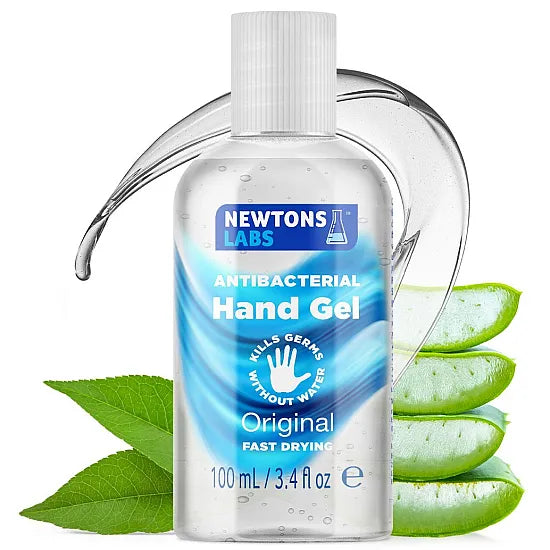
Newton's Antibacterial Hand Gel & Sanitiser - 100ml
Newton's Antibacterial Hand Gel & Sanitiser - 100ml
- ✔️ Kills bacteria and many viruses on hands within 30 seconds
- ✔️ Compact 100ml size fits in any pocket or handbag
- ✔️ Alcohol-based formula effective without soap or water
- ✔️ Suitable for adults and children under adult supervision
- ✔️ Affordable everyday hand hygiene at just £1.49
Price Checker
 Lowest price guarantee
 Includes FREE private prescription


Couldn't load pickup availability
What Is Newton's Antibacterial Hand Gel?
Keeping your hands clean is one of the simplest and most effective ways to protect yourself and others from infection. Newton's Antibacterial Hand Gel & Sanitiser 100ml is a compact, easy-to-carry antibacterial hand gel designed to reduce harmful bacteria on your hands quickly — no water or soap required. At just £1.49, it offers an affordable way to maintain hand hygiene whether you're commuting, shopping, or travelling.
The NHS highlights that good hand hygiene is one of the most important steps in preventing the spread of infections, including colds, flu, and gastrointestinal illnesses. This 100ml bottle fits neatly into a pocket, bag, or glove compartment, making it genuinely practical for everyday life. If you're also looking to support your overall health during cold and flu season, you might find our cold and flu range useful alongside your hand hygiene routine.
How Does Newton's Hand Gel Work to Kill Germs?
Alcohol-based hand sanitisers work through a well-understood mechanism. The ethanol in the gel disrupts the lipid membranes and denatures the proteins of bacteria and many viruses, rendering them inactive almost immediately on contact. This is why the NHS recommends alcohol-based sanitisers as an effective hand hygiene measure when handwashing is not possible.
- Ethanol penetrates bacterial cell walls and disrupts their structure
- Proteins within pathogens are denatured, stopping them from functioning
- The gel evaporates quickly, leaving no sticky residue
- Effective against a broad range of bacteria and enveloped viruses
Who Should Use Newton's Antibacterial Hand Sanitiser?
This product is suitable for most adults and older children who need a convenient hand hygiene solution when soap and water aren't to hand. It's particularly useful in situations where infection risk is higher or access to facilities is limited.
- Adults and teenagers who are out and about regularly
- Healthcare workers or carers needing frequent hand sanitisation
- Travellers and commuters using public transport
- Anyone supporting a vulnerable person at home
Children should only use hand sanitiser under adult supervision due to the risk of accidental ingestion. Those with known alcohol sensitivity or very dry, broken skin should seek advice from a pharmacist before use.
How Does Newton's Hand Gel Compare to Other Hand Sanitisers?
| Feature | Newton's Hand Gel 100ml | Typical Foam Hand Sanitiser |
|---|---|---|
| Format | Gel | Foam |
| Size | 100ml — pocket-friendly | Varies (often 250ml+) |
| Price | £1.49 | Typically £3.00–£6.00 |
| Active ingredient | Ethanol | Ethanol or isopropanol |
Is Newton's Antibacterial Hand Gel Safe to Store at Home?
Yes — provided you follow a few straightforward guidelines. Store the product below 25°C, away from direct sunlight and heat sources. Because this antibacterial hand gel contains ethanol, it is flammable and must be kept away from naked flames and sparks. Always ensure the cap is tightly closed after use to prevent evaporation.
Keep the bottle out of reach of children and pets. If you're building a broader home health kit, our first aid collection includes a range of products to help you stay prepared for everyday health needs.
This product is a medicine. Speak to your doctor or pharmacist before using if you have an underlying medical condition or are taking other medicines.
Newton's Antibacterial Hand Gel & Sanitiser 100ml specifications
| Treatment category | Hand hygiene / Infection prevention |
| Mechanism of action | Ethanol denatures bacterial proteins and disrupts cell membranes |
| Effective against | Bacteria and enveloped viruses |
| Suitable for | Adults and children (under adult supervision) |
| Active ingredient | Ethanol (alcohol) |
| Pack size | 100ml |
| UK classification | General Sale / OTC |
| Preparation | Gel |
| Route of administration | Topical (external use only) |
Specifications of Newton's Antibacterial Hand Gel & Sanitiser 100ml
What Is Newton's Antibacterial Hand Gel and What Is It Used For?
Newton's Antibacterial Hand Gel & Sanitiser 100ml is a topical, alcohol-based hand hygiene product intended for use on the skin of the hands. It is used to reduce the number of bacteria and many viruses present on the hands when soap and running water are not available. The NHS recommends using an alcohol-based hand sanitiser as part of everyday infection prevention, particularly in public spaces, healthcare settings, and during periods of increased illness in the community.
This product is for external use only. It is not a substitute for thorough handwashing with soap and water, especially when hands are visibly soiled or after using the toilet.
What Do You Need to Know Before Using Newton's Hand Gel?
Before using this product, please read the following warnings carefully.
Do not use this product if:
- You are allergic to ethanol or any other ingredient in the formulation
- You have open wounds, cuts, or severely broken skin on your hands
- You are applying it to a child without direct adult supervision
Warnings and precautions:
- For external use only — do not swallow
- Keep away from eyes, mouth, and mucous membranes
- Flammable — keep away from naked flames and heat sources
- Allow hands to dry fully before approaching any open flame or spark
- If accidentally ingested, seek immediate medical attention or contact NHS 111
- Those with very dry or eczema-prone skin should use with caution and consider a moisturiser afterwards
Known drug interactions:
- No significant systemic drug interactions are known for topically applied ethanol-based hand sanitisers
- Avoid contact with disulfiram patches or topical products containing ingredients sensitive to alcohol
How Should You Use Newton's Antibacterial Hand Sanitiser?
Using hand sanitiser correctly is just as important as using it regularly. The NHS advises covering all surfaces of the hands and rubbing until the product has fully evaporated — this ensures maximum effectiveness.
- Apply approximately 1–2ml of gel (roughly a 50p-coin-sized amount) to the palm of one hand
- Rub both palms together to spread the gel evenly
- Interlace your fingers and rub between them thoroughly
- Rub the backs of both hands
- Clean around your thumbs and the tips of your fingers
- Continue rubbing until the gel has completely evaporated — approximately 20–30 seconds
- Do not rinse off or wipe away before the gel has dried
| Indication | Age Group | Dose | Frequency |
|---|---|---|---|
| General hand hygiene | Adults & teenagers | 1–2ml per application | As needed |
| General hand hygiene | Children (under supervision) | Small amount, adult-applied | As needed |
| Infection prevention | Adults | 1–2ml per application | Before and after contact with others |
If you're managing a health condition that makes you more vulnerable to infection, you may also want to explore our vitamins and supplements range to support your immune health alongside good hand hygiene.
What Are the Possible Side Effects of Newton's Hand Gel?
Like all topical products, Newton's Antibacterial Hand Gel may cause side effects in some people, though not everyone will experience them. Most reactions are mild and resolve on their own.
Common side effects:
- Skin dryness, particularly with very frequent use
- Mild stinging or tingling on application, especially on sensitive or broken skin
- Temporary redness of the skin
Less common side effects:
- Contact dermatitis (itchy, inflamed skin) in those with alcohol sensitivity
- Allergic skin reaction — if this occurs, stop use immediately and seek advice from a pharmacist or GP
If you notice persistent irritation or a worsening skin reaction, discontinue use and consult a healthcare professional. You can also browse our skin care collection for products that may help soothe dry or irritated hands.
How Should You Store Newton's Antibacterial Hand Gel?
- Store below 25°C in a cool, dry place
- Keep away from direct sunlight and heat sources
- Keep away from naked flames and sparks — the product is flammable
- Always replace the cap tightly after use to prevent evaporation
- Keep out of the reach and sight of children
- Do not use after the expiry date printed on the packaging
- Do not store in the bathroom or near a sink where humidity is high
References
- https://www.nhs.uk/live-well/best-way-to-wash-your-hands/
- https://www.nhs.uk/conditions/infections/
- https://www.nhs.uk/conditions/coronavirus-covid-19/how-to-avoid-catching-and-spreading-coronavirus-covid-19/
- https://www.nhs.uk/conditions/skin-rashes/
- https://www.gov.uk/government/publications/covid-19-decontamination-in-non-healthcare-settings/covid-19-decontamination-in-non-healthcare-settings
Written and reviewed by our qualified team
Your safety and success are our highest priorities. Our medical team rigorously evaluates every product and piece of advice we provide, ensuring you receive only the most effective, science-backed solutions available.
Frequently Asked Questions
Where can I buy Newton's Antibacterial Hand Gel online in the UK?
You can buy Newton's Antibacterial Hand Gel & Sanitiser 100ml directly from Cured Pharmacy online for just £1.49. No prescription is needed, and it is dispatched quickly to UK addresses. It is a general sale product available to adults without any clinical consultation.
How does antibacterial hand gel kill germs?
Alcohol-based hand sanitisers work by denaturing the proteins and disrupting the lipid membranes of bacteria and many viruses, effectively destroying them on contact. The ethanol in Newton's hand gel evaporates quickly, leaving no residue. This mechanism is well-established and recognised by the NHS as an effective infection prevention measure.
How do I use Newton's Hand Gel correctly step by step?
Apply a small amount — roughly the size of a 50p coin — to the palm of one hand, then rub both hands together, covering all surfaces including between fingers, around thumbs, and under nails. Continue rubbing for 20 to 30 seconds until the gel has fully evaporated. Do not rinse off or wipe away before it has dried completely.
How often should I use hand sanitiser during the day?
You can use hand sanitiser as often as needed throughout the day, particularly before eating, after touching shared surfaces, after public transport, and before and after contact with vulnerable individuals. There is no strict maximum number of applications, but very frequent use may cause skin dryness. Applying a moisturiser at the end of the day can help counteract this.
Is Newton's Hand Gel safe for children to use?
Children can use hand sanitiser, but only under direct adult supervision due to the risk of accidental ingestion of the alcohol content. Adults should apply the gel to a child's hands and ensure it has fully dried before the child touches their face or mouth. Keep the bottle stored out of reach of young children at all times.
What are the side effects of using antibacterial hand gel regularly?
The most common side effect of regular use is skin dryness, as ethanol can strip natural oils from the skin over time. Some people may also experience mild stinging or temporary redness, particularly on sensitive or broken skin. If you develop a persistent rash or signs of contact dermatitis, stop use and speak to a pharmacist — you can also explore our skin care range for soothing options.
Can I use hand sanitiser instead of washing my hands with soap and water?
Hand sanitiser is an effective alternative when soap and water are not available, but the NHS recommends washing hands with soap and water as the preferred method — especially when hands are visibly dirty, after using the toilet, or after handling food. Sanitiser is best used as a supplement to, rather than a complete replacement for, regular handwashing.
Is Newton's Antibacterial Hand Gel flammable?
Yes, because it contains ethanol, Newton's hand gel is flammable. You should keep it away from naked flames, sparks, and heat sources at all times. Always allow your hands to dry fully — which takes around 20 to 30 seconds — before approaching any open flame, including gas hobs or candles.
Does hand sanitiser work against viruses as well as bacteria?
Alcohol-based hand sanitisers are effective against many enveloped viruses, including influenza and coronaviruses, as well as a broad range of bacteria. However, they are less effective against non-enveloped viruses such as norovirus and some types of gastroenteritis-causing pathogens — for these, thorough handwashing with soap and water is more effective. The NHS advises using soap and water after contact with someone who has a vomiting or diarrhoeal illness.
How long does a 100ml bottle of Newton's Hand Gel last?
A 100ml bottle typically provides around 50 to 60 applications, depending on how much gel you use each time. For most people using it several times a day while out and about, a single bottle will last one to two weeks. It is a convenient size that fits within airline liquid restrictions for hand luggage, making it ideal for travel — see our travel health range for more on-the-go essentials.
What happens if Newton's Hand Gel is accidentally swallowed?
If this product is accidentally ingested, seek immediate medical attention or contact NHS 111 straight away. Do not induce vomiting unless instructed to do so by a medical professional. Ethanol ingestion can be particularly dangerous for young children, so always store the bottle out of reach.
Can I use hand sanitiser on broken or damaged skin?
Using alcohol-based hand gel on open wounds, cuts, or severely broken skin is not recommended, as it can cause significant stinging and may delay healing. If your skin is broken, wash hands gently with mild soap and water instead. Those with conditions such as eczema or psoriasis should seek pharmacist advice before using alcohol-based sanitisers regularly.
What are the alternatives to Newton's Antibacterial Hand Gel?
Alternatives include other alcohol-based hand sanitisers in gel, foam, or spray formats, as well as antibacterial hand wipes for situations where a gel is impractical. Soap and water remains the gold-standard alternative recommended by the NHS. If you are looking for broader infection prevention support, our first aid collection includes a range of hygiene and wound care products.
How should I store Newton's Hand Gel at home?
Store the bottle below 25°C in a cool, dry place away from direct sunlight and heat sources. Because the product is flammable, never store it near a cooker, radiator, or open flame. Keep the cap tightly closed after each use to prevent the ethanol from evaporating and reducing the product's effectiveness.
What is the latest guidance on using hand sanitiser for infection prevention?
Current NHS and UK government guidance continues to recommend alcohol-based hand sanitisers as an important tool in reducing the spread of respiratory and gastrointestinal infections, particularly in healthcare and public settings. The WHO recommends formulations containing at least 60% ethanol for effective antimicrobial activity. Newton's hand gel meets this standard, making it a reliable everyday hygiene product.
Written and reviewed by our qualified team

Reviewed by:
Tarun Kumar
Superintendent/ Clinical Lead
📖 Find out more about our team of medical content authors and how we ensure the accuracy of our content with our content guidelines.
Content last updated: 14 Sep 2026
Other popular options


We’re a safe and
regulated UK service

Lowest Price Guarantee

We're convinced you won't find your treatment cheaper, but if you do we'll refund the difference.
Find out more
100% discreet packaging

Discreet, unbranded packaging for every order.
Find out more

Need help?
Talk to our friendly experts now


How our service works

Service setup

Discreet packaging

Express delivery