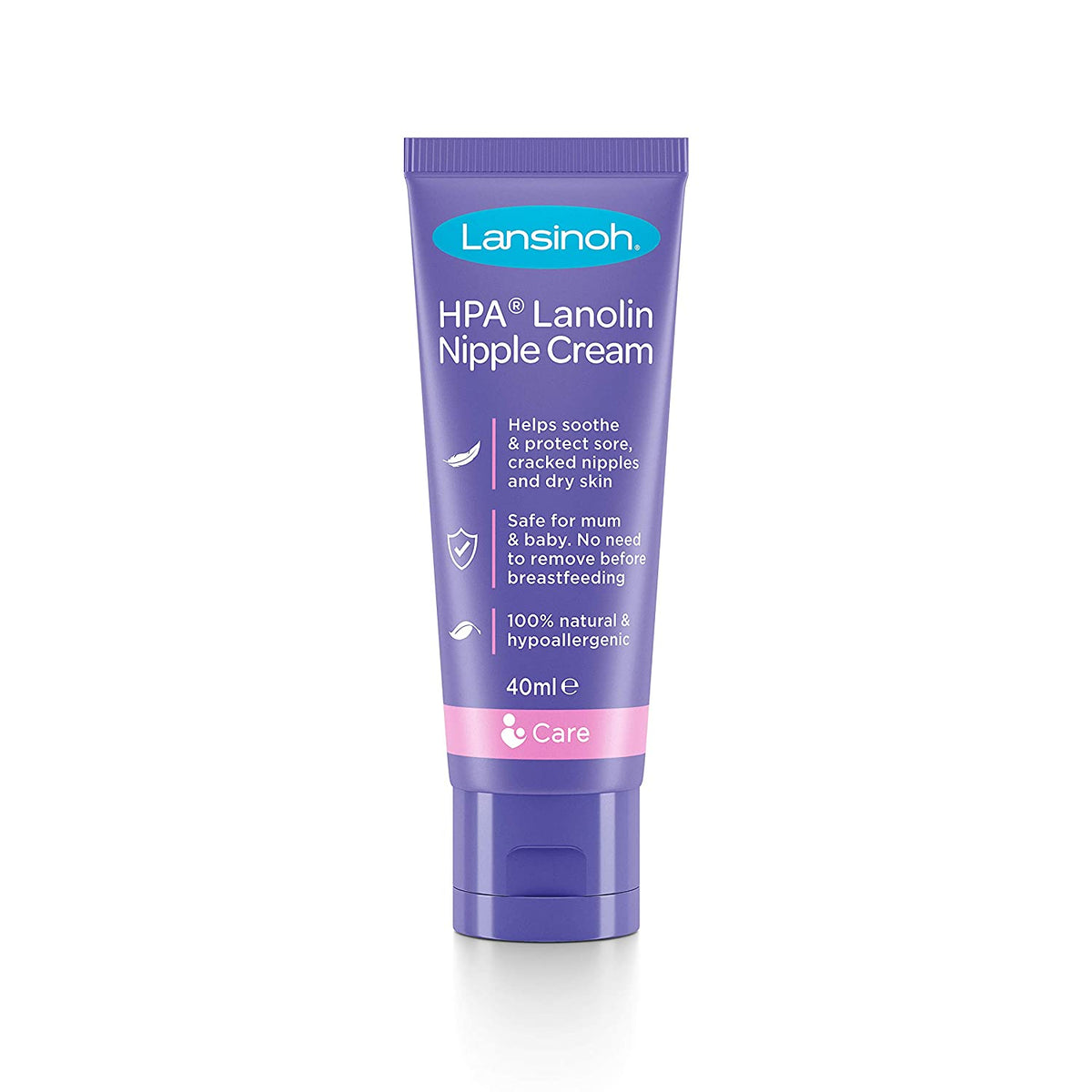
Lansinoh Lanolin Breastfeeding Cream - 40ml
- ✔️ Soothes sore, cracked nipples after every breastfeed
- ✔️ HPA Lanolin forms a protective barrier for faster healing
- ✔️ No removal needed before feeding — safe for babies
- ✔️ Fragrance-free and preservative-free for sensitive skin
- ✔️ Suitable for use throughout the entire breastfeeding journey
Price Checker
 Lowest price guarantee
 Includes FREE private prescription


Couldn't load pickup availability
What Is Lanolin Nipple Cream and How Can It Help?
Breastfeeding is one of the most natural things in the world — but that doesn't mean it's always comfortable, especially in those early days. Sore, cracked, or dry nipples are incredibly common, and they can make feeding feel like a real challenge. That's where lanolin nipple cream comes in. Lansinoh Lanolin Breastfeeding Cream is a topical emollient specifically formulated to soothe and protect tender nipple skin during nursing. At just £8.99 for a 40ml tube, it's a practical, affordable option for breastfeeding mothers. You can also explore our wider range of skin care products if you're looking for additional support for dry or sensitive skin.
The NHS recommends that mothers experiencing nipple pain during breastfeeding seek advice from a midwife or health visitor, as persistent discomfort can sometimes indicate an underlying issue such as poor latch or infection. Lansinoh cream is designed to complement that care — offering targeted relief between feeds.
How Does Lansinoh Lanolin Breastfeeding Cream Work?
The active ingredient in Lansinoh is HPA Lanolin — a highly purified, anhydrous (water-free) form of lanolin derived from sheep's wool. It works through a combination of emollient and occlusive mechanisms:
- Forms a semi-occlusive barrier over the nipple surface, reducing transepidermal water loss
- Softens and conditions dry, cracked skin by supplementing the skin's natural lipid layer
- Maintains a moist wound-healing environment, which research suggests supports faster tissue repair
- Does not contain water, preservatives, or fragrances — reducing the risk of irritation to both mother and baby
Because it is free from additives, it does not need to be removed before breastfeeding. That's a genuine convenience when you're feeding every two to three hours.
Who Should Use Lansinoh Lanolin Breastfeeding Cream?
This cream is intended for breastfeeding and pumping mothers who are experiencing nipple discomfort. It is not a treatment for infection — if you suspect mastitis or nipple thrush, please speak to your GP or midwife promptly. That said, it suits a wide range of situations:
- New mothers experiencing nipple soreness in the early days of breastfeeding
- Mothers whose babies are going through a growth spurt and feeding more frequently
- Women who use a breast pump and experience friction-related skin irritation
- Mothers with dry or sensitive skin who need a gentle, fragrance-free emollient
How Does Lansinoh Compare to Other Nipple Creams?
| Feature | Lansinoh Lanolin Cream | Generic Lanolin Cream |
|---|---|---|
| Active ingredient | HPA Lanolin (highly purified) | Standard lanolin (variable purity) |
| Preservative-free | Yes | Not always |
| Safe without removal before feeding | Yes | Check individual product |
| Fragrance-free | Yes | Not always |
Is Lansinoh Cream Suitable During Pregnancy and How Should It Be Stored?
Some mothers choose to use lanolin nipple cream in the final weeks of pregnancy to prepare the nipple skin ahead of breastfeeding, though this is a personal choice rather than a clinical recommendation. If you are pregnant and considering this, speak to your midwife first. You can also browse our women's health range for other products that support maternal wellbeing.
Store the cream below 25°C, away from direct sunlight and out of reach of children. The tube should be kept tightly closed when not in use. There is no requirement for refrigeration.
This product is a medicine. Speak to your doctor or pharmacist before using if you have an underlying medical condition or are taking other medicines.
Lansinoh Lanolin Breastfeeding Cream - 40ml specifications
| Treatment category | Skin care / Breastfeeding support |
| Mechanism of action | Emollient and occlusive barrier; reduces transepidermal water loss and supports moist wound healing |
| Effective for | Sore, cracked, or dry nipples associated with breastfeeding |
| Suitable for | Breastfeeding and pumping mothers; not suitable for those with lanolin allergy |
| Active ingredient | HPA Lanolin (highly purified anhydrous lanolin) |
| Pack size | 40ml tube |
| UK classification | General Sale / Cosmetic emollient |
| Preparation | Topical cream |
| Route of administration | Topical (applied to nipple and areola) |
Specifications of Lansinoh Lanolin Breastfeeding Cream - 40ml
What Is Lansinoh Lanolin Breastfeeding Cream and What Is It Used For?
Lansinoh Lanolin Breastfeeding Cream is a topical emollient containing HPA Lanolin — a highly purified, single-ingredient formulation designed to relieve the soreness, dryness, and cracking that many breastfeeding mothers experience on their nipples and areolae. It is used after breastfeeding or pumping sessions to soothe irritated skin and create a protective barrier that supports natural healing. The NHS acknowledges that nipple pain is one of the most common reasons mothers stop breastfeeding earlier than they intend, making effective skin care during this period genuinely important.
This cream is not an antibiotic, antifungal, or anti-inflammatory medicine. It does not treat infections. Its role is purely to condition and protect the skin. If you notice signs of infection — such as redness spreading beyond the nipple, fever, or discharge — contact your GP or midwife without delay.
What Do You Need to Know Before Using Lansinoh Lanolin Breastfeeding Cream?
Before using this cream, consider the following contraindications and warnings:
- Do not use if you have a known allergy or sensitivity to lanolin or wool alcohols
- Discontinue use immediately if you develop a rash, increased redness, or swelling at the application site
- Do not apply to broken or infected skin without first seeking medical advice
- If your baby shows any signs of skin reaction after feeding, stop use and consult your GP
- Not intended for use on any area other than the nipple and areola
Regarding drug interactions:
- No clinically significant drug interactions are known for topically applied HPA Lanolin
- If you are using any prescribed topical treatments on your nipples (such as antifungal or antibiotic creams), speak to your pharmacist before combining products
How Should You Use Lansinoh Lanolin Breastfeeding Cream?
Using this cream correctly makes a real difference to how quickly you feel relief. Follow these steps after each breastfeed or pumping session:
- Wash your hands thoroughly with soap and water before applying
- Express a small amount of cream — roughly the size of a pea — onto your fingertip
- Gently smooth the cream over the nipple and surrounding areola
- Allow the cream to absorb naturally — do not rub vigorously
- There is no need to remove the cream before the next feed; it is safe for your baby
- Repeat after every breastfeed or pumping session as needed
| Indication | User | Amount | Frequency |
|---|---|---|---|
| Sore/cracked nipples | Breastfeeding mothers | Pea-sized amount per nipple | After every feed or pumping session |
| Preventative use | Breastfeeding mothers | Pea-sized amount per nipple | Once or twice daily as needed |
If you are also using other topical creams or ointments for skin conditions, allow each product to absorb fully before applying the next.
What Are the Possible Side Effects of Lansinoh Lanolin Breastfeeding Cream?
Lansinoh is generally very well tolerated. Because it contains only one ingredient and no preservatives or fragrances, the risk of adverse reactions is low. However, as with any topical product, reactions can occasionally occur.
Common side effects (may affect a small number of users):
- Mild skin irritation or a temporary sensation of warmth at the application site
- Slight greasiness or heaviness on the skin immediately after application
Less common side effects (rare):
- Contact dermatitis — redness, itching, or a rash, particularly in those with lanolin sensitivity
- Allergic reaction — swelling, hives, or significant skin changes (seek medical advice promptly if this occurs)
If your baby develops any skin irritation around the mouth after feeding while you are using this cream, stop use and speak to your GP or health visitor. You can also find further support through our baby and toddler health range.
How Should You Store Lansinoh Lanolin Breastfeeding Cream?
- Store below 25°C in a cool, dry place
- Keep away from direct sunlight and heat sources
- Keep the tube tightly closed when not in use
- Keep out of the reach and sight of children
- Do not use after the expiry date printed on the tube
- Do not freeze
References
- https://www.nhs.uk/conditions/baby/breastfeeding-and-bottle-feeding/breastfeeding-problems/sore-nipples/
- https://www.nhs.uk/conditions/baby/breastfeeding-and-bottle-feeding/breastfeeding/benefits/
- https://www.nhs.uk/conditions/baby/breastfeeding-and-bottle-feeding/breastfeeding-problems/mastitis/
- https://www.nhs.uk/conditions/baby/breastfeeding-and-bottle-feeding/breastfeeding/how-to-breastfeed/
- https://www.nhs.uk/conditions/emollients/
Written and reviewed by our qualified team
Your safety and success are our highest priorities. Our medical team rigorously evaluates every product and piece of advice we provide, ensuring you receive only the most effective, science-backed solutions available.
Frequently Asked Questions
Where can I buy Lansinoh Lanolin Breastfeeding Cream online in the UK?
You can buy Lansinoh Lanolin Breastfeeding Cream 40ml directly from Cured Pharmacy, a UK GPhC-registered online pharmacy, for £8.99. No prescription is needed, and it can be ordered for home delivery. It is also available in some high street pharmacies and supermarkets across the UK.
How does Lansinoh lanolin nipple cream work in the body?
Lansinoh works topically — it does not enter the bloodstream. The HPA Lanolin forms a semi-occlusive barrier on the nipple skin, reducing moisture loss and creating a moist environment that supports the skin's natural repair process. It also softens and conditions dry, cracked tissue with each application.
How do I apply Lansinoh nipple cream step by step?
Wash your hands, then squeeze a pea-sized amount onto your fingertip. Gently smooth it over the nipple and areola after every breastfeed or pumping session. There is no need to remove it before the next feed — it is safe for your baby.
How often should I apply Lansinoh cream during the day?
Apply Lansinoh after every breastfeed or pumping session for best results, which may mean six to eight times per day in the early weeks of breastfeeding. If you are using it preventatively rather than for active soreness, once or twice daily may be sufficient. Follow the guidance of your midwife or health visitor if you are unsure.
Do I need to wipe off Lansinoh cream before breastfeeding?
No — one of the key advantages of Lansinoh is that it does not need to be removed before feeding. The HPA Lanolin formulation is considered safe for babies and will not harm them if ingested in the small amounts present on the nipple. This makes it far more convenient than some other topical products.
Is Lansinoh nipple cream safe for my baby?
Yes, Lansinoh HPA Lanolin is widely regarded as safe for babies when used as directed on the nipple and areola. The highly purified formulation contains no preservatives, fragrances, or additives that could cause harm. If your baby shows any unusual skin reaction around the mouth, stop use and consult your GP.
Can I use Lansinoh cream if I have a lanolin or wool allergy?
No — if you have a confirmed allergy to lanolin or wool alcohols, you should not use Lansinoh cream. Speak to your GP, midwife, or pharmacist for an alternative nipple care option. If you are unsure whether you are sensitive to lanolin, perform a small patch test on your inner arm before applying to the nipple area.
How long does it take for Lansinoh cream to relieve sore nipples?
Many breastfeeding mothers notice an improvement in comfort within 24 to 48 hours of consistent use after every feed. However, if your nipple pain is severe, worsening, or accompanied by other symptoms such as fever or discharge, contact your midwife or GP promptly as this may indicate mastitis or another condition requiring treatment.
Who is eligible to use Lansinoh Lanolin Breastfeeding Cream?
Lansinoh is suitable for breastfeeding and pumping mothers who are experiencing nipple soreness, dryness, or cracking. It is not suitable for anyone with a lanolin or wool allergy. It is not intended for use on infected skin — if you suspect an infection, seek medical advice before using any topical product.
What happens if I accidentally use too much Lansinoh cream?
Using slightly more than the recommended pea-sized amount is unlikely to cause harm — it may simply feel greasier than usual on the skin. There is no known toxicity from topical overuse of HPA Lanolin. If you have concerns, speak to your pharmacist for reassurance.
What are the alternatives to Lansinoh nipple cream?
Alternatives include expressed breast milk applied to the nipple and allowed to air dry, which has natural antimicrobial and healing properties according to NHS guidance. Other lanolin-based nipple creams are also available, though purity levels vary. You can browse our creams and ointments range for other topical skin care options.
Can I use Lansinoh cream during pregnancy?
Some mothers choose to apply lanolin nipple cream in the final weeks of pregnancy to condition the nipple skin ahead of breastfeeding, but this is a personal choice rather than a clinical recommendation. Always speak to your midwife before introducing any new topical product during pregnancy. There are no known safety concerns with topical HPA Lanolin use in pregnancy.
How long can I keep using Lansinoh cream for?
You can use Lansinoh for as long as you are breastfeeding and experiencing nipple discomfort. There is no recommended maximum duration of use. Most mothers find they need it most in the first few weeks of breastfeeding, with use naturally tapering off as the skin adapts and feeding becomes more established.
Are there any side effects of using Lansinoh nipple cream?
Side effects are uncommon. A small number of users may experience mild skin irritation or, rarely, a contact allergic reaction — particularly those with lanolin sensitivity. If you notice increased redness, itching, or a rash after applying the cream, stop use and consult your pharmacist or GP. You can also find general skin care support in our skin care collection.
What are the latest findings on lanolin for breastfeeding nipple care?
Clinical evidence supports the use of purified lanolin as an effective emollient for sore nipples during breastfeeding, with studies suggesting it performs comparably to expressed breast milk for symptom relief. The NHS recommends seeking advice from a midwife or health visitor for persistent nipple pain, as the underlying cause — such as latch issues — should always be addressed alongside any topical treatment.
Written and reviewed by our qualified team

Reviewed by:
Tarun Kumar
Superintendent/ Clinical Lead
📖 Find out more about our team of medical content authors and how we ensure the accuracy of our content with our content guidelines.
Content last updated: 14 Sep 2026
Other popular options


We’re a safe and
regulated UK service

Lowest Price Guarantee

We're convinced you won't find your treatment cheaper, but if you do we'll refund the difference.
Find out more
100% discreet packaging

Discreet, unbranded packaging for every order.
Find out more

Need help?
Talk to our friendly experts now


How our service works

Service setup

Discreet packaging

Express delivery