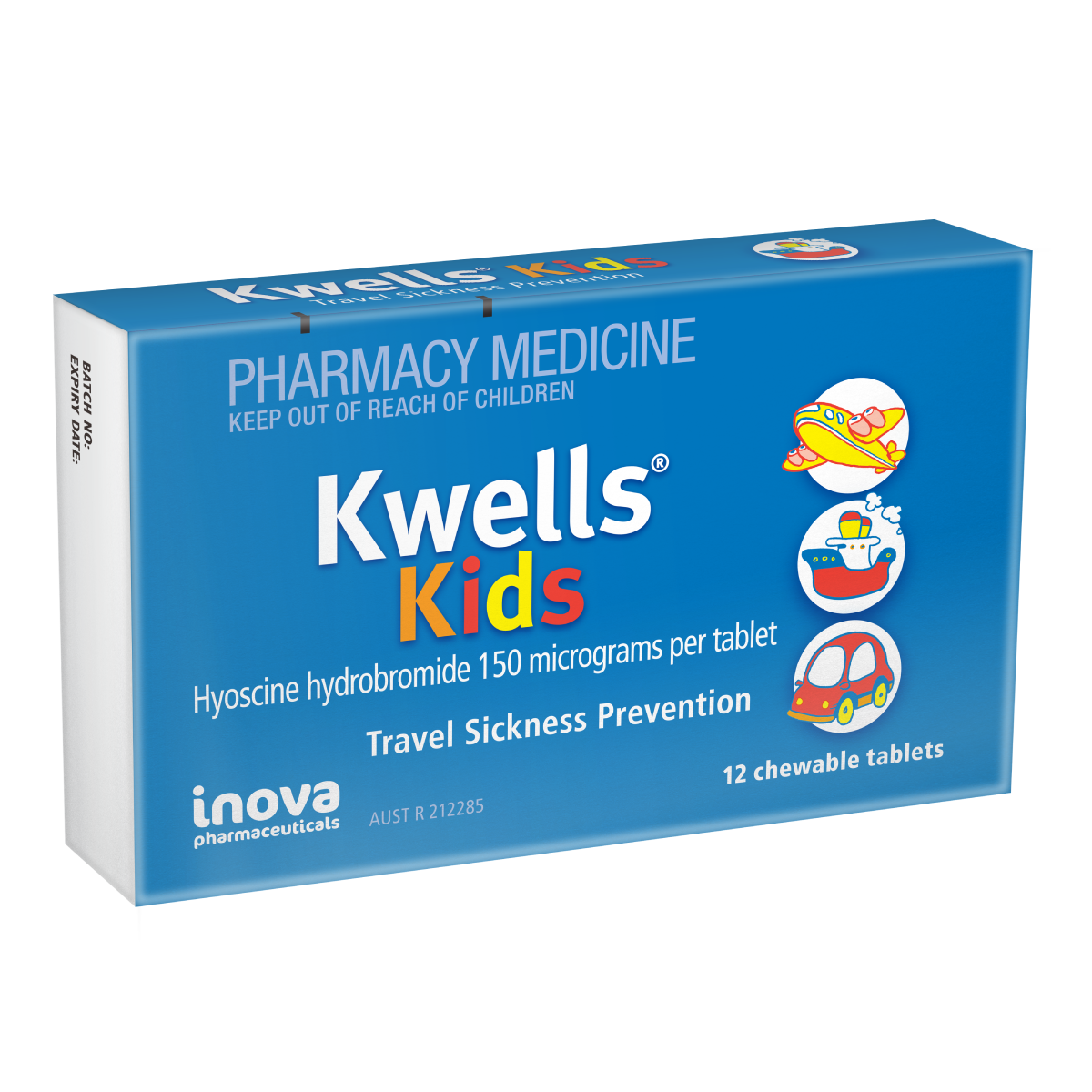
Kwells Kids Travel Sickness
- ✔️ Relieves nausea and vomiting caused by motion sickness
- ✔️ Contains hyoscine hydrobromide, clinically proven for travel sickness
- ✔️ Chewable tablet format ideal for children aged 4 and over
- ✔️ Works within 20–30 minutes when taken before travel
- ✔️ Suitable for car, ferry, coach, and air travel
Price Checker
 Discreet, tracked delivery
 Includes FREE private prescription


Couldn't load pickup availability
What Are Kwells Kids Travel Sickness Tablets?
If your child dreads long car journeys, ferry crossings, or flights, you are far from alone. Travel sickness — also called motion sickness — is remarkably common in children, and it can turn an exciting trip into a miserable experience for the whole family. Kwells Kids travel sickness tablets are a clinically established, over-the-counter option designed specifically for children aged 4 and over, helping to prevent and relieve the nausea and vomiting that motion sickness causes. You can find them alongside other travel health essentials in our travel collection.
Each tablet contains 150 micrograms of hyoscine hydrobromide as the active ingredient. Hyoscine is one of the most widely used medicines for motion sickness and has a well-established safety record when used as directed. The tablets are small, chewable, and suitable for children who struggle to swallow whole tablets — a practical detail that makes a real difference when you are trying to prepare a reluctant child before a journey.
How Do Kwells Kids Tablets Work?
Motion sickness happens when there is a conflict between what your child's eyes see and what their inner ear senses. The brain receives mixed signals and responds by triggering nausea and vomiting. Hyoscine hydrobromide works by blocking muscarinic receptors in the central nervous system, specifically interrupting the nerve signals that travel between the vestibular system (inner ear) and the brain's vomiting centre.
- Hyoscine crosses the blood-brain barrier and acts on the central nervous system.
- It blocks acetylcholine at muscarinic receptors, reducing vestibular stimulation.
- This dampens the conflicting sensory signals that trigger nausea.
- The result is a reduction in both the sensation of nausea and the urge to vomit.
Because it works centrally, hyoscine tends to act relatively quickly — which is why it is recommended to give the tablet 20 to 30 minutes before travel begins, rather than waiting until symptoms appear.
Who Is Kwells Kids Suitable For?
Kwells Kids are intended for children who experience nausea, vomiting, or dizziness during travel. They are suitable for use on car journeys, boat trips, coach travel, and flights. The product is specifically formulated for younger children, with a lower dose than the adult Kwells formulation.
- Children aged 4 to 10 years (one tablet per dose, up to three times in 24 hours).
- Children aged 10 and over (up to two tablets per dose).
- Children who can chew or swallow a small tablet.
- Children without contraindicated conditions (see below).
They are not suitable for children under 4 years of age. If your child has a history of glaucoma, urinary retention, or bowel obstruction, speak to your GP or pharmacist before use.
How Do Kwells Kids Compare to Other Travel Sickness Options?
| Feature | Kwells Kids (Hyoscine 150mcg) | Antihistamine Alternatives (e.g. Promethazine) |
|---|---|---|
| Active ingredient | Hyoscine hydrobromide | Promethazine hydrochloride or cinnarizine |
| Minimum age | 4 years | Varies: promethazine from 5 years; cinnarizine from 5 years |
| Onset of action | 20–30 minutes before travel | 1–2 hours before travel (promethazine) |
| Tablet form | Chewable tablet | Swallowable tablet or syrup (promethazine) |
How Should Kwells Kids Be Stored and Are There Any Precautions?
Store Kwells Kids below 25°C in a dry place, away from direct sunlight. Keep them out of the sight and reach of children when not in use. Do not use the tablets after the expiry date printed on the packaging. If you are also managing other health concerns during your trip — such as picking up sickness and nausea remedies for adults in the family — always check that medicines are stored separately and clearly labelled.
Kwells Kids travel sickness tablets contain hyoscine hydrobromide, which has anticholinergic properties. This means they can cause drowsiness, dry mouth, and blurred vision in some children. Avoid giving them alongside other medicines that have sedative or anticholinergic effects without first speaking to a pharmacist.
This product is a medicine. Speak to your doctor or pharmacist before using if you have an underlying medical condition or are taking other medicines.
Kwells Kids Travel Sickness specifications
| Treatment category | Travel sickness / Motion sickness |
| Active ingredient | Hyoscine hydrobromide 150 micrograms |
| Mechanism of action | Anticholinergic — blocks muscarinic receptors in the CNS to reduce vestibular-triggered nausea |
| Suitable for | Children aged 4 years and over |
| Pack sizes | 12 tablets |
| Strengths | 150 micrograms per tablet |
| UK classification | P (Pharmacy medicine) |
| Drug class | Anticholinergic / Antimuscarinic |
| Preparation | Chewable tablet |
| Route of administration | Oral |
| Effective | Prevention and relief of nausea and vomiting due to motion sickness |
Specifications of Kwells Kids Travel Sickness
What Is Kwells Kids and What Is It Used For?
Kwells Kids are chewable tablets used to prevent and relieve travel sickness (motion sickness) in children aged 4 years and over. Each tablet contains 150 micrograms of hyoscine hydrobromide, an anticholinergic medicine that acts on the central nervous system to reduce the nausea and vomiting triggered by motion. Travel sickness is caused by conflicting signals between the eyes and the inner ear, and it is particularly common in children between the ages of 4 and 12. Kwells Kids offer a child-appropriate dose in a format that is easy to administer before a journey.
What Do You Need to Know Before Using Kwells Kids?
Before giving Kwells Kids to your child, read the following carefully. There are certain conditions and medicines that may make this product unsuitable.
Do not use Kwells Kids if your child:
- Is under 4 years of age.
- Has a known allergy to hyoscine hydrobromide or any other ingredient in the tablet.
- Has glaucoma (increased pressure in the eye).
- Has difficulty passing urine (urinary retention).
- Has myasthenia gravis (a condition causing muscle weakness).
- Has a blockage in the gut (intestinal obstruction).
Speak to your pharmacist or GP before use if your child:
- Has epilepsy or a history of seizures.
- Has liver or kidney problems.
- Has a heart condition or irregular heartbeat.
- Is taking any other medicines, including herbal remedies.
Known drug interactions — avoid combining with:
- Antihistamines (e.g. chlorphenamine, promethazine) — increased sedation risk.
- Tricyclic antidepressants — enhanced anticholinergic effects.
- Other anticholinergic medicines — additive side effects.
- Sedatives or medicines that cause drowsiness — risk of excessive sedation.
How Should You Use Kwells Kids?
Always follow the dosage instructions on the packaging or as directed by your pharmacist. The tablets can be chewed or swallowed whole with a drink of water. For best results, give the tablet before travel begins rather than after symptoms start.
- Check your child's age and weight to confirm the correct dose (see table below).
- Give the tablet 20 to 30 minutes before the journey starts.
- The tablet may be chewed or swallowed whole with water.
- If the journey is long, a further dose may be given every 6 hours if needed.
- Do not give more than three doses in any 24-hour period.
| Age Group | Dose | Maximum Frequency | Maximum in 24 Hours |
|---|---|---|---|
| Under 4 years | Not suitable | — | — |
| 4 to 10 years | 1 tablet (150 micrograms) | Every 6 hours | 3 tablets |
| 10 years and over | 1–2 tablets (150–300 micrograms) | Every 6 hours | 6 tablets |
If you are travelling with younger children and need additional support, our baby and toddler collection includes a range of products suitable for the youngest members of the family.
What Are the Possible Side Effects of Kwells Kids?
Like all medicines, Kwells Kids can cause side effects, although not every child will experience them. Hyoscine hydrobromide has anticholinergic properties, which accounts for most of the side effects listed below.
Common side effects:
- Drowsiness or sleepiness.
- Dry mouth.
- Blurred vision.
- Dizziness.
Less common side effects:
- Difficulty passing urine.
- Constipation.
- Flushing or redness of the skin.
- Increased heart rate (tachycardia).
- Restlessness or agitation, particularly in younger children.
- Skin rash or allergic reaction (seek medical advice promptly if this occurs).
If your child experiences a serious allergic reaction — including swelling of the face, lips, or throat, difficulty breathing, or a severe rash — stop use immediately and seek emergency medical help. You can also find further guidance on managing nausea-related conditions in our sickness and nausea section.
How Should You Store Kwells Kids?
- Store below 25°C in a dry place.
- Keep away from direct sunlight and moisture.
- Keep out of the sight and reach of children at all times.
- Do not use after the expiry date printed on the carton or blister strip.
- Do not store in a bathroom or near a sink — humidity can affect the tablets.
- If the packaging is damaged or the tablets appear discoloured, do not use them.
References
Written and reviewed by our qualified team
Your safety and success are our highest priorities. Our medical team rigorously evaluates every product and piece of advice we provide, ensuring you receive only the most effective, science-backed solutions available.
Frequently Asked Questions
Where can I buy Kwells Kids travel sickness tablets online in the UK?
You can buy Kwells Kids travel sickness tablets directly from Cured Pharmacy, a GPhC-registered UK online pharmacy, for just £3.49. They are a Pharmacy (P) medicine, so they are available without a prescription. Browse our full travel collection for more holiday health essentials.
How do Kwells Kids tablets work in the body?
Kwells Kids contain hyoscine hydrobromide, which is an anticholinergic medicine. It crosses the blood-brain barrier and blocks muscarinic receptors in the central nervous system, interrupting the nerve signals between the inner ear and the brain's vomiting centre. This reduces the conflicting sensory signals that cause nausea and vomiting during travel.
How do I give Kwells Kids tablets to my child step by step?
Check your child's age to confirm the correct dose, then give the tablet 20 to 30 minutes before the journey begins. The tablet can be chewed or swallowed whole with a glass of water. If the journey continues for more than 6 hours, a further dose may be given, but do not exceed three doses in 24 hours for children aged 4 to 10.
What is the correct dose of Kwells Kids for my child's age?
Children aged 4 to 10 years should take one tablet (150 micrograms) per dose, up to three times in 24 hours. Children aged 10 and over may take one to two tablets per dose, up to three times in 24 hours. Kwells Kids are not suitable for children under 4 years of age.
When is the best time to give Kwells Kids before a journey?
The best time to give Kwells Kids is 20 to 30 minutes before travel begins, so the medicine has time to be absorbed and take effect. Giving it after symptoms have already started is less effective. If you are planning a very early departure, prepare the dose the night before so you are not rushing on the day.
Can Kwells Kids cause drowsiness in children?
Yes, drowsiness is one of the most common side effects of hyoscine hydrobromide. While this can actually be helpful on long journeys, you should ensure your child does not cycle, swim, or use playground equipment immediately after taking the tablets. If drowsiness seems excessive or your child is difficult to rouse, seek medical advice.
Who should not take Kwells Kids tablets?
Kwells Kids are not suitable for children under 4 years of age or those with glaucoma, urinary retention, myasthenia gravis, or a known allergy to hyoscine hydrobromide. Children with epilepsy, heart conditions, or liver and kidney problems should only use this product under medical supervision. Always check with your pharmacist if you are unsure.
What happens if my child accidentally takes too many Kwells Kids tablets?
If your child takes more than the recommended dose, contact NHS 111 immediately or take them to your nearest A&E department. Symptoms of overdose may include extreme drowsiness, confusion, rapid heartbeat, flushed skin, and difficulty breathing. Always store medicines out of the reach of children to prevent accidental ingestion.
What are the alternatives to Kwells Kids for travel sickness in children?
Antihistamine-based medicines such as promethazine (Phenergan Elixir, from age 5) or cinnarizine (Stugeron, from age 5) are commonly used alternatives. Non-medicine options include Sea-Band acupressure wristbands, which some children find helpful. You can explore further options in our sickness and nausea collection.
Can I give Kwells Kids alongside other medicines?
You should not give Kwells Kids alongside other anticholinergic medicines, antihistamines, tricyclic antidepressants, or sedatives without first speaking to a pharmacist, as these combinations can increase the risk of side effects such as excessive drowsiness. Always tell your pharmacist about all medicines your child is currently taking, including herbal remedies.
Are Kwells Kids suitable for children with asthma?
Hyoscine hydrobromide can have bronchodilatory effects, but Kwells Kids are not specifically contraindicated in children with mild, well-controlled asthma. However, if your child has any respiratory condition, it is always safest to check with your GP or pharmacist before use. Do not assume any medicine is safe without professional guidance.
How long do the effects of Kwells Kids last?
The effects of a single dose of Kwells Kids typically last around 6 hours, which is why repeat doses can be given every 6 hours during a long journey if needed. The maximum is three doses in any 24-hour period for children aged 4 to 10. Plan your dosing schedule around your journey length before you set off.
Can Kwells Kids be used for sea or air travel, not just car journeys?
Yes, Kwells Kids are suitable for all types of travel that may cause motion sickness, including car journeys, ferry crossings, coach trips, and flights. The underlying mechanism of motion sickness is the same regardless of the mode of transport. Give the dose 20 to 30 minutes before boarding or departure.
How long can you keep using Kwells Kids on a long holiday?
Kwells Kids are intended for short-term use during travel and should not be used continuously for extended periods without medical advice. If your child needs travel sickness relief every day for a prolonged trip, speak to your GP to discuss whether this is appropriate. Do not exceed the recommended daily dose on any single day of travel.
Is there any research supporting hyoscine for travel sickness in children?
Hyoscine hydrobromide is one of the most studied medicines for motion sickness and is recommended by the NHS as a treatment option for travel sickness. It has been used clinically for decades and its mechanism of action is well understood. The NHS advises it as a first-line option for children aged 4 and over who experience travel sickness.
Written and reviewed by our qualified team

Reviewed by:
Tarun Kumar
Superintendent/ Clinical Lead
📖 Find out more about our team of medical content authors and how we ensure the accuracy of our content with our content guidelines.
Content last updated: 14 Sep 2026
Other popular options


We’re a safe and
regulated UK service

100% discreet packaging

Discreet, unbranded packaging for every order.

Need help?
Talk to our friendly experts now


How our service works

Service setup

Discreet packaging

Express delivery