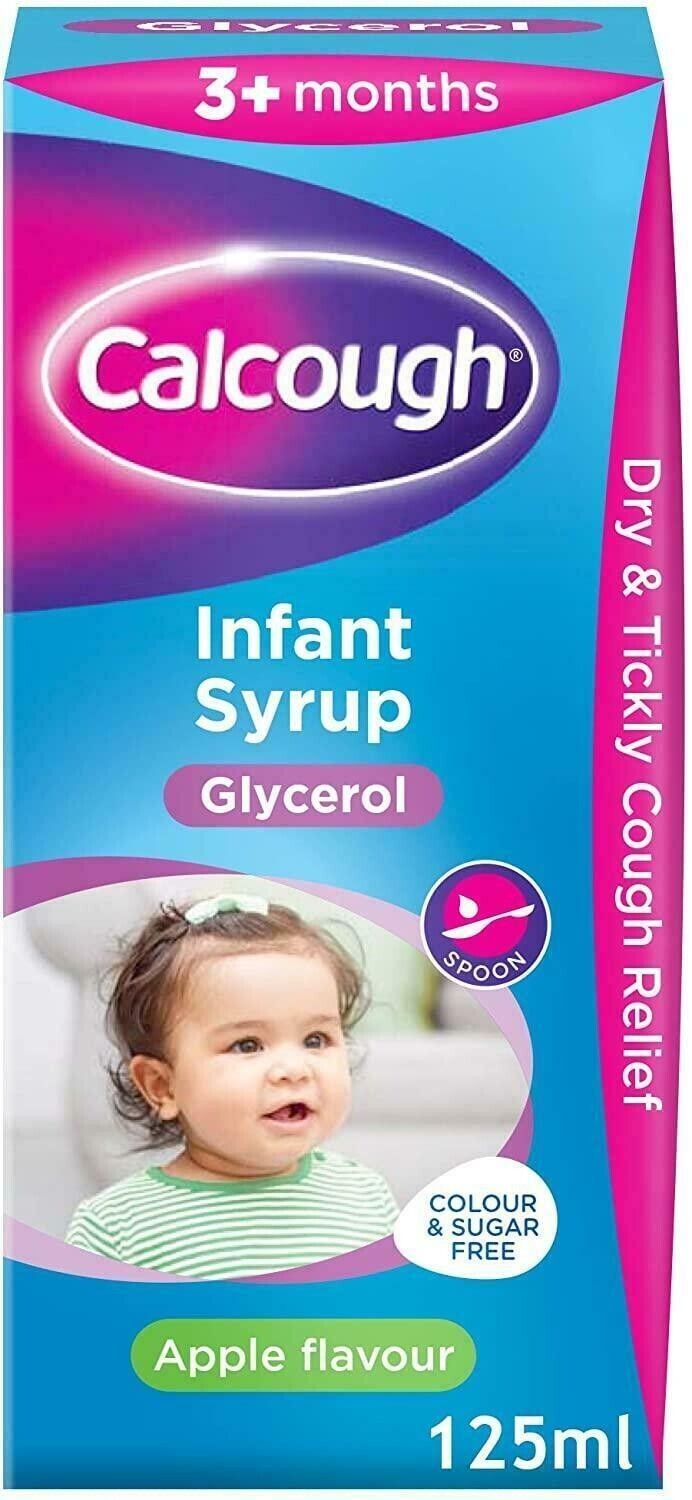
Infant Syrup Apple Flavour 3+ Months, 125ml Calcough
Infant Syrup Apple Flavour 3+ Months, 125ml Calcough
- ✔️ Soothes dry, irritating coughs in babies from 3 months
- ✔️ Glycerol demulcent coats and calms throat irritation
- ✔️ Sugar-free and alcohol-free — safe for infant teeth
- ✔️ Suitable where pharmacological cough suppressants are not
- ✔️ Apple flavour makes dosing easier for young babies
Price Checker
 Lowest price guarantee
 Includes FREE private prescription


Couldn't load pickup availability
What Is Infant Cough Syrup and How Can Calcough Help Your Baby?
When your baby develops a cough, it can be distressing for the whole family. Watching a little one struggle to settle, especially at night, leaves most parents searching for something safe and effective. Infant cough syrup formulated specifically for young babies is one of the few options available over the counter in the UK, and Calcough Infant Syrup Apple Flavour 125ml is designed precisely for this age group — suitable from just 3 months old. At only £4.73, it offers an accessible, pharmacist-recommended choice for parents who want gentle relief without a GP visit.
Coughs in babies are extremely common and are usually caused by minor upper respiratory tract infections, such as the common cold. The NHS advises that most coughs in children clear up on their own within three weeks, but that doesn't make the waiting any easier. You can browse our baby and toddler range for additional products to support your little one's comfort during illness.
How Does Calcough Infant Syrup Work to Soothe a Cough?
Calcough Infant Syrup works through a demulcent mechanism. Rather than suppressing the cough reflex with pharmaceutical agents — which are not recommended for children under 6 in the UK — it uses glycerol to coat and soothe the lining of the throat. This reduces the irritation that triggers coughing in the first place.
- Glycerol forms a protective, soothing layer over the throat mucosa
- This coating reduces the nerve irritation that causes the cough reflex to fire
- The apple flavour makes it more palatable for young infants
- It is sugar-free and alcohol-free, so it won't harm developing teeth or cause sedation
Who Should Use Calcough Infant Syrup — Is It Right for Your Baby?
This syrup is specifically formulated for infants aged 3 months and over. It is not suitable for newborns. If your baby is under 3 months and has a cough, you should contact your GP or call NHS 111 rather than using any over-the-counter remedy.
Calcough Infant Syrup may be appropriate if your baby:
- Is aged 3 months or older
- Has a dry, irritating cough associated with a cold or mild upper respiratory infection
- Is otherwise well — feeding normally, no high fever, no breathing difficulties
- Has not been diagnosed with asthma or a chronic respiratory condition
How Does Calcough Infant Syrup Compare to Other Baby Cough Remedies?
| Feature | Calcough Infant Syrup | Typical Infant Herbal Cough Drops |
|---|---|---|
| Suitable age | 3 months+ | Often 1 year+ |
| Active ingredient | Glycerol (demulcent) | Varies (e.g. honey, thyme extract) |
| Sugar-free | Yes | Not always |
| Alcohol-free | Yes | Not always |
How Should You Store Calcough Infant Syrup and Is It Clinically Suitable?
This infant cough syrup should be stored below 25°C, away from direct sunlight, and kept out of reach of children. Do not refrigerate. Once opened, check the product label for any in-use shelf life guidance. If the syrup changes colour, smell, or consistency, do not use it.
From a clinical suitability standpoint, glycerol-based syrups are considered appropriate for young infants because they carry no risk of sedation, respiratory depression, or antihistamine-related effects. The MHRA has previously advised against the use of cough and cold medicines containing active pharmacological agents in children under 6, which is why demulcent-based products like this one remain a sensible choice. If your baby has any known allergies or is taking other medicines, speak to your pharmacist before use. You may also find our cold and flu collection helpful for managing associated symptoms in older family members.
This product is a medicine. Speak to your doctor or pharmacist before using if you have an underlying medical condition or are taking other medicines.
Calcough Infant Syrup Apple Flavour 125ml specifications
| Treatment category | Cough relief |
| Mechanism of action | Demulcent — coats and soothes throat lining |
| Effective for | Dry, irritating coughs in infants |
| Suitable for | Infants aged 3 months and over |
| Active ingredient | Glycerol |
| Pack size | 125ml |
| UK classification | General Sale List (GSL) |
| Drug class | Demulcent |
| Preparation | Oral syrup |
| Route of administration | Oral |
Specifications of Calcough Infant Syrup Apple Flavour 125ml
What Is Calcough Infant Syrup and What Is It Used For?
Calcough Infant Syrup Apple Flavour is an oral demulcent syrup used to relieve the symptoms of dry, tickly, or irritating coughs in babies aged 3 months and over. It contains glycerol as its active ingredient, which works by forming a soothing coating over the throat lining to reduce irritation. It does not contain any cough suppressants, antihistamines, or decongestants — all of which are unsuitable for this age group according to MHRA guidance.
This syrup is intended for short-term symptomatic relief only. It does not treat the underlying cause of a cough, such as a viral infection. If your baby's cough is accompanied by a high temperature, difficulty breathing, wheezing, or poor feeding, seek medical advice promptly rather than relying on any over-the-counter remedy.
What Do You Need to Know Before Using Calcough Infant Syrup?
Before giving this syrup to your baby, read the following carefully.
Do not use Calcough Infant Syrup if your baby:
- Is under 3 months of age
- Has a known allergy or hypersensitivity to glycerol or any other ingredient in the product
- Has a cough associated with asthma, croup, or a diagnosed respiratory condition — seek medical advice first
- Has a persistent cough lasting more than 5 days without improvement
Drug interactions:
- No clinically significant drug interactions are known for glycerol-based demulcent syrups at the doses used in this product
- If your baby is taking any prescribed medicines, always check with your pharmacist before introducing any new product
How Should You Use Calcough Infant Syrup Correctly?
Always follow the dosage instructions on the product label or as directed by your pharmacist. Use the measuring device supplied with the product to ensure accuracy — never estimate doses using a household teaspoon, as these vary in size and can lead to under- or over-dosing.
- Shake the bottle gently before each use
- Measure the correct dose using the supplied oral syringe or measuring spoon
- Administer the syrup directly into your baby's mouth, aiming for the inside of the cheek
- Do not mix with formula, breast milk, or other liquids unless specifically advised
- Replace the cap securely after each use and store correctly
| Age Group | Dose | Frequency | Max daily doses |
|---|---|---|---|
| 3–12 months | 2.5ml | Up to 4 times daily | 4 |
| 1–5 years | 5ml | Up to 4 times daily | 4 |
Always refer to the product label for the most current dosage guidance, as formulations can vary between batches.
What Are the Possible Side Effects of Calcough Infant Syrup?
Calcough Infant Syrup is generally very well tolerated in infants. Because it contains glycerol rather than pharmacologically active agents, the side effect profile is minimal. That said, no medicine is entirely without risk, and you should be aware of the following.
Common side effects:
- Mild stomach discomfort or bloating
- Loose stools or slightly increased bowel frequency — glycerol can have a mild laxative effect in some infants
Less common side effects:
- Nausea or vomiting (rare at recommended doses)
- Allergic reaction — though uncommon, signs include rash, swelling of the face or lips, or difficulty breathing. Stop use immediately and call 999 if this occurs
If you notice any side effect not listed here, stop using the product and speak to your pharmacist or GP. You can also report suspected side effects to the MHRA via the Yellow Card scheme at yellowcard.mhra.gov.uk. For broader support with your baby's health, our baby and toddler collection includes a range of products to help manage common infant ailments.
How Should You Store Calcough Infant Syrup Safely?
Correct storage helps maintain the product's quality and safety throughout its shelf life.
- Store below 25°C in a cool, dry place
- Do not refrigerate or freeze
- Keep away from direct sunlight and heat sources
- Always keep out of the sight and reach of children
- Do not use after the expiry date printed on the label
- If the syrup appears discoloured or has an unusual smell, do not use it — return it to your pharmacist for safe disposal
If you need further advice on managing your baby's cough or cold symptoms, the NHS website provides clear, up-to-date guidance for parents. You can also explore our ear, nose and throat range for related products suitable for older children and adults in the family.
References
Written and reviewed by our qualified team
Your safety and success are our highest priorities. Our medical team rigorously evaluates every product and piece of advice we provide, ensuring you receive only the most effective, science-backed solutions available.
Frequently Asked Questions
Where can I buy Calcough Infant Syrup online in the UK?
You can buy Calcough Infant Syrup Apple Flavour 125ml directly from Cured Pharmacy online for just £4.73. It is a General Sale List (GSL) medicine, so no prescription is required. Simply add it to your basket and it will be dispatched to your door.
How does Calcough Infant Syrup work in the body?
Calcough Infant Syrup contains glycerol, which acts as a demulcent — it coats the lining of the throat and reduces the irritation that triggers the cough reflex. It does not suppress coughing through the central nervous system, making it a safer option for very young infants. This mechanism is why it is one of the few cough products suitable from 3 months of age.
What age can babies start using Calcough Infant Syrup?
Calcough Infant Syrup is suitable for babies aged 3 months and over. It must not be given to infants under 3 months. If your newborn or very young baby has a cough, contact your GP or NHS 111 for advice rather than using any over-the-counter remedy.
How do I give Calcough Infant Syrup to my baby step by step?
Shake the bottle gently before use, then measure the correct dose using the oral syringe or measuring spoon provided — never use a household teaspoon. Administer the syrup slowly into the inside of your baby's cheek, and replace the cap securely after each use. Always follow the dosage instructions on the product label.
What is the correct dose of Calcough Infant Syrup for my baby?
For babies aged 3 to 12 months, the typical dose is 2.5ml up to four times daily. For children aged 1 to 5 years, the dose is usually 5ml up to four times daily. Always check the product label for the most current guidance, and speak to your pharmacist if you are unsure.
What are the side effects of Calcough Infant Syrup?
Calcough Infant Syrup is generally very well tolerated. The most commonly reported side effects relate to glycerol's mild laxative properties and may include loose stools or mild stomach discomfort. Allergic reactions are rare but possible — if your baby develops a rash, swelling, or difficulty breathing, stop use immediately and call 999.
How long can I use Calcough Infant Syrup for?
You should not use Calcough Infant Syrup for more than 5 days without consulting a doctor or pharmacist. If your baby's cough does not improve within this time, or if it worsens at any point, seek medical advice promptly. Persistent coughs in infants can sometimes indicate a more serious underlying condition.
Is Calcough Infant Syrup sugar-free and alcohol-free?
Yes, Calcough Infant Syrup is both sugar-free and alcohol-free. This makes it suitable for regular short-term use in infants without contributing to tooth decay or causing any sedative effects. It is also free from the pharmacological cough suppressants that the MHRA advises against in children under 6.
Can I use Calcough Infant Syrup alongside other baby medicines?
No significant drug interactions are known for glycerol-based demulcent syrups at the doses used in this product. However, if your baby is already taking prescribed medicines, always check with your pharmacist before adding any new product. You can browse our baby and toddler range for other products that may complement your baby's care.
What happens if I accidentally give my baby too much Calcough Infant Syrup?
If you think your baby has received more than the recommended dose, contact NHS 111 or your nearest A&E for advice. Glycerol in large amounts can cause gastrointestinal upset, including diarrhoea and nausea. Always keep medicines stored safely out of reach of children to prevent accidental ingestion.
What are the alternatives to Calcough Infant Syrup for baby coughs?
For babies under 1 year, options are limited due to MHRA restrictions on cough medicines for young children. Saline nasal drops, keeping your baby upright during feeds, and ensuring adequate fluid intake are all NHS-recommended supportive measures. For older children and adults in the family, our cold and flu collection offers a wider range of options.
Does Calcough Infant Syrup treat the cause of my baby's cough?
No — Calcough Infant Syrup provides symptomatic relief only. It soothes throat irritation to reduce coughing but does not treat the underlying cause, such as a viral infection. Most infant coughs caused by colds resolve on their own within two to three weeks, as the NHS advises.
Is Calcough Infant Syrup suitable for babies with asthma?
If your baby has been diagnosed with asthma or any chronic respiratory condition, you should consult your GP or paediatric specialist before using any cough remedy, including Calcough Infant Syrup. Coughs in asthmatic infants may require specific medical management rather than over-the-counter treatment.
When should I see a doctor instead of using Calcough Infant Syrup?
Seek medical advice if your baby is under 3 months, has a high temperature, is struggling to breathe, is wheezing, is not feeding well, or if the cough has lasted more than 5 days without improvement. These signs may indicate a more serious condition that requires professional assessment. You can call NHS 111 at any time for guidance.
What is the latest guidance on cough medicines for babies in the UK?
The MHRA advises that cough and cold medicines containing active pharmacological ingredients — such as antihistamines, decongestants, or cough suppressants — should not be used in children under 6 years of age. Demulcent-based products like infant cough syrup containing glycerol remain one of the few appropriate over-the-counter options for babies from 3 months. Always check with your pharmacist if you are unsure which product is right for your child.
Written and reviewed by our qualified team

Reviewed by:
Tarun Kumar
Superintendent/ Clinical Lead
📖 Find out more about our team of medical content authors and how we ensure the accuracy of our content with our content guidelines.
Content last updated: 14 Sep 2026
Other popular options


We’re a safe and
regulated UK service

Lowest Price Guarantee

We're convinced you won't find your treatment cheaper, but if you do we'll refund the difference.
Find out more
100% discreet packaging

Discreet, unbranded packaging for every order.
Find out more

Need help?
Talk to our friendly experts now


How our service works

Service setup

Discreet packaging

Express delivery