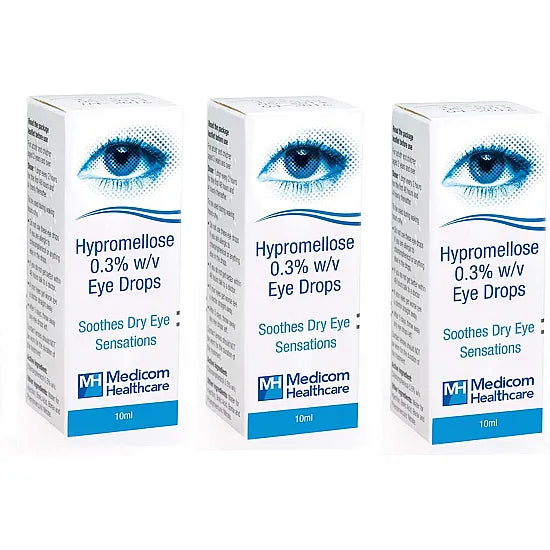
Hypromellose Eye Drops 0.3%
- ✔️ Soothes dry, gritty, and irritated eyes on contact
- ✔️ Lubricates the ocular surface to restore tear film stability
- ✔️ Suitable for screen-related eye fatigue and dry environments
- ✔️ Gentle 0.3% formula tolerated by sensitive eyes
- ✔️ OTC use — no prescription needed for fast relief
Price Checker
 Lowest price guarantee
 Includes FREE private prescription


Couldn't load pickup availability
What Are Hypromellose Eye Drops and How Do They Help Dry Eyes?
Dry, gritty, or irritated eyes are surprisingly common — and often more disruptive than people expect. Whether it's hours spent staring at a screen, living in a centrally heated home, or simply a condition your eyes are prone to, the discomfort can be persistent. Hypromellose eye drops are one of the most widely used over-the-counter solutions for this exact problem. Available from our eye care range at Cured Pharmacy, these drops offer straightforward, clinically recognised relief for dry eye symptoms.
Hypromellose 0.3% is classified as an artificial tear preparation. It works by supplementing your natural tear film when it's not doing its job properly — either because you're not producing enough tears, or because they're evaporating too quickly. The NHS recognises dry eye syndrome as a common condition that can affect people of all ages, and artificial tears like hypromellose are a first-line recommendation for managing it.
How Do Hypromellose Eye Drops Work to Relieve Dryness?
The mechanism is elegantly simple. Hypromellose is a semi-synthetic cellulose polymer — essentially a viscous, water-retaining substance that closely mimics the mucin layer of your natural tear film. When you instil the drops, they coat the surface of the cornea and conjunctiva, forming a thin, stable lubricating layer.
- Reduces friction between the eyelid and the corneal surface during blinking
- Stabilises the tear film, slowing evaporation of natural moisture
- Soothes the nerve endings on the ocular surface that trigger the sensation of grittiness or burning
- Provides a temporary but effective barrier against environmental irritants such as dust, wind, and dry air
The 0.3% concentration strikes a balance between adequate viscosity and comfort — thick enough to stay on the eye surface for a useful period, but not so thick that it causes significant blurring or leaves a sticky residue.
Who Should Use Hypromellose Eye Drops 0.3%?
These drops are suitable for most adults experiencing mild to moderate dry eye symptoms. They're particularly useful if your eyes feel dry, tired, or irritated after prolonged screen use — a condition sometimes called digital eye strain. They're also commonly used by people who wear contact lenses (though you should remove lenses before use), those who work in air-conditioned or heated environments, and older adults whose natural tear production has declined.
- Adults with dry eye syndrome or keratoconjunctivitis sicca
- People experiencing eye irritation from environmental factors (wind, smoke, air conditioning)
- Those with screen-related eye fatigue or reduced blink rate
- Patients recovering from minor eye procedures, as directed by a clinician
They are not suitable for children under 2 years without medical supervision, and you should not use them if you have a known allergy to hypromellose or any of the other ingredients in the formulation.
How Do Hypromellose Eye Drops Compare to Other Artificial Tears?
| Feature | Hypromellose 0.3% | Sodium Hyaluronate Drops |
|---|---|---|
| Active ingredient | Hypromellose (cellulose polymer) | Sodium hyaluronate (HA) |
| Duration of action | Short to moderate | Moderate to long |
| Viscosity | Low to moderate | Moderate to high |
| Typical cost | Lower (from £1.49) | Higher |
| OTC availability | Yes | Yes |
Is Hypromellose 0.3% Suitable for Long-Term Use and How Should It Be Stored?
Hypromellose eye drops are generally considered safe for ongoing use when symptoms persist. However, if you find yourself relying on them very frequently — more than four to six times a day — it's worth speaking to your GP or optometrist to rule out an underlying cause. Chronic dry eye can sometimes be linked to conditions such as blepharitis, Sjögren's syndrome, or certain medications.
Store your drops below 25°C, away from direct sunlight. Once opened, discard the bottle after 28 days — even if solution remains — to reduce the risk of contamination and infection. Keep out of reach of children. If you're looking for other products to support your eye health or general wellbeing, you might also find our vitamins and supplements range helpful, particularly omega-3 fatty acids, which have some evidence supporting tear film quality.
This product is a medicine. Speak to your doctor or pharmacist before using if you have an underlying medical condition or are taking other medicines.
Hypromellose Eye Drops 0.3% specifications
| Treatment category | Dry eye / Ocular lubricant |
| Mechanism of action | Forms a lubricating film over the ocular surface to supplement the natural tear film |
| Effective for | Dry, gritty, or irritated eyes; dry eye syndrome |
| Suitable for | Adults and children over 2 years (under medical supervision for children) |
| Active ingredient | Hypromellose 0.3% w/v |
| Strengths | 0.3% |
| UK classification | General Sale List (GSL) |
| Drug class | Ocular lubricant / Artificial tear |
| Preparation | Sterile aqueous eye drop solution |
| Route of administration | Ophthalmic (topical, into the eye) |
Specifications of Hypromellose Eye Drops 0.3%
What Is Hypromellose 0.3% and What Is It Used For?
Hypromellose Eye Drops 0.3% is a sterile, over-the-counter ocular lubricant used to relieve the symptoms of dry eye syndrome. The active ingredient, hypromellose, is a cellulose-derived polymer that acts as an artificial tear substitute. It is used when the eyes do not produce sufficient natural tears, or when the tear film is unstable and evaporates too quickly.
Common reasons people use these drops include prolonged screen use, exposure to dry or air-conditioned environments, wearing contact lenses, and age-related reduction in tear production. The NHS lists artificial tears as a standard first-line treatment for dry eye syndrome. These drops do not treat the underlying cause of dry eye but provide symptomatic relief, making daily activities more comfortable.
What Do You Need to Know Before Using Hypromellose Eye Drops?
Before using these drops, read the following carefully. Do not use them if any of the contraindications below apply to you, and always check with your pharmacist if you are unsure.
Do not use if you:
- Are allergic to hypromellose or any other ingredient in the formulation
- Have a known eye infection that has not been assessed by a healthcare professional
- Are wearing soft contact lenses at the time of application (remove lenses first)
- Have been told by your doctor not to use eye drops of this type
Warnings and precautions:
- If your eye pain is severe, or you experience sudden changes in vision, seek urgent medical attention rather than self-treating
- Do not touch the dropper tip to your eye, eyelid, or any surface — this can introduce bacteria
- Discard the bottle 28 days after first opening, even if solution remains
- If symptoms persist for more than 7 days without improvement, consult your GP or optometrist
- Use with caution if you have had recent eye surgery — seek professional advice first
Drug interactions:
- No significant drug interactions are known at standard OTC doses
- If you are using other eye drops or eye ointments, leave at least 5 minutes between applications; apply ointments last
- Inform your pharmacist of all medicines you are taking, including prescription eye drops
How Should You Use Hypromellose Eye Drops Correctly?
Using eye drops correctly makes a real difference to how effective they are. Follow these steps each time you apply them.
- Wash your hands thoroughly with soap and water before handling the bottle
- Remove soft contact lenses if you are wearing them
- Tilt your head back slightly and look up at the ceiling
- Gently pull down your lower eyelid with one finger to create a small pocket
- Hold the dropper above the eye and instil one to two drops into the pocket — do not let the tip touch your eye
- Close your eye gently and blink a few times to spread the solution across the surface
- If using in both eyes, repeat the process for the other eye
- Replace the cap immediately after use and store the bottle correctly
| Indication | Age Group | Dose | Frequency |
|---|---|---|---|
| Dry eye / ocular lubrication | Adults | 1–2 drops per eye | Up to 4 times daily |
| Dry eye / ocular lubrication | Children (2+ years, under supervision) | 1 drop per eye | As directed by a clinician |
If you need to use these drops more than four times a day to manage your symptoms, speak to your pharmacist or GP. You may benefit from a preservative-free formulation or a different type of lubricant. You can browse our full eye care collection for a range of options.
What Are the Possible Side Effects of Hypromellose Eye Drops?
Side effects with hypromellose eye drops are uncommon, but it's important to know what to look out for.
Common side effects:
- Temporary blurred vision immediately after application (usually clears within a few minutes)
- Mild stinging or burning sensation on instillation
- Slight sticky feeling around the eyelids
Less common side effects:
- Redness or increased irritation of the eye
- Watery eyes (reflex tearing)
- Allergic reaction — signs include swelling of the eyelids, itching, or a rash around the eye area
If you experience any signs of an allergic reaction, stop using the drops immediately and seek medical advice. Serious adverse effects are rare with topical ocular lubricants used as directed.
How Should You Store Hypromellose Eye Drops?
Correct storage keeps the drops sterile and effective for as long as you need them.
- Store below 25°C in a cool, dry place — do not refrigerate unless the label specifically states this
- Keep away from direct sunlight and heat sources
- Always replace the cap tightly after each use
- Discard the bottle 28 days after opening, regardless of how much solution remains
- Keep out of the reach and sight of children
- Do not use after the expiry date printed on the bottle or carton
If you're managing multiple health conditions and looking for other OTC products, our allergy and hay fever range includes antihistamine eye drops that may also be relevant if your dry eye symptoms are allergy-related.
References
Written and reviewed by our qualified team
Your safety and success are our highest priorities. Our medical team rigorously evaluates every product and piece of advice we provide, ensuring you receive only the most effective, science-backed solutions available.
Frequently Asked Questions
Where can I buy hypromellose eye drops online in the UK?
You can buy Hypromellose Eye Drops 0.3% directly from Cured Pharmacy, a GPhC-registered UK online pharmacy, without needing a prescription. They are available over the counter and can be ordered online for fast home delivery. Visit our eye care collection to browse the full range of eye products available.
How do hypromellose eye drops work in the eye?
Hypromellose is a cellulose-based polymer that forms a thin, lubricating film over the surface of the cornea and conjunctiva when applied. This film mimics the mucin layer of your natural tear film, reducing friction during blinking and slowing the evaporation of moisture from the eye surface. The result is a reduction in the gritty, burning, or tired sensation associated with dry eyes.
How do I use hypromellose eye drops step by step?
Wash your hands first, then tilt your head back and gently pull down your lower eyelid to form a small pocket. Instil one to two drops into the pocket without letting the dropper tip touch your eye, then blink gently to spread the solution. Replace the cap immediately after use and avoid sharing the bottle with anyone else.
How often can I use hypromellose eye drops each day?
The standard adult dose is one to two drops in the affected eye or eyes, up to four times daily. If you find you need to use them more frequently than this to stay comfortable, it's worth speaking to your pharmacist or GP, as you may benefit from a different formulation or a preservative-free option. Overuse does not typically cause harm, but frequent need may indicate an underlying condition worth investigating.
Can I use hypromellose eye drops with contact lenses?
You should always remove soft contact lenses before applying hypromellose eye drops and wait at least 15 minutes before reinserting them. This is because the preservatives in some formulations can be absorbed by soft lens material and may cause irritation. If you wear contact lenses regularly and need frequent lubrication, ask your pharmacist about preservative-free single-dose unit options.
Are hypromellose eye drops safe to use during pregnancy or breastfeeding?
Hypromellose eye drops are generally considered low risk during pregnancy and breastfeeding because the active ingredient is not significantly absorbed into the bloodstream when applied topically to the eye. However, as with any medicine used during pregnancy, you should always check with your GP or midwife before starting a new treatment. They can confirm whether this product is appropriate for your individual circumstances.
What are the side effects of hypromellose eye drops and how do I manage them?
The most common side effects are temporary blurred vision immediately after application and a mild stinging or burning sensation, both of which usually resolve within a few minutes. Less commonly, you may notice increased redness or irritation — if this persists, stop using the drops and consult a pharmacist. Signs of an allergic reaction, such as swelling of the eyelids or a rash, are rare but require you to stop use and seek medical advice promptly.
Who is eligible to use hypromellose eye drops?
These drops are suitable for most adults experiencing dry, gritty, or irritated eyes due to dry eye syndrome, environmental factors, or screen use. They can be used in children over 2 years of age under medical supervision, but are not recommended for infants without a clinician's guidance. People with a known allergy to hypromellose or any excipient in the formulation should not use this product.
What happens if I miss a dose of hypromellose eye drops?
Because hypromellose eye drops are used for symptom relief rather than as a systemic treatment, missing a dose simply means your eyes may feel drier or more uncomfortable for a period. There is no risk of a rebound effect or harm from missing an application — just use the drops when you next need them. Do not double up doses to compensate for a missed one.
What are the alternatives to hypromellose eye drops?
Common alternatives include sodium hyaluronate eye drops, which tend to have a longer duration of action and higher viscosity, carbomer gel drops, which are thicker and often used at night, and polyvinyl alcohol drops, which are thinner and suit mild symptoms. Your pharmacist can help you choose the right option based on the severity of your symptoms and how often you need relief. You can explore our eye care range to compare available products.
How long can I use hypromellose eye drops for?
Hypromellose eye drops can be used on an ongoing basis for as long as dry eye symptoms persist, and there is no set maximum duration for OTC use. However, if your symptoms have not improved after 7 days of regular use, or if they worsen at any point, you should consult your GP or optometrist. Long-term dry eye may have an underlying cause — such as blepharitis or a systemic condition — that warrants further investigation.
How should I store hypromellose eye drops after opening?
Once opened, hypromellose eye drops should be stored below 25°C, away from direct sunlight and heat. The bottle must be discarded 28 days after first opening, even if solution remains, to prevent the risk of bacterial contamination. Always replace the cap tightly after each use and keep the bottle out of reach of children.
Can hypromellose eye drops interact with other eye medicines?
No significant drug interactions are known with hypromellose eye drops at standard OTC doses. If you are using other eye drops — such as prescription glaucoma drops or antibiotic eye drops — leave at least 5 minutes between applications to avoid diluting the other medicine. Always apply eye ointments last if you are using both drops and an ointment, and inform your pharmacist of all eye treatments you are currently using.
Are hypromellose eye drops suitable for older adults?
Yes — hypromellose eye drops are commonly used by older adults, as tear production naturally decreases with age, making dry eye syndrome more prevalent in this group. They are safe for use in older people provided there are no contraindications, and no prescription is required. If an older person is also using multiple prescription eye drops, a pharmacist can advise on the correct order and timing of application.
What does the latest research say about hypromellose for dry eye?
Hypromellose has been used as an ocular lubricant for decades and remains a well-established, evidence-supported treatment for mild to moderate dry eye syndrome. Clinical guidelines from NICE and the NHS continue to recommend artificial tear preparations, including hypromellose, as a first-line approach to managing dry eye symptoms. While newer formulations such as sodium hyaluronate have shown longer retention times on the ocular surface in some studies, hypromellose remains a clinically appropriate and cost-effective option for many patients.
Written and reviewed by our qualified team

Reviewed by:
Tarun Kumar
Superintendent/ Clinical Lead
📖 Find out more about our team of medical content authors and how we ensure the accuracy of our content with our content guidelines.
Content last updated: 14 Sep 2026
Other popular options


We’re a safe and
regulated UK service

Lowest Price Guarantee

We're convinced you won't find your treatment cheaper, but if you do we'll refund the difference.
Find out more
100% discreet packaging

Discreet, unbranded packaging for every order.
Find out more

Need help?
Talk to our friendly experts now


How our service works

Service setup

Discreet packaging

Express delivery