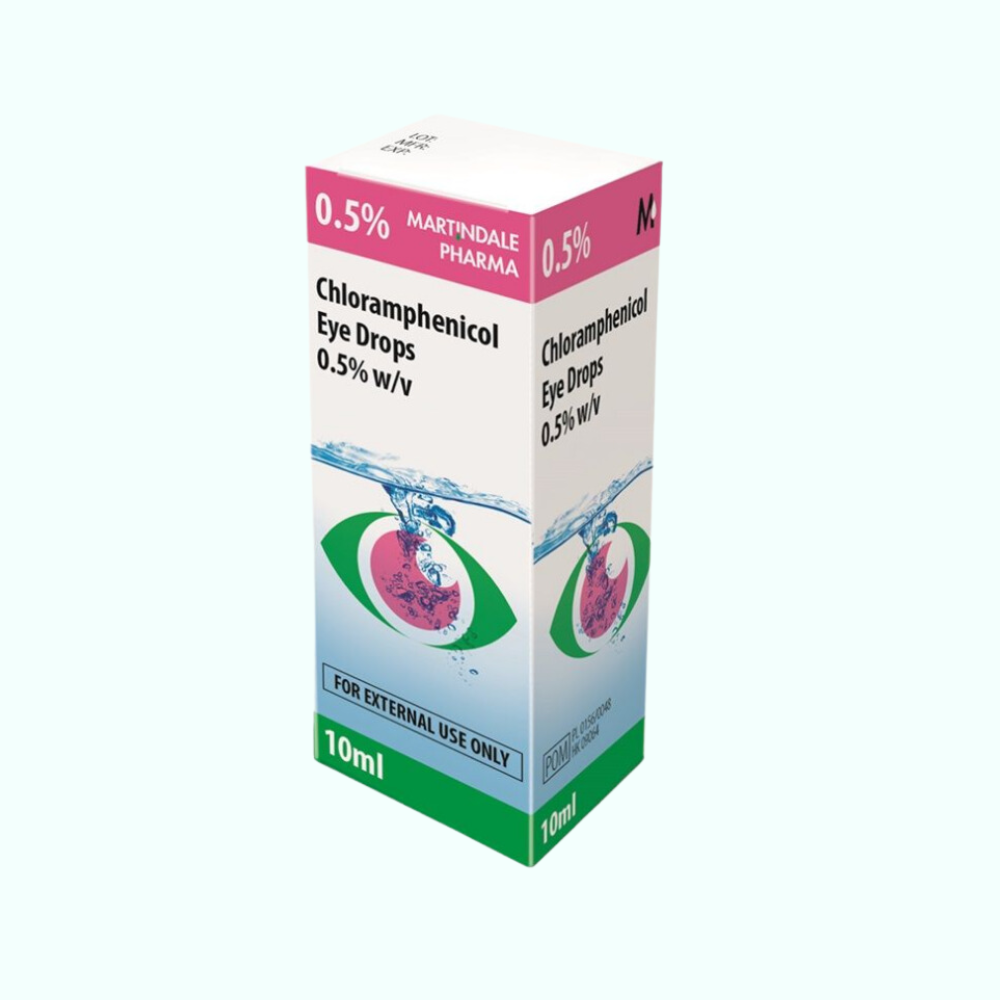
Chloramphenicol Eye Drops 0.5% (10ml)
Chloramphenicol Eye Drops 0.5% (10ml)
- ✔️ Treats bacterial conjunctivitis with broad-spectrum antibiotic action
- ✔️ Reduces infection duration and limits spread to others
- ✔️ Symptoms typically improve within 48 hours of starting treatment
- ✔️ Suitable for adults and children aged 2 years and over
- ✔️ Licensed OTC antibiotic — no GP appointment required
Price Checker
 Lowest price guarantee
 Includes FREE private prescription


Couldn't load pickup availability
What Are Chloramphenicol Eye Drops Used For?
If your eye has turned red, feels gritty, and is producing a sticky discharge — especially overnight — you are probably dealing with bacterial conjunctivitis. It is one of the most common eye infections in the UK, and it can spread quickly between people. Chloramphenicol eye drops 0.5% are an over-the-counter antibiotic treatment licensed for exactly this purpose. Available without a prescription for adults and children aged 2 years and over, they offer a straightforward, clinically proven way to tackle the infection at home. You can browse our full range of eye care products if you need additional support alongside treatment.
Bacterial conjunctivitis is caused by bacteria such as Staphylococcus aureus, Haemophilus influenzae, and Streptococcus pneumoniae. The NHS notes that it typically clears on its own within one to two weeks, but antibiotic drops can shorten the duration and reduce the risk of spreading the infection to others or to your other eye.
How Do Chloramphenicol Eye Drops Work?
Chloramphenicol is a broad-spectrum antibiotic that has been used in medicine for decades. It works by targeting bacteria directly at the site of infection — your eye — rather than being absorbed into the bloodstream in any meaningful quantity when used as drops.
- Chloramphenicol binds to the 50S subunit of the bacterial ribosome.
- This blocks the enzyme peptidyl transferase, preventing bacteria from building the proteins they need to survive and multiply.
- Without the ability to reproduce, the bacterial population declines rapidly.
- Your immune system then clears the remaining bacteria, resolving the infection.
Because it acts locally in the eye, systemic absorption is minimal at the doses used in these drops. This makes it well tolerated for most people when used as directed.
Who Is Suitable for Chloramphenicol Eye Drops?
These drops are suitable for a wide range of people, but not everyone. Before using them, it is worth confirming that your symptoms are consistent with bacterial — rather than viral or allergic — conjunctivitis. Viral conjunctivitis will not respond to antibiotics, and allergic conjunctivitis requires a different approach entirely. If you are unsure, a pharmacist can help you decide.
Chloramphenicol eye drops 0.5% are generally suitable for:
- Adults aged 18 and over with confirmed or suspected bacterial conjunctivitis
- Children aged 2 years and over (under medical supervision for younger children)
- People who wear contact lenses — though lenses should be removed before instilling drops
- Those who need a short-course antibiotic treatment without a GP appointment
How Do Chloramphenicol Eye Drops Compare to Alternatives?
| Feature | Chloramphenicol Eye Drops 0.5% | Fusidic Acid Eye Drops 1% |
|---|---|---|
| Active ingredient | Chloramphenicol 0.5% | Fusidic acid 1% |
| OTC availability | Yes (adults & children 2+) | Prescription only in most cases |
| Dosing frequency | Every 2–4 hours | Twice daily |
| Spectrum of activity | Broad-spectrum | Narrower (mainly gram-positive) |
How Should You Store Chloramphenicol Eye Drops?
Storage matters more than people often realise with eye drops. Before opening, store your chloramphenicol eye drops below 25°C, away from direct sunlight. Once opened, keep the bottle in the fridge (2–8°C) and discard it 28 days after first opening — even if liquid remains. This is because the preservative system degrades over time, increasing the risk of contamination. Never share your drops with another person, and always check the expiry date printed on the packaging before use. If you are also managing other eye or skin conditions, our creams and ointments collection may have additional products relevant to your care.
This product is a medicine. Speak to your doctor or pharmacist before using if you have an underlying medical condition or are taking other medicines.
Chloramphenicol Eye Drops 0.5% (10ml) specifications
| Treatment category | Bacterial conjunctivitis |
| Mechanism of action | Inhibits bacterial protein synthesis via 50S ribosomal subunit binding |
| Effective against | Common gram-positive and gram-negative bacteria causing conjunctivitis |
| Suitable for | Adults and children aged 2 years and over |
| Active ingredient | Chloramphenicol 0.5% w/v |
| Pack size | 10ml |
| Strength | 0.5% |
| UK classification | Pharmacy (P) medicine |
| Drug class | Broad-spectrum antibiotic |
| Preparation | Sterile aqueous eye drops solution |
| Route of administration | Ophthalmic (topical) |
Specifications of Chloramphenicol Eye Drops 0.5% (10ml)
What Is Chloramphenicol 0.5% Eye Drops and What Is It Used For?
Chloramphenicol Eye Drops 0.5% is a topical antibiotic medicine used to treat acute bacterial conjunctivitis — commonly known as "pink eye" or "sticky eye." It contains chloramphenicol as its active ingredient, a well-established antibiotic that has been used in ophthalmology for many years. The drops are licensed for over-the-counter sale in the UK for adults and children aged 2 years and over. They are not suitable for treating viral or allergic conjunctivitis, and they are strictly for human use only — this product is not for pets.
What Do You Need to Know Before Using These Eye Drops?
Before you start using these drops, read the following carefully. Some people should not use chloramphenicol eye drops at all, and others may need to take extra precautions.
Do not use these drops if you:
- Are allergic to chloramphenicol or any other ingredient in the formulation
- Have a personal or family history of blood disorders, particularly aplastic anaemia
- Are pregnant or breastfeeding — seek medical advice before use
- Are treating a child under 2 years of age
- Have a fungal or viral eye infection (e.g. herpes simplex keratitis)
- Are using these drops in or on an animal — this product is for human use only
Drug interactions to be aware of:
- Systemic chloramphenicol can interact with anticoagulants such as warfarin, but topical ophthalmic use carries minimal systemic absorption and interaction risk
- If you are using other eye drops or ointments, leave at least 5 minutes between applications
- Always tell your pharmacist about all medicines you are currently taking
If you wear contact lenses, remove them before instilling the drops and wait at least 15 minutes before reinserting. Soft contact lenses in particular can absorb preservatives from the drops.
How Should You Use Chloramphenicol Eye Drops Correctly?
Using eye drops correctly makes a real difference to how well they work. Follow these steps carefully each time you apply the drops.
- Wash your hands thoroughly with soap and water before handling the bottle.
- Tilt your head back slightly and look up towards the ceiling.
- Gently pull down your lower eyelid to create a small pocket.
- Hold the dropper tip close to your eye without touching it, and instil 1–2 drops into the pocket.
- Close your eye gently for 1–2 minutes. Do not blink excessively or rub your eye.
- If treating both eyes, repeat the process for the second eye using the same bottle.
- Replace the cap immediately after use and store the bottle in the fridge.
| Patient Group | Dose | Frequency (Days 1–2) | Frequency (Days 3–5) |
|---|---|---|---|
| Adults (18+) | 1–2 drops per affected eye | Every 2 hours while awake | Every 4 hours while awake |
| Children (2–17 years) | 1–2 drops per affected eye | Every 2 hours while awake | Every 4 hours while awake |
| Children under 2 years | Not recommended — seek GP advice | ||
If symptoms have not improved within 48 hours, or if they worsen at any point, stop using the drops and consult your GP. Do not use for longer than 5 days without medical advice. If you are managing other infections alongside this treatment, our first aid collection includes additional products that may help.
What Are the Possible Side Effects of These Eye Drops?
Like all medicines, chloramphenicol eye drops can cause side effects, although not everyone experiences them. Most side effects are mild and localised to the eye.
Common side effects (may affect up to 1 in 10 people):
- Transient stinging or burning sensation immediately after instillation
- Temporary blurred vision lasting a few minutes after application
- Mild eye irritation or watering
Less common side effects:
- Redness or increased sensitivity of the eye
- Allergic reactions such as swelling of the eyelids or itching — stop use immediately if this occurs
- In very rare cases with prolonged systemic use (not typically associated with short-course topical use), chloramphenicol has been linked to blood disorders including aplastic anaemia — this risk is considered extremely low with ophthalmic drops used as directed
Stop using the drops and seek medical advice promptly if you develop a rash, severe eye pain, or any signs of an allergic reaction.
How Should You Store Chloramphenicol Eye Drops Safely?
- Store below 25°C before opening
- After opening, store in a refrigerator at 2–8°C
- Discard 28 days after first opening, even if liquid remains
- Keep out of the reach and sight of children
- Do not use after the expiry date printed on the label
- Do not freeze
- Keep away from direct sunlight and heat sources
If you are unsure whether your drops are still safe to use, speak to your pharmacist. You can also explore our wider eye care range for complementary products to support your recovery.
References
Written and reviewed by our qualified team
Your safety and success are our highest priorities. Our medical team rigorously evaluates every product and piece of advice we provide, ensuring you receive only the most effective, science-backed solutions available.
Frequently Asked Questions
Where can I buy chloramphenicol eye drops online in the UK?
You can buy Chloramphenicol Eye Drops 0.5% (10ml) directly from Cured Pharmacy, a GPhC-registered UK online pharmacy, for £13.99. As a Pharmacy (P) medicine, they are available without a prescription but require a short suitability check before purchase. Browse our full eye care collection for related products.
How do chloramphenicol eye drops work in the body?
Chloramphenicol works by binding to the 50S subunit of the bacterial ribosome, blocking protein synthesis and preventing bacteria from reproducing. Because the drops are applied directly to the eye, systemic absorption is minimal at the doses used. This targeted action means the antibiotic gets to work quickly at the site of infection.
How do I use chloramphenicol eye drops step by step?
Wash your hands, tilt your head back, and gently pull down your lower eyelid to form a small pocket. Instil 1–2 drops without touching the dropper tip to your eye, then close your eye gently for one to two minutes. Replace the cap immediately and store the bottle in the fridge after use.
What is the correct dose of chloramphenicol eye drops for adults?
For adults, the recommended dose is 1–2 drops into the affected eye every 2 hours while awake during the first 48 hours of treatment. After that, reduce to every 4 hours for the remaining days, up to a maximum of 5 days total. Do not exceed this duration without speaking to a GP.
Can children use chloramphenicol eye drops?
Yes, chloramphenicol eye drops 0.5% are licensed for use in children aged 2 years and over, using the same dosing schedule as adults. They should not be used in children under 2 years of age without direct medical supervision from a GP or paediatrician. Always consult a healthcare professional if you are unsure whether the drops are appropriate for your child.
What are the side effects of chloramphenicol eye drops?
The most common side effects are a brief stinging or burning sensation immediately after instilling the drops, and temporary blurred vision that clears within a few minutes. Less commonly, some people experience mild eye irritation, redness, or eyelid swelling. If you develop a severe allergic reaction or your symptoms worsen, stop use and contact your pharmacist or GP.
Who should not use chloramphenicol eye drops?
These drops are not suitable for people with a known allergy to chloramphenicol, those with a personal or family history of aplastic anaemia or other blood disorders, or children under 2 years of age. They should also be avoided during pregnancy and breastfeeding unless a doctor has specifically advised their use. This product is for human use only and must not be used on animals.
What happens if I miss a dose of chloramphenicol eye drops?
If you miss a scheduled dose, apply the drops as soon as you remember and then continue with your regular dosing schedule. Do not apply a double dose to compensate for the one you missed, as this will not speed up recovery and may increase the likelihood of irritation. Consistency is important — try to set reminders to help you stay on schedule.
How long should I use chloramphenicol eye drops for?
Treatment should not exceed 5 days in total. If your symptoms have not improved within 48 hours of starting treatment, or if they worsen at any point, stop using the drops and seek advice from your GP or pharmacist. Completing the full course as directed helps prevent the infection from returning.
Can I use chloramphenicol eye drops with contact lenses?
You should remove your contact lenses before instilling the drops and wait at least 15 minutes before reinserting them. Soft contact lenses in particular can absorb the preservatives in the drops, which may cause irritation or damage to the lens. It is generally advisable to avoid wearing contact lenses altogether while you have an active eye infection.
Are chloramphenicol eye drops safe during pregnancy?
The safety of chloramphenicol eye drops during pregnancy has not been fully established, and they are not recommended for use during pregnancy or breastfeeding without medical advice. If you are pregnant or breastfeeding and think you have bacterial conjunctivitis, speak to your GP or midwife before using any antibiotic eye drops. They can advise on the most appropriate treatment for your situation.
What are the alternatives to chloramphenicol eye drops?
The main prescription alternative for bacterial conjunctivitis is fusidic acid eye drops (Fucithalmic), which is dosed twice daily and may be preferred in some patients. For mild cases, the NHS notes that bacterial conjunctivitis often resolves on its own within 1–2 weeks without antibiotic treatment. If you are also dealing with allergic eye symptoms, our allergy and hay fever range includes antihistamine eye drops that may be more appropriate.
How should I store chloramphenicol eye drops after opening?
Once opened, store the bottle in a refrigerator at 2–8°C and discard it 28 days after first opening, even if there is still liquid remaining. Before opening, the drops can be stored below 25°C at room temperature. Never freeze the drops, and always keep them out of the reach of children.
Can chloramphenicol eye drops be used for a stye or other eye conditions?
Chloramphenicol eye drops are specifically licensed for the treatment of bacterial conjunctivitis and are not indicated for styes, viral infections, or allergic eye conditions. Using antibiotics for conditions they are not designed to treat will not be effective and may contribute to antibiotic resistance. If you are unsure what is causing your eye symptoms, speak to a pharmacist or GP for a proper assessment.
What is the latest guidance on using chloramphenicol eye drops in the UK?
Current NHS and NICE guidance supports the use of chloramphenicol 0.5% eye drops as a first-line OTC treatment for acute bacterial conjunctivitis in adults and children aged 2 and over. The NHS also notes that many cases of bacterial conjunctivitis resolve without treatment, so antibiotic drops are most beneficial when symptoms are moderate to severe or when there is a risk of spreading the infection. Always follow the patient information leaflet and seek professional advice if you are unsure.
Written and reviewed by our qualified team

Reviewed by:
Tarun Kumar
Superintendent/ Clinical Lead
📖 Find out more about our team of medical content authors and how we ensure the accuracy of our content with our content guidelines.
Content last updated: 14 Sep 2026
Other popular options


We’re a safe and
regulated UK service

Lowest Price Guarantee

We're convinced you won't find your treatment cheaper, but if you do we'll refund the difference.
Find out more
100% discreet packaging

Discreet, unbranded packaging for every order.
Find out more

Need help?
Talk to our friendly experts now


How our service works

Service setup

Discreet packaging

Express delivery