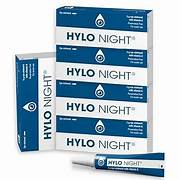
Hylo Night (formerly VitA-POS) Eye Ointment with Vitamin A - 5g
Hylo Night (formerly VitA-POS) Eye Ointment with Vitamin A - 5g
- ✔️ Relieves overnight dry eye symptoms with Vitamin A
- ✔️ Preservative-free formula suits sensitive eyes
- ✔️ Ointment base provides hours of sustained lubrication
- ✔️ Supports conjunctival surface health with retinol palmitate
- ✔️ Formerly VitA-POS — same trusted formula, new name
Price Checker
 Lowest price guarantee
 Includes FREE private prescription


Couldn't load pickup availability
What Is Hylo Night Eye Ointment and How Can It Help?
If you wake up with sore, gritty, or uncomfortable eyes, you are not alone. Dry eye syndrome affects millions of people in the UK, and symptoms are often at their worst first thing in the morning. Hylo night eye ointment — formerly known as VitA-POS — is a preservative-free ocular ointment containing retinol palmitate (Vitamin A) that works overnight to soothe and protect the surface of your eyes. Available from our eye care collection at Cured Pharmacy for just £4.99, it offers an accessible, clinically recognised option for managing dry eye symptoms while you sleep.
The product has been rebranded from VitA-POS to Hylo Night, but the formulation remains the same trusted ointment that eye care professionals have recommended for years. It is suitable for adults and is available over the counter without a prescription.
How Does Hylo Night Eye Ointment Work to Relieve Dry Eyes?
Dry eye occurs when your eyes do not produce enough tears, or when the tear film evaporates too quickly. This leaves the ocular surface exposed and vulnerable to irritation. Hylo Night addresses this through two complementary mechanisms:
- Vitamin A (retinol palmitate): Vitamin A plays a key role in maintaining the health of the conjunctival epithelium — the thin layer of cells covering the white of your eye. Deficiency or depletion of Vitamin A at the ocular surface is associated with dry eye and goblet cell loss.
- Ointment base lubrication: The paraffin-based ointment creates a protective, long-lasting film over the eye surface. Unlike drops, which drain away quickly, an ointment stays in contact with the eye for several hours — making it ideal for overnight use.
- Preservative-free formula: Preservatives in some eye products can themselves irritate the ocular surface over time. Hylo Night contains no preservatives, making it gentler for regular use.
Who Should Use Hylo Night Eye Ointment?
This ointment is designed for adults who experience dry, irritated, or uncomfortable eyes — particularly those whose symptoms are worse overnight or upon waking. It is especially useful if you have already tried daytime eye drops but still wake up with significant discomfort.
- Adults with chronic dry eye syndrome
- People who sleep with their eyes partially open (nocturnal lagophthalmos)
- Those who use screens heavily during the day and experience evening eye fatigue
- Individuals who have had laser eye surgery or other ocular procedures that affect tear production
How Does Hylo Night Compare to Other Dry Eye Ointments?
| Feature | Hylo Night Eye Ointment | Standard Lubricating Eye Ointment (e.g. Simple Eye Ointment) |
|---|---|---|
| Active ingredient | Retinol palmitate (Vitamin A) | Liquid paraffin / wool fat only |
| Preservative-free | Yes | Varies by brand |
| Ocular surface support | Yes — supports epithelial health | Lubrication only |
| Suitable for long-term use | Yes | Generally yes, but check label |
Is Hylo Night Eye Ointment Suitable for Sensitive Eyes and How Should It Be Stored?
Because hylo night eye ointment is preservative-free, it is generally well tolerated even by people with sensitive eyes or those who react to standard preserved eye drops. If you wear contact lenses, remove them before applying the ointment and do not reinsert them until the ointment has fully cleared. You can browse our wider range of creams and ointments if you are looking for other topical treatments alongside your eye care routine.
Store the tube below 25°C, away from direct heat and sunlight. Once opened, discard after 6 months — even if product remains in the tube. Do not use after the expiry date printed on the packaging.
This product is a medicine. Speak to your doctor or pharmacist before using if you have an underlying medical condition or are taking other medicines.
Hylo Night Eye Ointment with Vitamin A 5g specifications
| Treatment category | Dry eye / ocular lubricant |
| Mechanism of action | Vitamin A supports ocular surface epithelium; paraffin base provides prolonged lubrication |
| Effective for | Dry, irritated, and uncomfortable eyes; overnight symptom relief |
| Suitable for | Adults; preservative-sensitive individuals |
| Active ingredient | Retinol palmitate (Vitamin A) 250 IU/g |
| Pack size | 5g tube |
| UK classification | General Sale Medicine (GSL) |
| Drug class | Ocular lubricant / Vitamin A preparation |
| Preparation | Eye ointment |
| Route of administration | Ophthalmic (topical to the eye) |
Specifications of Hylo Night Eye Ointment with Vitamin A 5g
What Is Hylo Night Eye Ointment and What Is It Used For?
Hylo Night Eye Ointment (formerly VitA-POS) is a preservative-free ocular ointment containing retinol palmitate — a form of Vitamin A — at a concentration of 250 IU per gram. It is used to relieve the symptoms of dry eye syndrome, including burning, grittiness, soreness, and a feeling of something in the eye. Because it is an ointment rather than a drop, it stays on the eye surface for longer, making it particularly suited to overnight use when tear production naturally slows.
Dry eye is a recognised clinical condition in which the tear film is insufficient to keep the ocular surface adequately lubricated. The NHS notes that dry eye is very common and can be caused by factors including ageing, screen use, certain medications, and environmental conditions. Hylo Night is intended to supplement the natural tear film and support the health of the conjunctival epithelium during sleep.
What Do You Need to Know Before Using Hylo Night Eye Ointment?
Do not use Hylo Night if any of the following apply to you:
- You are allergic to retinol palmitate, liquid paraffin, white soft paraffin, or any other ingredient in the ointment
- You have a known hypersensitivity to Vitamin A preparations
- You are currently wearing contact lenses (remove lenses before application)
- You are under 18 years of age — consult a doctor before use in children
Important warnings to be aware of before use:
- Hylo Night will cause temporary blurring of vision immediately after application — do not drive or operate machinery until your vision has fully cleared
- For external use in the eye only — do not swallow
- If you experience eye pain, sudden change in vision, or worsening redness, stop use and seek medical advice promptly
- Tell your doctor or pharmacist if you are pregnant or breastfeeding before using this product
Known drug interactions:
- No clinically significant interactions with systemic medicines have been reported for topically applied Vitamin A eye ointment
- If you are using other eye drops or ointments, apply Hylo Night last and allow at least 5 minutes between different eye preparations
How Should You Use Hylo Night Eye Ointment?
Always use this product exactly as described. If you are unsure, ask your pharmacist. The ointment is applied directly to the eye just before bedtime.
- Wash your hands thoroughly before handling the tube
- Tilt your head back slightly and gently pull down your lower eyelid to create a small pocket
- Squeeze a small strip of ointment (approximately 1 cm) into the lower conjunctival sac — avoid touching the tip of the tube to your eye or eyelid
- Close your eye gently and blink once or twice to spread the ointment
- Wipe away any excess ointment from around the eye with a clean tissue
- Replace the cap on the tube immediately after use
| Indication | Age Group | Dose | Frequency |
|---|---|---|---|
| Dry eye symptom relief | Adults (18+) | ~1 cm strip per eye | Once nightly at bedtime |
| Dry eye symptom relief | Children | Consult a doctor | As directed by a healthcare professional |
What Are the Possible Side Effects of Hylo Night Eye Ointment?
Like all medicines, Hylo Night can cause side effects, although not everyone experiences them. Because it is applied at bedtime, many of the temporary visual effects occur while you are asleep and are not noticed.
Common side effects (may affect up to 1 in 10 people):
- Temporary blurred vision immediately after application
- Mild stinging or burning sensation in the eye
- A feeling of something in the eye (foreign body sensation)
Less common side effects (may affect up to 1 in 100 people):
- Eye redness or irritation
- Sticky eyelids upon waking
- Allergic reaction — including itching, swelling, or rash around the eye (stop use and seek advice if this occurs)
If you experience any severe or unexpected side effects, stop using the ointment and contact your GP or pharmacist. You can also report side effects directly to the MHRA via the Yellow Card scheme at yellowcard.mhra.gov.uk.
How Should You Store Hylo Night Eye Ointment?
Correct storage helps maintain the safety and effectiveness of the ointment. If you are managing multiple eye care products, it is worth keeping them organised and clearly labelled. You can find further guidance on managing eye conditions through our eye care collection.
- Store below 25°C — do not refrigerate or freeze
- Keep away from direct sunlight and heat sources
- Keep the tube tightly closed when not in use
- Discard 6 months after first opening, even if product remains
- Do not use after the expiry date printed on the tube and carton
- Keep out of the sight and reach of children
If you are also taking oral vitamins or supplements alongside this product, you can explore our vitamins and supplements range for complementary options to support your overall health.
References
Written and reviewed by our qualified team
Your safety and success are our highest priorities. Our medical team rigorously evaluates every product and piece of advice we provide, ensuring you receive only the most effective, science-backed solutions available.
Frequently Asked Questions
Where can I buy Hylo Night eye ointment online in the UK?
You can buy Hylo Night eye ointment (formerly VitA-POS) directly from Cured Pharmacy, a UK GPhC-registered online pharmacy, for just £4.99. No prescription is needed as it is an over-the-counter general sale medicine. Simply add it to your basket and it will be dispatched to your door.
How does Hylo Night eye ointment work in the eye?
Hylo Night works in two ways: the retinol palmitate (Vitamin A) helps maintain and restore the health of the conjunctival epithelium — the surface cells of the eye — while the paraffin-based ointment creates a long-lasting protective film over the ocular surface. Together, these actions reduce dryness, irritation, and discomfort overnight. Because it is an ointment rather than a drop, it stays in contact with the eye for much longer than standard lubricating drops.
How do I apply Hylo Night eye ointment step by step?
Wash your hands first, then tilt your head back and gently pull down your lower eyelid to form a small pocket. Squeeze approximately 1 cm of ointment into this pocket, being careful not to touch the tube tip to your eye. Close your eye gently, blink once or twice to spread the ointment, and wipe away any excess with a clean tissue before replacing the cap.
What is the correct dose of Hylo Night eye ointment?
The recommended dose for adults is a small strip of ointment (approximately 1 cm) applied to the lower conjunctival sac of each affected eye once nightly at bedtime. You should not apply more than this unless specifically advised by a healthcare professional. If one eye is unaffected, there is no need to treat it.
When is the best time to use Hylo Night eye ointment?
Hylo Night is specifically designed for use at bedtime, just before you go to sleep. Applying it at night means the temporary blurring it causes is not a practical problem, and the ointment has several hours to work while your eyes are closed and resting. Do not apply it before driving or operating machinery.
Can I use Hylo Night eye ointment with contact lenses?
No — you must remove your contact lenses before applying Hylo Night eye ointment. Since the product is intended for bedtime use, this is rarely an issue in practice, but you should wait until the ointment has fully cleared from your eyes before reinserting lenses the following morning. If you are unsure, speak to your optometrist.
What are the side effects of Hylo Night eye ointment?
The most commonly reported side effect is temporary blurred vision immediately after application, which is expected and resolves on its own. Some people also notice mild stinging, a foreign body sensation, or slightly sticky eyelids upon waking. Allergic reactions are rare but possible — if you notice swelling, severe itching, or a rash around the eye, stop use and seek medical advice.
Is Hylo Night eye ointment safe to use every night long-term?
Hylo Night can be used nightly on an ongoing basis for chronic dry eye conditions, as it is preservative-free and generally well tolerated with regular use. However, if your symptoms persist or worsen after a few weeks of use, it is worth reviewing your eye health with your GP or optometrist. Always discard the tube 6 months after first opening, regardless of how much product remains.
What is the difference between Hylo Night and Hylo Gel eye drops?
Hylo Gel is a daytime lubricating eye drop containing sodium hyaluronate, designed to be used throughout the day to relieve dry eye symptoms. Hylo Night is a Vitamin A-based ointment formulated specifically for overnight use, providing longer-lasting lubrication while you sleep. Many people with moderate to severe dry eye use both products as part of a complete day-and-night management routine — drops during the day, ointment at night.
Who is eligible to use Hylo Night eye ointment?
Hylo Night is suitable for adults aged 18 and over who experience dry, irritated, or uncomfortable eyes. It is particularly beneficial for those whose symptoms are worse in the morning, those with nocturnal lagophthalmos (sleeping with eyes partially open), and people who have had laser eye surgery. It is not recommended for children without medical supervision, and you should consult your doctor if you are pregnant or breastfeeding.
What happens if I miss a night of using Hylo Night eye ointment?
If you forget to apply Hylo Night one night, simply resume your normal routine the following evening — do not apply a double dose to compensate. Missing an occasional application is unlikely to cause harm, though you may notice your dry eye symptoms are more pronounced the following morning. Consistency is key for best results with any dry eye management routine.
Is Hylo Night the same as VitA-POS eye ointment?
Yes — Hylo Night is the new name for VitA-POS eye ointment. The product has been rebranded but the formulation, active ingredient (retinol palmitate 250 IU/g), and intended use remain exactly the same. If you have previously used VitA-POS and found it effective, you can switch to Hylo Night with confidence.
What are the alternatives to Hylo Night eye ointment for dry eyes?
Alternatives for overnight dry eye relief include Simple Eye Ointment (liquid paraffin and wool fat), Lacri-Lube, and Xailin Night. Unlike Hylo Night, most of these alternatives do not contain Vitamin A and therefore do not offer the additional ocular surface support that retinol palmitate provides. You can explore our full eye care range to compare available options.
How long does a 5g tube of Hylo Night eye ointment last?
A 5g tube typically lasts several weeks to a couple of months depending on how much ointment you apply per use and whether you treat one or both eyes. Regardless of how much product remains, the tube must be discarded 6 months after first opening to reduce the risk of contamination and infection. It is a good idea to note the date of opening on the tube when you first use it.
What does the latest research say about Vitamin A eye ointments for dry eye?
Clinical evidence supports the role of Vitamin A in maintaining conjunctival goblet cell density and ocular surface integrity, with studies suggesting that topical retinol preparations can help reduce dry eye symptoms in patients with goblet cell loss. The NHS recognises lubricating eye ointments as a first-line treatment option for dry eye, particularly for overnight use. If you are interested in supporting your eye health more broadly, our vitamins and supplements collection includes products that may complement your routine.
Written and reviewed by our qualified team

Reviewed by:
Tarun Kumar
Superintendent/ Clinical Lead
📖 Find out more about our team of medical content authors and how we ensure the accuracy of our content with our content guidelines.
Content last updated: 14 Sep 2026
Other popular options


We’re a safe and
regulated UK service

Lowest Price Guarantee

We're convinced you won't find your treatment cheaper, but if you do we'll refund the difference.
Find out more
100% discreet packaging

Discreet, unbranded packaging for every order.
Find out more

Need help?
Talk to our friendly experts now


How our service works

Service setup

Discreet packaging

Express delivery