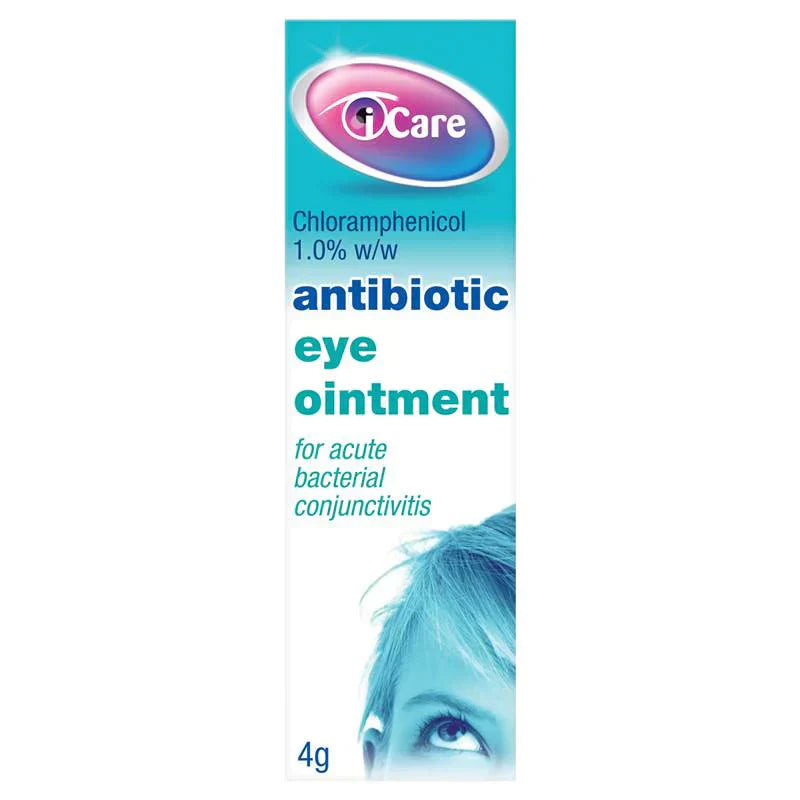
Chloramphenicol 1.0% antibiotic eye ointment 4g (brand may vary)
Chloramphenicol 1.0% antibiotic eye ointment 4g (brand may vary)
- ✔️ Treats bacterial conjunctivitis in adults and children aged 2+
- ✔️ Broad-spectrum antibiotic targets common eye infection bacteria
- ✔️ Ointment formulation provides prolonged contact with the eye
- ✔️ Clinically proven 5-day treatment course clears infection effectively
- ✔️ Suitable for night-time use alongside chloramphenicol eye drops
Price Checker
 Lowest price guarantee
 Includes FREE private prescription


Couldn't load pickup availability
What Is Chloramphenicol Eye Ointment and How Does It Treat Eye Infections?
If your eyes are red, sticky, and uncomfortable, bacterial conjunctivitis is one of the most likely culprits. Chloramphenicol eye ointment is a clinically proven, over-the-counter antibiotic treatment available in the UK for adults and children aged 2 years and over. Each 4g tube contains chloramphenicol at a 1% concentration — the same strength used in NHS-recommended treatment for bacterial eye infections. At just £6.99, it offers an accessible and effective option without needing a GP appointment. You can browse our full range of eye care products at Cured Pharmacy if you need additional support for your eye health.
Bacterial conjunctivitis is extremely common. It causes the white of the eye to appear pink or red, often with a yellow or green discharge that can cause the eyelids to stick together — particularly in the morning. The NHS confirms that most cases are caused by bacteria such as Staphylococcus aureus or Haemophilus influenzae, and antibiotic treatment like chloramphenicol can help clear the infection more quickly.
How Does Chloramphenicol Eye Ointment Work Against Bacteria?
Chloramphenicol belongs to a class of antibiotics known as bacteriostatic agents. Rather than killing bacteria outright, it stops them from multiplying — giving your immune system the opportunity to clear the infection naturally. Here is how it works:
- Chloramphenicol binds to the 50S subunit of the bacterial ribosome.
- This blocks the enzyme peptidyl transferase, preventing the formation of new proteins essential for bacterial survival.
- Without the ability to produce proteins, bacteria cannot reproduce.
- The immune system then eliminates the remaining bacteria over the course of treatment.
Because it acts on a broad spectrum of both gram-positive and gram-negative bacteria, chloramphenicol eye ointment is effective against the most common organisms responsible for bacterial conjunctivitis in the UK.
Who Is Chloramphenicol Eye Ointment Suitable For?
This ointment is suitable for a wide range of patients, but it is not appropriate for everyone. Before purchasing, it is important to confirm you meet the eligibility criteria. It is generally recommended for:
- Adults aged 18 and over with symptoms of bacterial conjunctivitis.
- Children aged 2 years and over (under the supervision of an adult).
- Patients who have not used chloramphenicol eye preparations in the past 3 months for the same condition.
- Those whose symptoms have been present for fewer than 5 days.
It is not suitable for contact lens wearers during treatment, those with a history of blood disorders, or anyone with a known allergy to chloramphenicol. If you are pregnant or breastfeeding, speak to your pharmacist or GP before use.
How Does Chloramphenicol Eye Ointment Compare to Eye Drops?
| Feature | Chloramphenicol Eye Ointment 1% | Chloramphenicol Eye Drops 0.5% |
|---|---|---|
| Concentration | 1% w/w | 0.5% w/v |
| Dosing frequency | 3–4 times daily or at night | Every 2 hours initially, reducing to 4 times daily |
| Duration of contact | Longer — ointment stays in eye | Shorter — drops disperse quickly |
| Vision after application | Temporarily blurred | Minimal blurring |
| Best suited for | Night-time use or standalone treatment | Daytime use |
How Should You Store Chloramphenicol Eye Ointment?
Proper storage is essential to maintain the effectiveness of this medicine. Store your tube below 25°C, away from direct sunlight and heat sources. Keep it out of the reach and sight of children at all times. Once opened, the tube should be discarded after 4 weeks — even if ointment remains — to reduce the risk of contamination and secondary infection.
Do not share this product with anyone else, even if they have similar symptoms. Using someone else's eye ointment can spread infection. If you are looking for other topical treatments, our creams and ointments collection includes a range of options for different conditions.
This product is a medicine. Speak to your doctor or pharmacist before using if you have an underlying medical condition or are taking other medicines.
Chloramphenicol 1.0% Antibiotic Eye Ointment 4g specifications
| Treatment category | Bacterial conjunctivitis / eye infections |
| Mechanism of action | Bacteriostatic — inhibits bacterial protein synthesis |
| Effective against | Gram-positive and gram-negative bacteria |
| Suitable for | Adults and children aged 2 years and over |
| Active ingredient | Chloramphenicol 1% w/w |
| Pack size | 4g tube |
| Strength | 1.0% w/w |
| UK classification | Pharmacy (P) medicine |
| Drug class | Broad-spectrum antibiotic |
| Preparation | Eye ointment |
| Route of administration | Ophthalmic (topical to the eye) |
Specifications of Chloramphenicol 1.0% Antibiotic Eye Ointment 4g
What Is Chloramphenicol Eye Ointment and What Is It Used For?
Chloramphenicol 1% eye ointment is a broad-spectrum antibiotic medicine used to treat bacterial conjunctivitis — a common infection of the conjunctiva, the thin membrane covering the white of the eye and the inner surface of the eyelids. It is available over the counter in the UK as a Pharmacy (P) medicine for adults and children aged 2 years and over. The NHS recommends antibiotic eye preparations such as chloramphenicol as a first-line treatment for bacterial conjunctivitis when symptoms are moderate or persistent.
What Do You Need to Know Before Using Chloramphenicol Eye Ointment?
Before using this ointment, read the following carefully. There are certain situations where this medicine should not be used.
Do not use this ointment if you:
- Are allergic to chloramphenicol or any other ingredient in the product.
- Have a personal or family history of aplastic anaemia or other blood disorders.
- Are under 2 years of age.
- Are pregnant or breastfeeding, unless advised by a doctor.
- Wear contact lenses (remove lenses before application and wait at least 15 minutes before reinserting).
- Have had a previous course of chloramphenicol eye treatment within the last 3 months for the same condition.
Drug interactions to be aware of:
- Chloramphenicol eye ointment is not known to interact significantly with other medicines at ophthalmic doses.
- However, if you are using other eye drops or ointments at the same time, leave at least 5 minutes between applications.
- Always inform your pharmacist of all medicines you are currently taking, including herbal remedies.
How Should You Use Chloramphenicol Eye Ointment Correctly?
Always use this medicine exactly as directed by your pharmacist or as described in the patient information leaflet. Do not use more than recommended.
- Wash your hands thoroughly with soap and water before touching your eyes or the tube.
- Tilt your head back slightly and gently pull down your lower eyelid to create a small pocket.
- Squeeze a thin strip of ointment (approximately 1cm) into the pocket formed by the lower eyelid.
- Release the eyelid and close your eye gently for 1–2 minutes.
- Blink a few times to help spread the ointment evenly across the surface of the eye.
- Wipe away any excess ointment from around the eye with a clean tissue.
- Replace the cap on the tube immediately after use.
| Indication | Age Group | Dose | Frequency |
|---|---|---|---|
| Bacterial conjunctivitis | Adults (18+) | ~1cm strip per eye | 3–4 times daily for 5 days |
| Bacterial conjunctivitis | Children (2–17 years) | ~1cm strip per eye | 3–4 times daily for 5 days |
| Night-time supplement to drops | Adults and children (2+) | ~1cm strip per eye | Once at bedtime |
If you are also using our wider range of eye care treatments, speak to your pharmacist about the correct order and timing of application.
What Are the Possible Side Effects of Chloramphenicol Eye Ointment?
Like all medicines, chloramphenicol eye ointment can cause side effects, although not everyone experiences them. Most side effects are mild and temporary.
Common side effects:
- Temporary stinging or burning sensation immediately after application.
- Blurred vision for a short time after applying the ointment.
- Mild eye irritation or watering.
Less common side effects:
- Allergic reaction — redness, swelling, or itching of the eye or eyelid.
- Increased sensitivity to light (photophobia).
- Prolonged use may rarely lead to overgrowth of non-susceptible organisms, including fungi.
Stop using the ointment and seek medical advice immediately if you develop signs of a serious allergic reaction, such as swelling of the face, lips, or throat, or if your symptoms worsen rather than improve after 48 hours of treatment. Serious blood disorders (aplastic anaemia) have been reported very rarely with systemic chloramphenicol use; the risk with topical ophthalmic use is considered extremely low but cannot be entirely excluded.
How Should You Store Chloramphenicol Eye Ointment Safely?
Correct storage protects the integrity of the medicine and keeps it safe to use throughout the treatment course. If you need other first aid or health essentials, our first aid collection has a range of useful products.
- Store below 25°C in a cool, dry place.
- Keep away from direct sunlight and heat sources.
- Do not store in the bathroom or near a sink where moisture can affect the product.
- Keep the tube tightly closed when not in use.
- Discard the tube 4 weeks after first opening, even if ointment remains.
- Keep out of the reach and sight of children.
- Do not use after the expiry date printed on the tube and carton.
- Do not dispose of medicines via wastewater or household waste — return unused medicine to your pharmacy.
References
Written and reviewed by our qualified team
Your safety and success are our highest priorities. Our medical team rigorously evaluates every product and piece of advice we provide, ensuring you receive only the most effective, science-backed solutions available.
Frequently Asked Questions
Where can I buy chloramphenicol eye ointment online in the UK?
You can buy chloramphenicol eye ointment from Cured Pharmacy, a GPhC-registered online pharmacy, for just £6.99 per 4g tube. A short online consultation is required to confirm suitability before your order is dispatched. Browse our full eye care collection for additional products to support your eye health.
How does chloramphenicol eye ointment work in the body?
Chloramphenicol is a bacteriostatic antibiotic that works by binding to the 50S ribosomal subunit in bacteria, blocking protein synthesis and preventing bacterial reproduction. This stops the infection from spreading and allows your immune system to clear the remaining bacteria. It is effective against a broad range of gram-positive and gram-negative bacteria commonly responsible for bacterial conjunctivitis.
How do I apply chloramphenicol eye ointment step by step?
Wash your hands thoroughly, then tilt your head back and gently pull down your lower eyelid to form a small pocket. Squeeze approximately 1cm of ointment into the pocket, close your eye gently for 1–2 minutes, and blink to spread the ointment. Wipe away any excess with a clean tissue and replace the cap immediately.
What is the correct dose of chloramphenicol eye ointment for adults?
The standard adult dose is a 1cm strip of ointment applied to the affected eye(s) three to four times daily for 5 days. If you are using chloramphenicol eye drops during the day, the ointment can be used at night instead to maintain antibiotic coverage. Do not exceed the recommended frequency or duration without medical advice.
Can children use chloramphenicol eye ointment?
Yes, chloramphenicol eye ointment is suitable for children aged 2 years and over when used under adult supervision. It is not recommended for infants under 2 years of age — if your child is younger than this, you should seek advice from your GP or pharmacist before using any antibiotic eye preparation. The dose for children aged 2 and over is the same as for adults.
What are the side effects of chloramphenicol eye ointment?
The most common side effects are temporary stinging, burning, or blurred vision immediately after applying the ointment — these usually resolve within a few minutes. Less commonly, you may experience eye redness, itching, or swelling, which could indicate an allergic reaction. Stop use and contact your pharmacist or GP if symptoms worsen or you develop signs of an allergic reaction.
Who should not use chloramphenicol eye ointment?
This product is not suitable for children under 2 years, people with a personal or family history of aplastic anaemia or blood disorders, or those with a known allergy to chloramphenicol. Pregnant or breastfeeding women should consult a doctor before use. Contact lens wearers should remove lenses before application and wait at least 15 minutes before reinserting them.
What happens if I miss a dose of chloramphenicol eye ointment?
If you miss a dose, apply it as soon as you remember — unless it is nearly time for your next scheduled application, in which case skip the missed dose and carry on as normal. Never apply a double dose to compensate for a missed one. Completing the full 5-day course is important to prevent the infection from returning.
How long does chloramphenicol eye ointment take to work?
Most people notice a clear improvement in symptoms — such as reduced redness, discharge, and discomfort — within 48 hours of starting treatment. Even if your symptoms improve quickly, you should complete the full 5-day course to ensure the infection is fully cleared. If there is no improvement after 48 hours, or if symptoms worsen at any point, seek medical advice promptly.
Can I use chloramphenicol eye ointment with contact lenses?
You should not wear contact lenses while you have bacterial conjunctivitis, as this can worsen the infection and damage your lenses. If you need to reinsert your lenses, remove them before applying the ointment and wait at least 15 minutes afterwards. It is generally advisable to switch to glasses for the duration of your treatment course.
What are the alternatives to chloramphenicol eye ointment?
The main over-the-counter alternative is chloramphenicol 0.5% eye drops, which are applied more frequently during the day and may be preferred by those who find ointment uncomfortable. For viral conjunctivitis, antibiotic treatments are not appropriate — lubricating eye drops may help relieve symptoms instead. Your pharmacist can advise on the most suitable option based on your symptoms.
How long can I use chloramphenicol eye ointment for?
The recommended treatment course is 5 days, or for 48 hours after symptoms have fully resolved — whichever is longer. You should not use this ointment for longer than 5 days without medical supervision, as prolonged use can increase the risk of resistant organisms developing. If your symptoms have not improved after 5 days, consult your GP.
Is chloramphenicol eye ointment safe during pregnancy?
Chloramphenicol eye ointment is not recommended during pregnancy unless specifically advised by a doctor, as there is limited safety data for topical ophthalmic use in pregnant women. If you are pregnant and think you have bacterial conjunctivitis, speak to your GP or midwife before using any antibiotic eye preparation. They can advise on the safest treatment option for you and your baby.
What is the difference between chloramphenicol eye ointment and eye drops?
Chloramphenicol eye ointment (1%) stays in contact with the eye for longer than drops, making it particularly useful at night or when fewer daily applications are preferred. Eye drops (0.5%) are applied more frequently — every 2 hours initially — and cause less temporary blurring, making them more convenient during the day. Some patients use drops during the day and ointment at night for continuous antibiotic coverage. You can find both formats in our eye care range.
What are the latest clinical findings on chloramphenicol for conjunctivitis?
Chloramphenicol remains one of the most widely studied and clinically supported topical antibiotics for bacterial conjunctivitis in the UK, with evidence supporting its efficacy and safety for short-term ophthalmic use. The NHS and NICE continue to recommend it as a first-line treatment option for bacterial conjunctivitis in primary care settings. Research also confirms that the risk of serious systemic side effects — such as aplastic anaemia — from topical ophthalmic use is extremely low, though it cannot be entirely excluded.
Written and reviewed by our qualified team

Reviewed by:
Tarun Kumar
Superintendent/ Clinical Lead
📖 Find out more about our team of medical content authors and how we ensure the accuracy of our content with our content guidelines.
Content last updated: 14 Sep 2026
Other popular options


We’re a safe and
regulated UK service

Lowest Price Guarantee

We're convinced you won't find your treatment cheaper, but if you do we'll refund the difference.
Find out more
100% discreet packaging

Discreet, unbranded packaging for every order.
Find out more

Need help?
Talk to our friendly experts now


How our service works

Service setup

Discreet packaging

Express delivery