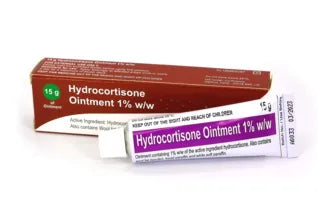
Hydrocortisone Ointment 15g, Bite, Sting and Itch Relief
Hydrocortisone Ointment 15g, Bite, Sting and Itch Relief
- ✔️ Relieves itching and redness from insect bites fast
- ✔️ Contains hydrocortisone 1% to calm skin inflammation
- ✔️ Soothes stings, bites and mild eczema on the body
- ✔️ Compact 15g tube ideal for travel first aid kits
- ✔️ Suitable for adults and children aged 10 and over
Price Checker
 Lowest price guarantee
 Includes FREE private prescription


Couldn't load pickup availability
Is Hydrocortisone Cream for Insect Bites Right for You?
Few things are more irritating than the relentless itch of an insect bite or sting — especially when you're trying to sleep or get on with your day. Hydrocortisone Ointment 15g is a trusted, pharmacy-strength option for calming that itch quickly. It contains hydrocortisone 1% w/w, a mild topical corticosteroid that has been used in the UK for decades to manage minor inflammatory skin reactions. Whether you've been bitten by a mosquito on holiday or stung by a nettle in the garden, this ointment offers targeted, localised relief. You can browse our full range of creams and ointments if you're looking for other topical treatments alongside this product.
This product is classified as a Pharmacy (P) medicine in the UK, meaning it's available without a prescription but should be used according to the label instructions. It's suitable for adults and children aged 10 and over, making it a practical addition to any home first aid kit or travel bag.
How Does Hydrocortisone Ointment Work on Skin Irritation?
Hydrocortisone belongs to a class of medicines called corticosteroids. When applied to the skin, it works by suppressing the local inflammatory response that causes redness, swelling and itching. Here's what happens at a skin level:
- Hydrocortisone binds to glucocorticoid receptors within skin cells.
- This reduces the production of pro-inflammatory mediators such as prostaglandins and histamine-related compounds.
- Blood vessel dilation in the affected area decreases, reducing redness and swelling.
- The itch signal sent to the nervous system is dampened, providing relief from the urge to scratch.
Because it works locally rather than systemically, the risk of whole-body side effects is very low when used correctly and for short periods. The ointment base also helps to lock in moisture, which can be particularly soothing on dry, irritated skin.
Who Should Use Hydrocortisone Ointment for Bite and Sting Relief?
This ointment is designed for people experiencing mild to moderate skin inflammation from everyday causes. It's not a treatment for serious allergic reactions — if you experience swelling of the face, throat or difficulty breathing after a sting, call 999 immediately. For the vast majority of minor reactions, though, it's a straightforward and effective choice.
It may be suitable for you if you:
- Have itching, redness or mild swelling from insect bites or stings
- Experience irritation from contact with plants such as nettles
- Have mild eczema flares on the body (not the face)
- Are an adult or a child aged 10 years or over
How Does Hydrocortisone Ointment Compare to Other Itch Relief Options?
| Feature | Hydrocortisone Ointment 1% | Antihistamine Cream (e.g. Anthisan) |
|---|---|---|
| Active ingredient | Hydrocortisone 1% w/w | Mepyramine maleate 2% |
| Mechanism | Reduces inflammation via corticosteroid action | Blocks histamine H1 receptors locally |
| Best suited for | Inflammatory itch, eczema, bites, stings | Histamine-driven itch from bites and stings |
| Age restriction | Not for under 10s without medical advice | Not for under 3s without medical advice |
Is Hydrocortisone Ointment Safe to Store and Travel With?
Hydrocortisone cream for insect bites is a compact, easy-to-carry treatment that fits neatly into a travel first aid kit. The 15g tube is small enough to comply with most airline liquid restrictions when packed in your hand luggage. Store it below 25°C, away from direct sunlight and out of reach of children. Do not freeze the product. If you're heading abroad and want to be prepared for bites and stings, it pairs well with other essentials from our travel health range.
This product is a medicine. Speak to your doctor or pharmacist before using if you have an underlying medical condition or are taking other medicines.
Hydrocortisone Ointment 15g Bite Sting and Itch Relief specifications
| Treatment category | Topical corticosteroid / Itch and inflammation relief |
| Active ingredient | Hydrocortisone 1% w/w |
| Mechanism of action | Suppresses local inflammatory mediators to reduce itch, redness and swelling |
| Effective for | Insect bites, stings, mild eczema, contact irritation |
| Suitable for | Adults and children aged 10 and over |
| Pack size | 15g |
| Strength | 1% w/w |
| UK classification | Pharmacy (P) medicine |
| Drug class | Mild topical corticosteroid |
| Preparation | Ointment |
| Route of administration | Topical (applied to skin) |
Specifications of Hydrocortisone Ointment 15g Bite Sting and Itch Relief
What Is Hydrocortisone Ointment and What Is It Used For?
Hydrocortisone Ointment 15g is a mild topical corticosteroid used to relieve the symptoms of inflamed, itchy skin. The active ingredient, hydrocortisone 1% w/w, is one of the most widely used OTC treatments for minor skin conditions in the UK. It is indicated for the short-term relief of itching, redness and swelling associated with insect bites, stings, contact dermatitis and mild eczema on the body. It is not a cure for underlying skin conditions, but it can significantly reduce discomfort while the skin heals.
What Do You Need to Know Before Using Hydrocortisone Ointment?
Before applying this ointment, read the following carefully. There are situations where this product should not be used, and others where caution is needed.
Do not use this product if you:
- Are allergic to hydrocortisone or any other ingredient in the ointment
- Have a bacterial, viral or fungal skin infection at the site of application
- Have acne, rosacea or perioral dermatitis
- Are applying to broken, weeping or infected skin
- Are applying to the face, groin or underarms (unless directed by a doctor)
- Are under 10 years of age (without medical supervision)
Use with caution if you:
- Are pregnant or breastfeeding — speak to your pharmacist or GP before use
- Have diabetes, as corticosteroids can occasionally affect blood glucose levels with extensive use
- Are using other topical corticosteroids at the same time
Drug interactions:
- No significant interactions are known for topical hydrocortisone 1% used at OTC doses
- Avoid using alongside other topical steroids on the same area without medical advice
How Should You Use Hydrocortisone Ointment Correctly?
Always follow the instructions on the product label. If you are unsure, ask your pharmacist. Here is a step-by-step guide to applying the ointment safely:
- Wash and dry the affected area of skin thoroughly before application.
- Squeeze a small amount of ointment — a thin layer is all that is needed.
- Gently rub the ointment into the skin until it is absorbed.
- Wash your hands after application, unless the hands are the area being treated.
- Do not cover the treated area with an airtight dressing unless advised by a doctor.
| Indication | Age Group | Dose | Frequency |
|---|---|---|---|
| Insect bites and stings | Adults and children 10+ | Thin layer to affected area | Once or twice daily |
| Mild eczema (body only) | Adults and children 10+ | Thin layer to affected area | Once or twice daily |
| Contact dermatitis | Adults and children 10+ | Thin layer to affected area | Once or twice daily |
If you're also managing symptoms like hay fever that may be worsening your skin reactions, you might find it helpful to explore our allergy and hay fever treatments for additional support.
What Are the Possible Side Effects of Hydrocortisone Ointment?
Like all medicines, hydrocortisone ointment can cause side effects, although not everyone experiences them. Using it correctly — in small amounts, for short periods — greatly reduces the risk.
Common side effects:
- Mild burning or stinging sensation at the application site
- Temporary skin redness immediately after application
- Mild itching at the treated area
Less common side effects (usually associated with prolonged or excessive use):
- Skin thinning (atrophy) at the application site
- Stretch marks (striae)
- Changes in skin pigmentation
- Increased hair growth at the application site
Stop using the ointment and speak to your pharmacist or GP if you notice any worsening of your skin condition, signs of infection (increased warmth, pus, or spreading redness), or any unexpected reaction.
How Should You Store Hydrocortisone Ointment?
Correct storage keeps the product safe and effective for its full shelf life. Follow these guidelines:
- Store below 25°C in a cool, dry place
- Do not freeze
- Keep away from direct sunlight and heat sources
- Keep the cap tightly closed when not in use
- Keep out of the sight and reach of children
- Do not use after the expiry date printed on the tube
- Do not dispose of medicines via wastewater or household waste — return unused medicines to your pharmacy
For minor skin complaints that go beyond itch relief, our skin care collection includes a wide range of products to support everyday skin health.
References
Written and reviewed by our qualified team
Your safety and success are our highest priorities. Our medical team rigorously evaluates every product and piece of advice we provide, ensuring you receive only the most effective, science-backed solutions available.
Frequently Asked Questions
Where can I buy hydrocortisone ointment for insect bites online in the UK?
You can buy Hydrocortisone Ointment 15g directly from Cured Pharmacy, a GPhC-registered online pharmacy. It is available without a prescription as an over-the-counter Pharmacy (P) medicine for adults and children aged 10 and over. Simply add it to your basket and it will be dispatched promptly to your door.
How does hydrocortisone ointment work on insect bites and stings?
Hydrocortisone is a mild corticosteroid that works by binding to receptors in skin cells and reducing the release of inflammatory chemicals such as prostaglandins. This calms the redness, swelling and itching that occur after an insect bite or sting. It does not treat the underlying cause of the bite but effectively manages the inflammatory skin response.
How do I apply hydrocortisone ointment step by step?
First, clean and dry the affected area of skin. Apply a thin layer of ointment and gently rub it in until absorbed. Wash your hands after application unless your hands are the area being treated, and avoid covering the area with an airtight dressing unless a doctor has advised it.
How often should I apply hydrocortisone ointment for itch relief?
Apply the ointment once or twice daily to the affected area, following the instructions on the product label. Applying it more frequently than recommended does not improve results and increases the risk of side effects such as skin thinning. If symptoms have not improved after seven days, speak to your pharmacist or GP.
Can children use hydrocortisone ointment for bites and stings?
Hydrocortisone 1% ointment is not recommended for children under 10 years of age without medical supervision. For children aged 10 and over, it can be used under adult guidance following the product label instructions. If you are unsure whether it is appropriate for your child, speak to a pharmacist before use.
What are the side effects of hydrocortisone ointment?
The most common side effects are mild burning, stinging or itching at the application site, which usually settle quickly. With prolonged or excessive use, skin thinning (atrophy) and changes in pigmentation can occur. Using the ointment for short periods and in small amounts, as directed, significantly reduces these risks.
How long can I use hydrocortisone ointment for?
For OTC use, hydrocortisone ointment should not be applied for more than seven consecutive days without seeking medical advice. Longer-term use should only be undertaken under the supervision of a GP or dermatologist. If your symptoms persist beyond a week, it is important to get them properly assessed.
Is hydrocortisone ointment different from hydrocortisone cream?
Yes — ointments have a greasy, oil-based formulation that creates a more occlusive barrier on the skin, making them particularly effective for dry, thickened or scaly skin. Creams are lighter and water-based, making them better suited to moist or weeping areas. Both contain the same active ingredient at the same strength.
Who should not use hydrocortisone ointment?
You should not use this ointment if you have a skin infection (bacterial, viral or fungal) at the application site, acne, rosacea, or if you are allergic to hydrocortisone. It should not be applied to the face, groin or underarms without medical advice. Pregnant or breastfeeding women should consult a pharmacist or GP before use.
Can I use hydrocortisone ointment on my face?
No — you should not apply hydrocortisone ointment to the face without specific advice from a doctor. The skin on the face is thinner and more sensitive, making it more susceptible to side effects such as skin thinning and rosacea flares. A GP can prescribe a suitable alternative if facial treatment is needed.
What happens if I accidentally use too much hydrocortisone ointment?
Applying too much on a single occasion is unlikely to cause serious harm, but regular overuse can lead to skin thinning and, in rare cases with very large areas treated, systemic absorption. If you think you or someone else has used a large amount, contact NHS 111 or your pharmacist for advice. Always use the smallest effective amount.
Is hydrocortisone ointment suitable for eczema as well as insect bites?
Yes — hydrocortisone 1% ointment is commonly used for mild eczema flares on the body in adults and children aged 10 and over. It helps to reduce the redness, itching and inflammation associated with atopic eczema. For more information on managing eczema, you can explore our skin care range for complementary products.
What are the alternatives to hydrocortisone ointment for bite and sting relief?
Alternatives include antihistamine creams such as mepyramine maleate (e.g. Anthisan), which target histamine-driven itch, or oral antihistamines for more widespread reactions. Cooling gels and calamine lotion can also provide symptomatic relief. If you experience a severe allergic reaction to a sting, seek emergency medical attention immediately.
Can I use hydrocortisone ointment while pregnant or breastfeeding?
If you are pregnant or breastfeeding, you should speak to your GP or pharmacist before using hydrocortisone ointment. While topical use at low concentrations is generally considered low risk, it is important to get personalised advice. Avoid applying it to large areas of skin or for prolonged periods during pregnancy.
Is hydrocortisone ointment a good product to pack in a travel first aid kit?
Absolutely — the compact 15g tube makes it ideal for travel, fitting easily into a toiletries bag or first aid kit. It's particularly useful in warmer climates where insect bites and stings are more common. Just ensure it is stored below 25°C and kept away from direct sunlight during your trip.
Written and reviewed by our qualified team

Reviewed by:
Tarun Kumar
Superintendent/ Clinical Lead
📖 Find out more about our team of medical content authors and how we ensure the accuracy of our content with our content guidelines.
Content last updated: 14 Sep 2026
Other popular options


We’re a safe and
regulated UK service

Lowest Price Guarantee

We're convinced you won't find your treatment cheaper, but if you do we'll refund the difference.
Find out more
100% discreet packaging

Discreet, unbranded packaging for every order.
Find out more

Need help?
Talk to our friendly experts now


How our service works

Service setup

Discreet packaging

Express delivery