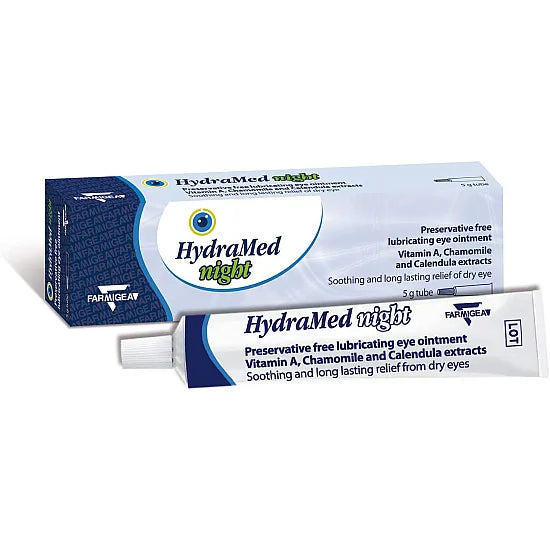
HydraMed Night Eye Ointment - 5g
- ✔️ Soothes dry, gritty eyes with overnight lubrication
- ✔️ Provides long-lasting relief from dry eye syndrome
- ✔️ Thick ointment formula stays on the eye surface longer
- ✔️ Suitable for adults with chronic or occasional dry eyes
- ✔️ Preservative-free formula minimises risk of irritation
Price Checker
 Discreet, tracked delivery
 Includes FREE private prescription


Couldn't load pickup availability
Is HydraMed Night Eye Ointment the Right Eye Ointment for Dry Eyes?
Dry, gritty, or irritated eyes are surprisingly common — and often worse first thing in the morning. If you wake up with eyes that feel sore, scratchy, or difficult to open, you may be experiencing the effects of reduced tear production during sleep. Eye ointment for dry eyes is specifically designed to address this, providing longer-lasting lubrication than standard eye drops. HydraMed Night Eye Ointment 5g is an over-the-counter option that works while you sleep, helping to soothe and protect the ocular surface through the night. You can browse our full range of eye care products to find the right solution for your needs.
Dry eye syndrome affects a significant proportion of the UK population. The NHS notes that symptoms include a burning or stinging sensation, redness, and sensitivity to light. Night-time ointments are often recommended when daytime drops alone are not providing enough relief, particularly for those with moderate to severe dryness.
How Does HydraMed Night Eye Ointment Work?
Eye ointments work differently from drops. Because of their thicker, gel-like consistency, they stay on the eye surface for much longer — making them ideal for overnight use when you are not blinking to spread tears naturally. Here is how HydraMed Night Eye Ointment works:
- Forms a protective, occlusive layer over the cornea and conjunctiva
- Reduces evaporation of the natural tear film
- Lubricates the eye surface to minimise friction and irritation
- Soothes inflammation caused by prolonged dryness
- Supports overnight recovery of the ocular surface epithelium
The ointment base — typically a blend of white soft paraffin and liquid paraffin — is well established in ophthalmic use. These ingredients are inert, well tolerated, and do not interact with the eye's natural chemistry.
Who Should Use HydraMed Night Eye Ointment?
This ointment is suitable for adults who experience dry, irritated, or uncomfortable eyes, particularly at night or upon waking. It is especially useful if you have already tried eye drops but find they do not last long enough. The following groups may benefit most:
- Adults with dry eye syndrome or keratoconjunctivitis sicca
- People who spend long hours in front of screens and experience end-of-day eye fatigue
- Those in air-conditioned or centrally heated environments where humidity is low
- Individuals who have had laser eye surgery and experience post-operative dryness
It is not recommended for use in children unless specifically directed by a doctor. Always read the label before use.
How Does HydraMed Night Eye Ointment Compare to Eye Drops?
| Feature | HydraMed Night Eye Ointment | Standard Lubricating Eye Drops |
|---|---|---|
| Duration of action | Long-lasting (hours) | Short-lasting (minutes to 1–2 hours) |
| Best time to use | Night-time / bedtime | Daytime, as needed |
| Effect on vision | Temporary blurring after application | Minimal or no blurring |
| Contact lens compatible | No | Some formulations yes |
How Should You Store HydraMed Night Eye Ointment?
Proper storage is important to maintain the integrity of the ointment. Keep HydraMed Night Eye Ointment below 25°C, away from direct sunlight and out of reach of children. Do not refrigerate. Once opened, the tube should be discarded after 28 days — even if product remains — to reduce the risk of contamination and infection. This is standard guidance for ophthalmic preparations and applies to all eye ointment for dry eyes products.
If you are unsure whether this product is right for you, particularly if you have an existing eye condition or are using other eye medications, speak to your pharmacist before starting. You may also find it helpful to explore our range of creams and ointments for other topical treatment needs.
This product is a medicine. Speak to your doctor or pharmacist before using if you have an underlying medical condition or are taking other medicines.
HydraMed Night Eye Ointment 5g specifications
| Treatment category | Dry eye / ocular lubricant |
| Mechanism of action | Forms a lubricating, protective film over the ocular surface to reduce moisture loss |
| Effective for | Dry, irritated, or uncomfortable eyes; nocturnal dry eye symptoms |
| Suitable for | Adults |
| Active ingredient | White soft paraffin / liquid paraffin blend |
| Pack size | 5g tube |
| UK classification | General Sale / OTC |
| Drug class | Ocular lubricant |
| Preparation | Sterile ophthalmic ointment |
| Route of administration | Topical ophthalmic (into the eye) |
Specifications of HydraMed Night Eye Ointment 5g
What Is HydraMed Night Eye Ointment and What Is It Used For?
HydraMed Night Eye Ointment 5g is a sterile, over-the-counter ocular lubricant intended for the relief of dry, sore, or irritated eyes. It is formulated for night-time use, providing sustained lubrication of the eye surface during sleep — a period when natural blinking stops and tear production slows significantly. The NHS recognises dry eye syndrome as a common condition that can cause discomfort, redness, and a gritty sensation, and recommends lubricating eye preparations as a first-line treatment. This ointment is used to manage symptoms rather than treat an underlying cause, so if your dry eye is linked to a medical condition, speak to your GP.
What Do You Need to Know Before Using HydraMed Night Eye Ointment?
Before using this ointment, check the following contraindications and warnings carefully:
- Do not use if you are allergic to any of the ingredients, including white soft paraffin or liquid paraffin
- Do not apply whilst wearing contact lenses — remove lenses before use
- Do not use if the tube seal is broken before first opening
- Not recommended for use in children unless directed by a doctor
- Avoid touching the tip of the tube to your eye or any surface to prevent contamination
- Seek medical advice if you experience eye pain, sudden changes in vision, or if symptoms worsen
Regarding drug interactions, no significant interactions with systemic medicines have been identified for topical ocular paraffin-based ointments. However:
- If you use other eye drops or ointments, allow at least 30 minutes between applications
- Apply other eye drops before this ointment, as the ointment base may reduce absorption of other preparations
How Should You Use HydraMed Night Eye Ointment?
Follow these steps carefully each time you use the ointment:
- Wash your hands thoroughly with soap and water
- Remove contact lenses if worn
- Tilt your head back slightly and look upward
- Gently pull down your lower eyelid to create a small pocket
- Squeeze a small ribbon of ointment (approximately 1 cm) into the lower eyelid pocket
- Close your eye gently — do not rub
- Blink a few times to help spread the ointment across the eye surface
- Wipe away any excess ointment from around the eye with a clean tissue
- Replace the cap on the tube immediately after use
| Indication | Age Group | Dose | Frequency |
|---|---|---|---|
| Dry eye relief | Adults | ~1 cm ribbon per eye | Once nightly at bedtime |
| Severe dryness | Adults (on medical advice) | ~1 cm ribbon per eye | Up to 3–4 times daily |
| Children | Under 18 | Only on medical advice | As directed by doctor |
What Are the Possible Side Effects of HydraMed Night Eye Ointment?
Like all medicines, this ointment can cause side effects, although not everyone will experience them. The NHS advises that most side effects from lubricating eye preparations are mild and temporary.
Common side effects:
- Temporary blurred vision immediately after application
- Mild stinging or burning sensation on first use
- Slight sticky feeling around the eyelids upon waking
Less common side effects:
- Redness or irritation that persists beyond a few minutes
- Sensitivity to light (photophobia)
- Allergic reaction — itching, swelling, or rash around the eye area
If you experience any signs of a serious allergic reaction — such as significant swelling, difficulty breathing, or severe eye pain — stop use immediately and seek urgent medical attention. You can find further guidance on managing eye conditions through our eye care collection.
How Should You Store HydraMed Night Eye Ointment?
- Store below 25°C in a cool, dry place
- Do not refrigerate or freeze
- Keep out of direct sunlight
- Keep out of the reach and sight of children
- Discard the tube 28 days after first opening, even if product remains
- Do not use after the expiry date printed on the tube and carton
- Do not use if the tube is damaged or the seal was broken before purchase
If you are managing multiple eye conditions or using several topical preparations, it may be worth speaking to your pharmacist about the best routine. For other health concerns, you can also explore our allergy and hay fever range, as allergic eye disease is a common cause of ocular irritation that may require a different treatment approach.
References
Written and reviewed by our qualified team
Your safety and success are our highest priorities. Our medical team rigorously evaluates every product and piece of advice we provide, ensuring you receive only the most effective, science-backed solutions available.
Frequently Asked Questions
Where can I buy HydraMed Night Eye Ointment online in the UK?
You can buy HydraMed Night Eye Ointment 5g directly from Cured Pharmacy, a GPhC-registered UK online pharmacy, for just £3.59. No prescription is needed as it is an over-the-counter product. Simply add it to your basket and it will be dispatched to your door.
How does HydraMed Night Eye Ointment work in the eye?
The ointment forms a thick, protective film over the surface of the eye, reducing moisture evaporation and lubricating the cornea and conjunctiva. Because it is much thicker than standard eye drops, it stays in contact with the eye surface for longer — making it particularly effective during sleep when blinking stops. This sustained contact helps the eye surface recover overnight.
How do I apply HydraMed Night Eye Ointment correctly?
Wash your hands first, then gently pull down your lower eyelid to create a small pocket. Squeeze approximately 1 cm of ointment into the pocket, close your eye gently, and blink to spread it. Wipe away any excess with a clean tissue and replace the cap immediately to avoid contamination.
When is the best time to use HydraMed Night Eye Ointment?
This ointment is designed specifically for use at bedtime. Applying it just before you sleep means the temporary blurring it causes will not affect your daytime activities. It works throughout the night to keep your eyes lubricated and comfortable, so you wake up with less dryness and irritation.
Will HydraMed Night Eye Ointment blur my vision?
Yes — temporary blurred vision is a normal and expected effect immediately after applying the ointment. This is due to its thick consistency and is the main reason it is recommended for night-time use only. Your vision should be clear again by the time you wake up in the morning.
Can I use HydraMed Night Eye Ointment with contact lenses?
No, you should not apply this ointment whilst wearing contact lenses. Always remove your lenses before application. Do not reinsert your lenses until the following morning, and ensure any residual ointment has cleared from your eyes before doing so.
What is the correct dose of HydraMed Night Eye Ointment?
The standard dose for adults is a small ribbon of ointment approximately 1 cm long, applied to the lower eyelid pocket of each affected eye. This is typically used once nightly at bedtime. In cases of more severe dryness, a doctor may advise more frequent use during the day as well.
What are the side effects of HydraMed Night Eye Ointment?
The most common side effects are temporary blurred vision, mild stinging on application, and a slightly sticky feeling around the eyelids in the morning. Less commonly, some people may experience redness, light sensitivity, or a mild allergic reaction. If you notice significant swelling, severe pain, or worsening symptoms, stop use and speak to your pharmacist or GP.
How long can I use HydraMed Night Eye Ointment for?
You can use HydraMed Night Eye Ointment regularly for ongoing dry eye relief. However, if your symptoms have not improved after 3 days of use, or if they worsen at any point, you should consult your GP or pharmacist. Long-term dry eye may require investigation to identify an underlying cause.
Who is eligible to use HydraMed Night Eye Ointment?
This ointment is suitable for adults experiencing dry, irritated, or uncomfortable eyes. It is not recommended for children unless specifically directed by a doctor. People with known allergies to paraffin-based ingredients should avoid it and seek an alternative from our eye care range.
What happens if I accidentally use too much HydraMed Night Eye Ointment?
Using slightly more than the recommended amount is unlikely to cause harm, but it may increase blurring and the sticky sensation around your eyes. If you accidentally get ointment in your mouth or experience any unusual symptoms, contact your pharmacist for advice. Do not attempt to rinse the eye with water unless directed to do so.
Can I use HydraMed Night Eye Ointment alongside other eye drops?
Yes, but timing matters. Always apply other eye drops first and wait at least 30 minutes before applying the ointment. The thick ointment base can act as a barrier and reduce the absorption of other preparations if applied first. Ask your pharmacist if you are unsure about the correct order.
What are the alternatives to HydraMed Night Eye Ointment?
Alternatives include other lubricating eye ointments containing white soft paraffin and liquid paraffin, such as Lacri-Lube or Simple Eye Ointment. For daytime use, preservative-free lubricating eye drops may be more suitable as they do not cause blurring. Your pharmacist can help you choose the right option from our eye care collection.
How should I store HydraMed Night Eye Ointment after opening?
Store the tube below 25°C in a cool, dry place away from direct sunlight. Do not refrigerate. Once opened, discard the tube after 28 days even if ointment remains, as this reduces the risk of bacterial contamination. Always keep the cap tightly closed between uses and keep out of reach of children.
Is there any research supporting the use of eye ointments for dry eye syndrome?
Yes. The NHS recommends lubricating eye preparations, including ointments, as a first-line treatment for dry eye syndrome. Paraffin-based ointments have a long history of use in ophthalmic practice and are included in the British National Formulary (BNF) as recognised treatments for ocular surface lubrication. They are particularly valued for overnight use due to their prolonged contact time with the eye surface.
Written and reviewed by our qualified team

Reviewed by:
Tarun Kumar
Superintendent/ Clinical Lead
📖 Find out more about our team of medical content authors and how we ensure the accuracy of our content with our content guidelines.
Content last updated: 14 Sep 2026
Other popular options


We’re a safe and
regulated UK service

100% discreet packaging

Discreet, unbranded packaging for every order.

Need help?
Talk to our friendly experts now


How our service works

Service setup

Discreet packaging

Express delivery