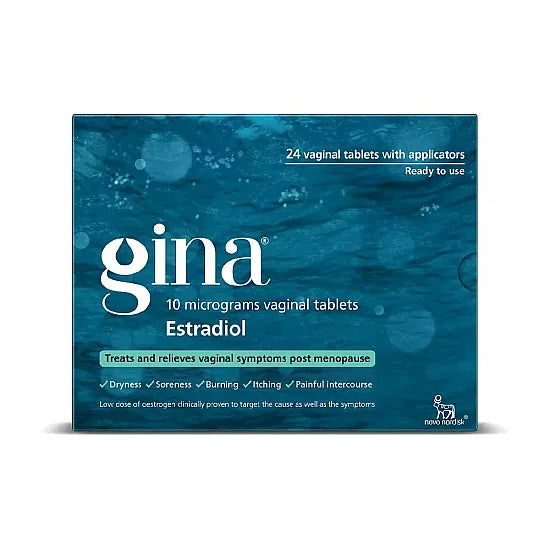
Gina Vaginal Tablets - Pack of 24
Gina Vaginal Tablets - Pack of 24
- ✔️ Relieves vaginal dryness and soreness caused by the menopause
- ✔️ Restores vaginal tissue health with low-dose local estriol
- ✔️ Available without a prescription for eligible women aged 50+
- ✔️ Once-daily initial phase transitions to convenient twice-weekly maintenance
- ✔️ 24-tablet pack includes reusable applicator for easy home use
Price Checker
 Lowest price guarantee
 Includes FREE private prescription


Couldn't load pickup availability
What Are Gina Vaginal Tablets and How Do They Help?
If you're going through the menopause and struggling with vaginal dryness, itching, or discomfort during sex, you're far from alone. These symptoms — collectively known as vaginal atrophy or genitourinary syndrome of the menopause — affect a significant number of women. Gina vaginal tablets are a licensed, over-the-counter treatment containing estriol 10 micrograms, designed to address these symptoms directly at the source. Available without a prescription for eligible women, this 24-tablet pack offers a practical, clinician-backed option you can access discreetly from home. You can explore our full range of women's health products for further support during the menopause.
Gina vaginal tablets were the first vaginal oestrogen product to be reclassified from prescription-only to pharmacy medicine status in the UK, a significant step that improved access for women who previously had to visit their GP for this type of treatment. Each pack contains 24 tablets along with a reusable applicator, making it straightforward to use at home.
How Do Gina Vaginal Tablets Work?
The active ingredient in Gina vaginal tablets is estriol, a naturally occurring, short-acting form of oestrogen. During and after the menopause, falling oestrogen levels cause the vaginal tissues to become thinner, drier, and less elastic — a process called vaginal atrophy. Estriol works locally to help restore the health of these tissues.
- Estriol binds to oestrogen receptors in the vaginal epithelium (the lining of the vaginal wall).
- This stimulates cell growth and increases the thickness and moisture of the vaginal lining.
- Blood flow to the vaginal tissues improves, restoring natural lubrication.
- The local pH of the vagina is also restored towards its normal acidic range, which can help reduce the risk of urinary tract infections.
Because the tablet is inserted directly into the vagina, the dose of estriol absorbed into the bloodstream is very low — particularly once you move to the twice-weekly maintenance dose. This local action is what makes it suitable as an OTC medicine for eligible women.
Who Should Use Gina Vaginal Tablets?
Gina vaginal tablets are specifically indicated for postmenopausal women aged 50 or over who have not had a period for at least 12 months. They are intended to relieve the local symptoms of vaginal atrophy rather than treat systemic menopause symptoms such as hot flushes or night sweats. If you're also experiencing those symptoms, speak to your GP about whether systemic hormone replacement therapy (HRT) might be appropriate for you.
This product is suitable for you if:
- You are aged 50 or over and have been through the natural menopause.
- You experience vaginal dryness, soreness, itching, or discomfort during intercourse.
- You are not currently using any other form of oestrogen therapy (topical or systemic).
- You have no history of oestrogen-sensitive cancers, unexplained vaginal bleeding, or blood clots.
How Do Gina Vaginal Tablets Compare to Other Vaginal Dryness Treatments?
| Feature | Gina Vaginal Tablets (Estriol 10 mcg) | Non-hormonal Vaginal Moisturiser |
|---|---|---|
| Active ingredient | Estriol (local oestrogen) | No active hormone |
| Mechanism | Restores vaginal tissue health | Provides temporary moisture only |
| Prescription required? | No (OTC for eligible women) | No |
| Suitable for women with oestrogen-sensitive cancer history? | No — seek medical advice | Generally yes — seek medical advice |
How Should You Store Gina Vaginal Tablets?
Store Gina vaginal tablets below 25°C in a dry place, away from direct sunlight. Keep the pack out of the reach and sight of children. Do not use the tablets after the expiry date printed on the carton. If you are also managing other aspects of your health during the menopause, our vitamins and supplements range includes products that may support general wellbeing during this time.
This product is a medicine. Speak to your doctor or pharmacist before using if you have an underlying medical condition or are taking other medicines.
Gina Vaginal Tablets 24 Pack specifications
| Treatment category | Vaginal atrophy / Genitourinary syndrome of the menopause |
| Active ingredient | Estriol 10 micrograms |
| Mechanism of action | Local oestrogen receptor agonist — restores vaginal epithelium |
| Route of administration | Vaginal |
| Preparation | Vaginal tablet |
| Pack size | 24 tablets |
| Strength | 10 micrograms estriol per tablet |
| UK classification | Pharmacy (P) medicine |
| Drug class | Local oestrogen / Topical hormone therapy |
| Suitable for | Postmenopausal women aged 50 and over |
| Effective for | Vaginal dryness, itching, soreness, discomfort during intercourse |
Specifications of Gina Vaginal Tablets 24 Pack
What Is Gina and What Is It Used For?
Gina vaginal tablets contain estriol 10 micrograms as the active ingredient. Estriol is a naturally occurring, short-acting form of oestrogen. This medicine is used to relieve the symptoms of vaginal atrophy — the thinning, drying, and inflammation of the vaginal walls that occurs when oestrogen levels fall after the menopause. Symptoms it treats include vaginal dryness, itching, burning, soreness, and pain or discomfort during sexual intercourse.
Gina vaginal tablets are classified as a Pharmacy (P) medicine in the UK, meaning they are available without a prescription but must be sold under the supervision of a pharmacist. They are suitable only for women aged 50 and over who have not had a period for at least 12 months.
What Do You Need to Know Before Using Gina Vaginal Tablets?
Do not use Gina vaginal tablets if any of the following apply to you:
- You have or have ever had breast cancer, or suspect you might have it.
- You have or have ever had endometrial (womb) cancer or any other oestrogen-sensitive cancer.
- You have unexplained vaginal bleeding.
- You have a history of blood clots (deep vein thrombosis or pulmonary embolism).
- You have untreated endometrial hyperplasia (thickening of the womb lining).
- You are under 50 years of age or have not yet reached the menopause.
- You are already using another form of oestrogen therapy (systemic HRT or another local oestrogen product).
- You are allergic to estriol or any other ingredient in the tablet.
Speak to your GP or pharmacist before using Gina vaginal tablets if you have liver disease, a history of migraines, epilepsy, diabetes, or high blood pressure. You should also seek advice if you have fibroids or a history of endometriosis.
Known drug interactions at the low local dose used in Gina vaginal tablets are unlikely due to minimal systemic absorption. However, inform your pharmacist if you are taking:
- Anticoagulants such as warfarin (monitor INR if systemic absorption is a concern).
- Medicines that affect liver enzymes (e.g. rifampicin, carbamazepine, St John's Wort).
How Should You Use Gina Vaginal Tablets?
Always use Gina vaginal tablets exactly as described in the patient information leaflet. If you are unsure, ask your pharmacist. The applicator provided in the pack is reusable — wash it with warm water after each use.
- Wash your hands thoroughly before handling the tablet and applicator.
- Remove one tablet from the blister strip and place it into the tip of the applicator.
- Lie on your back with your knees bent, or stand with one foot raised on a step.
- Gently insert the applicator as far into the vagina as is comfortable.
- Press the plunger to release the tablet, then carefully withdraw the applicator.
- Wash the applicator with warm water and allow it to dry before storing.
- Wash your hands again after use.
| Phase | Age Group | Dose | Frequency |
|---|---|---|---|
| Initial treatment | Women aged 50+ | 1 tablet (10 mcg estriol) | Once daily for 14 days |
| Maintenance treatment | Women aged 50+ | 1 tablet (10 mcg estriol) | Twice weekly (ongoing) |
If you are also looking for additional comfort during intercourse, our personal lubricants range may be used alongside vaginal oestrogen treatment — ask your pharmacist for guidance.
What Are the Possible Side Effects of Gina Vaginal Tablets?
Like all medicines, Gina vaginal tablets can cause side effects, although not everyone gets them. Most side effects are mild and local to the vaginal area.
Common side effects (may affect up to 1 in 10 women):
- Vaginal irritation or discomfort after insertion
- Vaginal discharge
- Mild vaginal bleeding or spotting
Less common side effects (may affect up to 1 in 100 women):
- Vulval itching or burning
- Pelvic discomfort
- Urinary tract symptoms such as increased frequency or mild burning on urination
- Headache
Stop using Gina vaginal tablets and seek medical advice promptly if you experience any unexpected vaginal bleeding, breast pain or tenderness, or signs of an allergic reaction such as rash, swelling, or difficulty breathing.
How Should You Store Gina Vaginal Tablets?
- Store below 25°C in a dry place, away from direct sunlight and heat.
- Keep the tablets in their original blister packaging until use.
- Keep out of the reach and sight of children.
- Do not use after the expiry date printed on the carton.
- Do not dispose of medicines via wastewater or household waste — return unused tablets to your pharmacy.
If you have concerns about other aspects of your health during the menopause, our cystitis and bladder infection range may be relevant, as urinary symptoms are common in postmenopausal women.
References
Written and reviewed by our qualified team
Your safety and success are our highest priorities. Our medical team rigorously evaluates every product and piece of advice we provide, ensuring you receive only the most effective, science-backed solutions available.
Frequently Asked Questions
Where can I buy Gina vaginal tablets online in the UK?
You can buy Gina vaginal tablets from Cured Pharmacy, a GPhC-registered UK online pharmacy, without a prescription. They are available as a Pharmacy (P) medicine for eligible postmenopausal women aged 50 and over. Simply add the pack to your basket and complete a short eligibility questionnaire at checkout to confirm suitability.
How do Gina vaginal tablets work in the body?
Gina vaginal tablets contain estriol 10 micrograms, a naturally occurring short-acting oestrogen that acts locally on the vaginal tissues. When inserted vaginally, estriol binds to oestrogen receptors in the vaginal lining, stimulating cell growth and restoring moisture, thickness, and elasticity. Because the dose is very low and acts locally, systemic absorption into the bloodstream is minimal at the recommended maintenance dose.
How do I insert Gina vaginal tablets correctly?
Place one tablet into the tip of the reusable applicator provided, then lie on your back with knees bent or stand with one foot raised. Insert the applicator gently as far into the vagina as is comfortable and press the plunger to release the tablet. Wash your hands before and after, and clean the applicator with warm water after each use.
What is the correct dose of Gina vaginal tablets?
The initial dose is one tablet inserted vaginally every night for 14 consecutive days. After this initial phase, the maintenance dose is one tablet inserted twice weekly on an ongoing basis. Do not use more than one tablet at a time and do not exceed the recommended frequency.
How long does it take for Gina vaginal tablets to work?
Some women notice an improvement in vaginal dryness and discomfort within the first two to four weeks of starting the initial daily treatment phase. Full benefit — including improved tissue health and reduced soreness during intercourse — is typically seen after 8 to 12 weeks of regular use. If you see no improvement after 12 weeks, speak to your GP.
What are the side effects of Gina vaginal tablets?
The most common side effects are mild vaginal irritation, discharge, or light spotting after insertion, which often settle as your body adjusts to treatment. Less commonly, some women experience vulval itching, pelvic discomfort, or urinary symptoms. Stop use and contact your GP if you experience unexpected vaginal bleeding, breast tenderness, or any signs of an allergic reaction.
Who is not suitable for Gina vaginal tablets?
Gina vaginal tablets are not suitable for women under 50, those who have not yet reached the menopause, or those with a history of breast cancer, endometrial cancer, unexplained vaginal bleeding, or blood clots. They should also not be used alongside other oestrogen therapies. Always read the full patient information leaflet and speak to a pharmacist if you are unsure whether this product is right for you.
Can I use Gina vaginal tablets if I am on HRT?
No — Gina vaginal tablets should not be used at the same time as systemic HRT (patches, tablets, gels) or any other local oestrogen product, as this would result in combined oestrogen exposure that has not been assessed for safety in this OTC setting. If you are already on HRT and experiencing vaginal symptoms, speak to your GP about whether a local oestrogen can be added to your regimen under medical supervision.
Can I use Gina vaginal tablets with a personal lubricant?
Yes, you can use a personal lubricant alongside Gina vaginal tablets for additional comfort during intercourse. However, avoid applying lubricants or other vaginal products at the same time as inserting the tablet, as this may affect how well the tablet dissolves and is absorbed. Use them at different times of day if needed.
What happens if I miss a dose of Gina vaginal tablets?
If you miss a dose during the initial 14-day daily phase, insert the tablet as soon as you remember — unless it is almost time for your next dose, in which case skip the missed one and continue as normal. During the maintenance phase (twice weekly), simply insert the tablet on the next scheduled day. Never insert two tablets to make up for a missed dose.
How long can I use Gina vaginal tablets for?
Gina vaginal tablets can be used as a long-term maintenance treatment, as vaginal atrophy is a chronic condition that tends to persist after the menopause. However, you should review your ongoing need for treatment with a healthcare professional at least once a year. If your symptoms return after stopping, treatment can be restarted.
Are Gina vaginal tablets safe to use long term?
At the recommended low dose, estriol in Gina vaginal tablets acts locally with minimal systemic absorption, and the available evidence supports its safety for long-term use in postmenopausal women. Annual review with a GP or pharmacist is recommended to reassess the need for continued treatment and to check for any new contraindications. Women with a history of oestrogen-sensitive conditions should not use this product without medical advice.
What are the alternatives to Gina vaginal tablets?
Alternatives include other prescription local oestrogen products (such as Vagifem or Ovestin cream), non-hormonal vaginal moisturisers used regularly, and personal lubricants for use during intercourse. You can browse our women's health range for non-hormonal options. If your symptoms are severe or not responding to OTC treatment, speak to your GP about prescription alternatives or systemic HRT.
Do Gina vaginal tablets affect fertility or contraception?
Gina vaginal tablets are only suitable for postmenopausal women aged 50 and over who have not had a period for at least 12 months, so fertility is not a relevant concern for this group. However, the menopause does not guarantee infertility immediately, and women who have any doubt about their menopausal status should speak to their GP before using this product. Gina vaginal tablets do not provide contraception.
What are the latest findings on vaginal oestrogen safety?
Current evidence from clinical studies and guidance from the British Menopause Society supports the safety of low-dose local vaginal oestrogen, including estriol, for postmenopausal women, with no significant increase in systemic oestrogen levels at the recommended dose. The NHS and MHRA reviewed the evidence before reclassifying Gina vaginal tablets to pharmacy-only status in 2022, confirming an acceptable safety profile for eligible women. Women with a history of hormone-sensitive cancers should always seek individual medical advice before use.
Written and reviewed by our qualified team

Reviewed by:
Tarun Kumar
Superintendent/ Clinical Lead
📖 Find out more about our team of medical content authors and how we ensure the accuracy of our content with our content guidelines.
Content last updated: 14 Sep 2026
Other popular options


We’re a safe and
regulated UK service

Lowest Price Guarantee

We're convinced you won't find your treatment cheaper, but if you do we'll refund the difference.
Find out more
100% discreet packaging

Discreet, unbranded packaging for every order.
Find out more

Need help?
Talk to our friendly experts now


How our service works

Service setup

Discreet packaging

Express delivery