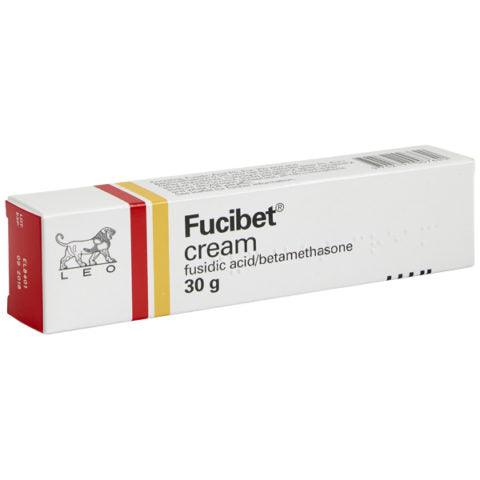
Fucibet Cream
Fucibet Cream
- ✔️ Treats infected eczema with dual antibiotic and steroid action
- ✔️ Reduces redness, itching, and weeping from infected skin
- ✔️ Targets Staphylococcus aureus, the most common skin infection bacteria
- ✔️ Suitable for adults and children over one year of age
- ✔️ Convenient once-tube treatment for inflammation and infection together
Price Checker
 Lowest price guarantee
 Includes FREE private prescription


Couldn't load pickup availability
What Is Fucibet Cream and How Does It Help?
Fucibet cream is a combination topical treatment containing two active ingredients — betamethasone valerate 0.1% and fusidic acid 2%. It is used to treat inflammatory skin conditions, such as eczema and dermatitis, that have become complicated by a bacterial infection. Skin infections can make an already uncomfortable condition significantly worse, causing increased redness, weeping, crusting, and pain. Having a single cream that addresses both problems at once can make managing these flare-ups considerably more straightforward. You can browse our wider range of creams and ointments if you are looking for other topical treatments.
Bacterial skin infections are more common than many people realise, particularly in those with pre-existing skin conditions. The NHS notes that eczema-affected skin is more vulnerable to infection because the skin barrier is already compromised. Fucibet cream is designed specifically for these situations — where inflammation and infection are occurring together.
How Does Fucibet Cream Work on Infected Skin?
The two active ingredients in Fucibet cream each play a distinct role:
- Betamethasone valerate 0.1% — a moderately potent corticosteroid that reduces redness, swelling, and itching by suppressing the local inflammatory response in the skin.
- Fusidic acid 2% — a topical antibiotic that works by inhibiting bacterial protein synthesis, effectively killing the bacteria (most commonly Staphylococcus aureus) responsible for the infection.
- Together, these two ingredients tackle both the root cause (infection) and the symptoms (inflammation) simultaneously.
- The cream formulation allows for easy, even application across affected areas of skin.
Because fusidic acid specifically targets bacteria rather than fungi or viruses, Fucibet cream is only appropriate where a bacterial infection is confirmed or strongly suspected. It will not treat fungal skin infections — if you think you might have a fungal condition, take a look at our athletes foot and fungal infections range instead.
Who Is Fucibet Cream Suitable For?
Fucibet cream is suitable for adults and children over the age of one year who have an inflammatory skin condition that has become secondarily infected with bacteria. It is typically used when a skin condition such as eczema or contact dermatitis is not responding to a plain moisturiser or emollient alone, and signs of infection — such as weeping, crusting, or increased warmth — are present.
It may be appropriate for you if you have:
- Infected eczema (atopic dermatitis with secondary bacterial infection)
- Infected contact dermatitis
- Infected seborrhoeic dermatitis
- Other inflammatory skin conditions complicated by bacterial infection, as assessed by a clinician
It is not suitable for everyone. People with certain skin conditions, including rosacea, acne, perioral dermatitis, or viral skin infections such as chickenpox or cold sores, should not use this cream. Always speak to a pharmacist or GP before starting treatment.
How Does Fucibet Cream Compare to Similar Treatments?
| Feature | Fucibet Cream | Trimovate Cream |
|---|---|---|
| Active ingredients | Betamethasone valerate 0.1% + Fusidic acid 2% | Clobetasone butyrate 0.05% + Oxytetracycline + Nystatin |
| Steroid strength | Moderate | Mild |
| Antifungal cover | No | Yes (Nystatin) |
| Primary use | Infected eczema/dermatitis (bacterial) | Infected eczema with possible fungal involvement |
How Should You Store Fucibet Cream?
Store fucibet cream below 25°C, away from direct heat and sunlight. Keep the tube tightly closed when not in use, and always store it out of the sight and reach of children. Do not use the cream after the expiry date printed on the packaging — if in doubt, return it to your local pharmacy for safe disposal.
Once opened, the cream should be used within the treatment period recommended by your prescriber or pharmacist. Do not share your tube with anyone else, even if they appear to have a similar skin condition.
This product is a medicine. Speak to your doctor or pharmacist before using if you have an underlying medical condition or are taking other medicines.
Fucibet Cream specifications
| Treatment category | Infected inflammatory skin conditions |
| Mechanism of action | Corticosteroid (anti-inflammatory) + antibiotic (antibacterial) |
| Effective for | Infected eczema, infected contact dermatitis, infected seborrhoeic dermatitis |
| Suitable for | Adults and children over 1 year |
| Active ingredient | Betamethasone valerate 0.1%, Fusidic acid 2% |
| Pack sizes | 30g |
| Strengths | Betamethasone 0.1% / Fusidic acid 2% |
| UK classification | Prescription-only medicine (POM) |
| Drug class | Topical corticosteroid + topical antibiotic combination |
| Preparation | Cream |
| Route of administration | Topical (applied to skin) |
Specifications of Fucibet Cream
What Is Fucibet Cream and What Is It Used For?
Fucibet cream is a topical combination medicine containing betamethasone valerate 0.1% (a corticosteroid) and fusidic acid 2% (an antibiotic). It is used to treat skin conditions where inflammation and bacterial infection are both present at the same time. Common examples include infected atopic eczema, infected contact dermatitis, and infected seborrhoeic dermatitis. The NHS advises that eczema-affected skin is particularly prone to bacterial infection, most often caused by Staphylococcus aureus, which can worsen symptoms considerably if left untreated.
What Do You Need to Know Before Using Fucibet Cream?
Do not use Fucibet cream if any of the following apply to you:
- You are allergic to betamethasone valerate, fusidic acid, or any other ingredient in the cream
- You have a viral skin infection such as chickenpox, cold sores, or shingles on the affected area
- You have a fungal skin infection (e.g. ringworm, athlete's foot) — this cream will not treat fungal infections
- You have rosacea, acne vulgaris, or perioral dermatitis
- You have tuberculosis of the skin
- The affected area is in or around the eye (risk of glaucoma or cataracts)
- You are treating a child under 1 year of age without medical supervision
Speak to your doctor or pharmacist before using this cream if you are pregnant, breastfeeding, or planning to become pregnant. Topical corticosteroids should be used with caution during pregnancy, particularly over large areas or for prolonged periods.
Known drug interactions to be aware of:
- Systemic corticosteroids used alongside topical betamethasone may increase the risk of adrenal suppression
- No significant interactions are expected with most common oral medicines when used topically as directed
How Should You Use Fucibet Cream?
Always use Fucibet cream exactly as your doctor or pharmacist has told you. The general guidance for application is as follows:
- Wash your hands thoroughly before and after applying the cream.
- Clean and gently dry the affected area of skin.
- Apply a thin layer of cream to the affected area only — do not apply to surrounding healthy skin.
- Gently rub the cream in until it is absorbed.
- Do not cover the treated area with an airtight dressing unless specifically instructed by your doctor, as this can increase absorption and the risk of side effects.
- Wash your hands again after application.
| Indication | Age Group | Dose | Frequency |
|---|---|---|---|
| Infected eczema / dermatitis | Adults | Thin layer to affected area | Twice daily |
| Infected eczema / dermatitis | Children over 1 year | Thin layer to affected area | Twice daily (under medical supervision) |
Treatment should generally not exceed two weeks without reassessment by a clinician. If your symptoms have not improved after seven days, contact your GP. You can also explore our skin care collection for complementary products to support your skin health during and after treatment.
What Are the Possible Side Effects of Fucibet Cream?
Like all medicines, Fucibet cream can cause side effects, although not everyone experiences them. If you notice any unexpected changes to your skin, stop using the cream and speak to your pharmacist or GP.
Common side effects (may affect up to 1 in 10 people):
- Burning or stinging sensation at the application site
- Itching or irritation of the skin
- Skin dryness
Less common side effects (may affect up to 1 in 100 people, particularly with prolonged use):
- Skin thinning (atrophy) at the application site
- Stretch marks (striae)
- Increased hair growth at the application site (hypertrichosis)
- Changes in skin pigmentation
- Development of secondary fungal infection
- Adrenal suppression (rare, with extensive or prolonged use)
Children and those using the cream on large areas of skin are at greater risk of systemic absorption and associated side effects. Always use the smallest effective amount for the shortest possible time.
How Should You Store Fucibet Cream?
Follow these storage instructions carefully to keep the cream safe and effective:
- Store below 25°C
- Keep away from direct heat, sunlight, and moisture
- Keep the tube tightly closed when not in use
- Store out of the sight and reach of children
- Do not use after the expiry date printed on the tube or carton
- Do not dispose of medicines via household waste — return unused or expired cream to your local pharmacy
If you need further guidance on managing your skin condition alongside other treatments, our first aid range includes wound care and skin protection products that may be helpful during recovery.
References
Written and reviewed by our qualified team
Your safety and success are our highest priorities. Our medical team rigorously evaluates every product and piece of advice we provide, ensuring you receive only the most effective, science-backed solutions available.
Frequently Asked Questions
Where can I buy Fucibet cream online in the UK?
You can buy Fucibet cream from Cured Pharmacy, a GPhC-registered online pharmacy in the UK. It is available for £19.95 and dispatched discreetly to your address. As a prescription-only medicine, you will need a valid prescription to complete your order.
How does Fucibet cream work in the body?
Fucibet cream works through two mechanisms at once. Betamethasone valerate reduces inflammation by suppressing the local immune response in the skin, while fusidic acid kills bacteria — most commonly Staphylococcus aureus — by blocking their ability to produce proteins. Together, they address both the infection and the inflammatory reaction simultaneously.
How do I apply Fucibet cream step by step?
Wash your hands, then clean and gently dry the affected area. Apply a thin layer of cream directly to the affected skin and rub in gently. Wash your hands again afterwards, and avoid applying near the eyes or on unaffected skin.
How often should I use Fucibet cream each day?
The standard recommended dose is twice daily — typically once in the morning and once in the evening. Always follow the specific instructions given by your prescribing doctor or pharmacist, as individual circumstances may vary.
How long does Fucibet cream take to work?
Many people notice a reduction in redness, itching, and weeping within the first few days of use. However, you should complete the full prescribed course — usually up to two weeks — even if symptoms improve earlier, to ensure the infection is fully cleared.
What are the side effects of Fucibet cream and how do I manage them?
Common side effects include a mild burning or stinging sensation, itching, and skin dryness at the application site. These are usually temporary. If you experience skin thinning, stretch marks, or signs of a new infection developing, stop using the cream and contact your GP or pharmacist promptly.
Who is eligible to use Fucibet cream?
Fucibet cream is suitable for adults and children over one year of age who have an inflammatory skin condition — such as eczema or contact dermatitis — that has become secondarily infected with bacteria. It is not suitable for people with viral or fungal skin infections, rosacea, or acne. A doctor must assess suitability before prescribing.
Can I use Fucibet cream on my face?
Fucibet cream is generally not recommended for use on the face unless specifically directed by a doctor. Facial skin is thinner and more sensitive, making it more susceptible to side effects from corticosteroids, including skin thinning and changes in pigmentation. Always seek medical advice before applying to facial areas.
Is Fucibet cream safe to use during pregnancy or breastfeeding?
You should consult your GP or pharmacist before using Fucibet cream if you are pregnant or breastfeeding. Topical corticosteroids should be used with caution during pregnancy, particularly over large areas of skin or for extended periods. Your doctor will weigh the benefits against any potential risks.
What happens if I miss a dose of Fucibet cream?
If you forget to apply the cream at your usual time, apply it as soon as you remember — unless it is nearly time for your next application. In that case, simply skip the missed dose and continue with your regular schedule. Do not apply a double amount to make up for a missed application.
Can I use Fucibet cream on children?
Fucibet cream can be used in children over one year of age, but only under medical supervision. Children are more susceptible to systemic absorption of corticosteroids through the skin, so treatment should be limited to the shortest effective duration and the smallest possible amount. It must not be used in infants under one year.
What are the alternatives to Fucibet cream?
Alternatives include Trimovate cream, which contains a milder steroid alongside an antibiotic and antifungal, or separate topical corticosteroid and antibiotic preparations. If your skin condition does not involve bacterial infection, a plain corticosteroid cream may be more appropriate. You can explore our skin care collection for a broader range of options.
How long can you use Fucibet cream for?
Fucibet cream is generally recommended for short-term use only — typically up to two weeks. Prolonged use increases the risk of side effects such as skin thinning and adrenal suppression. If your symptoms have not resolved within two weeks, you should return to your GP for reassessment rather than continuing treatment independently.
Does Fucibet cream treat fungal infections?
No — Fucibet cream is not effective against fungal infections. It contains fusidic acid, which is an antibacterial agent, not an antifungal. If you suspect a fungal skin infection such as ringworm or athlete's foot, visit our athletes foot and fungal infections range for appropriate treatments.
What are the latest findings on using combined steroid-antibiotic creams for infected eczema?
Clinical guidance continues to support the short-term use of combined topical corticosteroid and antibiotic preparations for infected eczema, particularly where Staphylococcus aureus is the likely causative organism. The NHS and NICE recommend limiting treatment duration to minimise the risk of antibiotic resistance and steroid-related side effects. Always follow current prescriber guidance and review treatment regularly.
Written and reviewed by our qualified team

Reviewed by:
Tarun Kumar
Superintendent/ Clinical Lead
📖 Find out more about our team of medical content authors and how we ensure the accuracy of our content with our content guidelines.
Content last updated: 14 Sep 2026
Other popular options


We’re a safe and
regulated UK service

Lowest Price Guarantee

We're convinced you won't find your treatment cheaper, but if you do we'll refund the difference.
Find out more
100% discreet packaging

Discreet, unbranded packaging for every order.
Find out more

Need help?
Talk to our friendly experts now


How our service works

Service setup

Discreet packaging

Express delivery