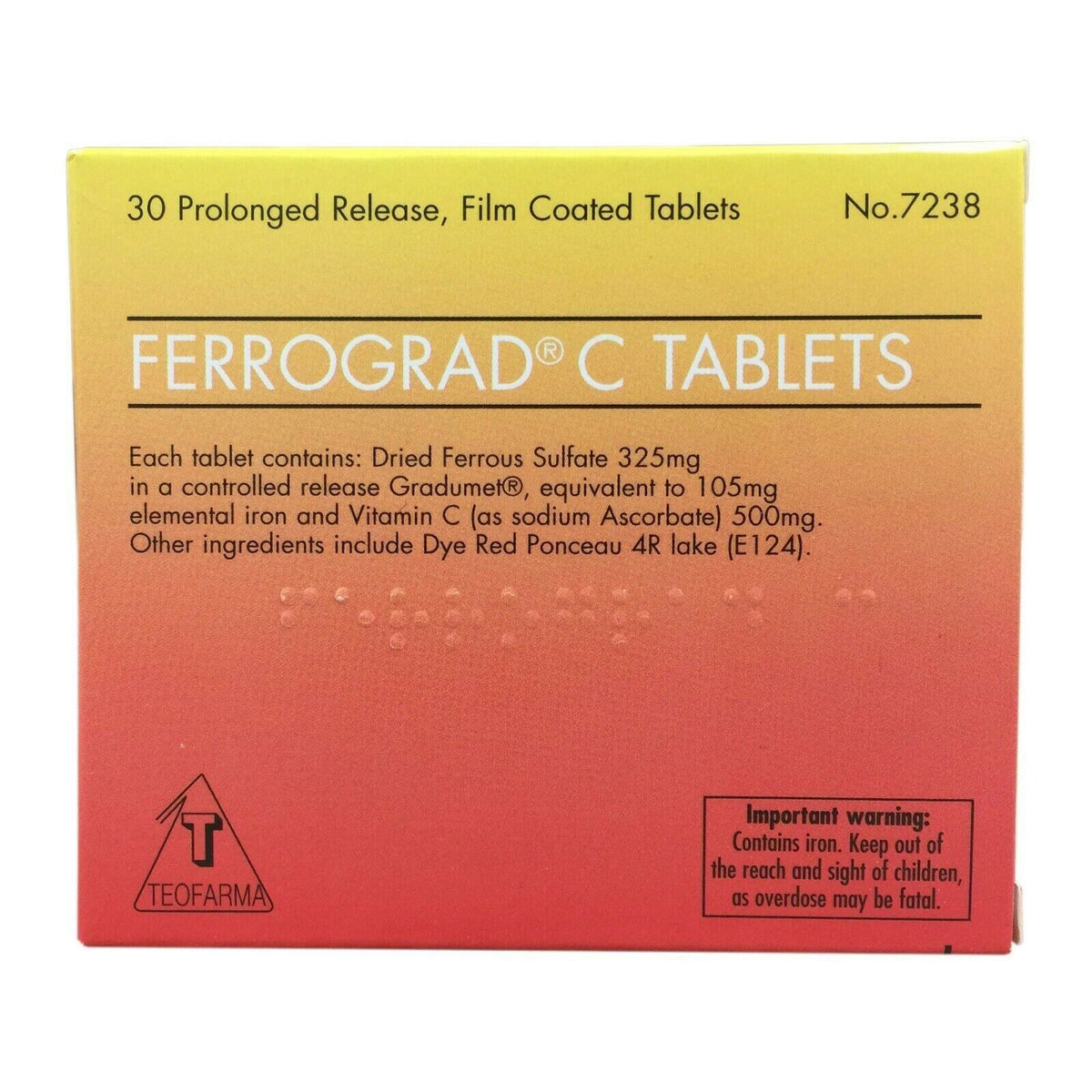
Ferrograd C Tablets - 30
Ferrograd C Tablets - 30
- ✔️ Treats iron deficiency anaemia with once-daily modified-release iron
- ✔️ Contains 500 mg vitamin C to enhance iron absorption naturally
- ✔️ Modified-release formula reduces common iron-related stomach upset
- ✔️ Suitable for adults with heavy periods, pregnancy risk, or low dietary iron
- ✔️ Restores haemoglobin and ferritin levels over a defined treatment course
Price Checker
 Lowest price guarantee
 Includes FREE private prescription


Couldn't load pickup availability
What Are Ferrograd C Tablets and How Do They Help?
If you've been told your iron levels are low, you're not alone. Iron deficiency anaemia is one of the most common nutritional deficiencies in the UK, affecting millions of people — particularly women of childbearing age, pregnant women, and those with certain long-term conditions. Ferrograd C tablets are a modified-release oral iron supplement that combines ferrous sulphate with ascorbic acid (vitamin C) in a single tablet, designed to help restore iron levels efficiently. Each pack contains 30 tablets, making it a convenient one-month supply at a straightforward once-daily dose. You can find this product alongside other evidence-based options in our vitamins and supplements collection.
Iron is essential for producing haemoglobin — the protein in red blood cells that carries oxygen around your body. When iron stores fall too low, your body can't make enough healthy red blood cells, leading to fatigue, breathlessness, pale skin, and difficulty concentrating. Ferrograd C tablets address this directly by delivering a therapeutic dose of iron alongside vitamin C, which is known to enhance non-haem iron absorption in the gut.
How Do Ferrograd C Tablets Work in the Body?
The mechanism behind Ferrograd C tablets is straightforward but clinically meaningful. The tablet uses a modified-release (also called sustained-release) formulation, which means the iron is released gradually as the tablet moves through your digestive tract rather than all at once. This reduces the concentration of iron in any one part of the gut, which is one reason this formulation tends to cause fewer gastrointestinal side effects than standard immediate-release iron tablets.
- Ferrous sulphate provides elemental iron in the ferrous (Fe²⁺) form, which is more readily absorbed than ferric (Fe³⁺) iron.
- Ascorbic acid (vitamin C, 500 mg) in the tablet helps maintain iron in its ferrous state within the gut, preventing oxidation to the less absorbable ferric form.
- Absorbed iron is transported via transferrin in the bloodstream to the bone marrow, where it is incorporated into new red blood cells.
- Over weeks of consistent use, haemoglobin levels rise and iron stores (measured as ferritin) are gradually replenished.
Who Should Consider Using Ferrograd C Tablets?
Ferrograd C tablets are suitable for adults who have been diagnosed with iron deficiency anaemia or who are at significant risk of developing it. They are available over the counter, but it's always worth confirming with your GP or pharmacist that iron supplementation is appropriate for your situation — particularly if you haven't had a blood test to confirm low iron levels.
- Adults with confirmed iron deficiency anaemia (low haemoglobin and/or low ferritin on blood testing)
- Women with heavy menstrual periods who regularly lose significant amounts of iron
- Pregnant women or those planning pregnancy (under medical guidance)
- People with poor dietary iron intake, including some vegetarians and vegans
- Individuals recovering from surgery or significant blood loss
How Do Ferrograd C Tablets Compare to Other Iron Supplements?
| Feature | Ferrograd C Tablets | Standard Ferrous Sulphate 200 mg |
|---|---|---|
| Iron form | Ferrous sulphate 325 mg (dried), modified-release | Ferrous sulphate 200 mg, immediate-release |
| Vitamin C included | Yes — 500 mg ascorbic acid per tablet | No |
| Dosing frequency | Once daily | Two to three times daily (typical) |
| GI tolerability | Generally better tolerated due to modified release | More likely to cause nausea and stomach upset |
| Suitable for children | No — adults only | Paediatric liquid formulations available |
Is Ferrograd C Suitable for Long-Term Use and How Should It Be Stored?
Ferrograd C tablets are typically used for a defined treatment period rather than indefinitely. Your GP will usually recommend continuing iron supplementation for three to six months after your haemoglobin has returned to normal, to ensure your body's iron stores are fully replenished. Long-term use beyond this should only continue under medical supervision, as excessive iron intake carries its own risks. If you're managing other aspects of your health alongside iron deficiency — such as digestive discomfort — you might also find our women's health range useful for related concerns.
Store Ferrograd C tablets below 25°C in a dry place, away from direct sunlight. Keep them out of reach and sight of children — iron overdose is a medical emergency in young children. Do not use after the expiry date printed on the pack.
This product is a medicine. Speak to your doctor or pharmacist before using if you have an underlying medical condition or are taking other medicines.
Ferrograd C Tablets 30 specifications
| Treatment category | Iron deficiency anaemia |
| Active ingredient | Ferrous sulphate 325 mg (dried), Ascorbic acid 500 mg |
| Mechanism of action | Replenishes iron stores; vitamin C enhances iron absorption |
| Preparation | Modified-release film-coated tablet |
| Route of administration | Oral |
| Pack size | 30 tablets |
| UK classification | General Sale / Pharmacy (P) |
| Drug class | Iron supplement / Haematinic |
| Suitable for | Adults aged 18 and over |
| Effective for | Iron deficiency anaemia; iron deficiency prevention |
Specifications of Ferrograd C Tablets 30
What Are Ferrograd C Tablets and What Are They Used For?
Ferrograd C tablets are an oral iron supplement used to treat iron deficiency anaemia in adults. Each modified-release tablet contains ferrous sulphate 325 mg (dried) — equivalent to approximately 105 mg of elemental iron — alongside 500 mg of ascorbic acid (vitamin C). The vitamin C is included specifically to improve iron absorption in the gut. This combination makes Ferrograd C tablets a clinically practical choice for adults who need therapeutic iron replacement and prefer a once-daily regimen.
Iron deficiency anaemia occurs when your body doesn't have enough iron to produce adequate haemoglobin. Symptoms can include persistent tiredness, shortness of breath, heart palpitations, pale skin, and difficulty concentrating. The NHS recommends treating confirmed iron deficiency with oral iron supplementation as a first-line approach.
What Do You Need to Know Before Using Ferrograd C Tablets?
Before taking Ferrograd C tablets, it's important to check whether they are appropriate for you. Do not take these tablets if any of the following apply:
- You have haemochromatosis (iron overload disorder) or haemosiderosis
- You have haemolytic anaemia or any anaemia not caused by iron deficiency
- You have a known allergy to ferrous sulphate, ascorbic acid, or any other ingredient in the tablet
- You have a history of peptic ulcer disease, inflammatory bowel disease, or intestinal strictures
- You are receiving repeated blood transfusions
- You have glucose-6-phosphate dehydrogenase (G6PD) deficiency (high-dose vitamin C may cause haemolysis)
Several medicines can interact with iron supplements. Iron can reduce the absorption of certain drugs, and some medicines can reduce iron absorption. Known interactions include:
- Tetracycline and quinolone antibiotics — take at least two hours apart from iron
- Antacids and calcium supplements — reduce iron absorption; separate doses by at least two hours
- Levodopa and methyldopa — iron may reduce their absorption and effectiveness
- Penicillamine — iron reduces its absorption; separate by at least two hours
- Thyroid hormones (e.g. levothyroxine) — iron can reduce absorption; take at least four hours apart
- Bisphosphonates — iron may reduce their absorption
How Should You Use Ferrograd C Tablets Correctly?
Always use Ferrograd C tablets exactly as directed by your doctor or pharmacist. The modified-release formulation means the tablet must be swallowed whole — never crush, chew, or break it, as this destroys the controlled-release mechanism and may cause a sudden high dose of iron to be released.
- Take one tablet once daily, preferably 30 minutes before a meal on an empty stomach.
- Swallow the tablet whole with a full glass of water.
- If you experience stomach upset, you may take the tablet with food — though this may slightly reduce absorption.
- Continue taking the tablets for as long as your doctor advises, even if you start to feel better.
- Do not take more than one tablet per day unless specifically instructed by a doctor.
| Indication | Age Group | Dose | Frequency |
|---|---|---|---|
| Iron deficiency anaemia (treatment) | Adults 18+ | 1 tablet (325 mg ferrous sulphate + 500 mg ascorbic acid) | Once daily |
| Iron deficiency (prevention/maintenance) | Adults 18+ | 1 tablet | Once daily (as directed by doctor) |
| Children under 18 | Not applicable | Not recommended | — |
What Are the Possible Side Effects of Ferrograd C Tablets?
Like all medicines, Ferrograd C tablets can cause side effects, although not everyone experiences them. The modified-release formulation is generally better tolerated than immediate-release iron tablets, but gastrointestinal effects are still the most frequently reported. If you're also managing digestive discomfort, our IBS and cramps range may offer additional support.
Common side effects (may affect up to 1 in 10 people):
- Dark or black stools — this is harmless and expected with iron supplementation
- Nausea or stomach discomfort
- Constipation
- Diarrhoea
- Abdominal cramps or bloating
Less common side effects (may affect fewer than 1 in 100 people):
- Vomiting
- Heartburn or indigestion
- Allergic reactions such as skin rash or itching (seek medical advice promptly)
- Tooth discolouration (rare with tablet form; more common with liquid iron)
If you notice any signs of a serious allergic reaction — including swelling of the face, lips, or throat, or difficulty breathing — stop taking the tablets and seek emergency medical help immediately.
How Should You Store Ferrograd C Tablets Safely?
Correct storage helps maintain the quality and safety of your tablets throughout the pack. Follow these storage instructions:
- Store below 25°C in a cool, dry place away from direct sunlight and moisture
- Keep the tablets in their original packaging until use
- Keep out of reach and sight of children at all times — iron overdose is a medical emergency in young children
- Do not use after the expiry date printed on the carton or blister pack
- Do not store in a bathroom or near a sink where humidity is high
- Do not dispose of medicines via wastewater or household waste — return unused tablets to your pharmacy
If you have any questions about storage or suitability, speak to your pharmacist. You can also browse our full vitamins and supplements range for related products that support your nutritional health.
References
- https://www.nhs.uk/conditions/iron-deficiency-anaemia/
- https://www.nhs.uk/conditions/vitamins-and-minerals/iron/
- https://www.nhs.uk/conditions/vitamins-and-minerals/vitamin-c/
- https://www.nhs.uk/conditions/anaemia/
- https://www.nhs.uk/pregnancy/keeping-well/vitamins-supplements-and-nutrition/
- https://bnf.nice.org.uk/drugs/ferrous-sulfate/
Written and reviewed by our qualified team
Your safety and success are our highest priorities. Our medical team rigorously evaluates every product and piece of advice we provide, ensuring you receive only the most effective, science-backed solutions available.
Frequently Asked Questions
Where can I buy Ferrograd C tablets online in the UK?
You can buy Ferrograd C tablets online from Cured Pharmacy, a GPhC-registered UK online pharmacy, without a prescription. They are available as an over-the-counter medicine for adults with iron deficiency anaemia. Simply add them to your basket and they'll be dispatched directly to your door. You can also browse our wider vitamins and supplements collection for related nutritional support products.
How do Ferrograd C tablets work in the body?
Ferrograd C tablets use a modified-release mechanism to deliver ferrous sulphate gradually through the digestive tract, reducing the risk of stomach irritation. The included ascorbic acid (vitamin C) helps keep iron in its ferrous (Fe²⁺) form, which is more readily absorbed by the gut lining. Together, these two ingredients work to replenish iron stores and support the production of healthy red blood cells over time.
What is the correct dose of Ferrograd C tablets for adults?
The standard adult dose is one Ferrograd C tablet taken once daily, swallowed whole with a full glass of water. The tablet must not be crushed or chewed, as this destroys the modified-release coating and may cause an excessive amount of iron to be absorbed at once. Do not take more than one tablet per day unless your doctor has specifically advised otherwise.
When is the best time to take Ferrograd C tablets?
Ferrograd C tablets are ideally taken on an empty stomach, around 30 minutes before a meal, as this is when iron absorption is at its highest. If you find they cause nausea or stomach discomfort when taken without food, you can take them with a light meal — though this may slightly reduce how much iron your body absorbs. Try to take your tablet at the same time each day to build a consistent routine.
What are the common side effects of Ferrograd C tablets?
The most frequently reported side effects include nausea, constipation, diarrhoea, abdominal cramps, and dark or black stools. Dark stools are a completely harmless and expected result of iron supplementation — they are not a sign of bleeding. If you experience persistent or severe stomach pain, vomiting, or any signs of an allergic reaction, stop taking the tablets and speak to your pharmacist or GP promptly.
How do I manage side effects of Ferrograd C tablets?
If you experience gastrointestinal side effects such as nausea or constipation, try taking your tablet with a small amount of food rather than on an empty stomach. Staying well hydrated and eating a fibre-rich diet can help manage constipation associated with iron supplementation. If side effects remain troublesome despite these measures, speak to your pharmacist — they may be able to suggest an alternative iron formulation or dosing strategy.
Who is eligible to take Ferrograd C tablets?
Ferrograd C tablets are suitable for adults aged 18 and over who have confirmed iron deficiency anaemia or are at significant risk of iron deficiency — for example, due to heavy periods, pregnancy, or a diet low in iron. They are not recommended for children, and should not be taken by anyone with haemochromatosis, haemolytic anaemia, or other conditions involving iron overload. Always check with your pharmacist or GP if you are unsure whether this product is right for you.
What happens if I miss a dose of Ferrograd C tablets?
If you forget to take your tablet, take it as soon as you remember — unless it is almost time for your next scheduled dose, in which case simply skip the missed one and carry on as normal. Never take two tablets at once to compensate for a missed dose, as this increases the risk of side effects. Setting a daily reminder on your phone can help you stay consistent with your treatment.
Can Ferrograd C tablets be taken during pregnancy?
Iron supplementation is commonly recommended during pregnancy when iron deficiency anaemia is confirmed by blood testing, as iron requirements increase significantly during this time. However, you should always consult your midwife, GP, or obstetrician before starting any iron supplement during pregnancy, as the appropriate dose and formulation will depend on your individual blood results and circumstances. Self-treating during pregnancy without medical guidance is not advisable.
How long do you need to take Ferrograd C tablets?
The NHS advises that iron supplementation should typically continue for at least three to six months after haemoglobin levels have returned to normal, in order to fully replenish the body's iron stores (measured as ferritin). The exact duration will depend on the severity of your deficiency and the underlying cause. Your GP will usually arrange a follow-up blood test to monitor your progress and advise when it is safe to stop.
Do Ferrograd C tablets interact with other medicines?
Yes — iron can interact with several commonly used medicines. Tetracycline and quinolone antibiotics, antacids, calcium supplements, levothyroxine, levodopa, methyldopa, penicillamine, and bisphosphonates can all have their absorption reduced by iron, or can reduce iron absorption themselves. To minimise interactions, separate your iron tablet from these medicines by at least two hours (or four hours for levothyroxine). Always tell your pharmacist about all medicines you are taking before starting Ferrograd C tablets.
Are Ferrograd C tablets suitable for vegetarians or vegans?
Vegetarians and vegans are at higher risk of iron deficiency because plant-based (non-haem) iron is less readily absorbed than the haem iron found in meat and fish. Ferrograd C tablets can be a useful option for adults in these groups who have confirmed iron deficiency anaemia, as the included vitamin C specifically helps improve non-haem iron absorption. However, you should check the product's full ingredient list for any excipients that may not align with a vegan diet, and consult your pharmacist if you have any concerns. You can also explore our women's health range for additional nutritional support products.
What are the alternatives to Ferrograd C tablets?
Common alternatives to Ferrograd C tablets include standard ferrous sulphate 200 mg tablets (taken two to three times daily), ferrous fumarate, and ferrous gluconate — all of which are available in the UK. Liquid iron formulations are also available for those who have difficulty swallowing tablets. Each formulation differs in elemental iron content, dosing frequency, and tolerability, so it's worth discussing the options with your pharmacist to find the most suitable choice for your needs.
Can I take Ferrograd C tablets with tea, coffee, or dairy?
Tea, coffee, and dairy products can all significantly reduce iron absorption when consumed at the same time as your iron tablet. Tannins in tea and coffee bind to iron in the gut, making it harder to absorb, while calcium in dairy competes with iron for absorption. It's best to avoid these drinks and foods for at least one hour before and after taking your Ferrograd C tablet to get the most benefit from each dose.
What are the latest findings on iron and vitamin C supplementation?
Research consistently supports the use of vitamin C alongside iron supplementation to enhance non-haem iron absorption — a principle that has been well established in nutritional science for decades. More recent clinical guidance from the NHS and NICE continues to recommend oral iron as the first-line treatment for iron deficiency anaemia in adults, with dietary vitamin C or combined formulations like Ferrograd C tablets recognised as a practical approach to improving absorption. If you'd like to explore further health support products, our pain relief collection is also available for related symptom management.
Written and reviewed by our qualified team

Reviewed by:
Tarun Kumar
Superintendent/ Clinical Lead
📖 Find out more about our team of medical content authors and how we ensure the accuracy of our content with our content guidelines.
Content last updated: 14 Sep 2026
Other popular options


We’re a safe and
regulated UK service

Lowest Price Guarantee

We're convinced you won't find your treatment cheaper, but if you do we'll refund the difference.
Find out more
100% discreet packaging

Discreet, unbranded packaging for every order.
Find out more

Need help?
Talk to our friendly experts now


How our service works

Service setup

Discreet packaging

Express delivery