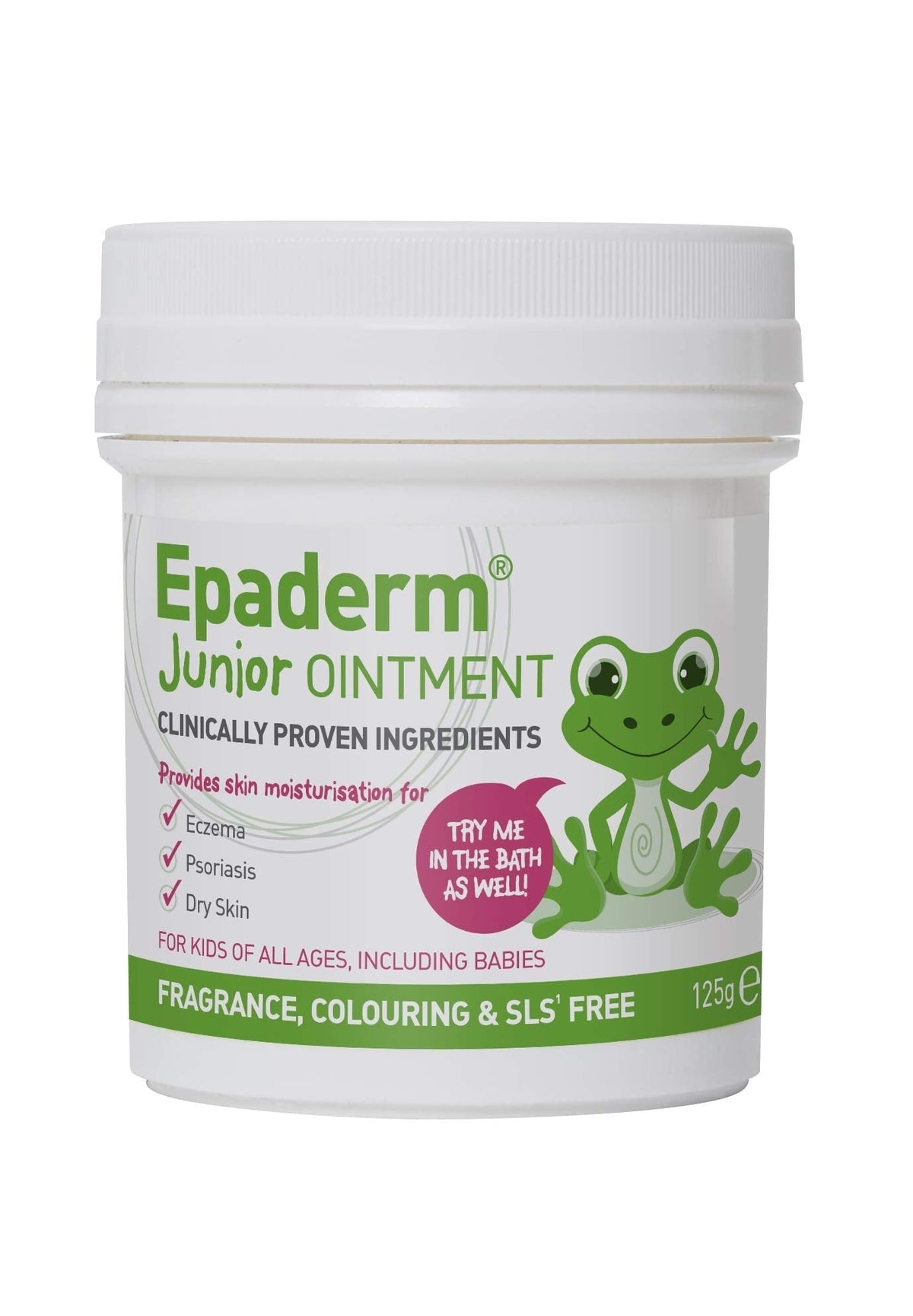
Epaderm Junior Ointment 125g
Epaderm Junior Ointment 125g
- ✔️ Soothes and moisturises dry, eczema-prone skin in children
- ✔️ Three-in-one: moisturiser, soap substitute, and bath additive
- ✔️ Fragrance-free, lanolin-free formula for sensitive young skin
- ✔️ Helps restore the skin's natural barrier with regular use
- ✔️ Suitable for children with eczema, dermatitis, and psoriasis
Price Checker
 Lowest price guarantee
 Includes FREE private prescription


Couldn't load pickup availability
What Is Epaderm Junior Ointment and Is It Right for Your Child?
If your child's skin is dry, itchy, or prone to flare-ups, finding the right emollient can feel overwhelming. Epaderm Junior Ointment is a three-in-one emollient, soap substitute, and bath additive designed specifically for children with dry skin conditions such as eczema, psoriasis, and ichthyosis. It's fragrance-free, lanolin-free, and free from common irritants — making it a gentle option for sensitive young skin. You can find it alongside other trusted products in our skin care collection.
Dry skin conditions in children are extremely common. The NHS estimates that eczema affects around one in five children in the UK at some point during childhood. Regular emollient use is a cornerstone of managing these conditions, helping to restore the skin's natural barrier and reduce the frequency of flare-ups.
How Does Epaderm Junior Ointment Work to Moisturise Skin?
The ointment works through a combination of occlusive and emollient mechanisms. Here's how each ingredient contributes:
- Yellow soft paraffin — forms a semi-occlusive barrier on the skin surface, significantly reducing transepidermal water loss (TEWL)
- Liquid paraffin — softens and lubricates the outer layers of the skin (the stratum corneum), improving flexibility and reducing cracking
- Emulsifying wax — allows the ointment to mix with water, making it effective as both a leave-on moisturiser and a rinse-off soap substitute
Together, these ingredients help to rehydrate the skin, reduce itching, and support the skin's natural protective function. Because it contains no active drugs, it can be used as frequently as needed without the concerns associated with medicated treatments.
Who Should Use Epaderm Junior Ointment?
This ointment is formulated for children but is also suitable for adults with dry or sensitive skin. It is particularly well-suited to:
- Children with eczema (atopic dermatitis) or dermatitis
- Children with psoriasis or ichthyosis
- Babies and toddlers with dry, flaky, or irritated skin (under medical guidance for infants under 12 months)
- Anyone seeking a fragrance-free, lanolin-free emollient for sensitive skin
Parents looking for a reliable daily moisturiser for their child's skin will find this product easy to incorporate into a routine. It's also worth exploring our baby and toddler range for complementary products.
How Does Epaderm Junior Ointment Compare to Similar Emollients?
| Feature | Epaderm Junior Ointment | Diprobase Ointment |
|---|---|---|
| Key ingredients | Yellow soft paraffin, liquid paraffin, emulsifying wax | White soft paraffin, liquid paraffin |
| Soap substitute use | Yes | No |
| Bath additive use | Yes | No |
| Fragrance-free | Yes | Yes |
Is Epaderm Junior Ointment Safe to Store and Use Long-Term?
Epaderm Junior Ointment should be stored below 25°C, away from direct heat and sunlight. Once opened, use within the period indicated on the packaging — typically 12 months. Always use a clean spatula or wash your hands before scooping product from the tub to avoid contamination.
One important safety point: paraffin-based emollients, including Epaderm Junior Ointment, can soak into fabrics such as clothing, bedding, and dressings. This creates a fire risk. Keep your child away from naked flames, open fires, and cigarettes while using this product, and wash fabrics regularly. The MHRA has issued guidance on this risk for all paraffin-containing emollients.
This product is a medicine. Speak to your doctor or pharmacist before using if you have an underlying medical condition or are taking other medicines.
Epaderm Junior Ointment 125g specifications
| Treatment category | Emollient / Moisturiser |
| Mechanism of action | Occlusive barrier; reduces transepidermal water loss |
| Effective for | Dry skin, eczema, dermatitis, psoriasis, ichthyosis |
| Suitable for | Children; adults with sensitive or dry skin |
| Active ingredients | Yellow soft paraffin, liquid paraffin, emulsifying wax |
| Pack size | 125g |
| UK classification | General Sale (GSL) |
| Drug class | Emollient |
| Preparation | Ointment |
| Route of administration | Topical |
Specifications of Epaderm Junior Ointment 125g
What Is Epaderm Junior Ointment and What Is It Used For?
Epaderm Junior Ointment is a topical emollient used to manage dry skin conditions in children. It contains yellow soft paraffin, liquid paraffin, and emulsifying wax — a combination that moisturises, softens, and protects the skin. It is used to treat and manage conditions including eczema, atopic dermatitis, psoriasis, and ichthyosis. Because it functions as a three-in-one product, it can be applied directly to the skin, used as a soap substitute during washing, or added to bathwater.
The NHS recommends regular emollient use as a first-line treatment for eczema in children, noting that emollients should be applied at least twice daily and more frequently during flare-ups. Epaderm Junior Ointment fits naturally into this routine.
What Do You Need to Know Before Using Epaderm Junior Ointment?
Before using this ointment, review the following contraindications and warnings:
- Do not use if your child is known to be allergic to any of the ingredients (yellow soft paraffin, liquid paraffin, or emulsifying wax)
- Avoid contact with the eyes
- Do not apply to broken, infected, or weeping skin without medical advice
- Paraffin-based emollients pose a fire risk — keep away from naked flames, open fires, and cigarettes; wash clothing and bedding regularly
- If skin condition worsens or does not improve within 7 days, consult a GP or pharmacist
Known drug interactions:
- No clinically significant drug interactions have been identified for topical paraffin-based emollients
- If using alongside a topical corticosteroid, apply the emollient first and allow it to absorb before applying the steroid
How Should You Use Epaderm Junior Ointment Correctly?
Follow these steps for correct application:
- Wash your hands thoroughly before use
- Use a clean spatula to remove ointment from the tub — do not dip fingers directly in
- Apply a generous layer to the affected area, smoothing in the direction of hair growth
- Allow the ointment to absorb for a few minutes before dressing your child
- For use as a soap substitute: apply a small amount to wet skin, massage gently, then rinse off
- For use as a bath additive: dissolve a small amount in warm bathwater, stir well, and soak for 10–20 minutes (caution — bath will be slippery)
| Use | Age Group | Amount | Frequency |
|---|---|---|---|
| Leave-on moisturiser | Children and adults | Generous layer to affected area | 2–4 times daily or as directed |
| Soap substitute | Children and adults | Small amount to wet skin | Each wash |
| Bath additive | Children and adults | Small amount dissolved in bathwater | Once daily or as needed |
For children with eczema, our creams and ointments collection includes a range of complementary emollient products that may be used alongside this ointment as part of a broader skincare routine.
What Are the Possible Side Effects of Epaderm Junior Ointment?
Side effects from emollients are uncommon, but they can occur. If your child experiences any of the following, stop use and speak to a pharmacist or GP.
Common side effects:
- Mild skin irritation or redness at the application site
- Temporary stinging or burning sensation, particularly on broken skin
- Greasy or heavy feeling on the skin
Less common side effects:
- Folliculitis (inflammation of hair follicles) with prolonged occlusive use
- Allergic contact dermatitis — rare, but possible if sensitive to any ingredient
Serious allergic reactions (anaphylaxis) are extremely rare with topical emollients. Seek emergency medical help if your child develops swelling of the face, lips, or throat, or has difficulty breathing after application.
How Should You Store Epaderm Junior Ointment?
- Store below 25°C in a cool, dry place
- Keep out of direct sunlight and away from heat sources
- Keep the lid tightly closed when not in use
- Keep out of reach and sight of children
- Do not use after the expiry date printed on the tub
- Once opened, use within 12 months
- Do not dispose of medicines via wastewater or household waste — return unused product to your pharmacist
If you're managing a child's skin condition alongside other health concerns, you may also find our allergy and hay fever range useful, as allergic conditions and eczema frequently co-exist in children.
References
Written and reviewed by our qualified team
Your safety and success are our highest priorities. Our medical team rigorously evaluates every product and piece of advice we provide, ensuring you receive only the most effective, science-backed solutions available.
Frequently Asked Questions
Where can I buy Epaderm Junior Ointment online in the UK?
You can buy Epaderm Junior Ointment 125g online from Cured Pharmacy for just £6.00, with no prescription required. It is a General Sale (GSL) medicine available for home delivery across the UK. Browse our full skin care collection for more emollient options.
How does Epaderm Junior Ointment work on dry skin?
Epaderm Junior Ointment works by forming an occlusive layer on the skin surface that traps moisture and reduces transepidermal water loss. The liquid paraffin softens the outer skin layers, while the emulsifying wax allows the product to be rinsed off when used as a soap substitute. Together, these ingredients help restore the skin's natural barrier function over time.
How do I apply Epaderm Junior Ointment step by step?
Use a clean spatula to scoop ointment from the tub, then apply a generous layer to the affected area, smoothing in the direction of hair growth. Apply two to four times daily, or as directed by your GP or pharmacist. For soap substitute use, apply to wet skin, massage gently, and rinse off thoroughly.
Can Epaderm Junior Ointment be used as a bath additive?
Yes — dissolve a small amount in warm bathwater, stir well to disperse, and allow your child to soak for 10 to 20 minutes. Always supervise children in the bath, as the water and bath surfaces will become slippery. Pat the skin dry gently after bathing and apply a further layer of ointment while the skin is still slightly damp.
Is Epaderm Junior Ointment safe for babies and newborns?
Epaderm Junior Ointment is formulated for children and is generally considered suitable for babies. However, for infants under 12 months, it is always advisable to consult your GP or health visitor before introducing any new skincare product. Our baby and toddler range includes products specifically selected for the youngest skin types.
What are the side effects of Epaderm Junior Ointment?
Side effects are uncommon but may include mild skin irritation, redness, or a temporary stinging sensation at the application site. Prolonged occlusive use can occasionally cause folliculitis (inflammation of hair follicles). If irritation persists or worsens, stop use and speak to your pharmacist or GP.
Does Epaderm Junior Ointment contain steroids or fragrances?
No — Epaderm Junior Ointment contains no steroids, fragrances, lanolin, or preservatives. It contains only yellow soft paraffin, liquid paraffin, and emulsifying wax. This makes it a suitable choice for children with highly sensitive or reactive skin.
What is the difference between Epaderm Junior Ointment and Epaderm Cream?
Epaderm Junior Ointment has a thicker, greasier consistency that provides a stronger occlusive barrier, making it particularly effective for very dry or severely affected skin. Epaderm Cream is lighter and easier to spread, which many people prefer for daytime use or on less severely affected areas. Both are fragrance-free and suitable for eczema-prone skin.
How often should I apply Epaderm Junior Ointment to my child's skin?
The NHS recommends applying emollients at least twice daily for dry skin conditions, and more frequently during flare-ups — some children may need application three to four times per day. There is no maximum number of daily applications for plain emollients like this one. Consistency is key: regular use helps maintain the skin barrier even when the skin appears clear.
Is there a fire risk with Epaderm Junior Ointment?
Yes — paraffin-based emollients, including Epaderm Junior Ointment, can soak into fabrics such as clothing, bedding, and bandages, creating a significant fire risk. The MHRA has issued safety guidance advising that patients using paraffin-containing emollients should keep away from naked flames and open fires, and wash fabrics regularly. This risk applies even after the product appears to have dried on fabric.
Who is eligible to use Epaderm Junior Ointment?
Epaderm Junior Ointment is suitable for children and adults with dry skin conditions including eczema, dermatitis, psoriasis, and ichthyosis. It is available without a prescription as a General Sale medicine. Speak to a GP or pharmacist before use if your child has infected skin, a known allergy to any ingredient, or if the skin condition has not been previously diagnosed.
Can I use Epaderm Junior Ointment alongside a steroid cream?
Yes — emollients and topical corticosteroids are commonly used together as part of an eczema management plan. Apply the emollient first and allow it to absorb for at least 30 minutes before applying the steroid cream, to avoid diluting the steroid and to reduce the risk of spreading it to unaffected areas. Always follow your GP's or pharmacist's instructions on steroid use.
How long can my child use Epaderm Junior Ointment for?
Epaderm Junior Ointment can be used long-term as part of an ongoing dry skin management routine. Unlike medicated treatments, plain emollients do not carry risks associated with prolonged use. Many children with eczema use emollients daily for years as part of their skincare routine, as recommended by the NHS.
What are the alternatives to Epaderm Junior Ointment?
Common alternatives include Diprobase Ointment, Hydromol Ointment, and Doublebase Gel, all of which are paraffin-based emollients used for similar dry skin conditions. The choice between products often comes down to personal preference regarding texture and ease of application. Browse our creams and ointments collection to compare available options.
What does the latest research say about emollients for childhood eczema?
Current NHS and NICE guidance consistently supports regular emollient use as the foundation of eczema management in children, noting that emollients reduce the need for topical steroids and help prevent flare-ups. Research also suggests that early and consistent emollient use in infants at high risk of eczema may help support skin barrier development, though this remains an active area of study. Always follow your GP's personalised advice for your child's specific condition.
Written and reviewed by our qualified team

Reviewed by:
Tarun Kumar
Superintendent/ Clinical Lead
📖 Find out more about our team of medical content authors and how we ensure the accuracy of our content with our content guidelines.
Content last updated: 14 Sep 2026
Other popular options


We’re a safe and
regulated UK service

Lowest Price Guarantee

We're convinced you won't find your treatment cheaper, but if you do we'll refund the difference.
Find out more
100% discreet packaging

Discreet, unbranded packaging for every order.
Find out more

Need help?
Talk to our friendly experts now


How our service works

Service setup

Discreet packaging

Express delivery