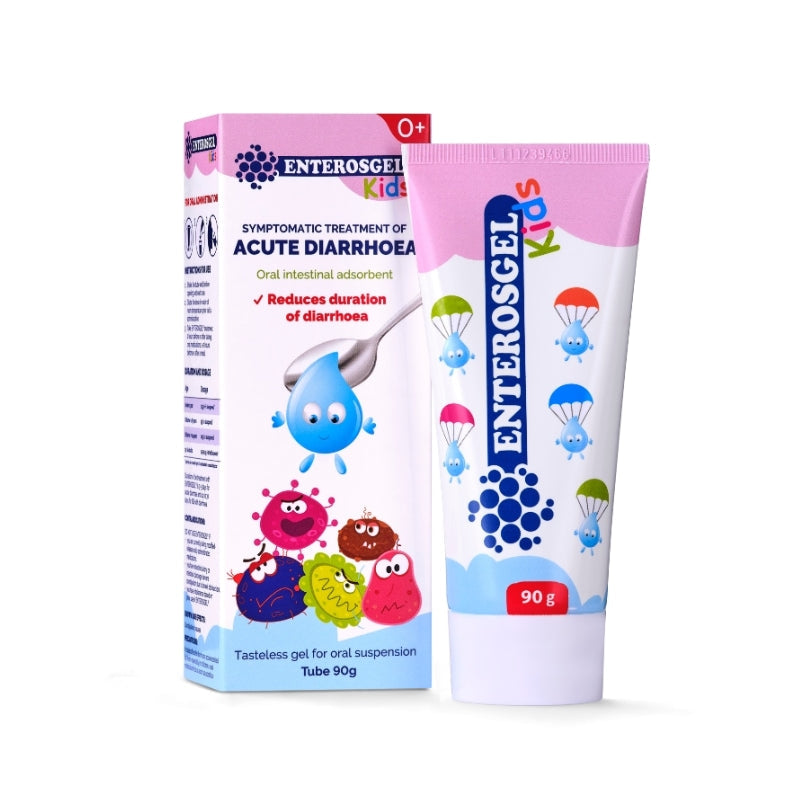
Enterosgel Diarrhoea Relief For Kids 90g
Enterosgel Diarrhoea Relief For Kids 90g
- ✔️ Drug-free gel that adsorbs gut toxins causing diarrhoea
- ✔️ Suitable for children aged one year and over
- ✔️ Helps reduce loose stool frequency during acute episodes
- ✔️ Can be mixed with food or drink for easy administration
- ✔️ Works alongside oral rehydration to support gut recovery
Price Checker
 Lowest price guarantee
 Includes FREE private prescription


Couldn't load pickup availability
What Is Diarrhoea Relief for Kids?
When your child has diarrhoea, it can be distressing for the whole family. Loose, frequent stools can leave little ones tired, uncomfortable, and at risk of dehydration. Diarrhoea relief for kids doesn't have to mean reaching for antibiotics or harsh medicines — Enterosgel Diarrhoea Relief For Kids 90g offers a drug-free, gentle approach that works with your child's body rather than against it. It's suitable for children aged 1 year and over, and it's available without a prescription from our baby and toddler range at Cured Pharmacy.
Diarrhoea in children is extremely common. The NHS notes that most cases in children are caused by a viral infection such as norovirus or rotavirus, and that the main risk is dehydration. Enterosgel is designed to help manage the episode by targeting the root cause — the toxins and pathogens irritating the gut lining — while being gentle enough for young digestive systems.
How Does Enterosgel Work in the Gut?
Enterosgel contains a single active ingredient: polymethylsiloxane polyhydrate, an organosilicon compound with a porous, sponge-like structure. It works through a process called adsorption — not to be confused with absorption. Rather than being taken into the bloodstream, the gel stays entirely within the gastrointestinal tract and binds harmful substances to its surface.
- The gel passes through the mouth and into the stomach and intestines unchanged.
- Its porous structure attracts and binds toxins, bacteria, viruses, and allergens present in the gut.
- Bound substances are then carried out of the body naturally through the stool.
- The gel itself is not absorbed and does not enter the bloodstream.
- The gut lining is left less irritated, helping to reduce the frequency and urgency of loose stools.
Because it works mechanically rather than chemically, Enterosgel does not interfere with the body's natural gut flora in the way that some medicines can. It simply helps clear the irritants causing the problem.
Who Should Use Enterosgel Diarrhoea Relief For Kids?
This product is specifically formulated for children and is suitable for a range of situations where acute diarrhoea is the primary concern. It is not intended for long-term or chronic use — if your child has ongoing digestive issues, speak to your GP. For short-term episodes, it may be appropriate for:
- Children aged 1 year and over experiencing acute diarrhoea.
- Children with diarrhoea triggered by a viral or bacterial gut infection.
- Children who have developed loose stools following antibiotic use.
- Children with diarrhoea associated with food intolerance or dietary changes.
It is not recommended for infants under 1 year without medical supervision. If your child is under 2 years old, always consult your GP before starting any treatment for diarrhoea.
How Does Enterosgel Compare to Other Children's Diarrhoea Treatments?
| Feature | Enterosgel For Kids | Oral Rehydration Salts (e.g. Dioralyte) |
|---|---|---|
| Mechanism | Adsorbs toxins and pathogens in the gut | Replaces lost fluids and electrolytes |
| Drug-free | Yes | Yes |
| Suitable age | 1 year and over | All ages (with guidance) |
| Addresses dehydration | No — use alongside fluids | Yes — primary purpose |
How Should You Store Enterosgel and Is It Safe Alongside Other Medicines?
Store Enterosgel below 25°C, away from direct sunlight. Do not freeze the gel, as this can affect its texture and efficacy. Once opened, the tube should be used within the recommended period stated on the packaging. Keep it out of reach and sight of children when not in use.
Because Enterosgel can bind to other substances in the gut, it may reduce the absorption of other oral medicines if taken at the same time. Always leave a gap of at least 1–2 hours between giving Enterosgel and any other medication. If your child takes regular prescribed medicines, speak to your pharmacist before use. You can also browse our diarrhoea treatments for further options to support your child's recovery.
This product is a medicine. Speak to your doctor or pharmacist before using if you have an underlying medical condition or are taking other medicines.
Enterosgel Diarrhoea Relief For Kids 90g specifications
| Treatment category | Diarrhoea relief |
| Mechanism of action | Gut adsorption of toxins and pathogens |
| Effective for | Acute diarrhoea in children |
| Suitable for | Children aged 1 year and over |
| Active ingredient | Polymethylsiloxane polyhydrate |
| Pack size | 90g |
| UK classification | General Sale / OTC |
| Drug class | Gut adsorbent |
| Preparation | Oral gel |
| Route of administration | Oral |
Specifications of Enterosgel Diarrhoea Relief For Kids 90g
What Is Enterosgel Diarrhoea Relief For Kids and What Is It Used For?
Enterosgel Diarrhoea Relief For Kids is an oral gel used to treat acute diarrhoea in children aged 1 year and over. Its active ingredient, polymethylsiloxane polyhydrate, is a drug-free organosilicon compound that works by adsorbing harmful substances in the gastrointestinal tract. It is not a medicine in the traditional pharmacological sense — it does not act on receptors or alter body chemistry. Instead, it physically binds toxins, bacteria, and viruses in the gut and helps remove them from the body through normal bowel movements.
The NHS advises that diarrhoea in children is most commonly caused by a gastroenteritis infection and that keeping children well hydrated is the priority. Enterosgel can be used alongside oral rehydration therapy to help manage symptoms. It is not a substitute for fluids, and parents should ensure their child continues to drink regularly throughout any episode of diarrhoea.
What Do You Need to Know Before Using Enterosgel For Kids?
Before giving Enterosgel to your child, read the following carefully. There are some situations where it should not be used, or where extra caution is needed.
Do not use Enterosgel if your child:
- Is under 1 year of age (without medical supervision).
- Has a known hypersensitivity or allergy to polymethylsiloxane polyhydrate or any other ingredient in the product.
- Has intestinal obstruction or suspected bowel blockage.
- Has atonic constipation (sluggish bowel with no urge to pass stools).
Use with caution and seek medical advice if your child:
- Is under 2 years old — always consult your GP before treating diarrhoea in very young children.
- Shows signs of severe dehydration such as sunken eyes, dry mouth, no tears when crying, or reduced urination.
- Has blood or mucus in their stools.
- Has a high fever alongside diarrhoea.
- Has not improved after 48 hours of treatment.
Potential interactions with other medicines:
- Enterosgel may reduce the absorption of other oral medicines taken at the same time.
- Always leave a gap of at least 1–2 hours between Enterosgel and any other oral medication, including vitamins or supplements.
- If your child takes regular prescribed medication, speak to your pharmacist before use.
How Should You Use Enterosgel For Kids?
Enterosgel is easy to give to children when mixed correctly. Follow these steps each time you administer a dose:
- Wash your hands thoroughly before handling the product.
- Measure the correct dose using a tablespoon or the measuring guide on the packaging.
- Mix the gel with a small amount of water, diluted juice, or soft food such as yoghurt or fruit puree.
- Give the mixture to your child between meals — not immediately before or after eating.
- Ensure your child drinks plenty of fluids throughout the day to prevent dehydration.
- Leave at least 1–2 hours between Enterosgel and any other oral medicines.
| Age Group | Dose | Frequency |
|---|---|---|
| 1–3 years | ½ tablespoon (7.5g) | 3 times daily |
| 3–12 years | 1 tablespoon (15g) | 3 times daily |
| Over 12 years / Adults | 1.5 tablespoons (22.5g) | 3 times daily |
If you are also managing other digestive concerns in your family, you may find our sickness and nausea range helpful alongside this product.
What Are the Possible Side Effects of Enterosgel For Kids?
Enterosgel is generally well tolerated in children. Because it is not absorbed into the bloodstream, systemic side effects are uncommon. However, as with any product, some children may experience reactions.
Common side effects:
- Constipation — the most frequently reported effect, usually temporary.
- Nausea — particularly if the gel is not mixed well with food or liquid.
Less common side effects:
- Feeling of fullness or bloating.
- Reduced appetite.
If constipation develops and does not resolve within a day or two of stopping the gel, or if your child seems unwell in any other way, contact your GP or pharmacist. Stop use immediately if any allergic reaction occurs, such as rash, swelling, or difficulty breathing, and seek urgent medical attention.
How Should You Store Enterosgel For Kids?
- Store below 25°C in a cool, dry place.
- Do not freeze — freezing alters the gel's structure and may reduce its effectiveness.
- Keep the tube tightly closed when not in use.
- Keep out of the reach and sight of children when not being administered.
- Do not use after the expiry date printed on the packaging.
- Do not store in direct sunlight or near a heat source.
For broader gut health support, you might also want to explore our IBS and cramps collection, which includes products suitable for older children and adults managing ongoing digestive discomfort.
References
Written and reviewed by our qualified team
Your safety and success are our highest priorities. Our medical team rigorously evaluates every product and piece of advice we provide, ensuring you receive only the most effective, science-backed solutions available.
Frequently Asked Questions
Where can I buy Enterosgel Diarrhoea Relief For Kids online in the UK?
You can buy Enterosgel Diarrhoea Relief For Kids 90g directly from Cured Pharmacy, a GPhC-registered UK online pharmacy, for £14.20. It is available without a prescription and can be ordered quickly for home delivery. Browse our full baby and toddler range for related products too.
How does Enterosgel work for children's diarrhoea?
Enterosgel works through adsorption — its porous gel structure binds toxins, bacteria, and viruses in the gut and carries them out of the body through the stool. It does not enter the bloodstream and does not alter gut chemistry. This makes it a gentle, drug-free option for managing acute diarrhoea in children.
How do I give Enterosgel to my child step by step?
Measure the correct dose for your child's age, then mix it thoroughly with a small amount of water, diluted juice, or soft food like yoghurt. Give it between meals and at least 1–2 hours away from any other oral medicines. Make sure your child drinks plenty of fluids throughout the day to stay hydrated.
What is the correct dose of Enterosgel for children?
Children aged 1–3 years should receive half a tablespoon (7.5g) three times daily. Children aged 3–12 years should take one tablespoon (15g) three times daily. Always follow the instructions on the packaging and consult your pharmacist if you are unsure about the right dose for your child.
When is the best time to give Enterosgel to my child?
The best time to give Enterosgel is between meals — not immediately before or after eating. This helps maximise the gel's contact with gut contents and improves its adsorption of toxins. Space doses evenly throughout the day, roughly every 6–8 hours, for consistent effect during an acute episode.
Are there any side effects of Enterosgel in children?
Enterosgel is generally well tolerated, but some children may experience temporary constipation or mild nausea, particularly if the gel is not mixed well with food or liquid. These effects are usually short-lived. If constipation persists after stopping the gel, or if your child develops any other symptoms, speak to your GP or pharmacist.
Can Enterosgel be used in babies under 1 year?
Enterosgel Diarrhoea Relief For Kids is not recommended for infants under 1 year of age without direct medical supervision. Diarrhoea in very young babies can become serious quickly due to the risk of dehydration. Always consult your GP or health visitor before giving any diarrhoea treatment to a baby under 12 months.
How long can my child take Enterosgel for?
Enterosgel is intended for short-term use during an acute episode of diarrhoea, typically for 3–5 days. If your child's symptoms have not improved within 48 hours (for children under 2) or 5 days (for older children), stop use and seek medical advice. It is not designed for long-term or preventative use.
What are the alternatives to Enterosgel for children's diarrhoea?
The main alternative is oral rehydration salts (ORS) such as Dioralyte, which replace fluids and electrolytes lost during diarrhoea but do not adsorb toxins. ORS and Enterosgel can be used together — they work in different ways and complement each other. You can explore more options in our diarrhoea treatments collection.
Can Enterosgel interfere with my child's other medicines?
Yes — because Enterosgel adsorbs substances in the gut, it can potentially reduce the absorption of other oral medicines if taken at the same time. Always leave a gap of at least 1–2 hours between Enterosgel and any other medication your child takes. If your child is on regular prescribed medicines, speak to your pharmacist before starting Enterosgel.
Is Enterosgel suitable for children with food allergies or intolerances?
Enterosgel contains no known common allergens such as gluten, lactose, or nuts, and its single active ingredient is an inorganic silica-based compound. However, always check the full ingredient list on the packaging if your child has known sensitivities. If you are unsure, consult your pharmacist before use.
What happens if my child misses a dose of Enterosgel?
If you miss a dose, simply give the next dose at the usual time — do not double up to make up for a missed one. Enterosgel works best when given consistently throughout the day, but missing a single dose is unlikely to significantly affect the overall outcome. Continue the course as normal.
Who is eligible to use Enterosgel Diarrhoea Relief For Kids?
This product is suitable for children aged 1 year and over experiencing acute diarrhoea. It is appropriate for diarrhoea caused by viral or bacterial gut infections, antibiotic-associated diarrhoea, or dietary changes. Children under 1 year, or those with intestinal obstruction or atonic constipation, should not use this product without medical advice.
Does Enterosgel help with diarrhoea caused by antibiotics in children?
Yes — Enterosgel can be used to help manage antibiotic-associated diarrhoea in children, as it adsorbs toxins and irritants in the gut regardless of their cause. However, remember to leave a gap of at least 1–2 hours between the antibiotic dose and Enterosgel to avoid reducing antibiotic absorption. Always check with your pharmacist if you are unsure.
What is the latest research on Enterosgel for children's diarrhoea?
Clinical studies have investigated polymethylsiloxane polyhydrate as a gut adsorbent for acute infectious diarrhoea in children, with findings generally supporting its tolerability and short-term effectiveness in reducing stool frequency. Research has also explored its use in antibiotic-associated diarrhoea. As with all OTC products, it should be used as part of a broader management plan that includes adequate hydration.
Written and reviewed by our qualified team

Reviewed by:
Tarun Kumar
Superintendent/ Clinical Lead
📖 Find out more about our team of medical content authors and how we ensure the accuracy of our content with our content guidelines.
Content last updated: 14 Sep 2026
Other popular options


We’re a safe and
regulated UK service

Lowest Price Guarantee

We're convinced you won't find your treatment cheaper, but if you do we'll refund the difference.
Find out more
100% discreet packaging

Discreet, unbranded packaging for every order.
Find out more

Need help?
Talk to our friendly experts now


How our service works

Service setup

Discreet packaging

Express delivery