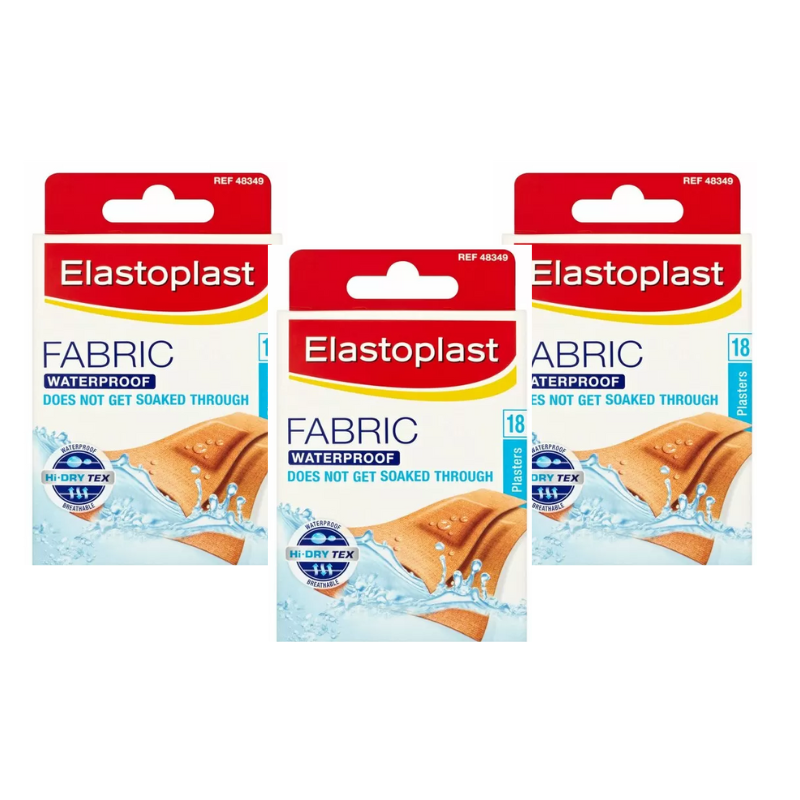
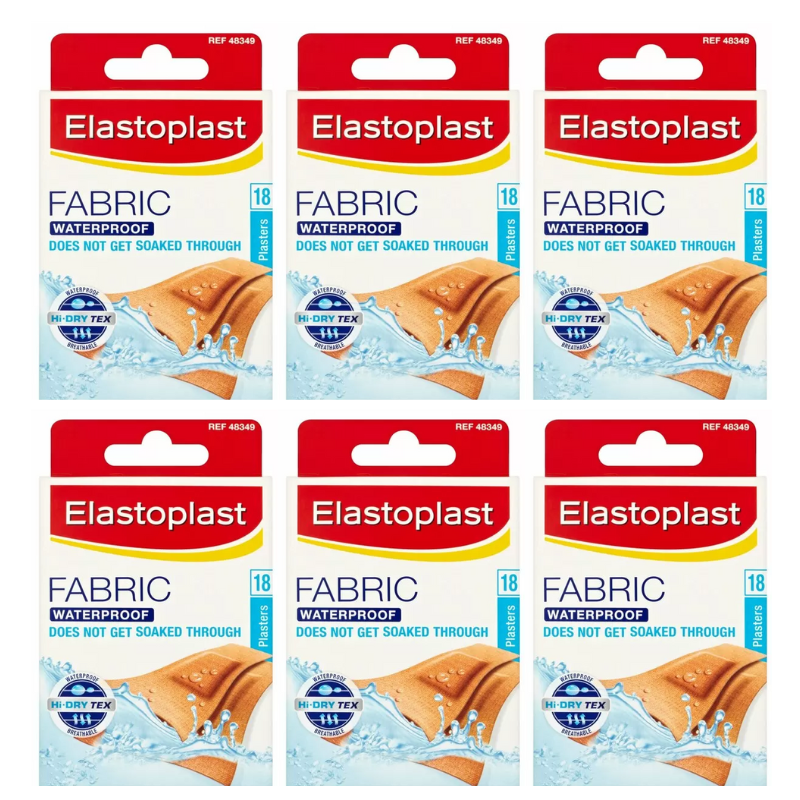
Elastoplast Fabric Waterproof 18 Strips
Elastoplast Fabric Waterproof 18 Strips
- ✔️ Flexible fabric conforms to knuckles and joints for secure fit
- ✔️ Waterproof backing protects wounds during everyday hand washing
- ✔️ Absorbent wound pad manages minor exudate and keeps wounds clean
- ✔️ Suitable for adults and children with minor cuts, grazes, and blisters
- ✔️ 18 strips per pack for reliable home first aid readiness
Price Checker
 Lowest price guarantee
 Includes FREE private prescription


Couldn't load pickup availability
Are Waterproof Fabric Plasters Right for You?
Minor cuts, grazes, and blisters are part of everyday life — and having the right dressing to hand makes all the difference. Waterproof fabric plasters like the Elastoplast Fabric Waterproof 18 Strips offer a flexible, skin-conforming layer of protection that stays put even when life gets a little messy. Whether you're washing up, gardening, or keeping active, these strips are designed to move with your skin rather than against it. At just £2.99 for 18 strips, they're a practical addition to any home first aid kit. You'll find them alongside other essentials in our first aid collection.
The fabric construction sets these plasters apart from standard plastic alternatives. Fabric dressings are generally more breathable and conform better to awkward areas like knuckles and fingertips — places where a rigid plaster tends to peel away quickly. The waterproof backing adds an extra layer of defence, helping to keep the wound clean and dry during everyday activities.
How Do Elastoplast Fabric Waterproof Strips Work?
These strips work through a combination of physical barrier protection and absorbent wound management. Here's how each component plays its part:
- Absorbent wound pad: Sits directly over the wound to absorb exudate (fluid) and keep the area clean.
- Waterproof outer layer: Resists water penetration during everyday activities such as hand washing, helping to prevent bacterial contamination.
- Flexible fabric backing: Conforms to the contours of the skin, reducing the risk of the plaster lifting at the edges — particularly useful on joints and fingers.
- Skin-friendly adhesive: Bonds securely to dry skin without causing unnecessary trauma on removal.
Together, these features create a moist wound environment that supports the body's natural healing process. The NHS notes that keeping a minor wound covered and clean is one of the most effective ways to prevent infection and promote healing.
Who Should Use Elastoplast Fabric Waterproof Strips?
These plasters are suitable for most adults and children dealing with minor wounds in everyday settings. They're particularly well suited to people who need a dressing that can keep up with an active lifestyle or frequent hand washing. That said, they're not appropriate for every wound type — always assess the injury first.
- Adults and children with minor cuts, grazes, or small blisters
- People who work with their hands or wash them frequently
- Those who need a flexible dressing on joints or high-movement areas
- Anyone wanting a reliable everyday plaster for their home first aid kit
They are not suitable for deep puncture wounds, heavily bleeding injuries, or wounds showing signs of infection such as redness, swelling, or discharge. In those cases, seek medical advice promptly.
How Do Elastoplast Fabric Strips Compare to Standard Plastic Plasters?
| Feature | Elastoplast Fabric Waterproof Strips | Standard Plastic Plasters |
|---|---|---|
| Flexibility | High — fabric conforms to skin contours | Low — can crack or lift on joints |
| Waterproof | Yes — resistant to everyday water exposure | Varies — many are not waterproof |
| Breathability | Good — fabric allows some air circulation | Limited — plastic can trap moisture |
| Suitable for joints | Yes | Not ideal |
Are These Plasters Safe to Store at Home?
Absolutely. These are a straightforward, non-medicated wound dressing — no active pharmaceutical ingredients are involved. Store them in a cool, dry place below 25°C, away from direct sunlight and out of reach of young children. Check the expiry date on the packaging before use, as the adhesive and sterility of the wound pad can degrade over time. If you're building out a home first aid kit, pairing these with products from our skin care range — such as antiseptic creams — can help you manage minor wounds more thoroughly.
These waterproof fabric plasters are a medical device. Speak to your doctor or pharmacist before using if you have an underlying medical condition or are taking other medicines.
This product is a medicine. Speak to your doctor or pharmacist before using if you have an underlying medical condition or are taking other medicines.
Elastoplast Fabric Waterproof 18 Strips specifications
| Treatment category | First aid / wound care |
| Mechanism of action | Physical barrier protection with absorbent wound pad |
| Effective for | Minor cuts, grazes, blisters |
| Suitable for | Adults and children |
| Active ingredient | None — medical device/wound dressing |
| Pack size | 18 strips |
| UK classification | General Sale / Medical Device |
| Preparation | Fabric adhesive strip with absorbent pad |
| Route of administration | Topical / cutaneous |
Specifications of Elastoplast Fabric Waterproof 18 Strips
What Are Elastoplast Fabric Waterproof Strips and What Are They Used For?
Elastoplast Fabric Waterproof 18 Strips are adhesive wound dressings designed for the management of minor cuts, grazes, and blisters. They are classified as a medical device rather than a medicine, meaning they work through physical action — covering and protecting the wound — rather than through any pharmacological effect. Each strip consists of a soft fabric backing, a central absorbent wound pad, and a skin-friendly adhesive border.
They are intended for single use on superficial wounds in everyday settings. The NHS advises that minor wounds should be cleaned, covered, and monitored for signs of infection — and these strips are designed to support exactly that process. They are not a substitute for professional medical care when wounds are deep, heavily contaminated, or failing to heal.
What Do You Need to Know Before Using Elastoplast Fabric Waterproof Strips?
Before applying any wound dressing, it's worth checking that the product is appropriate for your situation. These strips are generally safe for most people, but there are some important considerations.
Do not use these strips if:
- The wound is deep, gaping, or will not stop bleeding after 10 minutes of firm pressure
- There are signs of infection — redness spreading from the wound, warmth, swelling, pus, or fever
- You have a known allergy to adhesive plasters or any component of the dressing
- The wound is a puncture wound, animal bite, or caused by a rusty object — seek medical advice
- The wound is on the face or near the eyes
Warnings and precautions:
- People with fragile or thin skin (including some elderly patients) should remove plasters carefully to avoid skin tears
- Those with diabetes or poor circulation should seek medical advice for any foot or leg wounds, as healing may be impaired
- Do not apply to broken, inflamed, or eczematous skin without medical guidance
- Keep out of reach of children — small parts may present a choking hazard
Known interactions:
- No pharmacological drug interactions — this is a non-medicated medical device
- Avoid concurrent use of topical products (e.g. antiseptic creams) directly under the wound pad unless advised by a healthcare professional, as this may affect adhesion
How Should You Use Elastoplast Fabric Waterproof Strips?
Correct application is key to getting the most from these dressings. Follow these steps carefully for best results:
- Wash your hands thoroughly with soap and water before touching the wound.
- Clean the wound gently under cool running water to remove any dirt or debris. Pat dry with a clean cloth or sterile gauze.
- Select an appropriately sized strip — the wound pad should fully cover the wound without the pad touching the surrounding skin.
- Peel back the protective paper backing, taking care not to touch the wound pad.
- Centre the absorbent pad directly over the wound.
- Press the adhesive edges firmly onto clean, dry skin, smoothing outward from the centre.
- Check the plaster regularly and replace it if it becomes wet, dirty, or begins to lift at the edges.
| Indication | Age Group | Application | Frequency of Change |
|---|---|---|---|
| Minor cut or graze | Adults and children | One strip per wound | Daily or when soiled/wet |
| Small blister | Adults and children | One strip over intact blister | Daily or when lifting |
If you're managing a wound alongside other skin concerns, our creams and ointments collection includes antiseptic and healing products that complement wound care.
What Are the Possible Side Effects of Elastoplast Fabric Waterproof Strips?
As a non-medicated medical device, systemic side effects are not expected. However, local skin reactions can occur in some individuals, particularly those with sensitive skin.
Common side effects:
- Mild redness or irritation at the adhesive border after removal
- Temporary skin indentation from the plaster edges
- Minor discomfort on removal, particularly over hairy skin
Less common side effects:
- Contact dermatitis — an allergic reaction to the adhesive, presenting as itching, rash, or blistering around the plaster site
- Skin maceration (softening and whitening of the skin) if the plaster is left in place for too long or the wound becomes wet beneath it
If you notice spreading redness, increasing pain, or any signs of allergic reaction, remove the plaster and seek advice from your pharmacist or GP. For those prone to skin reactions, exploring pain relief options for wound discomfort may also be helpful alongside appropriate dressing choices.
How Should You Store Elastoplast Fabric Waterproof Strips?
- Store below 25°C in a cool, dry place
- Keep away from direct sunlight and sources of heat
- Do not store in a bathroom cabinet where humidity may affect the adhesive
- Keep out of reach and sight of young children
- Do not use after the expiry date printed on the packaging
- Once the individual strip wrapper is opened, use immediately — do not re-seal and store
References
Written and reviewed by our qualified team
Your safety and success are our highest priorities. Our medical team rigorously evaluates every product and piece of advice we provide, ensuring you receive only the most effective, science-backed solutions available.
Frequently Asked Questions
Where can I buy Elastoplast Fabric Waterproof 18 Strips online in the UK?
You can buy Elastoplast Fabric Waterproof 18 Strips directly from Cured Pharmacy online for just £2.99, with no prescription required. They are available as an over-the-counter first aid product and can be ordered quickly and conveniently. Browse our full first aid collection for more wound care essentials.
Are Elastoplast Fabric Waterproof strips genuinely waterproof?
Yes — these strips are designed to resist water during typical everyday activities such as hand washing, light rain, and general household tasks. They are not intended for prolonged submersion, such as swimming or bathing, where the adhesive may eventually lift. For best results, pat the plaster dry after any water exposure and replace it if it begins to peel.
How do I apply Elastoplast Fabric Waterproof strips step by step?
Start by washing your hands and cleaning the wound under cool running water, then pat the surrounding skin completely dry. Peel back the protective backing without touching the wound pad, centre the pad over the wound, and press the adhesive edges firmly onto dry skin. Smooth from the centre outward to remove any air pockets and ensure a secure seal.
How long should I leave an Elastoplast fabric plaster on?
You should change the plaster at least once daily, or sooner if it becomes wet, dirty, or starts to lift at the edges. Leaving a plaster on for too long can cause the skin beneath to become macerated — soft, white, and more vulnerable to infection. Always inspect the wound each time you change the dressing to check for signs of healing or infection.
Can children use Elastoplast Fabric Waterproof plasters?
Yes, these plasters are suitable for use on children for minor cuts, grazes, and small blisters. Adult supervision is recommended during application, particularly for younger children, to ensure the plaster is applied correctly and the wound is properly cleaned first. If a child's wound is deep, heavily bleeding, or shows signs of infection, seek medical advice rather than relying on a plaster alone.
What wounds are these plasters NOT suitable for?
These strips are not appropriate for deep or gaping wounds, puncture wounds, animal bites, heavily contaminated injuries, or wounds that will not stop bleeding after 10 minutes of firm pressure. They should also not be used on wounds showing signs of infection — such as spreading redness, warmth, swelling, or pus — or on wounds near the eyes. In all these cases, seek prompt medical attention.
Can I use these plasters on sensitive or eczema-prone skin?
People with sensitive skin, eczema, or a known allergy to adhesive plasters should use caution, as the adhesive border may trigger contact dermatitis — an itchy, red, or blistered reaction around the plaster site. If you have experienced reactions to plasters before, consider a hypoallergenic alternative and speak to your pharmacist for guidance. You can also explore our skin care range for products suited to sensitive skin.
What are the alternatives to Elastoplast Fabric Waterproof strips?
Alternatives include standard plastic adhesive plasters, hydrocolloid dressings (which are particularly useful for blisters and moist wound healing), silicone-based dressings for fragile skin, and sterile non-adhesive wound pads secured with medical tape. The right choice depends on the wound type, your skin sensitivity, and how active you are. A pharmacist can help you select the most appropriate dressing for your specific situation.
How do I remove an Elastoplast fabric plaster without causing pain?
To minimise discomfort, peel the plaster back slowly in the direction of hair growth rather than pulling it straight up. Soaking the plaster briefly with warm water or applying a small amount of baby oil around the edges can help loosen the adhesive, particularly on hairy skin. People with fragile or thin skin — including some older adults — should take extra care to avoid skin tears during removal.
What should I do if the wound under the plaster looks infected?
Remove the plaster and inspect the wound carefully. Signs of infection include increasing redness, warmth, swelling, pain, pus or discharge, and sometimes fever or swollen lymph nodes nearby. If you notice any of these, do not attempt to manage the infection at home with another plaster — contact your GP or pharmacist promptly, as you may need antibiotic treatment.
Are these plasters suitable for use on the face?
Elastoplast fabric strips can be used on the face for minor cuts or grazes, but care should be taken to avoid the eye area entirely. Facial skin is often more sensitive, so monitor for any adhesive reaction and remove gently. For wounds close to the eyes or mouth, or any facial wound that is deep or gaping, seek medical advice rather than self-treating.
How do waterproof fabric plasters support wound healing?
By covering the wound, these plasters help maintain a moist wound environment, which research supports as beneficial for faster healing of superficial wounds compared to leaving them exposed to air. The fabric backing also reduces friction and physical trauma to the wound site during movement. Keeping the wound clean and protected from bacteria is one of the most important steps in preventing complications.
Can I use antiseptic cream under an Elastoplast fabric plaster?
You can apply a thin layer of antiseptic cream to the wound before covering it with a plaster, but allow it to absorb slightly first so the surrounding skin remains dry enough for the adhesive to bond properly. Applying too much cream or leaving the skin wet may cause the plaster to lift prematurely. If you're unsure which antiseptic product to use, browse our creams and ointments collection for suitable options.
How should I store Elastoplast Fabric Waterproof 18 Strips at home?
Store the pack in a cool, dry place below 25°C, away from direct sunlight and sources of heat or humidity. Bathroom cabinets are not ideal due to steam and moisture, which can degrade the adhesive over time. Always check the expiry date before use and discard any strips whose individual wrappers have been damaged or opened.
What is the latest guidance on managing minor wounds at home?
Current NHS guidance recommends cleaning minor wounds under cool running water, avoiding the use of antiseptic directly in the wound (as it can damage tissue), covering with an appropriate dressing, and monitoring daily for signs of infection. Tetanus vaccination status should also be considered for wounds caused by dirty or rusty objects. If in doubt about any wound, contact your GP or call NHS 111 for advice.
Written and reviewed by our qualified team

Reviewed by:
Tarun Kumar
Superintendent/ Clinical Lead
📖 Find out more about our team of medical content authors and how we ensure the accuracy of our content with our content guidelines.
Content last updated: 14 Sep 2026
Other popular options


We’re a safe and
regulated UK service

Lowest Price Guarantee

We're convinced you won't find your treatment cheaper, but if you do we'll refund the difference.
Find out more
100% discreet packaging

Discreet, unbranded packaging for every order.
Find out more

Need help?
Talk to our friendly experts now


How our service works

Service setup

Discreet packaging

Express delivery