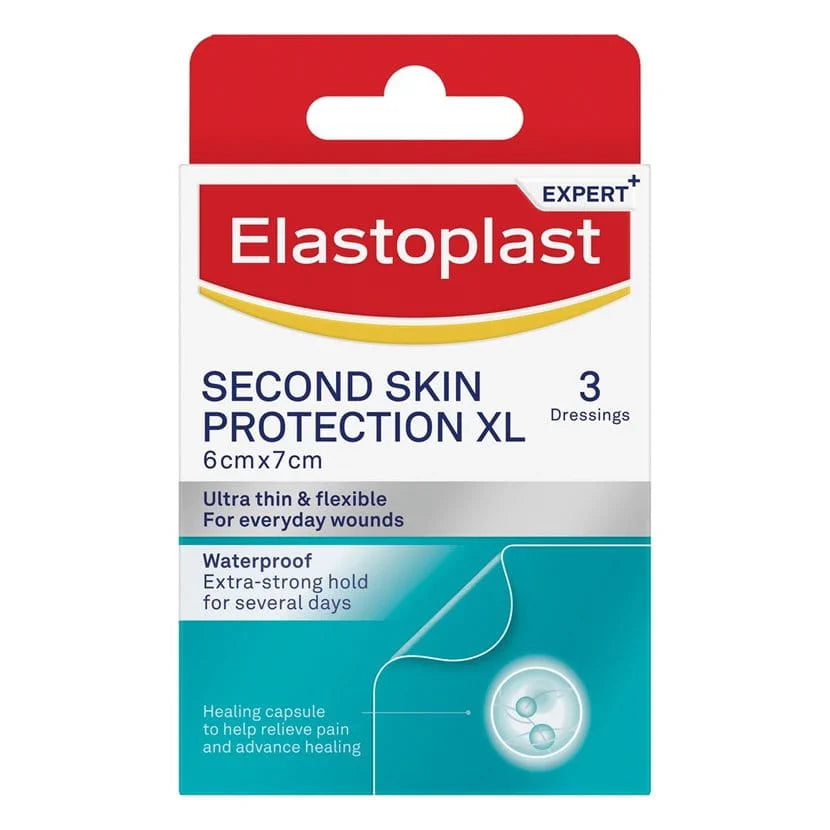
Elastoplast Dressings Second Skin Protection Patches XL
Elastoplast Dressings Second Skin Protection Patches XL
- ✔️ Hydrocolloid gel cushions and protects large friction blisters
- ✔️ Absorbs blister fluid to support faster natural healing
- ✔️ Water-resistant design stays in place during daily activity
- ✔️ Suitable for intact and burst blisters on feet and body
- ✔️ XL size covers larger blisters standard plasters cannot reach
Price Checker
 Lowest price guarantee
 Includes FREE private prescription


Couldn't load pickup availability
What Are Second Skin Blister Patches XL?
If you have ever had a blister ruin a long walk, a new pair of shoes, or a day on your feet, you will know how quickly something so small can become genuinely painful. Second skin blister patches are hydrocolloid dressings designed to sit directly over a blister, cushioning it from friction and creating the right conditions for the skin to heal. Elastoplast's XL version is specifically sized for larger blisters — the kind that form on heels, the ball of the foot, or other high-pressure areas. At just £3.50, it is one of the more accessible options in the first aid category.
Elastoplast is a well-established brand in wound care, and these patches are a medical device rather than a medicine — meaning there is no active pharmaceutical ingredient. The dressing itself does the work, physically protecting the skin and managing the wound environment.
How Do Elastoplast Second Skin Patches Work?
The science behind these patches is straightforward but genuinely effective. Hydrocolloid dressings have been used in clinical wound care for decades, and the same technology is what makes these patches work so well on blisters.
- The hydrocolloid gel layer absorbs fluid (exudate) from the blister, drawing it away from the wound surface.
- As it absorbs fluid, the gel turns white or yellowish — this is completely normal and not a sign of infection.
- A moist healing environment is maintained beneath the patch, which the NHS notes supports faster skin repair compared to dry wound management.
- The outer layer acts as a physical barrier against friction, pressure, and external contaminants.
- The cushioning effect reduces pain almost immediately on application, which is often the most noticeable benefit.
Because the patch manages moisture actively, you do not need to drain the blister yourself. In fact, leaving a blister intact where possible reduces the risk of infection — something the NHS advises for most blister types.
Who Should Use Elastoplast Second Skin XL Patches?
These patches are suitable for a wide range of people. The XL size makes them particularly useful when a standard-sized plaster simply will not cover the affected area. They are appropriate for:
- Adults and older children with friction blisters on the feet, heels, or toes
- Runners, hikers, and anyone who spends long periods on their feet
- People breaking in new footwear
- Those with blisters on the hands from manual work or sport
They are not suitable for use on infected wounds, deep lacerations, or heavily bleeding injuries. People with known allergies to hydrocolloid dressings or adhesive components should check the ingredients before use. If you have diabetes or poor circulation, blisters can carry a higher risk of complications — always speak to your GP or pharmacist before self-treating in that case.
How Do Elastoplast Second Skin Patches Compare to Standard Plasters?
| Feature | Elastoplast Second Skin XL | Standard Fabric Plaster |
|---|---|---|
| Wound type | Blisters (intact or burst) | Minor cuts and grazes |
| Cushioning | Yes — hydrocolloid gel layer | Minimal |
| Moisture management | Active — absorbs exudate | Passive — absorbs surface fluid only |
| Wear time | Up to several days | Usually changed daily |
| Water resistance | Water-resistant | Varies by product |
Are Elastoplast Second Skin XL Patches Suitable for Sensitive Skin?
Most people tolerate these patches well. The adhesive is designed to be gentle on skin, and the hydrocolloid material itself is generally non-irritating. That said, if you have a history of contact dermatitis or reactions to adhesive dressings, it is worth doing a small patch test on unaffected skin first. You can also explore our skin care range if you need additional support for sensitive or reactive skin alongside wound care.
Store the patches in a cool, dry place below 25°C and away from direct sunlight. Keep them in their original packaging until use to maintain sterility and adhesive quality.
This product is a medical device. Speak to your doctor or pharmacist before using if you have an underlying medical condition or are taking other medicines.
Elastoplast Dressings Second Skin Protection Patches XL specifications
| Treatment category | Wound care / blister management |
| Mechanism of action | Hydrocolloid gel absorbs wound fluid and cushions the blister |
| Effective for | Friction blisters on feet, heels, hands, and body |
| Suitable for | Adults and older children; intact or burst blisters |
| Active ingredient | None (medical device — hydrocolloid dressing) |
| UK classification | Medical device (CE marked) |
| Preparation | Hydrocolloid adhesive patch |
| Route of administration | Topical / cutaneous |
Specifications of Elastoplast Dressings Second Skin Protection Patches XL
What Are Elastoplast Second Skin XL Patches and What Are They Used For?
Elastoplast Dressings Second Skin Protection Patches XL are hydrocolloid wound dressings intended for the management of friction blisters. They are classified as a medical device rather than a medicine, which means they work through physical action rather than a pharmacological one. The patches are used to protect blisters from further friction, absorb blister fluid, and support the skin's natural healing process. They are particularly suited to larger blisters that a standard plaster would not adequately cover — think heel blisters from new boots, or blisters on the ball of the foot after a long run.
Blisters form when repeated friction causes the upper layers of skin to separate, allowing fluid to collect beneath. The NHS advises that most blisters heal on their own if protected from further damage — and that is exactly what these patches are designed to do.
What Do You Need to Know Before Using Elastoplast Second Skin XL Patches?
These patches are generally safe for most adults and older children, but there are some situations where you should not use them or should seek advice first.
Do not use these patches if:
- The wound shows signs of infection (increased redness, warmth, swelling, pus, or an unpleasant smell)
- The blister is the result of a burn, sunburn, or chemical exposure — seek medical advice for these
- You have a known allergy to hydrocolloid dressings or adhesive components
- The wound is deep, heavily bleeding, or involves broken skin beyond a simple blister
Use with caution and seek advice if:
- You have diabetes — foot blisters in people with diabetes can escalate quickly and should be assessed by a healthcare professional
- You have poor circulation or peripheral vascular disease
- You are applying the patch to a child under the age of guidance on the packaging
Known interactions:
- No known drug interactions — this is a medical device with no active pharmaceutical ingredient
- Avoid using alongside topical antiseptic creams directly under the patch, as this may affect adhesion and the wound environment
How Should You Use Elastoplast Second Skin XL Patches?
Correct application makes a real difference to how well these patches perform. Follow these steps carefully for the best result.
- Wash your hands thoroughly before touching the blister or the patch.
- Clean the skin around the blister gently with mild soap and water. Pat dry — the skin must be completely dry for the patch to adhere properly.
- Do not burst the blister if it is still intact. If it has already burst, gently clean the area and allow it to dry.
- Remove the patch from its packaging and peel off the protective backing.
- Centre the patch over the blister, ensuring the entire blister is covered with a margin of adhesive around the edges.
- Press firmly around the edges for 30–60 seconds to ensure a good seal.
- Leave the patch in place until the edges begin to lift naturally — do not remove it prematurely.
- When removing, peel back slowly and gently to avoid damaging the healing skin beneath.
| Indication | Age Group | Application | Frequency |
|---|---|---|---|
| Friction blister (intact) | Adults and older children | 1 patch per blister | Change when edges lift or after several days |
| Friction blister (burst) | Adults and older children | 1 patch per blister after cleaning | Change when edges lift or if signs of infection appear |
If you need additional wound care products alongside these patches, our first aid collection includes a range of dressings, antiseptics, and bandages to support recovery.
What Are the Possible Side Effects of Elastoplast Second Skin XL Patches?
Because these patches contain no active pharmaceutical ingredient, systemic side effects are not expected. However, local skin reactions can occasionally occur.
Common side effects:
- Mild redness or irritation at the patch edges on removal
- Temporary skin maceration (softening and whitening of skin) beneath the patch — this is normal and resolves quickly
- The gel turning white or opaque as it absorbs fluid — this is not a side effect but a sign the patch is working
Less common side effects:
- Contact dermatitis or allergic reaction to the adhesive — presents as itching, rash, or blistering beyond the original wound
- Skin stripping on removal if the patch is pulled off too quickly, particularly on fragile or elderly skin
If you notice signs of wound infection — increasing pain, redness spreading beyond the patch, warmth, swelling, or discharge — remove the patch and seek medical advice promptly. You can also explore our pain relief range if discomfort from the blister is significant before the patch takes effect.
How Should You Store Elastoplast Second Skin XL Patches?
- Store below 25°C in a cool, dry place
- Keep away from direct sunlight and sources of heat
- Store in the original packaging to maintain sterility and adhesive integrity
- Keep out of the reach and sight of children
- Do not use after the expiry date printed on the packaging
- Do not freeze
References
Written and reviewed by our qualified team
Your safety and success are our highest priorities. Our medical team rigorously evaluates every product and piece of advice we provide, ensuring you receive only the most effective, science-backed solutions available.
Frequently Asked Questions
Where can I buy Elastoplast Second Skin Patches XL online in the UK?
You can buy Elastoplast Second Skin Protection Patches XL directly from Cured Pharmacy online for £3.50 with fast UK delivery. They are a convenient option if you need blister protection quickly without visiting a high street shop. Our first aid collection also includes a range of complementary wound care products.
How do Elastoplast Second Skin XL patches work on blisters?
These patches use hydrocolloid gel technology to absorb fluid from the blister, maintaining a moist environment that supports natural skin repair. The outer layer simultaneously acts as a physical barrier against friction and pressure, which is often the root cause of blister pain. The gel visibly turns white as it works — this is completely normal and means the patch is doing its job.
How do I apply Elastoplast Second Skin XL patches correctly?
Clean and thoroughly dry the skin around the blister before application — moisture will prevent the patch from sticking properly. Peel off the backing, centre the patch over the blister, and press firmly around the edges for around 30 to 60 seconds. Leave it in place until the edges begin to lift naturally rather than removing it early.
How long should I leave Elastoplast Second Skin patches on?
You can leave these patches in place for up to several days — there is no need to change them daily as you would with a standard plaster. The patch should be replaced when the edges begin to peel away or if the patch becomes visibly saturated. Removing it too early can disrupt the healing process underneath.
Are Elastoplast Second Skin XL patches waterproof?
The patches are water-resistant and will stay in place during everyday activities such as showering or light exercise. Prolonged exposure to water — such as swimming or soaking in a bath — may reduce the adhesion over time. Pat the patch dry after contact with water to help it last longer.
Can I use these patches on an open or burst blister?
Yes, Elastoplast Second Skin XL patches are suitable for both intact and burst blisters. If the blister has already burst, clean the area gently with mild soap and water and allow it to dry completely before applying the patch. Do not remove the overlying skin flap, as this provides a natural protective layer while healing occurs.
What are the side effects of Elastoplast Second Skin patches?
Side effects are uncommon because these patches contain no active pharmaceutical ingredient. Mild redness or irritation at the patch edges can occur on removal, and the skin beneath may appear softened or white — both of which resolve quickly. If you develop a spreading rash, increased pain, or signs of infection, remove the patch and seek medical advice.
Who is eligible to use Elastoplast Second Skin XL patches?
These patches are suitable for adults and older children with friction blisters on the feet, heels, hands, or body. They are not recommended for infected wounds, burns, or deep lacerations. People with diabetes or poor circulation should consult a healthcare professional before self-treating blisters, as complications can develop more quickly in these groups.
What are the alternatives to Elastoplast Second Skin patches?
The main alternatives are other hydrocolloid blister plasters such as Compeed, or standard foam and fabric plasters for very minor blisters. Hydrocolloid options like second skin blister patches generally offer better cushioning and active moisture management than standard plasters. For broader wound care needs, browse our foot care collection for additional options.
Can I use Elastoplast Second Skin patches if I have diabetes?
If you have diabetes, you should speak to your GP or diabetes care team before self-treating any foot blister, even with an over-the-counter product. Reduced sensation and circulation in the feet mean that blisters can worsen quickly without obvious symptoms. Early professional assessment is always the safer approach for diabetic foot concerns.
How long does it take for a blister to heal under a Second Skin patch?
Most friction blisters heal within a few days to a week when properly protected. The hydrocolloid environment created by the patch can support faster healing compared to leaving the blister exposed or covered with a dry dressing. Healing time varies depending on the size of the blister, its location, and whether friction continues in that area.
What is the best time to apply a Second Skin blister patch?
Apply the patch as soon as you notice a blister forming — early application prevents the blister from worsening due to continued friction. If you know you are prone to blisters in a particular area, you can apply the patch preventatively before activity. Evening application, when the skin is clean and dry after washing, also tends to give the best adhesion.
Can I exercise or wear shoes over an Elastoplast Second Skin patch?
Yes — in fact, that is one of the main reasons people use these patches. The cushioning layer reduces friction between the blister and your footwear, making it much more comfortable to continue daily activities. Ensure the patch is firmly adhered before putting on shoes, and choose footwear that does not press directly on the patch edges.
How do I remove an Elastoplast Second Skin patch without damaging my skin?
Peel the patch back slowly and gently, working from one edge rather than pulling it straight off. If the patch feels firmly stuck, soaking the area briefly in warm water can help loosen the adhesive. Avoid rapid removal, particularly on fragile or elderly skin, as this can cause skin stripping.
What does the latest research say about hydrocolloid dressings for blisters?
Hydrocolloid dressings have been used in clinical wound care for several decades and are well-supported by evidence for managing superficial wounds including blisters. The NHS recommends moist wound healing principles for minor wounds, which hydrocolloid patches deliver effectively. Research consistently shows that moist wound environments reduce healing time and discomfort compared to dry dressing approaches.
Written and reviewed by our qualified team

Reviewed by:
Tarun Kumar
Superintendent/ Clinical Lead
📖 Find out more about our team of medical content authors and how we ensure the accuracy of our content with our content guidelines.
Content last updated: 14 Sep 2026
Other popular options


We’re a safe and
regulated UK service

Lowest Price Guarantee

We're convinced you won't find your treatment cheaper, but if you do we'll refund the difference.
Find out more
100% discreet packaging

Discreet, unbranded packaging for every order.
Find out more

Need help?
Talk to our friendly experts now


How our service works

Service setup

Discreet packaging

Express delivery