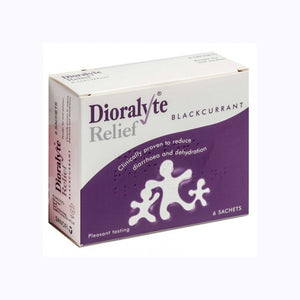
Dioralyte Relief Oral Dehydration Therapy - Blackcurrant - 6 Sachets
Dioralyte Relief Oral Dehydration Therapy - Blackcurrant - 6 Sachets
- ✔️ Restores lost electrolytes fast after diarrhoea or vomiting
- ✔️ Rice powder formula helps reduce stool frequency and output
- ✔️ Blackcurrant flavour improves palatability when feeling unwell
- ✔️ Suitable for adults and children over 12 months
- ✔️ Six sachets per pack for multi-day illness coverage
Price Checker
 Lowest price guarantee
 Includes FREE private prescription


Couldn't load pickup availability
What Are Oral Rehydration Sachets and How Do They Help?
When diarrhoea or vomiting strikes, your body loses far more than just water. It loses vital electrolytes — sodium, potassium, and chloride — that keep your cells functioning properly. That's where oral rehydration sachets come in. Dioralyte Relief Oral Rehydration Therapy in blackcurrant flavour is a clinically established way to replenish those lost fluids and salts quickly and safely. Each pack contains 6 sachets, making it a practical option to keep at home or take with you when travelling. You can browse our full range of diarrhoea treatments if you need additional support alongside rehydration therapy.
Dioralyte Relief is an over-the-counter medicine, meaning you don't need a prescription to buy it. It's been used widely across the UK for decades and is recommended by healthcare professionals as a first-line treatment for mild to moderate dehydration caused by acute diarrhoea. The blackcurrant flavour makes it more palatable — particularly useful when you're already feeling unwell and the last thing you want is a bland drink.
How Does Dioralyte Relief Work in the Body?
The science behind oral rehydration therapy is actually quite elegant. Rather than simply flooding the gut with water, Dioralyte Relief uses a glucose-sodium co-transport mechanism. Glucose molecules in the solution actively carry sodium ions across the intestinal wall and into the bloodstream — and water follows by osmosis. This process is significantly more efficient than drinking plain water, which can actually worsen electrolyte imbalance in some cases.
- Sodium chloride restores sodium levels lost through loose stools
- Potassium chloride replenishes potassium, which is critical for muscle and heart function
- Sodium citrate helps correct the mild acidosis that can accompany diarrhoea
- Rice powder (a key feature of the "Relief" formulation) helps to reduce stool output and frequency
- Glucose facilitates active absorption of sodium and water across the gut lining
The inclusion of rice powder is what distinguishes Dioralyte Relief from standard Dioralyte sachets. Clinical evidence suggests that rice-based oral rehydration solutions can reduce stool volume more effectively than glucose-based solutions alone, which may mean you feel better a little sooner.
Who Should Use Dioralyte Relief Blackcurrant Sachets?
Dioralyte Relief is suitable for a wide range of people experiencing dehydration due to diarrhoea or vomiting. It's particularly useful when symptoms are acute and you need to act quickly to prevent dehydration from worsening. That said, it's not appropriate for everyone — see the patient information section below for full contraindications.
- Adults and older children experiencing acute diarrhoea or vomiting
- People recovering from a stomach bug or gastroenteritis
- Travellers dealing with traveller's diarrhoea
- Individuals who need to maintain hydration during illness but struggle to keep fluids down
It is also commonly used alongside other supportive treatments. If you're managing broader digestive discomfort, our IBS and cramps collection may have additional products worth considering.
How Does Dioralyte Relief Compare to Standard Dioralyte?
| Feature | Dioralyte Relief (Blackcurrant) | Standard Dioralyte |
|---|---|---|
| Key active difference | Contains rice powder | Glucose-based only |
| Stool reduction | May reduce stool output | Primarily rehydrates |
| Flavour options | Blackcurrant | Blackcurrant, citrus, plain |
| Suitable for children | Yes (age-dependent dosing) | Yes (age-dependent dosing) |
Is Dioralyte Relief Suitable for Long-Term Use and How Should It Be Stored?
Dioralyte Relief is designed for short-term use during acute illness. It is not intended as a long-term supplement or daily drink. Once you've dissolved a sachet in 200ml of fresh drinking water, the solution should be used within one hour if kept at room temperature, or within 24 hours if refrigerated. Unused sachets should be stored below 25°C in a dry place, away from direct sunlight and out of reach of children.
If you're unsure whether oral rehydration sachets are right for your situation — for example, if you have kidney disease, are on a sodium-restricted diet, or are caring for a very young infant — always speak to a pharmacist or GP before use. You might also find it helpful to explore our sickness and nausea range for complementary products.
This product is a medicine. Speak to your doctor or pharmacist before using if you have an underlying medical condition or are taking other medicines.
Dioralyte Relief Oral Rehydration Therapy - Blackcurrant - 6 Sachets specifications
| Treatment category | Oral rehydration therapy |
| Mechanism of action | Glucose-sodium co-transport with rice powder to restore fluids and electrolytes |
| Effective for | Dehydration due to diarrhoea and vomiting |
| Suitable for | Adults and children (age-dependent dosing; consult pharmacist for infants) |
| Active ingredients | Sodium chloride, potassium chloride, sodium citrate, rice powder, glucose |
| Pack size | 6 sachets |
| UK classification | General Sale List (GSL) |
| Drug class | Oral rehydration salts |
| Preparation | Powder for oral solution |
| Route of administration | Oral |
Specifications of Dioralyte Relief Oral Rehydration Therapy - Blackcurrant - 6 Sachets
What Is Dioralyte Relief and What Is It Used For?
Dioralyte Relief Oral Rehydration Therapy is a medically recognised treatment for dehydration caused by acute diarrhoea and vomiting. It comes in a blackcurrant-flavoured powder that you dissolve in water to create a drink that replaces the fluids, salts, and glucose your body loses when you're ill. The NHS recommends oral rehydration solutions as the first-line approach to managing dehydration in both adults and children, ahead of sports drinks or plain water, which don't contain the right balance of electrolytes.
Each sachet contains a carefully balanced combination of sodium chloride, potassium chloride, sodium citrate, glucose, and rice powder. The rice powder component is specific to the "Relief" formulation and is included to help reduce the volume and frequency of loose stools, offering a dual benefit during acute illness.
What Do You Need to Know Before Using Dioralyte Relief?
Before using Dioralyte Relief, it's important to check whether it's appropriate for you. Do not use this product if any of the following apply:
- You have kidney failure or severely impaired kidney function
- You have an intestinal obstruction or ileus
- You are on a strictly sodium-restricted diet without medical supervision
- You have been diagnosed with a condition causing high blood potassium (hyperkalaemia)
- You are allergic to any of the ingredients listed on the packaging
Use with caution and seek medical advice first if you are caring for an infant under 12 months, if you have diabetes (due to the glucose content), or if you have heart disease or liver disease. Always read the full patient information leaflet supplied with the product.
Regarding drug interactions, Dioralyte Relief has no clinically significant interactions at standard OTC doses. However, be aware of the following:
- High potassium intake may be relevant if you take potassium-sparing diuretics (e.g. spironolactone) — speak to your GP
- Sodium content may be relevant if you are on ACE inhibitors or ARBs for blood pressure — check with your pharmacist
How Should You Use Dioralyte Relief Sachets?
Using Dioralyte Relief correctly is straightforward, but it's worth following the steps carefully to ensure the solution is prepared safely and effectively.
- Wash your hands thoroughly before handling the sachet
- Open one sachet and pour the contents into a clean cup or glass
- Add exactly 200ml of fresh drinking water (not hot water, as heat can degrade the ingredients)
- Stir well until the powder is completely dissolved
- Drink the solution slowly — sipping rather than gulping helps if you feel nauseous
- Prepare a fresh solution for each dose; do not store mixed solution for more than 1 hour at room temperature (or 24 hours in the fridge)
- Discard any unused solution after these time limits
| Indication | Age Group | Dose | Frequency |
|---|---|---|---|
| Acute diarrhoea / vomiting | Adults and children over 12 | 1–2 sachets | After each loose bowel motion |
| Acute diarrhoea / vomiting | Children 1–12 years | 1 sachet | After each loose bowel motion; consult pharmacist for weight-based guidance |
| Acute diarrhoea / vomiting | Infants under 12 months | As directed by GP or pharmacist only | Medical supervision required |
If you're travelling and want to be prepared, our travel health collection includes a range of products to keep you well on the go.
What Are the Possible Side Effects of Dioralyte Relief?
Dioralyte Relief is generally very well tolerated. Side effects are uncommon, but it's worth knowing what to look out for.
Common side effects:
- Nausea — particularly if the solution is drunk too quickly
- Vomiting — again, usually related to drinking speed rather than the product itself
Less common side effects:
- Bloating or abdominal discomfort
- Hypernatraemia (raised blood sodium) if used in excess without adequate plain fluid intake — more relevant in very young children
- Allergic reactions (rare) — symptoms may include skin rash, itching, swelling of the face or throat, or difficulty breathing
If you experience any signs of a serious allergic reaction, stop using the product immediately and seek emergency medical attention. For mild nausea, try sipping the solution more slowly or chilling it in the fridge before drinking.
How Should You Store Dioralyte Relief Sachets?
Proper storage keeps the sachets effective right up to their expiry date. Follow these guidelines:
- Store unopened sachets below 25°C in a dry place
- Keep away from direct sunlight and moisture
- Store out of sight and reach of children
- Once dissolved in water, use within 1 hour at room temperature or within 24 hours if refrigerated
- Do not freeze the prepared solution
- Do not use after the expiry date printed on the packaging
If you're stocking up your home medicine cabinet, our first aid collection has everything you need to be prepared for common illnesses and minor emergencies.
References
Written and reviewed by our qualified team
Your safety and success are our highest priorities. Our medical team rigorously evaluates every product and piece of advice we provide, ensuring you receive only the most effective, science-backed solutions available.
Frequently Asked Questions
Where can I buy Dioralyte Relief Blackcurrant sachets online in the UK?
You can buy Dioralyte Relief Oral Rehydration Therapy Blackcurrant 6 Sachets directly from Cured Pharmacy, a GPhC-registered UK online pharmacy, for just £4.55. No prescription is needed as it is a General Sale List medicine available over the counter. Simply add it to your basket and it will be dispatched promptly to your door.
How do oral rehydration sachets work in the body?
Oral rehydration sachets use a glucose-sodium co-transport mechanism in the intestinal wall to actively draw sodium and water back into the bloodstream, which is far more efficient than drinking plain water alone. The electrolytes in the solution — sodium, potassium, and chloride — replace those lost through diarrhoea or vomiting. Dioralyte Relief also contains rice powder, which may help reduce stool output during acute illness.
How do I prepare and use Dioralyte Relief sachets step by step?
Open one sachet and dissolve the entire contents in exactly 200ml of fresh, cool drinking water — never use hot water as it can affect the ingredients. Stir until fully dissolved, then sip the solution slowly rather than drinking it all at once, especially if you feel nauseous. Prepare a fresh solution for each dose and discard any unused solution after one hour at room temperature or 24 hours if refrigerated.
What is the correct dose of Dioralyte Relief for adults?
Adults and children over 12 years should take one to two sachets after each loose bowel motion. Continue until diarrhoea stops and you feel adequately rehydrated. The NHS advises drinking additional plain fluids alongside oral rehydration therapy to support recovery.
Can children use Dioralyte Relief Blackcurrant sachets?
Yes, Dioralyte Relief is suitable for children aged one year and over, with one sachet given after each loose bowel motion. For infants under 12 months, you must consult a GP or pharmacist before use, as dosing in very young babies requires medical supervision. Our baby and toddler collection also has other products suitable for young children.
What are the side effects of Dioralyte Relief sachets?
Side effects are uncommon but may include nausea or vomiting, particularly if the solution is consumed too quickly — sipping slowly usually resolves this. Rarely, some people may experience bloating or abdominal discomfort. If you notice any signs of an allergic reaction such as rash, facial swelling, or difficulty breathing, stop use immediately and seek emergency medical help.
How do I manage side effects of Dioralyte Relief?
If you feel nauseous after taking Dioralyte Relief, try chilling the prepared solution in the fridge before drinking, as a cooler temperature can make it easier to tolerate. Sip the drink slowly over 10–15 minutes rather than drinking it all at once. If vomiting occurs, wait 5–10 minutes and then try again with very small sips.
Who is eligible to use Dioralyte Relief sachets?
Dioralyte Relief is suitable for most adults and children over 12 months who are experiencing dehydration due to diarrhoea or vomiting. It is not suitable for people with kidney failure, intestinal obstruction, or hyperkalaemia without medical supervision. People with diabetes should be aware of the glucose content and may wish to speak to their pharmacist before use.
What happens if I miss a dose of Dioralyte Relief?
Dioralyte Relief is taken as needed after each loose bowel motion rather than on a fixed schedule, so there is no "missed dose" in the traditional sense. If you forget to take it after a bowel motion, simply take it as soon as you remember. Continue to drink plenty of fluids and take a sachet after each subsequent loose stool.
What are the alternatives to Dioralyte Relief sachets?
Alternatives include standard Dioralyte sachets (without rice powder), Electrolade, and other branded oral rehydration salts available in the UK. The NHS does not recommend homemade sugar-salt solutions as they are difficult to prepare accurately and may worsen dehydration if the proportions are wrong. You can explore our full diarrhoea treatments range for other options.
How long can you use Dioralyte Relief sachets for?
Dioralyte Relief is intended for short-term use during acute episodes of diarrhoea or vomiting only. If symptoms in adults persist beyond two to three days, or in children beyond 24–48 hours, you should seek medical advice promptly. Prolonged diarrhoea may indicate an underlying condition that requires investigation.
Is Dioralyte Relief safe to use during pregnancy?
Oral rehydration therapy is generally considered safe during pregnancy, but you should always consult your midwife, GP, or pharmacist before taking any medicine while pregnant. Dehydration during pregnancy can be serious, so seeking prompt medical advice if you are experiencing persistent vomiting or diarrhoea is important. Do not self-treat for extended periods without professional guidance.
Can I use Dioralyte Relief if I have diabetes?
Dioralyte Relief contains glucose, which may affect blood sugar levels in people with diabetes. If you have diabetes and need oral rehydration therapy, speak to your pharmacist or GP before use so they can advise on the most appropriate option and whether any blood glucose monitoring adjustments are needed. Do not avoid rehydration therapy altogether, as dehydration can also affect blood sugar control.
What is the best time to take Dioralyte Relief sachets?
There is no fixed time of day — you should take Dioralyte Relief after each loose bowel motion, whenever that occurs. The key is to start rehydrating as early as possible once diarrhoea begins, rather than waiting until you feel severely dehydrated. Consistent use throughout the day as symptoms occur gives the best results.
What does the latest research say about rice-based oral rehydration solutions?
Published clinical research has shown that rice-based oral rehydration solutions can reduce stool output and duration of diarrhoea compared to standard glucose-based solutions, particularly in adults with cholera-like diarrhoea. The World Health Organisation and NHS both recognise oral rehydration therapy as the cornerstone of diarrhoea management. Rice powder is thought to work by providing a slow-release source of glucose and by having a direct effect on reducing intestinal secretion.
Written and reviewed by our qualified team

Reviewed by:
Tarun Kumar
Superintendent/ Clinical Lead
📖 Find out more about our team of medical content authors and how we ensure the accuracy of our content with our content guidelines.
Content last updated: 14 Sep 2026
Other popular options


We’re a safe and
regulated UK service

Lowest Price Guarantee

We're convinced you won't find your treatment cheaper, but if you do we'll refund the difference.
Find out more
100% discreet packaging

Discreet, unbranded packaging for every order.
Find out more

Need help?
Talk to our friendly experts now


How our service works

Service setup

Discreet packaging

Express delivery