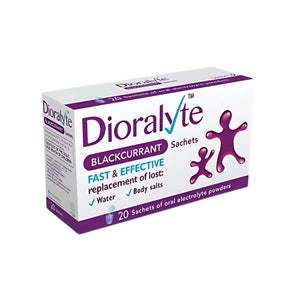
Dioralyte Blackcurrant Rehydration Sachets x20
- ✔️ Restores lost electrolytes — sodium, potassium, and chloride
- ✔️ Uses glucose-coupled transport for rapid fluid reabsorption
- ✔️ Suitable for adults, children, and infants with guidance
- ✔️ Blackcurrant flavour makes rehydration easier to tolerate
- ✔️ 20-sachet pack provides extended supply for acute illness
Price Checker
 Discreet, tracked delivery
 Includes FREE private prescription


Couldn't load pickup availability
What Are Dioralyte Blackcurrant Sachets?
When diarrhoea or vomiting strikes, your body loses far more than just water. It loses vital electrolytes — sodium, potassium, and chloride — that keep your cells functioning properly. That's where Dioralyte blackcurrant sachets come in. Each sachet contains a carefully balanced blend of glucose and electrolytes designed to restore what your body has lost, quickly and effectively. This 20-sachet pack gives you a reliable supply at home, whether you're managing a stomach bug yourself or keeping the family prepared.
Oral rehydration therapy (ORT) is the approach recommended by the NHS for treating dehydration caused by diarrhoea and vomiting in both adults and children. Dioralyte is one of the most widely used ORT products in the UK, available without a prescription. If you're also dealing with nausea alongside your symptoms, you might find our sickness and nausea range helpful for broader symptom relief.
How Do Dioralyte Sachets Work in the Body?
The science behind oral rehydration therapy is elegantly simple. Dioralyte uses a process called glucose-coupled sodium transport. Glucose molecules in the solution actively carry sodium ions across the intestinal wall. Water then follows by osmosis, meaning your body reabsorbs fluid far more efficiently than if you drank plain water alone.
- Glucose facilitates active sodium absorption in the small intestine
- Sodium absorption drives water reabsorption via osmosis
- Potassium and chloride are replenished to restore electrolyte balance
- Disodium hydrogen citrate helps correct the mild metabolic acidosis that can accompany diarrhoea
This mechanism is why plain water or sugary drinks are not adequate substitutes during acute diarrhoea — they simply don't contain the right balance of electrolytes to trigger efficient reabsorption.
Who Should Use Dioralyte Blackcurrant Sachets?
Dioralyte is suitable for a wide range of people experiencing fluid and electrolyte loss. It's particularly useful when symptoms are mild to moderate and you're managing recovery at home. That said, it's not a treatment for the underlying cause of diarrhoea — it simply supports your body while it recovers.
- Adults and children with acute diarrhoea or vomiting
- Infants (under medical supervision — always consult a GP or pharmacist first)
- People recovering from a stomach virus or food poisoning
- Travellers experiencing traveller's diarrhoea
How Do Dioralyte Sachets Compare to Plain Water or Sports Drinks?
| Feature | Dioralyte Blackcurrant Sachets | Plain Water | Sports Drink |
|---|---|---|---|
| Electrolyte replacement | Yes — sodium, potassium, chloride | No | Partial — often high sugar |
| Glucose-coupled transport | Yes | No | No (different glucose ratio) |
| NHS recommended for ORT | Yes | No | No |
| Suitable for children | Yes (with guidance) | Limited | Not recommended |
How Should You Store Dioralyte Sachets and Are They Suitable for Travel?
Store unopened sachets below 25°C in a dry place, away from direct sunlight. Once a sachet has been dissolved in water, use the solution within one hour if kept at room temperature, or within 24 hours if refrigerated. Never freeze the prepared solution. The compact sachet format makes Dioralyte blackcurrant sachets a practical choice for travel — they're lightweight, easy to pack, and don't require refrigeration until mixed. If you're heading abroad, our travel health range has everything else you might need for your trip.
This product is a medicine. Speak to your doctor or pharmacist before using if you have an underlying medical condition or are taking other medicines.
Dioralyte Blackcurrant Rehydration Sachets x20 specifications
| Treatment category | Oral rehydration therapy |
| Mechanism of action | Glucose-coupled sodium and water absorption in the small intestine |
| Effective for | Dehydration caused by diarrhoea, vomiting, or fever |
| Suitable for | Adults, children, and infants (infants under medical supervision) |
| Active ingredients | Sodium chloride, potassium chloride, disodium hydrogen citrate, glucose |
| Pack size | 20 sachets |
| UK classification | General Sale List (GSL) |
| Drug class | Oral rehydration salts (ORS) |
| Preparation | Powder for oral solution |
| Route of administration | Oral |
Specifications of Dioralyte Blackcurrant Rehydration Sachets x20
What Is Dioralyte and What Is It Used For?
Dioralyte Blackcurrant Rehydration Sachets are an oral rehydration therapy used to treat and prevent dehydration. Dehydration occurs when your body loses more fluid than it takes in — something that happens rapidly during bouts of diarrhoea or vomiting. Each sachet contains a precise combination of glucose, sodium chloride, potassium chloride, and disodium hydrogen citrate, which together restore the fluid and electrolyte balance your body needs to function normally.
The NHS recommends oral rehydration salts as the first-line treatment for dehydration caused by gastroenteritis in both adults and children. Dioralyte is not an anti-diarrhoeal medicine — it doesn't stop diarrhoea — but it protects your body from the harmful effects of fluid and salt loss while your immune system does its work. If you're also managing related digestive symptoms, our diarrhoea range includes additional products that may help.
What Do You Need to Know Before Using Dioralyte?
Before using Dioralyte, it's important to check whether it's appropriate for you. While it is generally well tolerated, there are some situations where you should seek medical advice first.
Do not use Dioralyte if you have:
- Kidney failure or severely reduced kidney function
- Intestinal obstruction or ileus (blocked bowel)
- An allergy to any of the ingredients, including the blackcurrant flavouring
- Uncontrolled diabetes (due to the glucose content — seek medical advice)
Use with caution and speak to a pharmacist or GP if you:
- Are giving Dioralyte to an infant under 12 months
- Have been vomiting continuously and cannot keep fluids down
- Have signs of severe dehydration (sunken eyes, no urination, extreme thirst, confusion)
- Are taking medicines that affect kidney function or electrolyte levels
Known drug interactions:
- No clinically significant interactions are documented at standard doses
- If you are taking medicines for heart conditions or kidney disease, consult your GP before use
How Should You Use Dioralyte Sachets?
Always follow the instructions on the packaging or as directed by your pharmacist. Preparing the solution correctly is essential — using too little or too much water will alter the electrolyte concentration and reduce effectiveness.
- Wash your hands thoroughly before preparing the solution
- Pour 200ml of fresh drinking water (not sparkling) into a clean glass or cup
- Empty one sachet into the water
- Stir well until the powder is completely dissolved
- Drink the solution slowly — sip it rather than gulping
- Discard any unused solution after one hour (or within 24 hours if refrigerated)
- Do not add to milk, juice, or any other liquid
| Age Group | Dose per Episode | Frequency | Notes |
|---|---|---|---|
| Adults and children over 12 | 1–2 sachets | After each loose bowel movement | Adjust to fluid loss |
| Children 1–12 years | 1 sachet | After each loose bowel movement | Seek pharmacist advice |
| Infants under 12 months | As directed by GP | As directed by GP | Always consult a doctor first |
What Are the Possible Side Effects of Dioralyte?
Dioralyte is generally very well tolerated. Side effects are uncommon, but as with any medicine, some people may experience them. If you notice anything unusual, stop use and speak to your pharmacist or GP.
Common side effects:
- Nausea — particularly if the solution is drunk too quickly
- Vomiting — usually mild and related to drinking speed
Less common side effects:
- Bloating or abdominal discomfort
- Allergic reactions to flavouring ingredients (rare)
- Electrolyte imbalance if used incorrectly or in excessive quantities
If you experience signs of a serious allergic reaction — such as swelling of the face, lips, or throat, difficulty breathing, or a widespread rash — stop use immediately and call 999 or go to your nearest A&E.
How Should You Store Dioralyte Sachets?
Correct storage keeps the sachets effective right up to their expiry date. Always check the expiry date printed on the packaging before use.
- Store unopened sachets below 25°C in a dry place
- Keep away from direct sunlight and moisture
- Keep out of the reach and sight of children
- Once dissolved, use the solution within one hour at room temperature
- If refrigerated (2–8°C), use the prepared solution within 24 hours
- Do not freeze the prepared solution
- Do not use sachets after the expiry date printed on the pack
If you're building a home medicine cabinet, it's worth pairing Dioralyte with other essentials from our first aid range so you're prepared for common illnesses at home.
References
Written and reviewed by our qualified team
Your safety and success are our highest priorities. Our medical team rigorously evaluates every product and piece of advice we provide, ensuring you receive only the most effective, science-backed solutions available.
Frequently Asked Questions
Where can I buy Dioralyte Blackcurrant Sachets online in the UK?
You can buy Dioralyte Blackcurrant Rehydration Sachets x20 directly from Cured Pharmacy, a GPhC-registered UK online pharmacy. They are available over the counter without a prescription and are dispatched quickly to your door. No GP visit is needed for this product.
How do Dioralyte sachets work in the body?
Dioralyte uses glucose-coupled sodium transport — glucose molecules actively carry sodium ions across the intestinal wall, and water follows by osmosis. This process is far more efficient than drinking plain water alone, which is why oral rehydration salts are the NHS-recommended approach for treating dehydration from diarrhoea. The electrolytes in each sachet also help restore potassium and chloride levels lost during illness.
How do I prepare and use Dioralyte sachets correctly?
Dissolve one sachet in exactly 200ml of fresh drinking water — not sparkling water, milk, or juice — and stir until fully dissolved. Sip the solution slowly rather than drinking it all at once, as gulping can trigger nausea. Use the prepared solution within one hour at room temperature, or within 24 hours if kept in the fridge.
What is the correct dose of Dioralyte for adults?
Adults and children over 12 should take one to two sachets dissolved in 200ml of water after each loose bowel movement. The total number of sachets used each day should reflect the amount of fluid being lost. If you're unsure about your intake, speak to a pharmacist for personalised guidance.
Can children and babies use Dioralyte Blackcurrant Sachets?
Yes, Dioralyte is suitable for children, but dosing varies by age and weight. Children aged one to twelve should take one sachet after each loose bowel movement. For infants under 12 months, always consult a GP or pharmacist before use, as incorrect dosing in very young babies can be harmful. You can also browse our baby and toddler range for other age-appropriate health products.
What are the side effects of Dioralyte sachets?
Side effects are uncommon but can include nausea or vomiting, usually if the solution is drunk too quickly. Bloating or mild abdominal discomfort has also been reported in some users. If you experience any signs of an allergic reaction — such as facial swelling, difficulty breathing, or a rash — stop use immediately and seek emergency medical help.
Who should not use Dioralyte sachets?
Dioralyte should not be used by people with kidney failure, bowel obstruction, or a known allergy to any of its ingredients. People with uncontrolled diabetes should seek medical advice before use due to the glucose content. If you are severely dehydrated — showing signs such as no urination, sunken eyes, or confusion — seek urgent medical attention rather than self-treating.
How long can you use Dioralyte sachets for?
Dioralyte is intended for short-term use during acute episodes of diarrhoea or dehydration. In adults, if symptoms have not improved within 24 to 48 hours, you should seek medical advice. For children, especially young ones, consult a GP sooner if there is no improvement or if symptoms worsen at any point.
What happens if I accidentally use too much Dioralyte?
Taking more sachets than recommended could potentially cause electrolyte imbalance, particularly elevated sodium levels (hypernatraemia). If you think you or someone else has taken too much, contact NHS 111 or your nearest A&E for advice. Always follow the dosing instructions on the packaging and do not exceed the recommended amount without medical guidance.
Can I use Dioralyte if I am pregnant or breastfeeding?
Dioralyte is generally considered safe to use during pregnancy and breastfeeding, as it simply replaces fluids and electrolytes. However, if you are pregnant and experiencing persistent vomiting or diarrhoea, it's always best to speak to your midwife or GP before self-treating. Staying well hydrated is particularly important during pregnancy.
Is Dioralyte suitable for people with diabetes?
Each Dioralyte sachet contains glucose, which can affect blood sugar levels. People with well-controlled diabetes may be able to use it under medical supervision, but those with uncontrolled diabetes should consult their GP or diabetes team first. If you use glucose monitoring equipment, our diabetes monitoring range can help you keep track of your levels during illness.
What are the alternatives to Dioralyte sachets?
Other oral rehydration salt products available in the UK include Electrolade and Hydralyte, which work on the same glucose-coupled transport principle. Plain water, sports drinks, and fruit juices are not adequate substitutes, as they do not contain the correct electrolyte balance. Dioralyte blackcurrant sachets remain one of the most widely recommended ORT options by UK pharmacists and NHS clinicians.
Can I use Dioralyte for a hangover?
While Dioralyte is not licensed specifically for hangover recovery, alcohol consumption does cause dehydration and electrolyte loss, so some people use oral rehydration salts in this context. It is not harmful to do so in healthy adults, but Dioralyte is primarily designed and clinically indicated for dehydration caused by diarrhoea and vomiting. Drinking water and eating a balanced meal remains the most straightforward approach to hangover recovery.
What is the best time to take Dioralyte sachets?
There is no fixed time of day — Dioralyte should be taken after each loose bowel movement or episode of vomiting to replace fluids as they are lost. Starting rehydration early, as soon as symptoms begin, helps prevent dehydration from becoming severe. Consistent sipping throughout the day is more effective than drinking large amounts infrequently.
What does the latest research say about oral rehydration therapy?
Oral rehydration therapy has been endorsed by the World Health Organisation and NHS for decades as the safest and most effective treatment for mild to moderate dehydration from acute diarrhoea. Research consistently shows that ORT reduces the need for intravenous fluids and hospital admission in both children and adults. The glucose-electrolyte formulation used in products like Dioralyte is based on well-established physiological principles that have not changed significantly since ORT was first developed.
Written and reviewed by our qualified team

Reviewed by:
Tarun Kumar
Superintendent/ Clinical Lead
📖 Find out more about our team of medical content authors and how we ensure the accuracy of our content with our content guidelines.
Content last updated: 14 Sep 2026
Other popular options


We’re a safe and
regulated UK service

100% discreet packaging

Discreet, unbranded packaging for every order.

Need help?
Talk to our friendly experts now


How our service works

Service setup

Discreet packaging

Express delivery