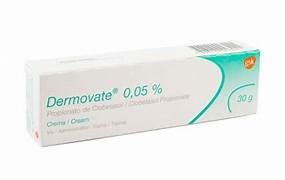
Dermovate (Clobetasol Propionate) 0.05% Cream 30g
Dermovate (Clobetasol Propionate) 0.05% Cream 30g
- ✔️ Treats severe eczema, psoriasis, and lichen planus effectively
- ✔️ Very potent clobetasol propionate reduces inflammation rapidly
- ✔️ Suitable for adults and children over one year of age
- ✔️ Cream formulation ideal for moist or weeping inflamed skin
- ✔️ Short-course treatment delivers fast, targeted symptom relief
Price Checker
 Lowest price guarantee
 Includes FREE private prescription


Couldn't load pickup availability
What Is Clobetasol Propionate Cream and What Does It Treat?
If you're dealing with a stubborn, severe skin flare that milder treatments simply haven't shifted, clobetasol propionate cream may be what your skin needs. Dermovate 0.05% cream is a potent topical corticosteroid used to manage severe inflammatory skin conditions, including recalcitrant eczema, psoriasis, and lichen planus. It belongs to the highest-potency class of topical steroids available in the UK and is indicated when other treatments have failed to provide adequate relief. You can explore our full range of creams and ointments if you're looking for alternatives or complementary products.
Dermovate is manufactured by GSK and has been used in clinical practice for decades. The active ingredient, clobetasol propionate at 0.05%, is classified as a very potent corticosteroid by the British National Formulary. It is available in a 30g tube, which is a standard pack size for short-course topical steroid treatment.
How Does Dermovate Cream Work on Inflamed Skin?
Dermovate works by penetrating the outer layers of the skin and binding to glucocorticoid receptors within skin cells. This triggers a cascade of anti-inflammatory effects that reduce the redness, swelling, and itching that characterise severe inflammatory skin conditions. Here's a simplified breakdown of the mechanism:
- Clobetasol propionate binds to intracellular glucocorticoid receptors in skin cells.
- This suppresses the production of pro-inflammatory cytokines and mediators such as prostaglandins and leukotrienes.
- Blood vessel constriction (vasoconstriction) reduces redness and swelling at the site of inflammation.
- Reduced immune cell activity at the skin surface helps calm the overactive immune response seen in conditions like eczema and psoriasis.
The result is a noticeable reduction in symptoms — often within a few days of starting treatment. That said, it's important to use the cream exactly as directed and not to apply it more frequently than recommended.
Who Is Dermovate Cream Suitable For?
Dermovate cream is intended for adults and children over one year of age, though it should only be used in children under close medical supervision. It is suitable for people who have a confirmed diagnosis of a severe inflammatory skin condition that has not responded adequately to less potent topical steroids. It is not a first-line treatment — your doctor or pharmacist will typically recommend trying a milder steroid first.
Dermovate cream may be appropriate for you if:
- You have severe eczema (atopic dermatitis) that hasn't responded to moderate-potency steroids.
- You have plaque psoriasis on the body (not the face or scalp).
- You have lichen planus or discoid lupus erythematosus confirmed by a healthcare professional.
- You are an adult or supervised child over one year of age with no contraindications.
How Does Dermovate Cream Compare to Other Topical Steroids?
| Feature | Dermovate 0.05% Cream | Betnovate 0.1% Cream |
|---|---|---|
| Active ingredient | Clobetasol propionate | Betamethasone valerate |
| Potency class | Very potent | Potent |
| Typical use duration | Up to 4 weeks | Up to 4 weeks |
| Suitable for face? | No | No (without medical advice) |
Is Dermovate Cream Stored Correctly and Who Should Avoid It?
Store Dermovate cream below 30°C and keep it out of reach of children. Do not freeze the product. Once opened, use within the period indicated on the packaging. Avoid contact with the eyes, and never apply to broken, infected, or ulcerated skin without specific medical guidance. If you're also managing other skin concerns, our skin care collection includes a range of supportive products that may complement your treatment plan.
Certain groups should avoid using clobetasol propionate cream without explicit medical advice. This includes people with rosacea, acne vulgaris, perioral dermatitis, or any untreated skin infection (bacterial, fungal, or viral). Pregnant or breastfeeding women should consult their doctor before use, as systemic absorption — though low — is possible with very potent steroids applied over large areas or under occlusion.
This product is a medicine. Speak to your doctor or pharmacist before using if you have an underlying medical condition or are taking other medicines.
Dermovate (Clobetasol Propionate) 0.05% Cream 30g specifications
| Treatment category | Inflammatory skin conditions |
| Mechanism of action | Topical corticosteroid — suppresses inflammatory mediators via glucocorticoid receptor binding |
| Effective for | Severe eczema, psoriasis, lichen planus, discoid lupus erythematosus |
| Suitable for | Adults and children over 1 year (children under medical supervision only) |
| Active ingredient | Clobetasol propionate 0.05% |
| Pack size | 30g |
| Strength | 0.05% |
| UK classification | POM (Prescription Only Medicine) |
| Drug class | Very potent topical corticosteroid |
| Preparation | Cream |
| Route of administration | Topical (cutaneous) |
Specifications of Dermovate (Clobetasol Propionate) 0.05% Cream 30g
What Is Dermovate Cream and What Is It Used For?
Dermovate cream contains clobetasol propionate 0.05%, a very potent topical corticosteroid. It is used to treat severe inflammatory skin conditions in adults and children over one year of age. Conditions it is commonly prescribed for include severe atopic eczema, plaque psoriasis, lichen planus, and discoid lupus erythematosus. It is intended for short-term use only and should be applied to the affected area of skin — not to the face, groin, or underarms unless specifically directed by a doctor.
What Do You Need to Know Before Using Dermovate Cream?
Before applying Dermovate cream, it's essential to be aware of the following contraindications and warnings:
- Do not use if you are allergic to clobetasol propionate or any other ingredient in the cream.
- Do not apply to skin affected by rosacea, acne vulgaris, or perioral dermatitis.
- Do not use on infected skin (bacterial, fungal, or viral) without treating the infection first.
- Do not apply to the face, scalp, groin, or axillae unless directed by a doctor.
- Do not use under occlusive dressings without medical supervision.
- Avoid use in children under one year of age.
- Use with caution during pregnancy and breastfeeding — consult your doctor first.
- Do not use near the eyes or on broken or ulcerated skin.
Regarding drug interactions, topical clobetasol propionate has limited systemic absorption under normal use. However, be aware of the following:
- Using other corticosteroid-containing products at the same time may increase the risk of systemic side effects.
- Ritonavir and itraconazole may increase plasma concentrations of corticosteroids — inform your doctor if you take these medicines.
How Should You Use Dermovate Cream Correctly?
Always use Dermovate cream exactly as your doctor or pharmacist has told you. The following steps outline correct application:
- Wash and dry your hands thoroughly before applying the cream.
- Apply a thin layer of cream to the affected area of skin only.
- Gently rub the cream in until it is absorbed.
- Wash your hands again after application (unless your hands are the area being treated).
- Do not cover the treated area with an airtight dressing unless your doctor has told you to.
- Do not apply more than the recommended amount — more is not better with potent steroids.
| Indication | Age Group | Dose | Frequency |
|---|---|---|---|
| Severe eczema / psoriasis | Adults | Thin layer to affected area | Once or twice daily |
| Severe eczema / psoriasis | Children over 1 year | Thin layer to affected area | Once daily (under medical supervision) |
The total weekly dose should not exceed 50g in adults. Treatment should be limited to a maximum of four consecutive weeks. If you're also managing related skin concerns, you may find our skin care range helpful for supporting your skin barrier between flares.
What Are the Possible Side Effects of Dermovate Cream?
Like all medicines, Dermovate cream can cause side effects, although not everyone gets them. The risk of side effects increases with prolonged use, large surface area application, or use under occlusion.
Common side effects (may affect up to 1 in 10 people):
- Burning, stinging, or itching at the application site
- Skin dryness or irritation
- Folliculitis (inflammation of hair follicles)
Less common side effects (may affect up to 1 in 100 people):
- Skin thinning (atrophy) with prolonged use
- Stretch marks (striae)
- Telangiectasia (visible small blood vessels)
- Hypopigmentation (lightening of the skin)
- Adrenal suppression (with extensive or prolonged use)
- Cushing's syndrome features (with excessive systemic absorption)
- Contact dermatitis (allergic reaction to the cream)
If you notice any worsening of your skin condition, signs of infection, or unexpected changes to your skin, stop using the cream and contact your GP or pharmacist promptly. For other skin-related concerns, our athletes foot and fungal infections section may be relevant if you suspect a secondary infection.
How Should You Store Dermovate Cream?
- Store below 30°C.
- Do not freeze.
- Keep the tube tightly closed when not in use.
- Keep out of the sight and reach of children.
- Do not use after the expiry date printed on the tube and carton.
- Do not dispose of medicines via wastewater or household waste — return unused product to your pharmacist.
References
Written and reviewed by our qualified team
Your safety and success are our highest priorities. Our medical team rigorously evaluates every product and piece of advice we provide, ensuring you receive only the most effective, science-backed solutions available.
Frequently Asked Questions
Where can I buy Dermovate cream online in the UK?
You can buy Dermovate clobetasol propionate cream from Cured Pharmacy, a GPhC-registered UK online pharmacy. A short clinical consultation is required to confirm the product is appropriate for your condition. This ensures your safety and complies with UK pharmacy regulations for prescription-strength topical steroids.
How does Dermovate cream work in the body?
Dermovate cream works by binding to glucocorticoid receptors in skin cells, which suppresses the production of inflammatory chemicals such as prostaglandins and cytokines. This reduces redness, swelling, and itching at the site of application. The vasoconstriction effect also helps calm the visible signs of inflammation relatively quickly.
How do I apply Dermovate cream step by step?
Wash your hands, then apply a thin layer of cream to the affected skin area only, rubbing it in gently until absorbed. Wash your hands again afterwards unless your hands are the area being treated. Do not cover the area with an airtight dressing unless your doctor has specifically instructed you to do so.
How often should I apply Dermovate cream each day?
Adults should apply Dermovate cream once or twice daily to the affected area. In children over one year of age, once-daily application under medical supervision is typically recommended. Always follow the instructions given by your doctor or pharmacist, and do not apply more frequently than advised.
What are the side effects of Dermovate cream and how do I manage them?
Common side effects include burning, stinging, or itching at the application site, which often settle as your skin adjusts. With prolonged use, more serious effects such as skin thinning, stretch marks, or adrenal suppression can occur — this is why treatment should be limited to four weeks. If you notice any unexpected skin changes, stop using the cream and speak to your GP or pharmacist promptly.
Can I use Dermovate cream on my face?
No — Dermovate cream should not be applied to the face unless a doctor has specifically directed you to do so. Facial skin is thinner and more sensitive, making it far more susceptible to side effects from very potent corticosteroids, including skin thinning and telangiectasia. If you have a facial skin condition, speak to your GP about a more appropriate treatment.
Who is eligible to use Dermovate cream?
Dermovate cream is suitable for adults and children over one year of age who have a severe inflammatory skin condition that has not responded to less potent topical steroids. It is not suitable for people with rosacea, acne, perioral dermatitis, or untreated skin infections. A healthcare professional should confirm your suitability before you start treatment.
What happens if I miss a dose of Dermovate cream?
If you forget to apply Dermovate cream at your usual time, apply it as soon as you remember — unless it is nearly time for your next application, in which case skip the missed dose. Do not apply a double amount to make up for a missed application. Consistency matters, but doubling up increases the risk of side effects without additional benefit.
How long can you use Dermovate cream for?
Dermovate cream should not be used continuously for more than four consecutive weeks without a medical review. Prolonged use significantly increases the risk of skin thinning, adrenal suppression, and other corticosteroid-related side effects. If your condition has not improved after four weeks, return to your GP for reassessment rather than continuing treatment independently.
What is the difference between Dermovate cream and Dermovate ointment?
Both formulations contain clobetasol propionate 0.05% and are equally potent, but they suit different skin types. The cream is water-based and better suited to moist, weeping, or inflamed skin, while the ointment is greasier and more occlusive, making it preferable for dry, thickened, or scaly skin. Your pharmacist or doctor can advise which formulation is more appropriate for your condition.
Is Dermovate cream safe to use during pregnancy?
Dermovate cream should only be used during pregnancy if the potential benefit outweighs the risk, and only under medical supervision. Very potent topical corticosteroids can be absorbed systemically, particularly when applied over large areas or under occlusion, which may pose a risk to the developing baby. Always consult your doctor or midwife before using any potent steroid cream if you are pregnant or planning to become pregnant.
Can Dermovate cream be used on children?
Dermovate cream can be used in children over one year of age, but only under close medical supervision and for the shortest possible duration. Children have a higher skin surface area to body weight ratio, which increases the risk of systemic absorption and adrenal suppression. It should never be used in infants under one year of age.
What are the alternatives to Dermovate cream?
Alternatives include other topical corticosteroids of varying potency, such as Betnovate (betamethasone valerate 0.1%, potent) or Eumovate (clobetasone butyrate 0.05%, moderate potency). For conditions like eczema, non-steroidal options such as tacrolimus or pimecrolimus ointments may also be considered. You can browse our creams and ointments collection for a range of topical treatment options.
Can I use Dermovate cream if I have a skin infection?
No — you should not apply Dermovate cream to infected skin without first treating the infection. Topical corticosteroids can suppress the immune response in the skin, which may worsen bacterial, fungal, or viral infections. If you suspect your skin is infected, speak to your GP before using Dermovate. Our athletes foot and fungal infections section may be helpful if you're dealing with a fungal skin condition alongside inflammation.
What are the latest findings on long-term topical steroid use?
Recent clinical guidance continues to emphasise that very potent topical corticosteroids like clobetasol propionate should be used for the shortest effective duration to minimise the risk of skin atrophy, adrenal suppression, and topical steroid withdrawal syndrome. The NHS and MHRA have both highlighted the importance of using the lowest effective potency for the shortest time necessary. Always follow your prescriber's instructions and attend regular reviews if you require ongoing treatment.
Written and reviewed by our qualified team

Reviewed by:
Tarun Kumar
Superintendent/ Clinical Lead
📖 Find out more about our team of medical content authors and how we ensure the accuracy of our content with our content guidelines.
Content last updated: 14 Sep 2026
Other popular options


We’re a safe and
regulated UK service

Lowest Price Guarantee

We're convinced you won't find your treatment cheaper, but if you do we'll refund the difference.
Find out more
100% discreet packaging

Discreet, unbranded packaging for every order.
Find out more

Need help?
Talk to our friendly experts now


How our service works

Service setup

Discreet packaging

Express delivery