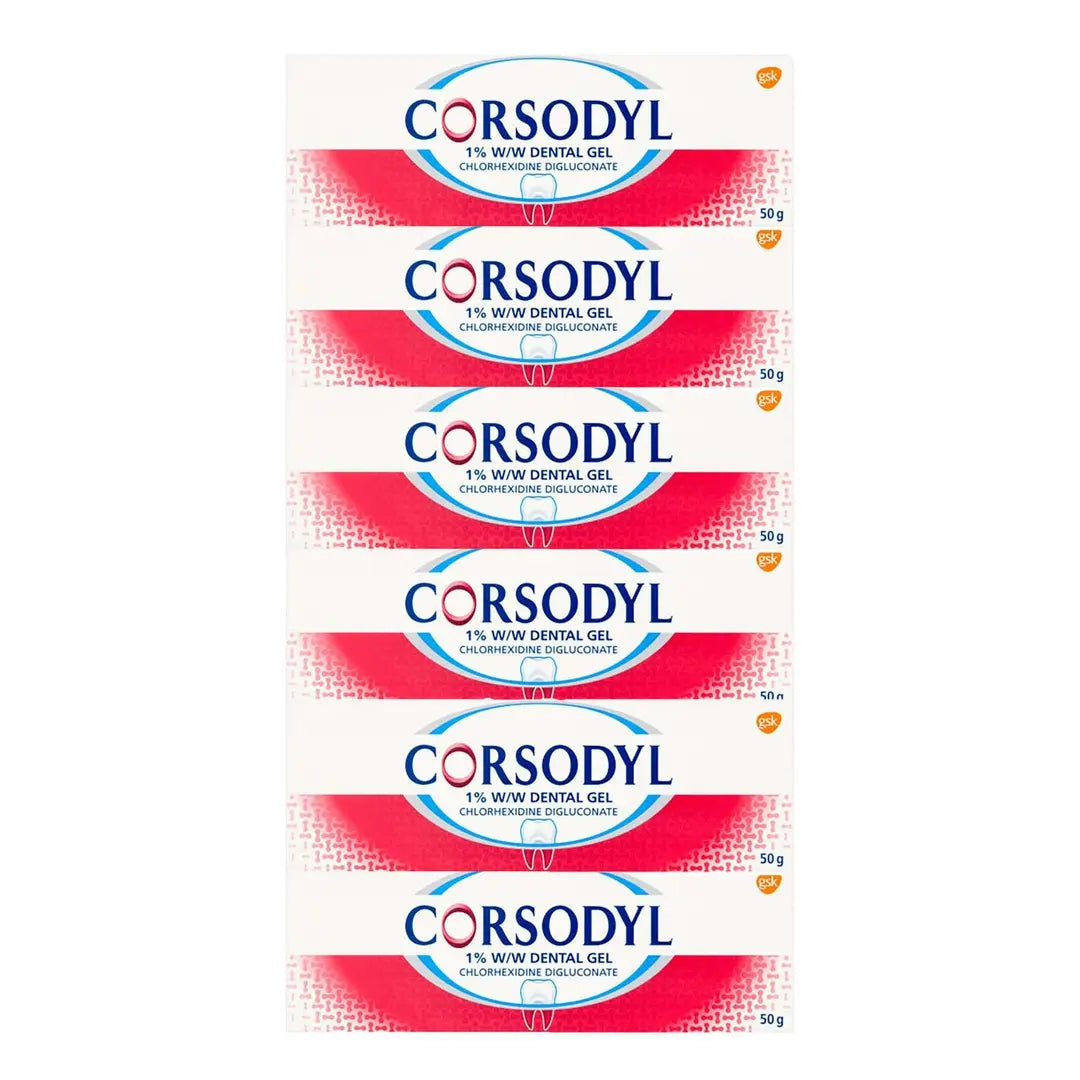
Corsodyl 1% W/W Gum Problem Treatment Dental Gel - 50g
Corsodyl 1% W/W Gum Problem Treatment Dental Gel - 50g
- ✔️ Targets gum disease bacteria directly at the source
- ✔️ Reduces bleeding and inflamed gums with twice-daily use
- ✔️ Chlorhexidine gel stays in contact longer than mouthwash
- ✔️ Suitable for adults and young people aged 12 and over
- ✔️ Treats mouth ulcers and minor oral infections effectively
Price Checker
 Lowest price guarantee
 Includes FREE private prescription


Couldn't load pickup availability
Is Corsodyl Dental Gel Right for Your Gums?
Gum problems are more common than most people realise. Bleeding when you brush, soreness around the gumline, or persistent bad breath — these are signs your gums may need some targeted attention. Corsodyl dental gel is a clinically established, over-the-counter treatment containing 1% chlorhexidine digluconate, an antiseptic ingredient with a long track record in managing gum disease and oral infections. At just £4.99 for a 50g tube, it's an accessible option for anyone looking to take their oral health seriously. You can explore the full range of dental products at Cured Pharmacy if you're looking for complementary care alongside this gel.
Gum disease — known clinically as gingivitis in its early stages — affects a significant proportion of UK adults. The NHS notes that most adults in the UK have some degree of gum disease, and it's one of the leading causes of tooth loss. Catching it early and treating it with an appropriate antiseptic gel can make a real difference to your long-term dental health.
How Does Corsodyl Dental Gel Work on Gum Disease?
The active ingredient, chlorhexidine digluconate, is a broad-spectrum antiseptic. It works by targeting the bacterial cell membranes responsible for plaque formation and gingival inflammation. Here's how it acts:
- Binds to bacterial cell walls and disrupts their integrity, killing the bacteria
- Reduces plaque accumulation on tooth surfaces and along the gumline
- Decreases gingival inflammation, helping to stop bleeding gums
- Creates a residual antibacterial effect that continues working after application
Unlike a mouthwash, the gel formulation allows you to apply the treatment directly to the affected area, which means the active ingredient stays in contact with the gum tissue for longer. That targeted delivery is particularly useful for localised gum problems or mouth ulcers.
Who Should Use Corsodyl Dental Gel?
This gel is suitable for adults and young people aged 12 and over who are experiencing mild to moderate gum problems. It's particularly helpful if you've noticed early warning signs of gum disease or have been advised by your dentist to use an antiseptic oral product as part of your treatment plan.
- Adults with bleeding or inflamed gums (gingivitis)
- People recovering from dental procedures or oral surgery
- Those with mouth ulcers or minor oral infections
- Patients who wear dentures and experience gum irritation
It is not a substitute for regular brushing, flossing, or professional dental cleaning. Think of it as a short-term therapeutic aid rather than a long-term replacement for good oral hygiene habits.
How Does Corsodyl Dental Gel Compare to Corsodyl Mouthwash?
| Feature | Corsodyl Dental Gel 1% | Corsodyl Mouthwash 0.2% |
|---|---|---|
| Active ingredient concentration | 1% chlorhexidine digluconate | 0.2% chlorhexidine digluconate |
| Application method | Direct topical application to gums | Rinsing around the mouth |
| Best suited for | Localised gum problems, ulcers | General oral antisepsis, wider coverage |
| Contact time with tissue | Longer — gel stays in place | Shorter — rinsed away |
How Should You Store Corsodyl Dental Gel?
Store your tube of corsodyl dental gel below 25°C, away from direct sunlight and heat sources. Keep the cap tightly closed when not in use, and always store it out of the reach and sight of children. Do not use the gel after the expiry date printed on the tube or carton. If you're managing multiple health products at home, our oral health collection includes a range of products that can be stored and used alongside this gel safely.
This product is a medicine. Speak to your doctor or pharmacist before using if you have an underlying medical condition or are taking other medicines.
Corsodyl 1% W/W Gum Problem Treatment Dental Gel 50g specifications
| Treatment category | Oral antiseptic / Gum disease treatment |
| Mechanism of action | Disrupts bacterial cell membranes; broad-spectrum antiseptic |
| Effective against | Gingivitis, plaque bacteria, mouth ulcers, minor oral infections |
| Suitable for | Adults and children aged 12 and over |
| Active ingredient | Chlorhexidine digluconate 1% w/w |
| Pack size | 50g tube |
| Strength | 1% w/w |
| UK classification | General Sale List (GSL) |
| Drug class | Antiseptic (biguanide) |
| Preparation | Topical dental gel |
| Route of administration | Topical (gingival/oral mucosa) |
Specifications of Corsodyl 1% W/W Gum Problem Treatment Dental Gel 50g
What Is Corsodyl Dental Gel and What Is It Used For?
Corsodyl 1% W/W Gum Problem Treatment Dental Gel is a topical antiseptic gel used to treat and prevent gum disease (gingivitis), mouth ulcers, and minor oral infections. Its active ingredient, chlorhexidine digluconate 1% w/w, is a well-established antiseptic used widely in dentistry. The gel is applied directly to the gums or affected area of the mouth, making it particularly effective for localised treatment. It is available over the counter without a prescription and is classified as a General Sale List (GSL) medicine in the UK.
The NHS recognises gum disease as a very common condition, and early-stage gingivitis is often reversible with good oral hygiene and appropriate antiseptic treatment. Corsodyl dental gel is one of the recommended options for short-term management of these conditions.
What Do You Need to Know Before Using Corsodyl Dental Gel?
Before using this gel, read the following carefully. Do not use Corsodyl dental gel if any of the following apply to you:
- You are allergic to chlorhexidine digluconate or any other ingredient in the gel
- You have had a previous severe allergic reaction (anaphylaxis) to chlorhexidine
- You are under 12 years of age
Take extra care and speak to your pharmacist or dentist first if:
- You are pregnant or breastfeeding
- You have open wounds or ulcers in the mouth that are worsening
- You have a known sensitivity to any oral antiseptic products
- You are using the gel in or near the eyes — avoid contact entirely
Regarding drug interactions, chlorhexidine at topical oral doses has no clinically significant known interactions with systemic medicines. However:
- Do not use Corsodyl dental gel at the same time as other oral antiseptic products without dental advice
- Avoid using immediately after toothpaste — rinse your mouth with water first, as some toothpaste ingredients can reduce the effectiveness of chlorhexidine
How Should You Use Corsodyl Dental Gel?
Always use this product exactly as described in the patient information leaflet or as directed by your dentist or pharmacist. Here is a step-by-step guide:
- Brush your teeth as normal, then rinse your mouth thoroughly with water
- Wait a few minutes before applying the gel — do not apply immediately after toothpaste
- Squeeze a small amount of gel (approximately 1cm) onto a clean fingertip or soft toothbrush
- Apply gently directly to the affected gum area or mouth ulcer
- Do not rinse your mouth, eat, or drink for at least 30 minutes after application
- Repeat twice daily — morning and evening — for the duration of treatment
| Indication | Age Group | Dose | Frequency |
|---|---|---|---|
| Gingivitis / gum disease | Adults & children 12+ | Small amount (~1cm) applied to gums | Twice daily |
| Mouth ulcers | Adults & children 12+ | Small amount applied directly to ulcer | Twice daily |
| Post-dental procedure care | Adults | As directed by dentist | As directed |
If you're also managing other aspects of your health alongside your oral care, you might find our vitamins and supplements range useful — certain nutrients such as vitamin C and zinc play a role in supporting gum tissue health.
What Are the Possible Side Effects of Corsodyl Dental Gel?
Like all medicines, Corsodyl dental gel can cause side effects, although not everyone experiences them. Knowing what to look out for helps you use the product safely.
Common side effects (may affect up to 1 in 10 people):
- Brown staining of teeth, tongue, and dental restorations — this is the most frequently reported effect
- Temporary alteration in taste sensation
- Mild irritation or soreness of the oral mucosa
Less common side effects (may affect up to 1 in 100 people):
- Swelling of the salivary glands (parotid gland enlargement)
- Mouth ulcers or worsening of existing ulcers in rare cases
- Desquamation (peeling) of the oral mucosa
Serious allergic reactions to chlorhexidine are rare but have been reported. Stop using the gel immediately and seek urgent medical attention if you experience swelling of the face, lips, or throat, difficulty breathing, or a sudden rash. If you experience any side effects not listed here, report them via the MHRA Yellow Card scheme.
How Should You Store Corsodyl Dental Gel?
- Store below 25°C in a cool, dry place
- Keep away from direct sunlight and heat sources
- Keep the cap tightly closed after each use
- Store out of the reach and sight of children
- Do not use after the expiry date printed on the tube or carton
- Do not dispose of medicines via wastewater or household waste — return unused product to your pharmacy
For other health products you may need to store safely at home, browse our first aid collection for a range of essentials.
References
Written and reviewed by our qualified team
Your safety and success are our highest priorities. Our medical team rigorously evaluates every product and piece of advice we provide, ensuring you receive only the most effective, science-backed solutions available.
Frequently Asked Questions
Where can I buy Corsodyl dental gel online in the UK?
You can buy Corsodyl dental gel online from Cured Pharmacy, a GPhC-registered UK online pharmacy, for just £4.99 per 50g tube. It is available without a prescription as an over-the-counter medicine. Browse our full dental products collection for more oral care options.
How does Corsodyl dental gel work in the mouth?
Corsodyl dental gel contains 1% chlorhexidine digluconate, a broad-spectrum antiseptic that binds to bacterial cell membranes and destroys the bacteria responsible for gum disease and plaque. It also creates a residual antibacterial effect that continues working after you've applied it. This makes it particularly effective for treating localised gum inflammation and mouth ulcers.
How do I use Corsodyl dental gel step by step?
Brush your teeth first, rinse with water, and wait a few minutes before applying the gel. Squeeze approximately 1cm of gel onto a clean fingertip or soft toothbrush and apply directly to the affected gum area. Avoid eating, drinking, or rinsing your mouth for at least 30 minutes after application to allow the gel to work effectively.
What is the correct dose of Corsodyl dental gel?
The recommended dose is a small amount (approximately 1cm of gel) applied directly to the affected area twice daily — once in the morning and once in the evening. Do not apply more than directed, as this will not improve results and may increase the risk of side effects such as staining. Always follow the instructions in the patient information leaflet.
How long should I use Corsodyl dental gel for?
Corsodyl dental gel is intended for short-term use, typically up to one month. If your symptoms have not improved after this period, or if they worsen at any point, you should consult your dentist or GP. Prolonged use without dental supervision is not recommended due to the risk of tooth staining and other side effects.
Can Corsodyl dental gel stain my teeth?
Yes, brown staining of teeth, the tongue, and dental restorations is one of the most commonly reported side effects of chlorhexidine-containing products including Corsodyl dental gel. This staining is usually reversible and can be removed by a dental hygienist during a professional clean. To minimise staining, avoid tea, coffee, and red wine during treatment where possible.
Is Corsodyl dental gel safe to use during pregnancy?
Corsodyl dental gel is applied topically and systemic absorption through the oral mucosa is considered minimal. However, as with any medicine, you should consult your GP, midwife, or dentist before using it during pregnancy or while breastfeeding. They can advise whether the benefits outweigh any potential risks in your individual situation.
Can children use Corsodyl dental gel?
Corsodyl dental gel is not recommended for children under 12 years of age. For children aged 12 and over, it may be used under adult supervision following the same dosage instructions as adults. If your child has gum problems or mouth ulcers, speak to a dentist or pharmacist before starting any treatment.
What are the alternatives to Corsodyl dental gel?
Alternatives include Corsodyl mouthwash (0.2% chlorhexidine), which provides broader coverage across the whole mouth, or other antiseptic oral gels available from your pharmacy. Your dentist may also recommend professional scaling and polishing as part of a wider gum disease management plan. You can explore our oral health collection for a range of complementary products.
Why should I wait after brushing before applying Corsodyl dental gel?
Some ingredients commonly found in toothpaste — particularly sodium lauryl sulphate (SLS) — can inactivate chlorhexidine and reduce its effectiveness. Rinsing your mouth with water and waiting a few minutes after brushing before applying the gel helps ensure the active ingredient works as intended. This is a simple but important step that many people overlook.
What happens if I accidentally swallow Corsodyl dental gel?
Swallowing a small amount of Corsodyl dental gel accidentally is unlikely to cause serious harm, as the gel is applied in very small quantities. However, if a large amount is swallowed — particularly by a child — contact NHS 111 or your nearest A&E immediately. Always keep the tube out of reach of children to prevent accidental ingestion.
How do I manage side effects of Corsodyl dental gel?
If you experience tooth staining, this can usually be managed by reducing the duration of use and having a professional clean at your dental practice. For taste disturbance, this typically resolves once you stop using the gel. If you experience any signs of an allergic reaction — such as swelling, rash, or difficulty breathing — stop using the product immediately and seek urgent medical attention.
Can I use Corsodyl dental gel with dentures?
Yes, Corsodyl dental gel can be used by people who wear dentures, particularly if you're experiencing gum irritation or soreness beneath the denture. However, be aware that chlorhexidine can stain denture materials over time. Remove your dentures before applying the gel and clean them separately as directed by your dentist.
What are the latest findings on chlorhexidine for gum disease?
Chlorhexidine remains one of the most studied and clinically supported antiseptics in dentistry, with decades of published evidence supporting its use in managing gingivitis and plaque. Current guidance from dental bodies continues to recommend it as a short-term adjunct to mechanical oral hygiene. Research also highlights the importance of combining antiseptic treatment with regular professional dental care for the best outcomes.
Who is eligible to use Corsodyl dental gel?
Corsodyl dental gel is suitable for adults and young people aged 12 and over who have gum disease, mouth ulcers, or minor oral infections. It is not suitable for anyone with a known allergy to chlorhexidine or any other ingredient in the formulation. If you have an underlying health condition or are taking other medicines, speak to your pharmacist or GP before use.
Written and reviewed by our qualified team

Reviewed by:
Tarun Kumar
Superintendent/ Clinical Lead
📖 Find out more about our team of medical content authors and how we ensure the accuracy of our content with our content guidelines.
Content last updated: 14 Sep 2026
Other popular options


We’re a safe and
regulated UK service

Lowest Price Guarantee

We're convinced you won't find your treatment cheaper, but if you do we'll refund the difference.
Find out more
100% discreet packaging

Discreet, unbranded packaging for every order.
Find out more

Need help?
Talk to our friendly experts now


How our service works

Service setup

Discreet packaging

Express delivery