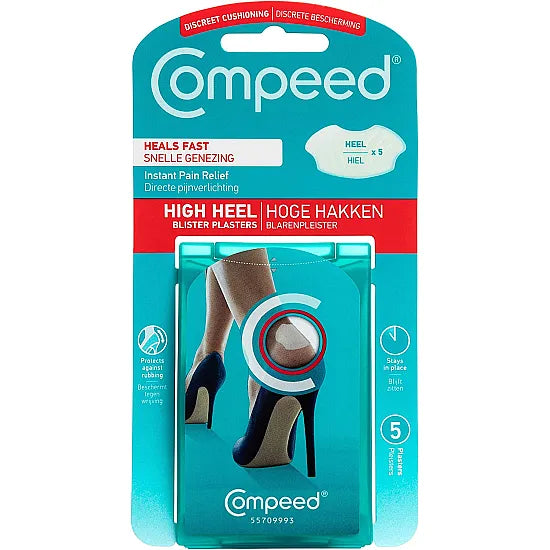
Compeed High Heel Blister Plasters - 5 Hydrocolloid Plasters
Compeed High Heel Blister Plasters - 5 Hydrocolloid Plasters
- ✔️ Hydrocolloid gel actively absorbs blister fluid to speed healing
- ✔️ Contoured shape fits the heel precisely inside any footwear
- ✔️ Cushions painful heel blisters against ongoing friction immediately
- ✔️ Stays in place for up to five days without lifting or peeling
- ✔️ Suitable for both treating and preventing heel blisters from high heels
Price Checker
 Lowest price guarantee
 Includes FREE private prescription


Couldn't load pickup availability
Are High Heel Blister Plasters the Answer to Painful Heel Blisters?
If you've ever slipped on a new pair of heels only to spend the rest of the day wincing with every step, you'll know exactly how debilitating a heel blister can be. Blisters form when repeated friction causes the upper layers of skin to separate, allowing fluid to collect beneath the surface — a process the NHS describes as a common response to rubbing, heat, or pinching from ill-fitting footwear. High heel blister plasters are designed specifically for this problem, shaped to contour the back of the heel where friction is most intense. Compeed High Heel Blister Plasters offer a pack of five hydrocolloid plasters at just £4.49, making them an accessible, clinically sound option for anyone dealing with this everyday discomfort. You can browse our full range of products in our foot care collection for more solutions.
Blisters on the heel are particularly common when wearing new shoes or high heels, where the counter of the shoe repeatedly rubs against the skin. Left untreated, they can become painful enough to affect your gait, and in some cases, an open blister may become infected. Acting quickly with the right plaster makes a real difference.
How Do Compeed High Heel Blister Plasters Work?
The science behind these plasters is straightforward but genuinely effective. Each plaster contains a hydrocolloid gel matrix — a material that interacts with the moisture produced by the blister wound. Here's what happens once you apply one:
- The hydrocolloid absorbs excess fluid from the blister, reducing pressure and pain almost immediately.
- It creates a moist, occlusive microenvironment at the wound site, which the NHS confirms supports faster skin cell regeneration compared to dry healing.
- The outer layer acts as a physical barrier, protecting the blister from further friction, dirt, and bacteria.
- As the plaster absorbs fluid, it turns white and slightly raised — this is normal and indicates it is working correctly.
- The plaster stays flexible and adheres firmly to the heel, even inside shoes, without bunching or peeling.
You don't need to pop the blister first. In fact, the NHS advises against deliberately bursting blisters, as doing so increases the risk of infection. Simply apply the plaster over the intact blister and let the hydrocolloid do its job.
Who Should Use Compeed High Heel Blister Plasters?
These plasters are suitable for most adults who develop heel blisters from footwear friction. They're particularly useful if you:
- Wear high heels or new shoes regularly and experience recurring heel blisters.
- Need a discreet, low-profile plaster that fits inside footwear without slipping.
- Want to continue wearing shoes comfortably while a blister heals.
- Prefer a plaster that stays in place for several days without needing frequent changes.
They are not recommended for use on infected blisters — signs of infection include increasing redness, warmth, swelling, or pus. If you notice any of these, seek advice from a pharmacist or GP before applying any dressing.
How Do Compeed High Heel Plasters Compare to Standard Blister Plasters?
| Feature | Compeed High Heel Blister Plasters | Standard Fabric Blister Plasters |
|---|---|---|
| Healing mechanism | Hydrocolloid — moist wound healing | Dry coverage only |
| Shape | Contoured for heel area | Generic rectangular or oval |
| Duration of wear | 2–5 days continuous wear | Usually 1 day, changes needed |
| Pain relief | Cushions and reduces pressure | Minimal cushioning |
Are Compeed High Heel Blister Plasters Suitable for Sensitive Skin?
Most people with normal skin tolerate hydrocolloid plasters well. However, if you have a known sensitivity to adhesives or have experienced reactions to plasters in the past, it's worth doing a small patch test before applying to a larger area. People with conditions such as eczema or psoriasis affecting the heel should speak to a pharmacist first, as the adhesive border may cause irritation on already compromised skin. If you're managing a skin condition alongside foot care, our skin care collection may also be helpful.
People with diabetes should always consult their GP or diabetes care team before using any blister dressing on their feet, as impaired circulation and reduced sensation mean foot wounds carry a higher risk of complications in this group.
This product is a medicine. Speak to your doctor or pharmacist before using if you have an underlying medical condition or are taking other medicines.
Compeed High Heel Blister Plasters - 5 Hydrocolloid Plasters specifications
| Treatment category | Foot care / wound care |
| Mechanism of action | Hydrocolloid gel matrix — moist wound healing and friction cushioning |
| Effective for | Heel blisters caused by friction from footwear |
| Suitable for | Adults; not recommended for infected blisters or diabetic foot wounds without medical advice |
| Active ingredient | Hydrocolloid gel matrix |
| Pack size | 5 plasters |
| UK classification | General Sale (GSL) |
| Preparation | Adhesive hydrocolloid plaster |
| Route of administration | Topical (applied to skin) |
Specifications of Compeed High Heel Blister Plasters - 5 Hydrocolloid Plasters
What Are Compeed High Heel Blister Plasters and What Are They Used For?
Compeed High Heel Blister Plasters are topical hydrocolloid wound dressings designed to treat and protect blisters that form on the back of the heel — most commonly caused by friction from high heels, new shoes, or ill-fitting footwear. Each pack contains five individually wrapped plasters, shaped specifically to conform to the heel's curved surface. They are available over the counter without a prescription and are classified as a general sale medical device in the UK.
The plasters work by maintaining a moist healing environment at the blister site, which supports the skin's natural repair process. They simultaneously cushion the area against ongoing friction, meaning you can continue wearing shoes with significantly less pain. They are not intended for use on open wounds, infected blisters, or ulcers.
What Do You Need to Know Before Using Compeed High Heel Blister Plasters?
Before applying these plasters, there are a few important things to consider. They are generally safe for most adults, but certain situations call for extra caution or professional advice.
Do not use if:
- The blister shows signs of infection — redness spreading beyond the blister, warmth, swelling, pus, or fever.
- You have a known allergy to hydrocolloid dressings or adhesive plasters.
- The skin around the blister is broken, raw, or severely damaged.
- You have diabetes — always seek advice from your GP or diabetes care team before treating any foot wound.
- You have peripheral vascular disease or poor circulation affecting the feet.
Warnings and precautions:
- Do not deliberately burst the blister before applying the plaster — the NHS advises this increases infection risk.
- If the blister bursts on its own, clean the area gently before applying the plaster.
- Keep out of reach of children.
- If irritation or an allergic reaction develops, remove the plaster and seek pharmacist advice.
Known interactions:
- No known drug interactions — this is a topical medical device, not a medicinal product containing an active pharmaceutical ingredient.
How Should You Apply Compeed High Heel Blister Plasters Correctly?
Correct application is key to getting the most from these plasters. Follow these steps carefully for best results:
- Wash your hands thoroughly before handling the plaster.
- Clean the blister area gently with mild soap and water, then pat completely dry.
- Do not apply any creams, lotions, or antiseptics to the area before applying the plaster, as this reduces adhesion.
- Peel the backing off the plaster carefully, avoiding touching the adhesive surface.
- Centre the plaster over the blister and press down firmly, starting from the middle and smoothing outwards.
- Hold the plaster in place for 30–60 seconds to activate the adhesive bond with body heat.
- Leave the plaster in place — do not remove it until it naturally begins to detach at the edges.
If you need additional pain relief while the blister heals, you may find products from our pain relief collection helpful alongside the plaster.
| Indication | Age Group | Number of Plasters | Duration of Wear |
|---|---|---|---|
| Heel blister from footwear friction | Adults (18+) | 1 plaster per blister | 2–5 days, until naturally detached |
| Prevention of blister formation | Adults (18+) | 1 plaster on friction-prone area | Replace as needed |
What Are the Possible Side Effects of Compeed High Heel Blister Plasters?
Side effects from hydrocolloid blister plasters are uncommon, but it's worth knowing what to look out for. The plaster turning white and slightly raised during wear is completely normal — this is the hydrocolloid absorbing blister fluid and is not a side effect.
Common side effects:
- Mild redness or skin irritation at the edges of the plaster after removal.
- Temporary skin maceration (softening and wrinkling) if the plaster is worn for an extended period.
Less common side effects:
- Allergic contact dermatitis — itching, rash, or blistering beyond the original wound site.
- Skin stripping or minor trauma on removal, particularly on fragile or elderly skin.
If you experience any signs of an allergic reaction — including widespread rash, swelling, or difficulty breathing — remove the plaster immediately and seek urgent medical attention. For general first aid supplies, our first aid collection has a range of products to support wound care at home.
How Should You Store Compeed High Heel Blister Plasters?
- Store below 25°C in a cool, dry place.
- Keep away from direct sunlight and sources of heat.
- Do not store in a bathroom or humid environment, as moisture can affect the adhesive.
- Keep the plasters in their original sealed packaging until use.
- Keep out of reach and sight of children.
- Do not use after the expiry date printed on the packaging.
References
Written and reviewed by our qualified team
Your safety and success are our highest priorities. Our medical team rigorously evaluates every product and piece of advice we provide, ensuring you receive only the most effective, science-backed solutions available.
Frequently Asked Questions
Where can I buy Compeed High Heel Blister Plasters online in the UK?
You can buy Compeed High Heel Blister Plasters directly from Cured Pharmacy for £4.49 per pack of five. No prescription is needed, and they can be ordered online and delivered to your door. Browse our full foot care collection for related products.
How do Compeed High Heel Blister Plasters work on the skin?
Each plaster contains a hydrocolloid gel matrix that absorbs fluid from the blister, creating a moist microenvironment that supports the skin's natural healing process. At the same time, the plaster cushions the heel against further friction from footwear. The NHS confirms that moist wound healing generally leads to faster tissue repair than leaving wounds to dry out.
How do I apply Compeed High Heel Blister Plasters step by step?
Clean and thoroughly dry the heel area, then peel the backing from the plaster without touching the adhesive surface. Centre the plaster over the blister, press firmly from the middle outwards, and hold in place for around 30 to 60 seconds. Do not apply any cream or lotion to the skin beforehand, as this will reduce adhesion.
How long should I leave a Compeed blister plaster on my heel?
You should leave the plaster in place until it naturally begins to detach at the edges, which typically takes between two and five days. Removing it early disrupts the moist healing environment and may cause unnecessary pain. If the plaster falls off before the blister has healed, apply a fresh one.
Should I pop the blister before applying the plaster?
No — the NHS advises against deliberately bursting blisters, as doing so significantly increases the risk of bacterial infection. Apply the plaster directly over the intact blister and allow the hydrocolloid to absorb the fluid naturally. If the blister has already burst, clean the area gently before applying the plaster.
Can I wear Compeed High Heel Blister Plasters inside shoes all day?
Yes — these plasters are specifically contoured to fit the heel and are designed to stay in place inside footwear during normal daily activity. The slim, flexible construction means they sit discreetly inside shoes without bunching or peeling. Many people find they can wear them continuously for several days without needing to replace them.
Are Compeed High Heel Blister Plasters suitable for people with diabetes?
People with diabetes should always consult their GP or diabetes care team before treating any foot wound, including blisters. Diabetes can impair circulation and reduce sensation in the feet, meaning wounds carry a higher risk of complications and may be slower to heal. The NHS recommends that people with diabetes seek professional foot care advice promptly for any foot injury.
What are the side effects of Compeed High Heel Blister Plasters?
Side effects are uncommon but may include mild redness or irritation at the plaster edges after removal, and temporary skin softening beneath the plaster. Rarely, allergic contact dermatitis can occur, presenting as itching, rash, or spreading redness — if this happens, remove the plaster and seek pharmacist advice. The white, raised appearance of the plaster during wear is normal and not a side effect.
Who is eligible to use Compeed High Heel Blister Plasters?
These plasters are suitable for most adults aged 18 and over who have heel blisters caused by footwear friction. They are not recommended for infected blisters, people with diabetes (without medical advice), those with peripheral vascular disease, or anyone with a known allergy to adhesive dressings. If you are unsure whether they are right for you, speak to your pharmacist.
What are the alternatives to Compeed High Heel Blister Plasters?
Alternatives include standard fabric blister plasters, moleskin heel pads, silicone heel cushions, or zinc oxide tape for blister prevention. However, hydrocolloid plasters are generally considered more effective for active blister healing because they maintain a moist wound environment rather than simply covering the area. If you need additional wound care support, our first aid collection includes a range of dressings.
How long can I use Compeed High Heel Blister Plasters for?
Each plaster is used for a single blister episode and worn until it naturally detaches, usually within two to five days. You can apply a fresh plaster if the blister has not fully healed when the first one comes off. If a blister has not improved after two weeks of self-care, or if it becomes infected, seek advice from a pharmacist or GP.
Can I use Compeed High Heel Blister Plasters to prevent blisters before they form?
Yes — applying a plaster to a friction-prone area of the heel before wearing new or high-heeled shoes can help prevent blisters from forming in the first place. This is a common and practical use, particularly if you know certain shoes tend to rub. Simply apply the plaster to clean, dry skin before putting on your shoes.
Why does my Compeed plaster turn white and puff up — is that normal?
Completely normal. The white, raised appearance occurs because the hydrocolloid gel is absorbing fluid from the blister wound — this is the plaster actively working. Do not remove it just because it looks different; leave it in place until the edges begin to naturally lift. Removing it prematurely interrupts the healing process.
What is the latest evidence on hydrocolloid dressings for blister healing?
Hydrocolloid dressings have been used in wound care for several decades and are well-supported by clinical evidence for managing superficial wounds and friction blisters. The NHS and NICE both recognise moist wound healing as the preferred approach for minor skin wounds. Research consistently shows that maintaining a moist environment at the wound site reduces healing time and minimises scarring compared to dry wound management.
How do I manage skin irritation after removing a Compeed blister plaster?
If you notice mild redness or irritation after removing the plaster, gently clean the area with warm water and allow the skin to breathe before applying a new dressing. Avoid using harsh antiseptics on intact or healing skin, as these can delay recovery. If irritation persists or worsens, consult your pharmacist — you may also find suitable soothing products in our skin care collection.
Written and reviewed by our qualified team

Reviewed by:
Tarun Kumar
Superintendent/ Clinical Lead
📖 Find out more about our team of medical content authors and how we ensure the accuracy of our content with our content guidelines.
Content last updated: 14 Sep 2026
Other popular options


We’re a safe and
regulated UK service

Lowest Price Guarantee

We're convinced you won't find your treatment cheaper, but if you do we'll refund the difference.
Find out more
100% discreet packaging

Discreet, unbranded packaging for every order.
Find out more

Need help?
Talk to our friendly experts now


How our service works

Service setup

Discreet packaging

Express delivery