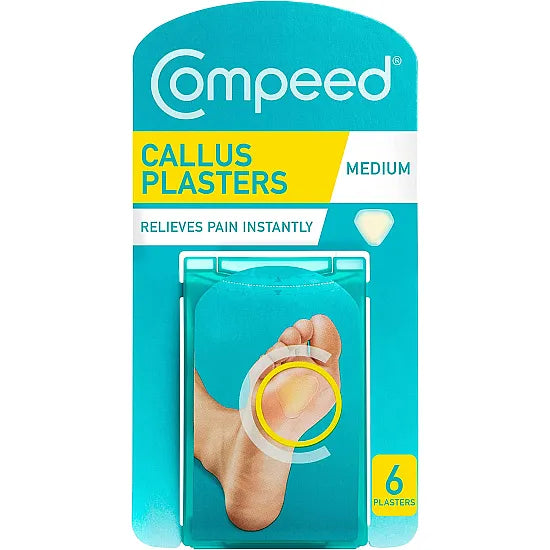
Compeed Callus Plasters - 6 Hydrocolloid Plasters
- ✔️ Softens and reduces hard callus skin on feet
- ✔️ Hydrocolloid gel cushions against pressure and friction
- ✔️ Flexible design stays in place during daily activity
- ✔️ Suitable for adults and children aged 12 and over
- ✔️ Treats calluses without chemicals or salicylic acid
Price Checker
 Lowest price guarantee
 Includes FREE private prescription


Couldn't load pickup availability
What Are Callus Plasters and How Do They Help?
If you've ever dealt with a stubborn patch of hard, thickened skin on the sole of your foot, you'll know how uncomfortable it can be. Calluses form when repeated friction or pressure causes the skin to toughen up as a protective response — most commonly on the heels, balls of the feet, or the sides of the toes. Callus plasters offer a straightforward, non-invasive way to manage this at home, without the need for a GP appointment. The Compeed Callus Plasters pack contains 6 hydrocolloid plasters, priced at just £5.49, making them an accessible option for everyday foot care. You can browse our full range of products in our foot care collection if you're looking for additional support.
Calluses are extremely common. According to the NHS, they are usually caused by ill-fitting footwear, high-impact activities, or simply standing for long periods. While they're rarely dangerous in otherwise healthy individuals, they can cause significant discomfort and, if left untreated, may crack or become painful.
How Do Compeed Callus Plasters Work?
These plasters use hydrocolloid gel technology — the same type used in many wound dressings — to create a moist microenvironment against the skin. Here's how the process works:
- The hydrocolloid gel absorbs moisture from the surface of the callus, gradually softening the hardened skin.
- The plaster acts as a physical cushion, reducing the pressure and friction that caused the callus in the first place.
- By maintaining a consistent moist environment, the plaster helps the thickened skin break down more effectively than simply filing alone.
- The flexible, skin-toned design means the plaster stays in place during normal daily activity, including walking.
It's worth noting that hydrocolloid dressings are well-established in wound care. Their ability to manage moisture at the skin surface is what makes them particularly suited to softening callused tissue over time.
Who Should Use Compeed Callus Plasters?
These plasters are suitable for most adults who experience calluses on their feet. They're particularly useful if you spend a lot of time on your feet, wear shoes that rub, or engage in activities like running or hiking. That said, they're not appropriate for everyone.
- Adults with hard, thickened skin on the soles or sides of the feet
- People who want a discreet, easy-to-use solution they can wear during the day
- Those looking to avoid more invasive treatments such as professional debridement
- Individuals who have already tried basic moisturising without sufficient improvement
They are not recommended for children under 12, or for use on infected, broken, or inflamed skin. People with diabetes, peripheral neuropathy, or poor circulation should speak to a healthcare professional before using any callus treatment.
How Do Compeed Callus Plasters Compare to Other Callus Treatments?
| Feature | Compeed Callus Plasters | Salicylic Acid Corn Pads |
|---|---|---|
| Mechanism | Hydrocolloid moisture management + cushioning | Keratolytic acid dissolves hard skin |
| Suitable for sensitive skin | Generally yes | Use with caution — can irritate surrounding skin |
| Safe for diabetics | Consult GP first | Not recommended — seek podiatry advice |
| Requires prescription | No — OTC | No — OTC |
Are Compeed Callus Plasters Suitable for Sensitive Skin?
For most people, callus plasters using hydrocolloid technology are well tolerated, even on sensitive skin. The adhesive is designed to be gentle, and because the plaster creates a protective barrier rather than applying a chemical agent, the risk of irritation to surrounding healthy skin is lower than with salicylic acid-based alternatives. If you have a known adhesive allergy, check the product packaging carefully before use.
If you're managing a broader skin condition alongside your callus, it may be worth exploring our skin care collection for complementary products. Store the plasters below 25°C, away from direct sunlight and out of reach of children.
This product is a medicine. Speak to your doctor or pharmacist before using if you have an underlying medical condition or are taking other medicines.
Compeed Callus Plasters - 6 Hydrocolloid Plasters specifications
| Treatment category | Foot care / Callus treatment |
| Mechanism of action | Hydrocolloid gel softens callus tissue and cushions against pressure |
| Effective for | Hard skin calluses on the feet |
| Suitable for | Adults aged 12 and over |
| Active ingredient | Hydrocolloid gel |
| Pack size | 6 plasters |
| UK classification | General Sale (GSL) |
| Preparation | Adhesive hydrocolloid plaster |
| Route of administration | Topical / cutaneous |
Specifications of Compeed Callus Plasters - 6 Hydrocolloid Plasters
What Are Compeed Callus Plasters and What Are They Used For?
Compeed Callus Plasters are hydrocolloid adhesive plasters designed specifically to treat calluses — areas of thickened, hardened skin that develop on the feet as a result of repeated friction or pressure. Each pack contains 6 plasters. They work by softening the callus from the outside in, while simultaneously protecting the area from further mechanical irritation. They are for external use only and are intended for use on the feet in adults and children aged 12 and over.
Calluses differ from corns in that they tend to be broader and less defined, though both result from similar causes. The NHS notes that calluses are generally painless but can become uncomfortable if they grow thick enough to affect how you walk or stand.
What Do You Need to Know Before Using Compeed Callus Plasters?
Before applying these plasters, read the following carefully. There are certain situations where use is not appropriate.
Do not use if you:
- Have diabetes, peripheral arterial disease, or peripheral neuropathy — always consult your GP or podiatrist first
- Have broken, infected, inflamed, or irritated skin in the area
- Are allergic to any component of the plaster, including the adhesive
- Are under 12 years of age
- Have poor circulation in your feet
Drug interactions:
- No known drug interactions have been identified for topical hydrocolloid plasters
- If you are using any topical medicated creams on the same area, allow them to absorb fully and seek pharmacist advice before applying the plaster
If you're unsure whether this product is right for you, speak to your pharmacist before purchasing. You can also find additional support products in our pain relief collection if foot discomfort is affecting your daily life.
How Should You Use Compeed Callus Plasters?
Applying the plasters correctly makes a real difference to how well they work. Follow these steps each time:
- Wash and thoroughly dry the affected area of your foot before application.
- Peel the backing off the plaster carefully, avoiding touching the gel surface.
- Centre the plaster directly over the callus, ensuring the gel pad covers the entire hardened area.
- Press firmly around the edges to secure the adhesive to the surrounding skin.
- Leave the plaster in place — do not remove it prematurely. It can be worn during normal daily activities.
- Replace the plaster when it begins to loosen or fall away naturally, or after 24–48 hours.
- Repeat the process with a fresh plaster until the callus has softened sufficiently.
| Indication | Age Group | Application | Frequency |
|---|---|---|---|
| Foot callus | Adults and children 12+ | 1 plaster per callus site | Replace every 24–48 hours as needed |
| Foot callus | Under 12 | Not recommended | Seek medical advice |
What Are the Possible Side Effects of Compeed Callus Plasters?
Side effects with hydrocolloid callus plasters are uncommon, but it's important to know what to look out for. If you notice anything unusual, remove the plaster and consult your pharmacist or GP.
Common side effects:
- Mild redness or skin irritation at the edges of the plaster
- Slight maceration (softening and whitening) of the skin directly under the plaster — this is expected and part of the softening process
Less common side effects:
- Allergic contact dermatitis — itching, rash, or blistering around the application site
- Skin breakdown if the plaster is left on for too long or applied to already compromised skin
If you experience a severe allergic reaction — including swelling, difficulty breathing, or widespread rash — seek emergency medical attention immediately. This is rare but possible with any adhesive product.
How Should You Store Compeed Callus Plasters?
Proper storage keeps the plasters effective for their full shelf life. Follow these guidelines:
- Store below 25°C in a cool, dry place
- Keep away from direct sunlight and sources of heat
- Store in the original packaging to protect the adhesive surface
- Keep out of the reach and sight of children
- Do not use after the expiry date printed on the packaging
- Do not freeze
If you're managing foot health as part of a wider skin care routine, our creams and ointments collection includes a range of emollients and barrier creams that may complement your callus treatment.
References
Written and reviewed by our qualified team
Your safety and success are our highest priorities. Our medical team rigorously evaluates every product and piece of advice we provide, ensuring you receive only the most effective, science-backed solutions available.
Frequently Asked Questions
Where can I buy Compeed Callus Plasters online in the UK?
You can buy Compeed Callus Plasters online in the UK directly from Cured Pharmacy for £5.49 per pack of 6. No prescription is needed, and they are available for quick dispatch. Browse our full foot care collection for related products.
How do Compeed Callus Plasters work on hard skin?
Compeed Callus Plasters use hydrocolloid gel technology to absorb moisture from the surface of the callus, gradually softening the thickened skin. At the same time, the plaster cushions the area from pressure and friction, addressing the root cause of discomfort. This dual action makes them more effective than simply filing the skin alone.
How do I apply Compeed Callus Plasters step by step?
Start by washing and thoroughly drying the affected foot. Peel the backing from the plaster and centre the gel pad directly over the callus, pressing firmly around the edges to secure it. Leave it in place for up to 24–48 hours, replacing it when it loosens or falls away naturally.
How long should I leave callus plasters on my foot?
Compeed Callus Plasters are designed to be left on for up to 24–48 hours per application. You should replace the plaster sooner if it becomes loose or visibly saturated before that time. Continue applying fresh plasters until the callus has softened to a comfortable level.
How many plasters will I need to treat a callus?
The number of plasters required depends on the size and severity of the callus. Most people find that several applications over one to two weeks are needed for the callus to soften noticeably. A pack of 6 plasters is typically sufficient for a single treatment course for a mild to moderate callus.
Are Compeed Callus Plasters safe for people with diabetes?
People with diabetes should not use callus plasters without first consulting their GP or podiatrist. Diabetes can reduce sensation and circulation in the feet, which increases the risk of skin damage or infection going unnoticed. The NHS recommends that people with diabetes seek professional foot care rather than self-treating calluses at home.
Can children use Compeed Callus Plasters?
Compeed Callus Plasters are not recommended for children under 12 years of age. If a child has a callus or hard skin on their foot, it is advisable to seek advice from a GP or podiatrist. For children aged 12 and over, adult supervision during application is recommended.
What are the side effects of using callus plasters?
Side effects are uncommon but can include mild redness or irritation at the edges of the plaster, and some whitening of the skin directly beneath it — this is a normal part of the softening process. Rarely, an allergic contact reaction may occur, causing itching or a rash; if this happens, remove the plaster and consult your pharmacist.
What is the difference between a callus and a corn?
A callus is a broad, flat area of thickened skin caused by repeated friction or pressure, usually painless unless very thick. A corn is a smaller, more defined area of hard skin with a central core, often found between or on top of the toes, and tends to be more painful. Both can be managed with appropriate foot care products, though treatment approaches may differ.
How do Compeed Callus Plasters compare to salicylic acid treatments?
Salicylic acid treatments work by chemically dissolving the hardened skin, whereas Compeed Callus Plasters use hydrocolloid gel to soften the callus through moisture management and cushioning. Salicylic acid can irritate surrounding healthy skin if not applied carefully, making hydrocolloid plasters a gentler option for many people. Neither type is recommended for people with diabetes without professional guidance.
Can I wear Compeed Callus Plasters in shoes during the day?
Yes — Compeed Callus Plasters are designed to be worn during normal daily activities, including walking and wearing shoes. Their flexible, skin-toned design helps them stay in place and remain discreet under footwear. Avoid wearing very tight shoes that may dislodge the plaster prematurely.
What should I do if my callus does not improve after using the plasters?
If your callus has not improved after two to three weeks of consistent use, it is advisable to consult your GP or a podiatrist. Persistent or painful calluses may require professional debridement or investigation into the underlying cause, such as gait abnormalities or footwear issues. Do not attempt to cut or shave a callus yourself, as this carries a risk of infection.
Are there any alternatives to Compeed Callus Plasters?
Alternatives include salicylic acid-based corn and callus pads, pumice stone filing after soaking the feet, and professional podiatry treatment for more severe cases. You can also explore our first aid collection for other protective dressings and foot care accessories. The right choice depends on the severity of your callus and any underlying health conditions.
How long can I keep using callus plasters before seeing a doctor?
If you have been using callus plasters consistently for two to three weeks without noticeable improvement, or if the callus becomes painful, red, or shows signs of infection, you should seek medical advice. The NHS recommends seeing a GP or podiatrist if home treatments are not working or if you have any concerns about your foot health. Long-term or recurring calluses may indicate an underlying issue worth investigating.
What is the latest thinking on treating calluses at home?
Current NHS guidance supports the use of emollients, regular gentle filing with a pumice stone, and protective padding or plasters as first-line home treatments for calluses. Hydrocolloid plasters are widely regarded as a practical and well-tolerated option for softening and protecting callused skin. Addressing the root cause — such as footwear fit or gait — remains important for preventing recurrence.
Written and reviewed by our qualified team

Reviewed by:
Tarun Kumar
Superintendent/ Clinical Lead
📖 Find out more about our team of medical content authors and how we ensure the accuracy of our content with our content guidelines.
Content last updated: 14 Sep 2026
Other popular options


We’re a safe and
regulated UK service

Lowest Price Guarantee

We're convinced you won't find your treatment cheaper, but if you do we'll refund the difference.
Find out more
100% discreet packaging

Discreet, unbranded packaging for every order.
Find out more

Need help?
Talk to our friendly experts now


How our service works

Service setup

Discreet packaging

Express delivery