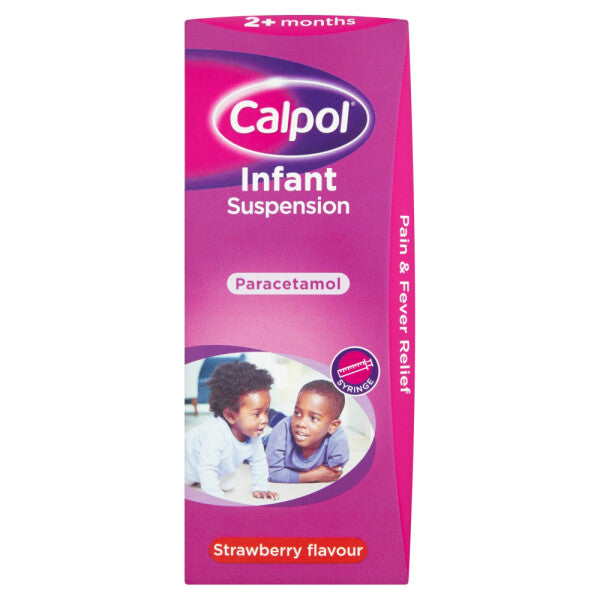
Calpol Infant Suspension - 200ml
Calpol Infant Suspension - 200ml
- ✔️ Relieves mild to moderate pain in babies from 2 months
- ✔️ Reduces fever quickly, including post-vaccination temperature
- ✔️ Sugar-free strawberry liquid — easy for infants to take
- ✔️ Paracetamol 120mg/5ml — clinically proven analgesic and antipyretic
- ✔️ Suitable for teething, earache, sore throat, and headache
Price Checker
 Lowest price guarantee
 Includes FREE private prescription


Couldn't load pickup availability
What Is Calpol Infant Suspension and How Does It Help?
Calpol infant suspension is one of the most trusted over-the-counter medicines for babies and young children in the UK. It contains paracetamol 120mg per 5ml in a sugar-free, strawberry-flavoured liquid that's easy to give to little ones. Whether your baby is running a temperature after their vaccinations or seems unsettled with teething pain, this suspension offers reliable, fast-acting relief. You can find it alongside other trusted products in our baby and toddler range.
It's suitable for babies from 2 months of age and is licensed for use in children up to 6 years old in the infant formulation. The NHS recommends paracetamol as a first-line option for managing mild to moderate pain and fever in children, making this a staple in any family medicine cabinet.
How Does Calpol Infant Suspension Work to Reduce Fever and Pain?
Paracetamol — the active ingredient — works centrally in the brain and peripherally in the body to reduce pain and fever. Here's a simple breakdown of the mechanism:
- Paracetamol inhibits the enzyme cyclooxygenase (COX) in the central nervous system, reducing the production of prostaglandins that signal pain.
- It acts on the hypothalamus — the brain's temperature-regulating centre — to lower a raised body temperature.
- Unlike ibuprofen, it does not have significant anti-inflammatory activity at standard doses, which makes it gentler on the stomach.
- Onset of action is typically within 30–60 minutes of administration.
Because it works centrally rather than peripherally, it's well tolerated in infants when used at the correct dose. It does not mask serious symptoms in the way that stronger medicines might, so you can still monitor your child's condition effectively.
Who Is Calpol Infant Suspension Suitable For?
This suspension is designed specifically for younger children. It's appropriate for:
- Babies aged 2 months and over (up to 6 years for the infant formulation)
- Children experiencing mild to moderate pain — including teething, earache, sore throat, or headache
- Infants with a fever, including post-vaccination fever
- Children who cannot swallow tablets or capsules
It is not suitable for babies under 2 months of age. If your child is premature or has a known liver or kidney condition, always speak to your GP or pharmacist before use. Children with a known allergy to paracetamol or any of the excipients should not use this product.
How Does Calpol Infant Suspension Compare to Calpol Six Plus?
| Feature | Calpol Infant Suspension | Calpol Six Plus Suspension |
|---|---|---|
| Active ingredient | Paracetamol 120mg/5ml | Paracetamol 250mg/5ml |
| Age range | 2 months – 6 years | 6 years – 12 years |
| Sugar-free | Yes | Yes |
| Flavour | Strawberry | Strawberry |
How Should You Store Calpol Infant Suspension and Check It Is Still Safe to Use?
Store this medicine below 25°C in a dry place — do not refrigerate it, as this can affect the consistency of the suspension. Once opened, use within 28 days and discard any remaining liquid after that point. Always check the expiry date on the bottle before giving it to your child.
Keep the bottle tightly closed and well out of the reach and sight of children. If you're building up your home medicine supplies, you might also want to explore our first aid collection for other essentials. If you're ever unsure whether a dose is still appropriate or the product is still in date, your pharmacist can advise.
This product is a medicine. Speak to your doctor or pharmacist before using if you have an underlying medical condition or are taking other medicines.
Calpol Infant Suspension 200ml specifications
| Treatment category | Children's pain relief and fever management |
| Mechanism of action | COX enzyme inhibition; hypothalamic temperature regulation |
| Effective for | Mild to moderate pain, fever, post-vaccination temperature |
| Suitable for | Babies and children aged 2 months to 6 years |
| Active ingredient | Paracetamol 120mg/5ml |
| Pack size | 200ml |
| Strength | 120mg/5ml |
| UK classification | General Sale List (GSL) |
| Drug class | Analgesic / Antipyretic |
| Preparation | Oral suspension |
| Route of administration | Oral |
Specifications of Calpol Infant Suspension 200ml
What Is Calpol Infant Suspension and What Is It Used For?
Calpol Infant Suspension is an oral paracetamol liquid containing 120mg of paracetamol per 5ml. It is used to relieve mild to moderate pain in babies and young children — including teething pain, earache, sore throat, and headache — and to reduce fever, including the raised temperature that sometimes follows routine childhood vaccinations. The NHS advises that paracetamol is appropriate for managing post-immunisation fever in infants aged 2 months and over.
It is available over the counter without a prescription and is classified as a General Sale List (GSL) medicine in the UK. The 200ml bottle is a practical size for families who want a reliable supply at home.
What Do You Need to Know Before Using Calpol Infant Suspension?
Before giving this medicine to your child, read the following carefully.
Do not use Calpol Infant Suspension if your child:
- Is under 2 months of age
- Has a known allergy to paracetamol or any of the other ingredients
- Has severe liver or kidney disease
- Is already taking another medicine containing paracetamol
Take extra care and speak to your pharmacist or GP if your child:
- Was born prematurely
- Has liver or kidney problems
- Is malnourished or has a low body weight for their age
- Is taking any other regular prescribed medicines
Known drug interactions:
- Other paracetamol-containing products — concurrent use can cause accidental overdose
- Warfarin — prolonged regular use of paracetamol may enhance the anticoagulant effect
- Metoclopramide — may increase the rate of paracetamol absorption
How Should You Use Calpol Infant Suspension?
Always use the oral dosing syringe provided in the pack — never use a kitchen spoon, as this can lead to inaccurate dosing. Shake the bottle well before each use.
- Check your child's age and weight against the dosage table below.
- Measure the correct dose using the oral syringe provided.
- Administer the suspension directly into your child's mouth, aiming for the inside of the cheek.
- If your child refuses, you may mix the dose with a small amount of cool, previously boiled water.
- Wait at least 4 hours before giving another dose if symptoms persist.
- Do not give more than 4 doses in any 24-hour period.
| Age | Dose | Frequency | Max doses per 24 hours |
|---|---|---|---|
| 2–3 months | 2.5ml | Once only (post-vaccination fever); seek advice if further doses needed | 2 (post-vaccination only) |
| 3–6 months | 2.5ml | Every 4–6 hours | 4 |
| 6–24 months | 5ml | Every 4–6 hours | 4 |
| 2–4 years | 7.5ml | Every 4–6 hours | 4 |
| 4–6 years | 10ml | Every 4–6 hours | 4 |
If your child's fever does not improve within 24 hours, or their pain persists beyond 3 days, contact your GP. You may also find it helpful to browse our cold and flu range for additional supportive products during illness.
What Are the Possible Side Effects of Calpol Infant Suspension?
Paracetamol is generally very well tolerated in children when used at the correct dose. Serious side effects are rare. However, you should be aware of the following:
Common side effects (may affect up to 1 in 10 children):
- None commonly reported at therapeutic doses
Less common side effects (may affect up to 1 in 100 children):
- Skin rash or itching
- Nausea or stomach discomfort
- Flushing
Rare but serious — stop use immediately and seek urgent medical attention if your child develops:
- Swelling of the face, lips, tongue, or throat (signs of a serious allergic reaction)
- Difficulty breathing or wheezing
- Severe skin reactions such as blistering or peeling
- Signs of liver problems — yellowing of the skin or eyes (jaundice)
Overdose is a serious risk with paracetamol. If you think your child has taken too much, go to your nearest A&E immediately, even if they seem well. Take the medicine packaging with you.
How Should You Store Calpol Infant Suspension?
Correct storage keeps the medicine safe and effective for the full duration of use. For families managing multiple health products at home, our vitamins and supplements collection also includes products that support children's general wellbeing.
- Store below 25°C in a dry place — do not refrigerate
- Keep the bottle tightly closed when not in use
- Use within 28 days of first opening
- Do not use after the expiry date printed on the label
- Keep out of the reach and sight of children at all times
- Do not dispose of medicines via wastewater or household waste — return unused medicine to your pharmacist
References
Written and reviewed by our qualified team
Your safety and success are our highest priorities. Our medical team rigorously evaluates every product and piece of advice we provide, ensuring you receive only the most effective, science-backed solutions available.
Frequently Asked Questions
Where can I buy Calpol Infant Suspension online in the UK?
You can buy Calpol Infant Suspension 200ml directly from Cured Pharmacy, a GPhC-registered UK online pharmacy. It is available without a prescription as an over-the-counter medicine. Simply add it to your basket and it will be dispatched quickly to your door.
How does Calpol Infant Suspension work in the body?
Calpol Infant Suspension contains paracetamol, which works by inhibiting the COX enzyme in the central nervous system, reducing the production of prostaglandins that cause pain signals. It also acts on the hypothalamus to lower a raised body temperature. This dual action makes it effective for both pain relief and fever reduction in young children.
What age can I start giving Calpol Infant Suspension?
Calpol Infant Suspension is suitable for babies aged 2 months and over. For babies aged 2–3 months, it should only be given for post-vaccination fever and limited to two doses unless a doctor advises otherwise. Always check the dosage table on the packaging before administering.
How do I give Calpol Infant Suspension step by step?
Shake the bottle well, then draw up the correct dose using the oral syringe provided — never use a kitchen spoon. Administer the liquid gently into the inside of your child's cheek, and wait at least 4 hours before giving another dose if needed. Do not give more than 4 doses in 24 hours.
What is the correct dose of Calpol Infant Suspension for my child?
The dose depends on your child's age: babies aged 3–6 months receive 2.5ml, children aged 6 months to 2 years receive 5ml, and children aged 4–6 years receive 10ml. Always refer to the dosage table in the patient information leaflet or on the packaging. If you are unsure, ask your pharmacist.
How often can I give Calpol Infant Suspension?
You can give Calpol Infant Suspension every 4–6 hours as needed, but never more than 4 doses in any 24-hour period. Always leave at least 4 hours between doses. If your child's symptoms do not improve within 24 hours for fever, or 3 days for pain, contact your GP.
What are the side effects of Calpol Infant Suspension?
Side effects are uncommon when Calpol is used at the correct dose. Rarely, a skin rash, itching, or mild stomach discomfort may occur. Stop use immediately and seek urgent medical attention if your child develops swelling of the face or lips, difficulty breathing, or any signs of a serious allergic reaction.
Can I give Calpol Infant Suspension alongside other medicines?
Do not give Calpol alongside any other product containing paracetamol, as this can lead to accidental overdose. Always check the ingredients of any other medicines your child is taking, including cold and flu remedies. If your child is on regular prescribed medication, speak to your pharmacist or GP before use.
Is Calpol Infant Suspension suitable after vaccinations?
Yes — the NHS recommends paracetamol for managing post-vaccination fever in babies aged 2 months and over. For babies aged 2–3 months, you can give two doses of 2.5ml, four to six hours apart, if they develop a fever after their immunisations. If the fever persists or you are concerned, contact your GP or health visitor.
What happens if I accidentally give my child too much Calpol?
Paracetamol overdose is a medical emergency. If you think your child has taken more than the recommended dose, go to your nearest A&E immediately — even if your child appears well, as symptoms of liver damage may not appear straight away. Take the medicine packaging with you so medical staff can assess the situation quickly.
What are the alternatives to Calpol Infant Suspension?
Ibuprofen suspension (such as Nurofen for Children) is an alternative for children aged 3 months and over, and may be more effective for inflammatory pain. Some parents alternate paracetamol and ibuprofen under medical guidance for persistent fever. You can explore our pain relief collection for other options suitable for children.
How long can I use Calpol Infant Suspension for?
For pain relief, do not use Calpol Infant Suspension for more than 3 days without seeking medical advice. For fever, if your child's temperature has not improved within 24 hours, contact your GP. Prolonged or frequent use without medical supervision is not recommended.
Does Calpol Infant Suspension contain sugar or allergens?
Calpol Infant Suspension is sugar-free, making it suitable for children at risk of tooth decay. It does contain maltitol liquid and sorbitol, so children with rare hereditary fructose intolerance should not use it. Always check the full ingredients list in the patient information leaflet if your child has known allergies or intolerances.
What is the difference between Calpol Infant and Calpol Six Plus?
Calpol Infant Suspension contains 120mg of paracetamol per 5ml and is designed for children aged 2 months to 6 years. Calpol Six Plus contains a higher concentration of 250mg per 5ml and is intended for children aged 6 to 12 years. Using the wrong formulation for your child's age could result in under- or over-dosing, so always check the label carefully.
What are the latest guidelines on using paracetamol in children?
Current NHS and NICE guidance supports paracetamol as a first-line treatment for mild to moderate pain and fever in children, including post-vaccination fever. Routine use of paracetamol to prevent fever before vaccinations is not recommended, as it may reduce the immune response. Always follow the dosage instructions and consult your GP if you have concerns about your child's health. You can also browse our ear, nose and throat range for products that support children during colds and infections.
Written and reviewed by our qualified team

Reviewed by:
Tarun Kumar
Superintendent/ Clinical Lead
📖 Find out more about our team of medical content authors and how we ensure the accuracy of our content with our content guidelines.
Content last updated: 14 Sep 2026
Other popular options


We’re a safe and
regulated UK service

Lowest Price Guarantee

We're convinced you won't find your treatment cheaper, but if you do we'll refund the difference.
Find out more
100% discreet packaging

Discreet, unbranded packaging for every order.
Find out more

Need help?
Talk to our friendly experts now


How our service works

Service setup

Discreet packaging

Express delivery