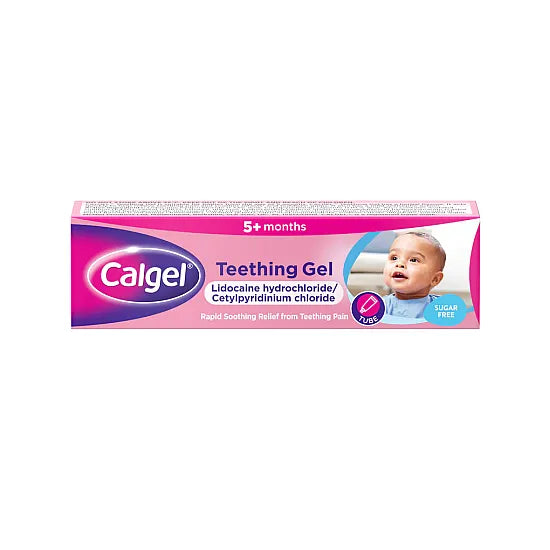
Calpol Calgel Teething Gel 5+ Months
Calpol Calgel Teething Gel 5+ Months
- ✔️ Temporarily numbs sore gums with lidocaine hydrochloride
- ✔️ Suitable for babies from 5 months of age
- ✔️ Contains antiseptic to reduce oral bacteria during teething
- ✔️ Up to 6 applications per day for flexible relief
- ✔️ Sugar-free formula safe for developing baby teeth
Price Checker
 Lowest price guarantee
 Includes FREE private prescription


Couldn't load pickup availability
What Is Teething Gel for Babies and How Can Calgel Help?
Teething is one of those milestones that every parent dreads a little. Sore, swollen gums, broken sleep, and a very unhappy baby — it can feel relentless. Teething gel for babies like Calpol Calgel Teething Gel 5+ Months offers targeted, fast-acting relief directly at the source of the discomfort. Available over the counter from our baby and toddler range, it's a trusted option that many UK parents reach for when their little one starts showing signs of teething distress.
Calgel contains two active ingredients: lidocaine hydrochloride 0.33% w/w, a local anaesthetic, and cetylpyridinium chloride 0.1% w/w, an antiseptic. Together, they work to temporarily ease gum pain while helping to keep the oral environment clean. It's suitable for babies from 5 months of age and is applied directly to the gum using a clean fingertip.
How Does Calpol Calgel Teething Gel Work on Sore Gums?
The relief Calgel provides comes down to its two-ingredient formula. Here's how each component plays its part:
- Lidocaine hydrochloride — a local anaesthetic that temporarily blocks nerve signals in the gum tissue, reducing the sensation of pain and soreness at the teething site.
- Cetylpyridinium chloride — a mild antiseptic that helps reduce bacteria on the gum surface, which can be useful as babies often put objects in their mouths during teething.
- The gel formulation allows the active ingredients to adhere to the gum surface, giving localised relief rather than systemic absorption at recommended doses.
- Effects are temporary by design — the gel is intended for short-term, symptomatic relief rather than ongoing treatment.
Who Is Calpol Calgel Teething Gel Suitable For?
Calgel is designed specifically for infants and young children experiencing teething discomfort. It is not intended for adults or older children with dental pain — there are more appropriate products available in our oral health collection for those situations. So who is it right for?
- Babies aged 5 months and over who are showing signs of teething (drooling, gum swelling, irritability, disturbed sleep)
- Infants whose parents or carers want a topical, locally acting option rather than a systemic painkiller
- Babies without a known allergy to local anaesthetics or any of the listed excipients
- Children where a pharmacist or GP has confirmed teething as the likely cause of distress
It is not suitable for babies under 5 months of age. If you are unsure whether your baby's symptoms are due to teething or another cause, always speak to your GP or health visitor before using any medicine.
How Does Calgel Teething Gel Compare to Other Teething Remedies?
| Feature | Calpol Calgel Teething Gel | Dentinox Teething Gel |
|---|---|---|
| Active ingredient | Lidocaine HCl 0.33% + Cetylpyridinium chloride 0.1% | Lidocaine HCl 0.33% + Cetylpyridinium chloride 0.1% |
| Minimum age | 5 months | 5 months |
| Max applications per 24 hours | 6 | 6 |
| Brand | Calpol (Haleon) | Dentinox |
How Should You Store Calpol Calgel Teething Gel?
Store Calgel below 25°C, away from direct sunlight and heat sources. Do not refrigerate the gel — cold temperatures can affect the consistency and make application more difficult. Keep the tube tightly closed when not in use and always store it out of the reach and sight of children. Once opened, check the expiry date on the packaging and do not use the product beyond that date.
As with all medicines, if you notice any change in the appearance, smell, or texture of the gel, do not use it and dispose of it safely. Using a teething gel for babies that has been stored incorrectly may reduce its effectiveness or, in rare cases, cause irritation.
This product is a medicine. Speak to your doctor or pharmacist before using if you have an underlying medical condition or are taking other medicines.
Calpol Calgel Teething Gel 5+ Months specifications
| Treatment category | Teething relief / Oral analgesic |
| Mechanism of action | Local anaesthetic (lidocaine HCl) + antiseptic (cetylpyridinium chloride) |
| Effective for | Teething pain and gum soreness in infants |
| Suitable for | Babies aged 5 months and over |
| Active ingredient | Lidocaine hydrochloride 0.33% w/w; Cetylpyridinium chloride 0.1% w/w |
| Pack size | 10 g tube |
| UK classification | General Sale List (GSL) |
| Drug class | Local anaesthetic / Antiseptic |
| Preparation | Topical gel |
| Route of administration | Topical application to oral mucosa (gums) |
Specifications of Calpol Calgel Teething Gel 5+ Months
What Is Calpol Calgel Teething Gel and What Is It Used For?
Calpol Calgel Teething Gel 5+ Months is a topical oral gel used to relieve the pain and discomfort associated with teething in babies aged 5 months and over. Teething typically begins around 6 months of age, though some babies start earlier, and it can cause significant gum soreness, irritability, and disturbed sleep. The gel is applied directly to the affected gum area to provide localised, temporary relief. It is classified as a General Sale List (GSL) medicine in the UK, meaning it can be purchased without a prescription.
What Do You Need to Know Before Using Calpol Calgel Teething Gel?
Before using Calgel, it's important to check that it is appropriate for your baby. Do not use this product if any of the following apply:
- Your baby is under 5 months of age
- Your baby has a known allergy to lidocaine, other local anaesthetics, or any of the other ingredients in the gel (including cetylpyridinium chloride)
- Your baby has open sores, wounds, or broken skin in the mouth or on the gums
- You suspect the baby's symptoms may not be due to teething — always consult a GP or health visitor if you are unsure
There are also some important warnings to be aware of:
- Do not apply more than 6 times in any 24-hour period
- Avoid getting the gel in your baby's eyes
- Do not use immediately before feeding, as the numbing effect may temporarily affect your baby's ability to swallow safely
- If symptoms persist for more than 7 days, or worsen, seek medical advice
- Keep out of reach and sight of children
Drug interactions: At the doses used in this product, clinically significant drug interactions are not expected. However, if your baby is taking any other medicines, speak to your pharmacist before use.
- No significant interactions have been identified at recommended topical doses
How Should You Use Calpol Calgel Teething Gel?
Always use Calgel exactly as described in the patient information leaflet or as directed by your pharmacist. Here's a step-by-step guide:
- Wash your hands thoroughly before applying the gel.
- Squeeze approximately 1 cm of gel onto your clean index finger.
- Gently massage the gel onto the sore gum area using a circular motion.
- Allow at least 20 minutes before reapplying if needed.
- Do not apply more than 6 times in any 24-hour period.
- Do not apply immediately before feeding.
| Indication | Age Group | Dose | Frequency |
|---|---|---|---|
| Teething pain relief | 5 months and over | Approx. 1 cm of gel per application | Up to 6 times in 24 hours |
| Teething pain relief | Under 5 months | Not suitable | Do not use |
If you are also considering other pain relief options for your baby, you may find it helpful to browse our pain relief collection for further guidance on suitable products.
What Are the Possible Side Effects of Calpol Calgel Teething Gel?
Like all medicines, Calgel can cause side effects, although not everyone will experience them. Most babies tolerate the gel well when it is used as directed.
Common side effects:
- Mild local irritation or redness at the application site
- Temporary numbness of the gum and surrounding tissue
Less common side effects:
- Hypersensitivity or allergic reactions — symptoms may include rash, swelling, or difficulty breathing. Stop use immediately and seek urgent medical attention if this occurs.
- Excessive drooling immediately after application (though this is also a normal teething symptom)
If you notice any side effect not listed here, or if you are concerned about your baby's reaction to the gel, contact your pharmacist or GP promptly. You can also report suspected side effects to the MHRA via the Yellow Card scheme.
How Should You Store Calpol Calgel Teething Gel?
Correct storage helps maintain the quality and safety of the product. Follow these guidelines:
- Store below 25°C
- Do not refrigerate
- Keep away from direct sunlight and heat sources
- Keep the tube tightly closed when not in use
- Store out of the reach and sight of children
- Do not use after the expiry date printed on the tube and carton
- Do not use if the tube seal is broken before first use
For more products to support your baby's health and comfort, explore our full dental products range, which includes a variety of oral care options for the whole family.
References
- https://www.nhs.uk/conditions/baby/babys-development/teething/teething-symptoms-and-remedies/
- https://www.nhs.uk/medicines/lidocaine-for-mouth-and-throat/
- https://www.nhs.uk/conditions/baby/babys-development/teething/teething-tips/
- https://www.nhs.uk/conditions/baby/health/when-to-call-a-doctor-or-health-visitor/
- https://www.medicines.org.uk/emc/product/1026/smpc
Written and reviewed by our qualified team
Your safety and success are our highest priorities. Our medical team rigorously evaluates every product and piece of advice we provide, ensuring you receive only the most effective, science-backed solutions available.
Frequently Asked Questions
Where can I buy Calpol Calgel Teething Gel online in the UK?
You can buy Calpol Calgel Teething Gel 5+ Months directly from Cured Pharmacy for just £3.19, with no prescription required. It is a General Sale List (GSL) medicine, so it is available over the counter from any UK-registered pharmacy. Ordering online is a convenient option, especially when you need it quickly for a distressed baby.
How does Calgel Teething Gel work in the body?
Calgel works locally rather than systemically — it does not enter the bloodstream in significant amounts at the recommended dose. The lidocaine hydrochloride temporarily blocks nerve signals in the gum tissue, reducing the sensation of pain. The cetylpyridinium chloride acts as an antiseptic to help reduce bacteria on the gum surface.
How do I apply Calgel Teething Gel step by step?
Start by washing your hands thoroughly, then squeeze approximately 1 cm of gel onto your clean index finger. Gently massage the gel onto the sore gum area using a circular motion, and wait at least 20 minutes before reapplying if needed. Do not exceed 6 applications in any 24-hour period.
What age is Calgel Teething Gel suitable for?
Calgel Teething Gel is suitable for babies aged 5 months and over. It must not be used in babies younger than 5 months, as safety has not been established for that age group. If your baby is under 5 months and appears to be in discomfort, speak to your GP or health visitor for advice.
How quickly does Calgel Teething Gel start to work?
Calgel typically begins to provide relief within a few minutes of application, as the lidocaine numbs the gum tissue relatively quickly. The effect is temporary and may last for a short period, so you may need to reapply — but always wait at least 20 minutes between applications. Do not apply more than 6 times in 24 hours.
What are the side effects of Calgel Teething Gel?
Most babies tolerate Calgel well when used as directed, but mild local irritation or temporary numbness at the application site can occur. Rarely, hypersensitivity reactions such as rash or swelling may develop — if this happens, stop use immediately and seek medical advice. You can report any suspected side effects to the MHRA via the Yellow Card scheme.
Can I use Calgel Teething Gel at the same time as Calpol?
Yes, Calgel Teething Gel and Calpol infant suspension (paracetamol) work through different mechanisms and can generally be used together for teething discomfort. Always follow the individual dosage instructions for each product and do not exceed the recommended doses for either. If you are unsure, speak to your pharmacist before combining any medicines.
Who should not use Calgel Teething Gel?
Calgel should not be used in babies under 5 months of age, or in any baby with a known allergy to lidocaine, other local anaesthetics, or cetylpyridinium chloride. It should also be avoided if your baby has open sores or broken skin in the mouth. Always check with your pharmacist or GP if you are unsure whether this product is appropriate for your child.
What are the alternatives to Calgel Teething Gel?
Alternatives to Calgel include Dentinox Teething Gel, which contains the same active ingredients at the same concentrations. Non-medicated options recommended by the NHS include chilled (not frozen) teething rings and gently rubbing the gums with a clean finger. You can also explore our baby and toddler range for other suitable products.
How long can I use Calgel Teething Gel for?
Calgel is intended for short-term, symptomatic relief during active teething episodes. If your baby's symptoms persist for more than 7 days without improvement, or if symptoms worsen, you should stop using the gel and consult your GP or health visitor. Teething is a natural process, and the gel is not meant to be used continuously over long periods.
Can I use Calgel Teething Gel before breastfeeding or bottle feeding?
It is advisable not to apply Calgel immediately before feeding, as the numbing effect of lidocaine may temporarily affect your baby's ability to suckle or swallow safely. Allow some time after application before feeding your baby. If you have concerns about timing, speak to your pharmacist or health visitor for personalised guidance.
Does Calgel Teething Gel contain sugar or artificial colours?
Calgel Teething Gel is sugar-free, which is important for protecting your baby's developing teeth. Always check the full ingredients list on the product packaging or patient information leaflet if your baby has any known sensitivities or allergies. If you have specific concerns about excipients, your pharmacist can help clarify.
What happens if I accidentally apply too much Calgel Teething Gel?
If you accidentally apply more than the recommended amount, do not panic — the risk of serious harm from a single excess application is low, but you should contact NHS 111 or your pharmacist for advice. Do not apply more than 6 doses in 24 hours under any circumstances. If you suspect your baby has swallowed a large amount of the gel, seek urgent medical attention.
Is there any latest research on lidocaine teething gels for babies?
Regulatory bodies including the MHRA have reviewed the safety of lidocaine-containing teething gels and consider them safe when used as directed in babies aged 5 months and over. The NHS advises that teething gels containing a local anaesthetic can be used for short-term relief, though non-medicated options such as teething rings should also be considered. Always follow current NHS guidance and speak to a healthcare professional if you have concerns.
How should I store Calgel Teething Gel safely at home?
Store Calgel below 25°C, away from direct sunlight and heat — do not put it in the fridge. Keep the tube tightly closed and always store it out of the reach and sight of children. For more oral care products suitable for the whole family, visit our oral health collection.
Written and reviewed by our qualified team

Reviewed by:
Tarun Kumar
Superintendent/ Clinical Lead
📖 Find out more about our team of medical content authors and how we ensure the accuracy of our content with our content guidelines.
Content last updated: 14 Sep 2026
Other popular options


We’re a safe and
regulated UK service

Lowest Price Guarantee

We're convinced you won't find your treatment cheaper, but if you do we'll refund the difference.
Find out more
100% discreet packaging

Discreet, unbranded packaging for every order.
Find out more

Need help?
Talk to our friendly experts now


How our service works

Service setup

Discreet packaging

Express delivery