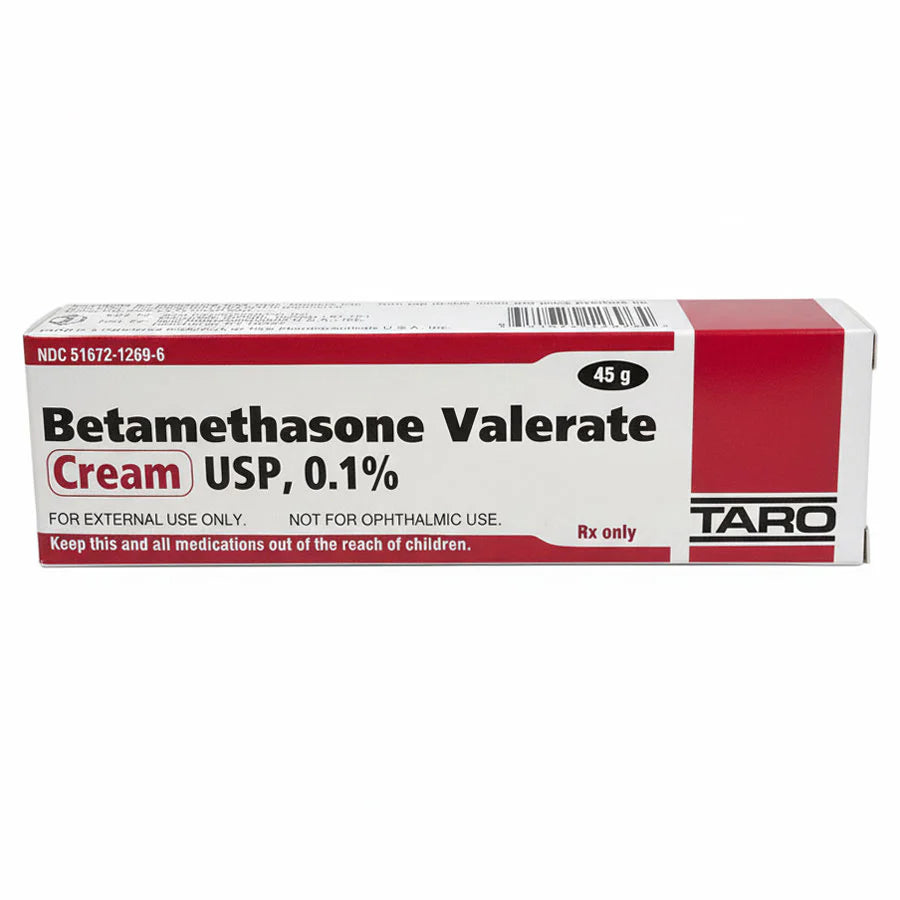
Betamethasone 0.1% Cream
Betamethasone 0.1% Cream
- ✔️ Relieves itching and redness from eczema and dermatitis
- ✔️ Potent corticosteroid — effective where milder creams have failed
- ✔️ Reduces skin inflammation visibly within days of use
- ✔️ Suitable for adults and children over one year of age
- ✔️ Targets psoriasis, contact dermatitis, and seborrhoeic dermatitis
Price Checker
 Lowest price guarantee
 Includes FREE private prescription


Couldn't load pickup availability
What Is Betamethasone Cream and What Does It Treat?
If you're dealing with persistent skin inflammation, itching, or redness that just won't settle, betamethasone cream could be the treatment your skin needs. Betamethasone 0.1% Cream is a topical corticosteroid — a type of medicine applied directly to the skin to reduce inflammation. It contains betamethasone valerate as its active ingredient and is widely used across the UK for a range of inflammatory skin conditions. You can browse our full range of creams and ointments if you're looking for additional topical treatments alongside this one.
This cream is classified as a potent corticosteroid by the British National Formulary (BNF). That means it's stronger than over-the-counter hydrocortisone but is appropriate for conditions that haven't responded to milder treatments. It's available at Cured Pharmacy for £14.49, making it an accessible option for those managing ongoing skin conditions.
How Does Betamethasone 0.1% Cream Work on the Skin?
Topical corticosteroids like betamethasone work by mimicking the anti-inflammatory effects of naturally occurring steroid hormones produced by the adrenal glands. When applied to the skin, the active ingredient is absorbed into skin cells and acts on specific receptors to reduce the production of inflammatory chemicals — including prostaglandins and cytokines — that cause redness, swelling, and itching.
- Reduces the release of inflammatory mediators in the skin
- Causes localised vasoconstriction (narrowing of blood vessels), which reduces redness and swelling
- Suppresses immune cell activity in the skin that drives inflammatory reactions
- Relieves itching by calming the nerve signals associated with skin irritation
The result is a noticeable reduction in the visible and physical symptoms of inflammatory skin conditions — often within a few days of starting treatment.
Who Is Betamethasone 0.1% Cream Suitable For?
This cream is intended for adults and children over the age of one year (under medical supervision for children). It's particularly useful for people whose skin condition hasn't responded adequately to milder corticosteroids such as hydrocortisone 1%. Always read the label and consult a pharmacist or GP if you're unsure whether this product is right for you.
- Adults with eczema (atopic dermatitis) causing significant itching and inflammation
- People with psoriasis affecting the body (not the face)
- Those experiencing contact dermatitis or allergic skin reactions
- Individuals with seborrhoeic dermatitis or other inflammatory skin conditions
How Does Betamethasone Cream Compare to Other Topical Steroids?
| Feature | Betamethasone 0.1% Cream | Hydrocortisone 1% Cream |
|---|---|---|
| Steroid potency | Potent | Mild |
| Suitable for face? | No (unless directed by doctor) | Short-term use only |
| Typical conditions treated | Eczema, psoriasis, contact dermatitis | Mild eczema, insect bites, mild rashes |
| Risk of skin thinning | Higher with prolonged use | Lower |
How Should Betamethasone 0.1% Cream Be Stored?
Store your betamethasone cream below 25°C, away from direct heat and sunlight. Keep the tube tightly closed when not in use, and always store it out of the reach and sight of children. Do not use the cream after the expiry date printed on the packaging — if in doubt, return it to your pharmacy for safe disposal. You can also explore our wider skin care range for complementary products to support your skin health routine.
This product is a medicine. Speak to your doctor or pharmacist before using if you have an underlying medical condition or are taking other medicines.
Betamethasone 0.1% Cream specifications
| Treatment category | Inflammatory skin conditions |
| Mechanism of action | Topical corticosteroid — reduces skin inflammation via glucocorticoid receptor activation |
| Effective for | Eczema, psoriasis, contact dermatitis, seborrhoeic dermatitis |
| Suitable for | Adults and children over 1 year (under medical supervision) |
| Active ingredient | Betamethasone valerate 0.1% |
| Strengths | 0.1% w/w |
| UK classification | Pharmacy (P) medicine |
| Drug class | Potent topical corticosteroid |
| Preparation | Cream |
| Route of administration | Topical (applied to skin) |
Specifications of Betamethasone 0.1% Cream
What Is Betamethasone 0.1% Cream and What Is It Used For?
Betamethasone 0.1% Cream is a topical medicine belonging to the corticosteroid family. It is used to treat a range of inflammatory skin conditions where the skin becomes red, itchy, swollen, or irritated. The active ingredient — betamethasone valerate — is a potent corticosteroid that works locally on the skin to reduce these symptoms. It does not cure the underlying condition but provides effective symptom relief, allowing the skin to recover.
Conditions commonly treated with this cream include atopic eczema, contact dermatitis, psoriasis (on the body), and seborrhoeic dermatitis. It is not suitable for treating skin infections, acne, or rosacea.
What Do You Need to Know Before Using Betamethasone 0.1% Cream?
Before applying this cream, it's important to be aware of the following contraindications and warnings:
- Do not use if you are allergic to betamethasone valerate or any other ingredient in the cream
- Do not apply to infected skin (bacterial, fungal, or viral infections) unless a separate antimicrobial treatment is also prescribed
- Do not use on the face, groin, or underarms unless specifically directed by a doctor
- Do not use on broken, ulcerated, or damaged skin
- Avoid use around the eyes — contact can cause glaucoma or cataracts with prolonged exposure
- Use with caution in children — their skin absorbs more of the medicine, increasing the risk of systemic effects
- Speak to your GP before using during pregnancy or whilst breastfeeding
- Do not use under airtight dressings unless directed by a healthcare professional
Known drug interactions to be aware of:
- Ritonavir and itraconazole — may increase the systemic absorption of betamethasone, raising the risk of side effects
- Other topical corticosteroids — avoid using simultaneously on the same area
How Should You Use Betamethasone 0.1% Cream?
Always use this cream exactly as directed by your pharmacist or doctor. Do not apply more than recommended, and do not use it for longer than advised. If you're also managing a fungal skin issue, our athletes foot and fungal infections range may be helpful alongside your treatment plan.
- Wash and dry your hands thoroughly before applying the cream
- Clean and gently dry the affected area of skin
- Squeeze a small amount of cream onto your fingertip — a thin layer is all that's needed
- Apply gently to the affected area and rub in lightly until absorbed
- Wash your hands again after application (unless the hands are the area being treated)
- Do not cover the treated area with an airtight bandage or dressing unless instructed
| Indication | Age Group | Dose | Frequency |
|---|---|---|---|
| Eczema / dermatitis | Adults | Thin layer to affected area | Once or twice daily |
| Psoriasis (body) | Adults | Thin layer to affected area | Once or twice daily |
| Inflammatory skin conditions | Children over 1 year | Thin layer — minimum effective amount | Once daily (under medical supervision) |
What Are the Possible Side Effects of Betamethasone 0.1% Cream?
Like all medicines, betamethasone cream can cause side effects, although not everyone experiences them. Most side effects are local — meaning they occur at the site of application — and are more likely with prolonged or excessive use.
Common side effects:
- Burning, stinging, or itching at the application site
- Skin dryness or mild irritation
- Temporary redness after application
Less common side effects (more likely with prolonged use):
- Skin thinning (atrophy) — particularly with long-term use or use on delicate skin areas
- Stretch marks (striae)
- Increased hair growth at the application site (hypertrichosis)
- Changes in skin pigmentation
- Perioral dermatitis (if used near the mouth)
- Adrenal suppression — rare, but possible with large amounts applied over a long period
If you notice any unusual skin changes or your symptoms worsen, stop using the cream and speak to your pharmacist or GP promptly.
How Should You Store Betamethasone 0.1% Cream?
- Store below 25°C in a cool, dry place
- Keep away from direct sunlight and heat sources
- Keep the tube tightly closed when not in use
- Store out of the reach and sight of children
- Do not use after the expiry date printed on the tube or carton
- Do not dispose of medicines via household waste — return unused cream to your pharmacy
If you're looking for other skin-related treatments or want to explore complementary options, our skin care collection has a wide range of products to support your routine.
References
Written and reviewed by our qualified team
Your safety and success are our highest priorities. Our medical team rigorously evaluates every product and piece of advice we provide, ensuring you receive only the most effective, science-backed solutions available.
Frequently Asked Questions
Where can I buy betamethasone cream online in the UK?
You can buy Betamethasone 0.1% Cream directly from Cured Pharmacy, a GPhC-registered online pharmacy in the UK. It is available for £14.49 and dispatched discreetly to your address. Browse our full creams and ointments range for related topical treatments.
How does betamethasone cream work on inflamed skin?
Betamethasone valerate is a potent topical corticosteroid that works by binding to glucocorticoid receptors inside skin cells, reducing the production of inflammatory chemicals such as prostaglandins and cytokines. This suppresses the immune response in the skin, relieving redness, swelling, and itching. It also causes localised vasoconstriction, which further reduces visible inflammation.
How do I apply betamethasone 0.1% cream step by step?
Wash your hands, then clean and dry the affected skin area. Apply a thin layer of cream to the affected area and gently rub it in until absorbed. Wash your hands again afterwards, and avoid covering the area with an airtight dressing unless your doctor has told you to.
How long does betamethasone cream take to work?
Most people notice a reduction in itching and redness within two to three days of starting treatment. Full improvement may take up to two weeks, depending on the severity of the skin condition. If there is no improvement after two to four weeks, speak to your GP or pharmacist.
How often should I apply betamethasone cream each day?
The usual dose for adults is a thin layer applied once or twice daily to the affected area. Your doctor or pharmacist will advise the most appropriate frequency for your specific condition. Applying more than recommended does not improve results and increases the risk of side effects.
Can I use betamethasone cream on my face?
You should not apply betamethasone 0.1% cream to the face unless a doctor has specifically told you to. Facial skin is thinner and absorbs more of the medicine, increasing the risk of side effects such as skin thinning, perioral dermatitis, and changes in pigmentation. A milder corticosteroid is usually recommended for facial use.
What are the side effects of betamethasone 0.1% cream?
Common side effects include burning, stinging, or mild irritation at the application site. With prolonged use, more significant effects such as skin thinning, stretch marks, and changes in skin colour can occur. If you notice any worsening of your skin or unexpected changes, stop using the cream and consult your pharmacist or GP.
Who is eligible to use betamethasone cream?
Betamethasone 0.1% Cream is suitable for adults and children over one year of age, though children should only use it under medical supervision. It is intended for people with inflammatory skin conditions such as eczema, psoriasis, or contact dermatitis that have not responded to milder treatments. It is not suitable for people with skin infections, acne, or rosacea.
Is betamethasone cream safe to use during pregnancy?
Betamethasone cream should be used with caution during pregnancy, as some of the medicine can be absorbed through the skin into the bloodstream. Always speak to your GP or midwife before using any topical corticosteroid if you are pregnant or breastfeeding. They can advise whether the benefits outweigh any potential risks in your situation.
What happens if I miss an application of betamethasone cream?
If you forget to apply the cream at your usual time, apply it as soon as you remember — unless it is nearly time for your next application, in which case skip the missed dose. Do not apply a double amount to make up for a missed application. Simply continue with your regular schedule.
What is the difference between betamethasone cream and betamethasone ointment?
Both contain the same active ingredient at the same strength, but the formulation differs. The cream is water-based and is generally preferred for moist or weeping skin conditions, as it is lighter and less greasy. The ointment is oil-based and is better suited to dry, thickened, or scaly skin, as it provides a more occlusive barrier that helps retain moisture.
How does betamethasone cream compare to hydrocortisone cream?
Betamethasone 0.1% is classified as a potent corticosteroid, whereas hydrocortisone 1% is mild. Betamethasone is used when milder steroids have not been effective enough, or when the skin condition is more severe. Because it is stronger, it carries a higher risk of side effects with prolonged use and requires more careful monitoring.
How long can you use betamethasone cream for?
Treatment should generally be limited to the shortest duration necessary to control symptoms — typically no longer than two to four weeks for most conditions. Prolonged use increases the risk of skin thinning and other side effects. If your condition requires longer-term management, your GP can advise on a suitable treatment plan.
Are there any alternatives to betamethasone cream?
Yes — alternatives include other topical corticosteroids such as mometasone furoate 0.1% (also potent) or clobetasone butyrate 0.05% (moderate). For milder conditions, hydrocortisone 1% may be sufficient. Your pharmacist or GP can help you choose the most appropriate option based on your skin condition and medical history. You can also explore our skin care collection for complementary options.
What are the latest clinical findings on topical betamethasone use?
Current clinical guidance from the NHS and BNF continues to support betamethasone valerate 0.1% as a first-line potent topical corticosteroid for inflammatory skin conditions in adults. Research consistently highlights the importance of using the minimum effective amount for the shortest possible duration to minimise the risk of skin atrophy and systemic absorption. Fingertip unit guidance is widely recommended to help patients apply the correct quantity.
Written and reviewed by our qualified team

Reviewed by:
Tarun Kumar
Superintendent/ Clinical Lead
📖 Find out more about our team of medical content authors and how we ensure the accuracy of our content with our content guidelines.
Content last updated: 14 Sep 2026
Other popular options


We’re a safe and
regulated UK service

Lowest Price Guarantee

We're convinced you won't find your treatment cheaper, but if you do we'll refund the difference.
Find out more
100% discreet packaging

Discreet, unbranded packaging for every order.
Find out more

Need help?
Talk to our friendly experts now


How our service works

Service setup

Discreet packaging

Express delivery