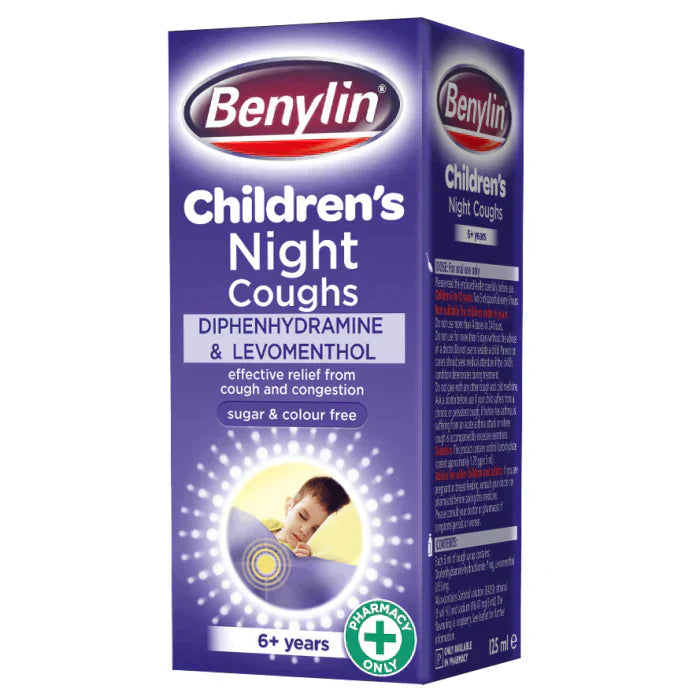
Benylin Children's Night Coughs 6+ Years – 125ml
Benylin Children's Night Coughs 6+ Years – 125ml
- ✔️ Relieves dry and tickly night-time coughs in children aged 6+
- ✔️ Contains diphenhydramine to suppress the cough reflex overnight
- ✔️ Sedating formula helps children fall and stay asleep
- ✔️ Suitable for children aged 6 to 12 years and over
- ✔️ Oral liquid format for easy, accurate dosing at bedtime
Price Checker
 Lowest price guarantee
 Includes FREE private prescription


Couldn't load pickup availability
Is Benylin Children's Night Cough Syrup Right for Your Child?
When your child's cough keeps them — and you — awake through the night, finding something that actually helps matters. Benylin children's night cough syrup is a well-established over-the-counter liquid medicine formulated specifically for children aged 6 years and over. It targets dry and tickly coughs that tend to worsen at bedtime, helping your child settle and sleep more comfortably. You can browse our full range of cold and flu remedies if you're looking for additional support during the colder months.
Each 125ml bottle contains diphenhydramine hydrochloride as its active ingredient — a sedating antihistamine with a well-documented cough-suppressant action. The NHS notes that most coughs in children are caused by viral upper respiratory tract infections and will resolve on their own, but symptomatic relief at night can make a real difference to your child's rest and recovery.
How Does Benylin Children's Night Coughs Work in the Body?
Diphenhydramine hydrochloride works through two complementary mechanisms that make it particularly suited to night-time use. Understanding how it acts can help you feel more confident about using it appropriately.
- Cough suppression: Diphenhydramine acts centrally on the brain's cough centre, reducing the frequency and intensity of the cough reflex.
- Antihistamine action: It blocks H1 histamine receptors, which can help calm irritation in the upper airways that triggers tickly coughs.
- Sedative effect: As a first-generation antihistamine, it crosses the blood-brain barrier and causes drowsiness — an intentional benefit when used at bedtime.
- Onset of action: Effects are typically felt within 30 minutes of taking the dose, making it practical to give shortly before your child's usual bedtime.
Because of its sedating properties, this medicine is designed exclusively for night-time use. It should never be given during the day or before activities requiring alertness.
Who Is Benylin Children's Night Coughs Suitable For?
This product is intended for children who are experiencing a dry or tickly cough that is disrupting their sleep. It is not a treatment for the underlying cause of the cough — rather, it provides symptomatic relief overnight. If your child also has other cold symptoms, you might find our baby and toddler health range useful for broader support.
- Children aged 6 to 12 years with a dry or tickly night-time cough
- Children aged 12 years and over who need overnight cough relief
- Children whose cough is disrupting sleep but who have no known contraindications
- Families looking for a trusted, pharmacist-recommended branded option
It is not suitable for children under 6 years of age, and it should not be used in children with certain medical conditions (see the patient information section below for full details).
How Does Benylin Children's Night Coughs Compare to Similar Products?
| Feature | Benylin Children's Night Coughs | Piriton Syrup (Chlorphenamine) |
|---|---|---|
| Active ingredient | Diphenhydramine hydrochloride | Chlorphenamine maleate |
| Primary use | Night-time cough relief | Allergy and hay fever relief |
| Minimum age | 6 years | 1 year (with caution) |
| Sedating effect | Yes — intended for night use | Yes — may cause drowsiness |
How Should You Store Benylin Children's Night Coughs?
Store the bottle below 25°C, away from direct sunlight and heat sources. Always keep it out of the reach and sight of children — even though it is a children's medicine, accidental overdose is a risk if the bottle is left accessible. Once opened, check the label for any in-use expiry guidance and do not use the product beyond the printed expiry date on the packaging.
If you are unsure whether Benylin children's night cough syrup is appropriate for your child given their medical history or current medications, speak to your pharmacist before use. This is especially important if your child has asthma, epilepsy, liver or kidney problems, or is taking any other medicines.
This product is a medicine. Speak to your doctor or pharmacist before using if you have an underlying medical condition or are taking other medicines.
Benylin Children's Night Coughs 6+ Years – 125ml specifications
| Treatment category | Cough suppressant / Night-time cough relief |
| Mechanism of action | Central cough suppression and H1 antihistamine blockade via diphenhydramine hydrochloride |
| Effective for | Dry and tickly night-time coughs in children |
| Suitable for | Children aged 6 years and over |
| Active ingredient | Diphenhydramine hydrochloride |
| Pack size | 125ml |
| UK classification | General Sale List (GSL) |
| Drug class | First-generation sedating antihistamine / Cough suppressant |
| Preparation | Oral liquid (syrup) |
| Route of administration | Oral |
Specifications of Benylin Children's Night Coughs 6+ Years – 125ml
What Is Benylin Children's Night Coughs and What Is It Used For?
Benylin Children's Night Coughs 6+ Years is an oral liquid medicine used to relieve dry and tickly coughs in children aged 6 years and over. It contains diphenhydramine hydrochloride, a sedating antihistamine that suppresses the cough reflex and promotes sleep — making it specifically suited to night-time use. It does not treat the underlying cause of a cough, such as a viral infection, but it can meaningfully reduce the frequency of coughing overnight so your child gets the rest they need to recover.
The NHS advises that most childhood coughs are caused by common colds and upper respiratory tract infections, which typically resolve within two to three weeks without medical treatment. Symptomatic relief, however, can support your child's comfort and sleep quality during this time.
What Do You Need to Know Before Using Benylin Children's Night Coughs?
Before giving this medicine to your child, read the following carefully. There are situations where this product should not be used, and others where extra caution is needed.
Do not use this product if your child:
- Is under 6 years of age
- Is allergic to diphenhydramine hydrochloride or any other ingredient in the product
- Has a productive (chesty) cough with phlegm — this medicine is for dry and tickly coughs only
- Has asthma or chronic obstructive pulmonary disease (COPD)
- Has epilepsy or a history of seizures
- Has glaucoma (raised pressure in the eye)
- Has difficulty urinating due to an enlarged prostate or bladder problems
- Is taking monoamine oxidase inhibitors (MAOIs) or has taken them within the last 14 days
Possible drug interactions — do not use alongside:
- Other antihistamines (including those in other cold or allergy medicines)
- Sedatives, sleeping tablets, or tranquillisers
- Tricyclic antidepressants
- MAOIs
- Medicines for anxiety or psychosis
Always check with a pharmacist if your child is taking any other medicines before using this product. You can also explore our ear, nose and throat range for complementary products that may help with associated cold symptoms.
How Should You Use Benylin Children's Night Coughs?
Always use the measuring device provided with the bottle to ensure an accurate dose. Never use a kitchen spoon, as this can lead to under- or over-dosing.
- Shake the bottle gently before use.
- Measure the correct dose using the supplied measuring cup or spoon.
- Give the dose to your child at bedtime only — not during the day.
- Do not give more than one dose in 24 hours.
- Do not use for more than 3 consecutive nights without seeking pharmacist or GP advice.
| Age Group | Dose | Frequency | Maximum per 24 hours |
|---|---|---|---|
| Under 6 years | Do not use | — | — |
| 6 to 12 years | 10ml | Once at bedtime | 10ml |
| 12 years and over | 10–20ml | Once at bedtime | 20ml |
What Are the Possible Side Effects of Benylin Children's Night Coughs?
Like all medicines, this product can cause side effects, although not everyone will experience them. Because diphenhydramine is a sedating antihistamine, some effects are expected and are part of how the medicine works at night.
Common side effects:
- Drowsiness (this is expected and intended at night)
- Dry mouth
- Dizziness
- Headache
Less common side effects:
- Difficulty urinating
- Blurred vision
- Nausea or stomach upset
- Paradoxical excitability (particularly in younger children — restlessness or agitation instead of drowsiness)
- Palpitations
If your child experiences paradoxical excitability, stop the medicine and speak to a pharmacist or GP. This reaction, while uncommon, is more likely in younger children and is a known effect of first-generation antihistamines. If you notice any signs of an allergic reaction — such as rash, swelling, or difficulty breathing — seek emergency medical attention immediately.
How Should You Store Benylin Children's Night Coughs?
- Store below 25°C in a cool, dry place.
- Keep away from direct sunlight and heat.
- Keep the bottle tightly closed when not in use.
- Store out of the reach and sight of children at all times.
- Do not use after the expiry date printed on the label or carton.
- Do not dispose of medicines via wastewater or household waste — return unused medicine to your pharmacist for safe disposal.
If you have any concerns about your child's cough or their response to this medicine, speak to your pharmacist or GP. For general support during cold and flu season, our vitamins and supplements range includes options that may help support your child's immune system alongside symptomatic treatment.
References
Written and reviewed by our qualified team
Your safety and success are our highest priorities. Our medical team rigorously evaluates every product and piece of advice we provide, ensuring you receive only the most effective, science-backed solutions available.
Frequently Asked Questions
Where can I buy Benylin Children's Night Coughs 6+ Years online in the UK?
You can buy Benylin Children's Night Coughs 6+ Years 125ml directly from Cured Pharmacy, a UK GPhC-registered online pharmacy. It is available without a prescription as an over-the-counter medicine. Simply add it to your basket and it will be dispatched promptly to your door.
How does Benylin Children's Night Coughs work in the body?
The active ingredient, diphenhydramine hydrochloride, is a first-generation sedating antihistamine that works by suppressing the cough reflex centrally in the brain. It also blocks H1 histamine receptors, which helps calm airway irritation that triggers tickly coughs. The sedative effect is intentional and helps children sleep through the night more comfortably.
What age is Benylin Children's Night Coughs suitable for?
This product is suitable for children aged 6 years and over only. It must not be given to children under 6 years of age under any circumstances. If your child is under 6 and has a cough, speak to your pharmacist or GP for age-appropriate advice.
What is the correct dose of Benylin Children's Night Coughs for a 7-year-old?
For children aged 6 to 12 years, the recommended dose is 10ml taken once at bedtime. This should not be repeated within 24 hours. Always use the measuring device provided with the bottle rather than a household spoon to ensure accuracy.
Can I give Benylin Children's Night Coughs during the day?
No — this medicine is formulated specifically for night-time use only. Diphenhydramine causes significant drowsiness, which is an intended effect at bedtime but would be unsafe and inappropriate during the day. If your child needs daytime cough relief, speak to a pharmacist about suitable alternatives.
How long can you use Benylin Children's Night Coughs for?
This medicine should not be used for more than 3 consecutive nights without seeking advice from a pharmacist or GP. If your child's cough persists beyond this period, it may indicate an underlying condition that requires further assessment. Prolonged use without medical guidance is not recommended.
What are the side effects of Benylin Children's Night Coughs?
Common side effects include drowsiness, dry mouth, dizziness, and headache. Less commonly, children may experience difficulty urinating, blurred vision, nausea, or paradoxical excitability — where a child becomes restless rather than sleepy. If you notice any unusual or concerning reactions, stop the medicine and contact your pharmacist or GP.
Can Benylin Children's Night Coughs be given with paracetamol?
There is no known direct interaction between diphenhydramine and paracetamol, but you should always check with a pharmacist before combining any medicines. Ensure you are not giving your child any other products that also contain antihistamines, as this could lead to excessive sedation. Always read the labels of all medicines your child is taking.
Is Benylin Children's Night Coughs suitable for children with asthma?
No — this product is not recommended for children with asthma. Diphenhydramine can thicken bronchial secretions and may worsen respiratory symptoms in children with asthma or other chronic respiratory conditions. If your child has asthma and a night-time cough, consult your GP or asthma nurse for appropriate management.
What happens if I accidentally give my child too much Benylin Children's Night Coughs?
If you think your child has taken more than the recommended dose, contact NHS 111 or go to your nearest A&E immediately. Symptoms of overdose may include extreme drowsiness, rapid heartbeat, agitation, or difficulty breathing. Always keep medicines stored safely out of children's reach to prevent accidental ingestion.
What are the alternatives to Benylin Children's Night Coughs?
Alternatives for children's night-time cough relief include simple linctus or glycerol-based soothing syrups, which are suitable for younger children and those where antihistamines are contraindicated. Honey and warm water is also recommended by the NHS for children over 1 year as a soothing home remedy. You can explore our full cold and flu range for other options.
Does Benylin Children's Night Coughs contain sugar or alcohol?
You should check the patient information leaflet included with the product for the full list of excipients, including whether the formulation contains sugar or alcohol. If your child has diabetes or a specific dietary requirement, speak to your pharmacist before use to confirm suitability.
Who is not eligible to use Benylin Children's Night Coughs?
This product is not suitable for children under 6 years, children with asthma, epilepsy, glaucoma, or urinary retention, or those taking MAOIs or other sedating medicines. Children with a productive (chesty) cough producing phlegm should also not use this product, as it is designed for dry and tickly coughs only.
What is the best time to give Benylin Children's Night Coughs?
Give the dose at your child's usual bedtime, approximately 20 to 30 minutes before they settle down to sleep. This allows time for the medicine to take effect before they try to fall asleep. Do not give it earlier in the evening when your child is still active, as the drowsiness could cause falls or accidents.
Are there any recent studies on diphenhydramine for children's coughs?
Current NHS and NICE guidance acknowledges that evidence for over-the-counter cough medicines in children is limited, and most coughs resolve without treatment. Diphenhydramine is an established antihistamine with a long history of use for night-time cough suppression in children aged 6 and over, but it should be used for the shortest time necessary. Always follow the dosage instructions and consult a healthcare professional if you have concerns. You can also find supportive products in our baby and toddler health range.
Written and reviewed by our qualified team

Reviewed by:
Tarun Kumar
Superintendent/ Clinical Lead
📖 Find out more about our team of medical content authors and how we ensure the accuracy of our content with our content guidelines.
Content last updated: 14 Sep 2026
Other popular options


We’re a safe and
regulated UK service

Lowest Price Guarantee

We're convinced you won't find your treatment cheaper, but if you do we'll refund the difference.
Find out more
100% discreet packaging

Discreet, unbranded packaging for every order.
Find out more

Need help?
Talk to our friendly experts now


How our service works

Service setup

Discreet packaging

Express delivery