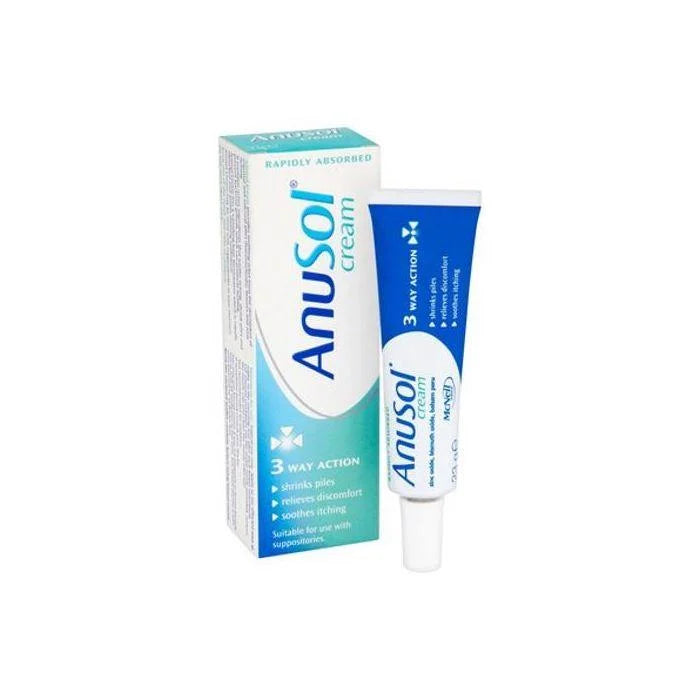
AnuSol Cream
- ✔️ Soothes itching and soreness caused by external haemorrhoids
- ✔️ Protective barrier reduces further irritation around the anus
- ✔️ Astringent action helps reduce swelling of haemorrhoid tissue
- ✔️ Suitable for adults seeking non-steroid, prescription-free piles relief
- ✔️ Gentle formula without local anaesthetic — well tolerated for short-term use
Price Checker
 Lowest price guarantee
 Includes FREE private prescription


Couldn't load pickup availability
What Is AnuSol Cream for Piles?
Haemorrhoids — more commonly known as piles — affect a significant number of people in the UK at some point in their lives. They can cause itching, soreness, swelling, and general discomfort around the back passage, and while they're rarely dangerous, they can be genuinely miserable to live with. AnuSol cream for piles is one of the most widely recognised over-the-counter treatments available, offering targeted relief from these uncomfortable symptoms without the need for a prescription. You can browse our full range of haemorrhoids and piles treatments to find the right option for you.
AnuSol Cream contains a combination of active ingredients — zinc oxide, bismuth oxide, bismuth subgallate, and Peru balsam — that work together to soothe irritated tissue, reduce swelling, and protect the sensitive skin around the anal area. It's a trusted name that's been used in the UK for decades, and at just £4.50, it's an accessible first-line option for managing mild to moderate haemorrhoid symptoms at home.
How Does AnuSol Cream Work on Haemorrhoids?
The cream works through a combination of astringent, protective, and soothing actions. Rather than a single mechanism, it targets several aspects of haemorrhoid discomfort simultaneously. Here's how each ingredient contributes:
- Zinc oxide — acts as an astringent and skin protectant, helping to reduce irritation and form a mild barrier over inflamed tissue.
- Bismuth oxide and bismuth subgallate — provide astringent and mild antiseptic properties, helping to reduce swelling and protect the mucous membrane.
- Peru balsam — promotes healing of damaged skin and has mild antiseptic qualities, helping to soothe soreness and support tissue recovery.
Together, these ingredients help calm the inflammation and discomfort associated with external haemorrhoids. The cream doesn't contain a local anaesthetic or a corticosteroid, which means it's generally well tolerated for short-term use without the risks associated with steroid-containing preparations.
Who Should Use AnuSol Cream?
AnuSol Cream is suitable for adults who are experiencing the typical symptoms of external haemorrhoids. It's particularly useful if you're dealing with itching, soreness, or mild swelling around the anal area. That said, it's not appropriate for everyone, and it's worth knowing whether it's the right fit for your situation before you buy.
It may be suitable for you if you:
- Are an adult aged 18 or over experiencing external haemorrhoid symptoms
- Have mild to moderate itching, soreness, or discomfort around the back passage
- Are looking for a non-steroid, over-the-counter option for short-term symptom relief
- Have not been diagnosed with any condition affecting the anal area that requires prescription treatment
It is not suitable for children under 18 without medical advice, and you should always speak to a pharmacist or GP if you're unsure whether AnuSol Cream is appropriate for your specific symptoms.
How Does AnuSol Cream Compare to Other Piles Treatments?
| Feature | AnuSol Cream | Germoloids Cream |
|---|---|---|
| Active ingredients | Zinc oxide, bismuth oxide, bismuth subgallate, Peru balsam | Lidocaine hydrochloride, zinc oxide |
| Contains local anaesthetic? | No | Yes (lidocaine) |
| Contains corticosteroid? | No | No |
| Primary action | Astringent, protective, soothing | Numbing, astringent, protective |
Is AnuSol Cream Suitable for Long-Term Use and How Should It Be Stored?
AnuSol cream for piles is intended for short-term use only — typically no longer than seven days. If your symptoms haven't improved within that time, or if they worsen at any point, you should stop using the cream and consult your GP or pharmacist. Prolonged use without medical supervision isn't recommended, as persistent haemorrhoid symptoms can sometimes indicate an underlying condition that needs further investigation.
Store AnuSol Cream below 25°C, away from direct heat and sunlight. Keep it out of the reach and sight of children. Do not use the cream after the expiry date printed on the packaging. If you're managing other digestive symptoms alongside piles — such as constipation, which is a common contributing factor — it may also be worth exploring our constipation treatments to address the root cause.
This product is a medicine. Speak to your doctor or pharmacist before using if you have an underlying medical condition or are taking other medicines.
AnuSol Cream specifications
| Treatment category | Haemorrhoids / Piles |
| Mechanism of action | Astringent, skin protectant, mild antiseptic |
| Effective for | Itching, soreness, swelling associated with external haemorrhoids |
| Suitable for | Adults aged 18 and over |
| Active ingredients | Zinc oxide, bismuth oxide, bismuth subgallate, Peru balsam |
| UK classification | General Sale List (GSL) |
| Drug class | Astringent / Skin protectant |
| Preparation | Cream |
| Route of administration | Topical / Rectal (external use) |
Specifications of AnuSol Cream
What Is AnuSol Cream and What Is It Used For?
AnuSol Cream is an over-the-counter topical medicine used to relieve the symptoms of haemorrhoids (piles). Haemorrhoids are swollen blood vessels in and around the rectum and anus that can cause itching, pain, swelling, and discomfort. According to the NHS, haemorrhoids are very common and often improve on their own, but treatments like AnuSol Cream can help ease symptoms while the body heals. The cream is applied externally to the skin around the anus and is not intended for internal use unless specifically directed by a healthcare professional.
AnuSol cream for piles is classified as a General Sale List (GSL) medicine in the UK, meaning it can be purchased without a prescription. It is suitable for adults aged 18 and over and is designed for short-term symptomatic relief only.
What Do You Need to Know Before Using AnuSol Cream?
Before using AnuSol Cream, it's important to check that it's appropriate for you. Do not use this cream if any of the following apply:
- You are allergic to zinc oxide, bismuth compounds, Peru balsam, or any other ingredient in the cream
- You have been diagnosed with a condition affecting the anal area that requires prescription treatment
- You are under 18 years of age (use only under medical supervision)
- You are pregnant or breastfeeding — speak to your GP or midwife first
- You have rectal bleeding that has not been investigated by a doctor
- Your symptoms have not been previously diagnosed as haemorrhoids
There are no well-documented significant drug interactions with AnuSol Cream when used topically as directed. However, as a general precaution:
- Avoid using alongside other topical preparations in the same area without pharmacist advice
- Do not use with other rectal medicines at the same time unless advised by a healthcare professional
How Should You Use AnuSol Cream?
Using AnuSol Cream correctly is straightforward, but it's worth following the steps carefully to get the most benefit and avoid unnecessary irritation. Always read the patient information leaflet supplied with the product before use.
- Wash your hands thoroughly before and after application.
- Clean the affected area gently with mild soap and water, then pat dry with a soft cloth.
- Squeeze a small amount of cream (approximately 2–3 cm) onto your fingertip.
- Apply the cream gently to the external anal area, covering the affected skin.
- Do not insert the cream internally unless using the applicator nozzle as directed by a healthcare professional.
- Wash your hands again after application.
| Indication | Age Group | Dose | Frequency |
|---|---|---|---|
| External haemorrhoid symptoms | Adults (18+) | Small amount (~2–3 cm) | Up to 3 times daily and after each bowel movement |
| External haemorrhoid symptoms | Under 18 | Not recommended without medical advice | — |
If you're also managing digestive discomfort alongside your haemorrhoid symptoms, our IBS and cramps treatments may offer additional support for related gut health concerns.
What Are the Possible Side Effects of AnuSol Cream?
Like all medicines, AnuSol Cream can cause side effects, although not everyone experiences them. Most people tolerate it well when used as directed. If you notice any unexpected reaction, stop using the cream and speak to your pharmacist or GP.
Common side effects:
- Mild local skin irritation at the site of application
- Temporary stinging or burning sensation immediately after application
Less common side effects:
- Allergic skin reaction (redness, rash, or swelling around the application area)
- Worsening of local irritation
Peru balsam, one of the active ingredients, is a known sensitiser and can occasionally cause contact dermatitis in susceptible individuals. If you develop a rash or notice increased redness after use, discontinue the cream and seek pharmacist advice promptly.
How Should You Store AnuSol Cream?
Correct storage helps maintain the cream's effectiveness and safety throughout its shelf life. Follow these guidelines:
- Store below 25°C in a cool, dry place
- Keep away from direct sunlight and heat sources
- Keep the tube tightly closed when not in use
- Keep out of the reach and sight of children
- Do not use after the expiry date printed on the tube or carton
- Do not dispose of medicines via wastewater or household waste — return unused medicines to your pharmacy
For further information on managing haemorrhoid symptoms and related conditions, you may also find our pain relief collection helpful for managing associated discomfort.
References
Written and reviewed by our qualified team
Your safety and success are our highest priorities. Our medical team rigorously evaluates every product and piece of advice we provide, ensuring you receive only the most effective, science-backed solutions available.
Frequently Asked Questions
Where can I buy AnuSol Cream online in the UK?
You can buy AnuSol Cream online in the UK from Cured Pharmacy, a GPhC-registered online pharmacy, for just £4.50. It is available without a prescription as an over-the-counter medicine. Simply add it to your basket and it will be dispatched directly to your door. You can also browse our full haemorrhoids and piles collection for related products.
How does AnuSol Cream work on piles?
AnuSol Cream works through a combination of astringent and protective actions. Its active ingredients — zinc oxide, bismuth oxide, bismuth subgallate, and Peru balsam — soothe irritated tissue, reduce swelling, and form a protective barrier over the affected skin. This helps relieve the itching, soreness, and discomfort associated with external haemorrhoids. It does not contain a local anaesthetic or corticosteroid, making it a gentle first-line option.
How do I apply AnuSol Cream step by step?
Start by washing your hands and cleaning the affected area gently with mild soap and water, then pat dry. Apply a small amount of cream (around 2–3 cm) to the external anal area up to three times daily and after each bowel movement. Always wash your hands again after application, and avoid inserting the cream internally unless directed by a healthcare professional.
What is the correct dose of AnuSol Cream for adults?
For adults aged 18 and over, apply a small amount of AnuSol Cream to the affected external area up to three times a day and after each bowel movement. Do not exceed this frequency without medical advice. The cream should be used for no longer than seven days unless a doctor advises otherwise.
How long can I use AnuSol Cream for?
AnuSol Cream is intended for short-term use only — typically no more than seven days. If your symptoms have not improved within this time, or if they worsen at any point, stop using the cream and consult your GP or pharmacist. Persistent haemorrhoid symptoms should always be investigated to rule out other causes. Long-term unsupervised use is not recommended.
What are the side effects of AnuSol Cream?
Side effects are uncommon but can include mild local skin irritation, a temporary stinging or burning sensation after application, or — less commonly — an allergic skin reaction such as redness or a rash. Peru balsam, one of the active ingredients, is a known sensitiser and may cause contact dermatitis in some people. If you notice any worsening irritation or an unusual reaction, stop using the cream and speak to your pharmacist promptly.
Can I use AnuSol Cream during pregnancy?
Haemorrhoids are particularly common during pregnancy due to increased pressure on the pelvic blood vessels. However, you should speak to your GP, midwife, or pharmacist before using AnuSol Cream while pregnant or breastfeeding, as not all topical treatments are automatically considered safe in these circumstances. Your healthcare professional can advise on the most appropriate option for you.
Is AnuSol Cream suitable for children?
AnuSol Cream is not recommended for use in children under 18 without specific medical advice. Haemorrhoids are uncommon in children, and any rectal symptoms in a child should be assessed by a GP before any treatment is started. Do not apply this cream to a child without first consulting a healthcare professional.
What is the difference between AnuSol Cream and AnuSol Suppositories?
AnuSol Cream is applied externally to the skin around the anus and is most suitable for external haemorrhoid symptoms such as itching and soreness. AnuSol Suppositories are inserted into the rectum and are designed to treat internal haemorrhoids. Your pharmacist can help you decide which formulation is more appropriate based on the location and nature of your symptoms.
What are the alternatives to AnuSol Cream for piles?
There are several over-the-counter alternatives to AnuSol Cream, including Germoloids Cream (which contains a local anaesthetic, lidocaine), Preparation H, and Proctosedyl Ointment (available on prescription). Lifestyle measures such as increasing dietary fibre, staying hydrated, and avoiding straining during bowel movements are also recommended by the NHS to help manage and prevent haemorrhoids. You can explore our haemorrhoids and piles range for more options.
Can AnuSol Cream be used for anal fissures?
AnuSol Cream is specifically licensed for the relief of haemorrhoid symptoms and is not indicated for the treatment of anal fissures. Anal fissures are small tears in the lining of the anus and typically require different treatments, such as topical glyceryl trinitrate (GTN) ointment, which is available on prescription. If you suspect you have an anal fissure, speak to your GP for an accurate diagnosis and appropriate treatment.
Does AnuSol Cream contain a steroid?
No, AnuSol Cream does not contain a corticosteroid. It relies on astringent and protective ingredients — zinc oxide, bismuth oxide, bismuth subgallate, and Peru balsam — to relieve symptoms. If you need a steroid-containing haemorrhoid treatment, products such as Anusol HC or Proctosedyl (both prescription-only) may be considered, but these require a GP consultation first.
What should I do if my haemorrhoid symptoms don't improve with AnuSol Cream?
If your symptoms have not improved after seven days of using AnuSol Cream, or if they worsen at any point, you should stop using the cream and consult your GP. Persistent or severe haemorrhoid symptoms may require further investigation or a different treatment approach, such as banding, sclerotherapy, or surgical intervention in more serious cases. The NHS recommends seeking medical advice if you experience rectal bleeding, as this should always be assessed by a doctor.
Can constipation make haemorrhoids worse, and how can I help prevent this?
Yes — straining during bowel movements due to constipation is one of the most common causes and aggravating factors for haemorrhoids. The NHS recommends increasing your intake of dietary fibre, drinking plenty of water, and taking regular exercise to keep stools soft and regular. If constipation is an ongoing issue, our constipation treatments may help address the underlying cause alongside using AnuSol Cream for symptom relief.
Is there any latest research on topical haemorrhoid treatments like AnuSol Cream?
Current clinical guidance, including that from the BNF and NHS, continues to support the use of topical astringent and protective preparations such as AnuSol Cream as a first-line symptomatic treatment for mild to moderate haemorrhoids. Research consistently highlights that lifestyle modifications — particularly dietary fibre intake and hydration — remain the cornerstone of haemorrhoid management, with topical treatments providing valuable short-term symptom relief. Always consult your pharmacist or GP for the most up-to-date personalised advice.
Written and reviewed by our qualified team

Reviewed by:
Tarun Kumar
Superintendent/ Clinical Lead
📖 Find out more about our team of medical content authors and how we ensure the accuracy of our content with our content guidelines.
Content last updated: 14 Sep 2026
Other popular options


We’re a safe and
regulated UK service

Lowest Price Guarantee

We're convinced you won't find your treatment cheaper, but if you do we'll refund the difference.
Find out more
100% discreet packaging

Discreet, unbranded packaging for every order.
Find out more

Need help?
Talk to our friendly experts now


How our service works

Service setup

Discreet packaging

Express delivery