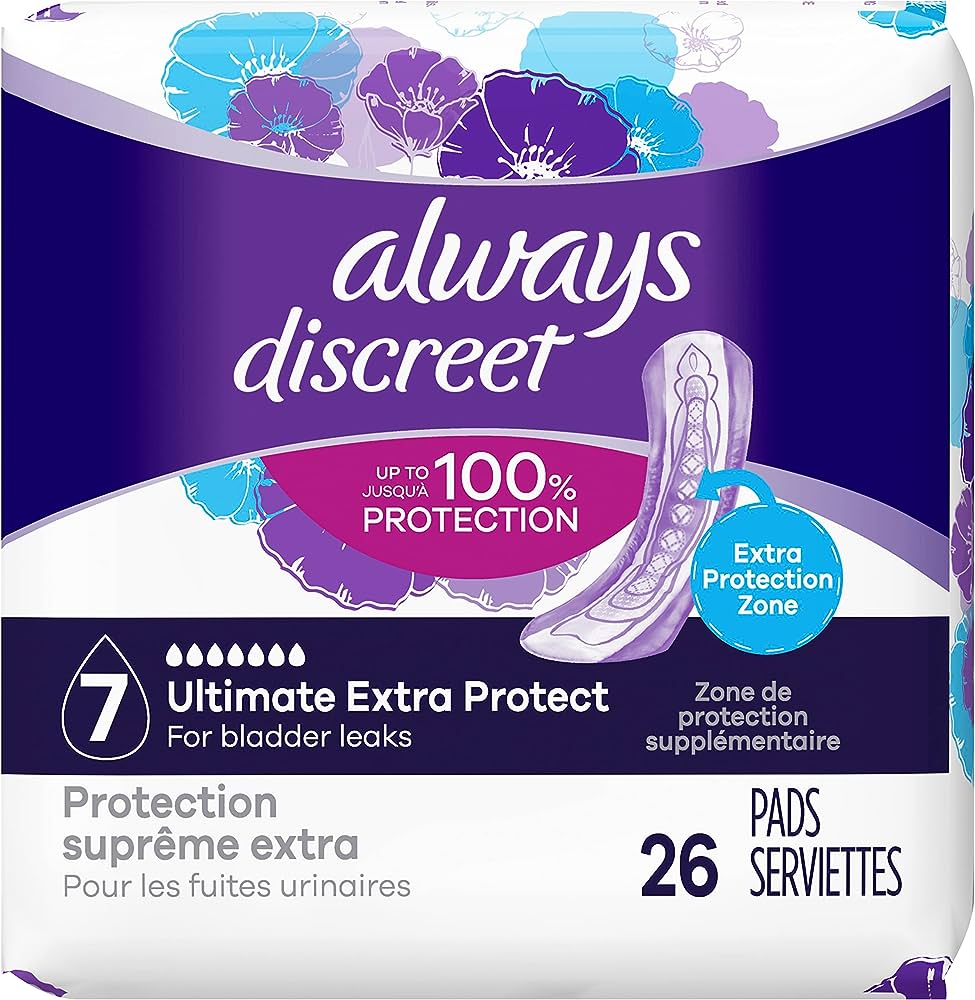
Always Discreet Incontinence Pads 26 Pads
Always Discreet Incontinence Pads 26 Pads
- ✔️ Designed specifically for light to moderate urinary leakage in women
- ✔️ Superabsorbent core locks away fluid and neutralises odour instantly
- ✔️ Stays discreetly thin even after absorbing fluid
- ✔️ Breathable layers protect skin from moisture and irritation
- ✔️ Pack of 26 pads offers reliable all-day bladder leakage protection
Price Checker
 Lowest price guarantee
 Includes FREE private prescription


Couldn't load pickup availability
Are Incontinence Pads for Women Worth It?
Urinary incontinence is far more common than many people realise. The NHS estimates that between 3 and 6 million people in the UK are affected by some degree of urinary incontinence, and women are disproportionately impacted — particularly after childbirth, during the menopause, or as they get older. Living with bladder leakage can feel isolating, but the right products make an enormous difference to daily confidence and comfort. Incontinence pads for women are one of the most practical, accessible solutions available without a prescription. The Always Discreet Incontinence Pads 26 Pads, available from Cured Pharmacy for just £7.49, are designed specifically to manage light to moderate urinary leakage discreetly and reliably.
These pads are not the same as period pads or general sanitary products. They are engineered to handle the thinner, faster flow of urine rather than menstrual fluid, which means they absorb more effectively and lock away odour more efficiently. If you've been using period pads to manage leakage, you may find a dedicated incontinence pad offers noticeably better protection. You can also explore our women's health range for other products that support bladder and pelvic health.
How Do Always Discreet Incontinence Pads Work?
The core technology in these pads centres on a superabsorbent polymer (SAP) layer. When urine contacts the pad, the SAP rapidly draws fluid away from the surface and locks it into a gel-like structure, preventing it from leaking back out. This keeps the skin drier for longer and significantly reduces the risk of irritation or breakdown. The mechanism works in a few key steps:
- Fluid hits the top sheet and is immediately wicked downward away from the skin
- The acquisition layer distributes the fluid evenly across the absorbent core
- The superabsorbent polymer core converts liquid to gel, locking it in place
- Odour-neutralising agents within the core help control smell throughout wear
- The breathable outer layer allows air circulation while preventing leakage through the back of the pad
The result is a pad that stays thin and discreet even after absorbing fluid — which is why so many women find these far more comfortable than bulkier alternatives.
Who Should Use Always Discreet Incontinence Pads?
These pads are suitable for adult women experiencing light to moderate urinary leakage. They are not intended for heavy or total incontinence, where more absorbent products or medical intervention may be needed. Common situations where these pads are appropriate include:
- Stress incontinence — leakage triggered by coughing, sneezing, laughing, or exercise
- Urge incontinence — a sudden, strong need to urinate that is difficult to control
- Post-partum bladder weakness following childbirth
- Perimenopausal or menopausal bladder changes
If your leakage is new, worsening, or accompanied by pain, blood in the urine, or recurrent infections, please speak to your GP before relying solely on pads. Incontinence can sometimes signal an underlying condition that warrants investigation.
How Do Always Discreet Pads Compare to Regular Period Pads?
| Feature | Always Discreet Incontinence Pads | Standard Period Pads |
|---|---|---|
| Fluid type managed | Urine (thin, fast flow) | Menstrual blood (thicker, slower flow) |
| Odour control | Yes — neutralises urine odour | Limited — not designed for urine |
| Absorbent core | Superabsorbent polymer gel | Cellulose/cotton blend |
| Skin protection | Breathable, moisture-wicking layers | Standard — not optimised for urine |
Are Always Discreet Pads Safe for Sensitive Skin?
Most people tolerate these pads well. The soft top sheet is designed to minimise friction, and the breathable outer layer helps reduce heat and moisture build-up — both of which can contribute to skin irritation. However, if you have particularly sensitive skin or a history of contact dermatitis, it is worth monitoring the area closely when you first start using them. Changing pads regularly is the single most important step in protecting skin integrity. If you notice persistent redness or soreness, our skin care range includes barrier creams and soothing products that may help.
This product is a medical device for external use. Speak to your doctor or pharmacist before using if you have an underlying medical condition or are taking other medicines.
Always Discreet Incontinence Pads 26 Pads specifications
| Treatment category | Urinary incontinence management |
| Mechanism of action | Superabsorbent polymer core locks fluid and neutralises odour |
| Effective for | Light to moderate urinary leakage |
| Suitable for | Adult women |
| Active ingredient | Superabsorbent polymer (SAP) |
| Pack size | 26 pads |
| UK classification | General sale / medical device |
| Preparation | Disposable absorbent pad |
| Route of administration | External use only |
Specifications of Always Discreet Incontinence Pads 26 Pads
What Are Always Discreet Incontinence Pads and What Are They Used For?
Always Discreet Incontinence Pads are disposable absorbent pads designed specifically to manage urinary leakage in adult women. They are used for light to moderate stress or urge incontinence — the kind of leakage that happens when you cough, sneeze, laugh, or feel a sudden urge to urinate. Unlike general sanitary pads, these are engineered to handle the specific properties of urine, absorbing it rapidly and locking it away to keep you feeling dry and comfortable throughout the day. The NHS recognises absorbent products as a valid and widely used management strategy for urinary incontinence, particularly while awaiting further treatment or pelvic floor rehabilitation.
What Do You Need to Know Before Using Always Discreet Incontinence Pads?
These pads are safe for most adult women, but there are some important points to be aware of before use.
Do not use if:
- You are experiencing heavy or total urinary incontinence — these pads are not designed for that level of leakage
- You have an open wound, active skin infection, or severe dermatitis in the area where the pad would be worn
- You are using these as a substitute for medical assessment of new or worsening incontinence
Warnings and precautions:
- Change pads frequently — leaving a wet pad in place increases the risk of skin irritation and urinary tract infections
- If you notice blood in your urine, pain on urination, or a burning sensation, seek medical advice promptly — these are not symptoms that pads alone will address
- Recurrent urinary tract infections can be associated with incontinence; if you experience frequent infections, speak to your GP
- Do not flush used pads — dispose of them in a bin
Known interactions:
- No drug interactions — this is an external-use absorbent product with no systemic absorption
How Should You Use Always Discreet Incontinence Pads?
Using these pads correctly ensures you get the best protection and minimise any risk of skin irritation. Follow these steps each time you apply a fresh pad:
- Wash and dry your hands thoroughly before handling the pad
- Remove the pad from its individual wrapper
- Peel away the adhesive backing strip from the underside of the pad
- Centre the pad lengthways in the gusset of your underwear, with the soft absorbent side facing upward toward your body
- If the pad has wings, fold them around the edges of the gusset and press firmly to secure
- Change the pad as soon as it feels wet, uncomfortable, or at least every 4 to 6 hours
- Wrap the used pad in its wrapper or toilet tissue and dispose of it in a bin — never flush
| Indication | Age Group | Pad Type | Frequency of Change |
|---|---|---|---|
| Light stress incontinence | Adult women | Light absorbency pad | Every 4–6 hours or when wet |
| Moderate urge incontinence | Adult women | Moderate absorbency pad | Every 3–4 hours or when wet |
If you are also managing a bladder or urinary tract infection, it is especially important to change pads frequently and maintain good hygiene to avoid worsening symptoms.
What Are the Possible Side Effects of Always Discreet Incontinence Pads?
Most women use these pads without any problems. However, as with any product worn close to the skin, some people may notice mild reactions.
Common side effects:
- Mild skin redness or warmth in the area covered by the pad
- Slight itching, particularly if the pad is worn for an extended period
- Mild chafing along the edges of the pad
Less common side effects:
- Contact dermatitis — a localised allergic or irritant skin reaction causing redness, swelling, or blistering
- Folliculitis (inflammation of hair follicles) in the groin area, particularly in warm conditions
- Increased susceptibility to thrush or bacterial vaginosis if pads are changed infrequently — if you experience symptoms, our thrush treatment range may help
If any reaction is severe, persistent, or spreading, stop use immediately and consult your pharmacist or GP.
How Should You Store Always Discreet Incontinence Pads?
- Store in a cool, dry place away from direct sunlight and sources of heat
- Keep pads in their original packaging until use to maintain hygiene and absorbency
- Do not store in a damp bathroom environment where moisture could compromise the packaging
- Keep out of reach of children
- Check the expiry date on the packaging before use — do not use pads past their stated date
References
- https://www.nhs.uk/conditions/urinary-incontinence/
- https://www.nhs.uk/conditions/urinary-incontinence/treatment/
- https://www.nhs.uk/conditions/urinary-incontinence/causes/
- https://www.nhs.uk/conditions/urinary-tract-infections-utis/
- https://www.nhs.uk/conditions/skin-rashes/
- https://www.nice.org.uk/guidance/cg171
Written and reviewed by our qualified team
Your safety and success are our highest priorities. Our medical team rigorously evaluates every product and piece of advice we provide, ensuring you receive only the most effective, science-backed solutions available.
Frequently Asked Questions
Where can I buy Always Discreet Incontinence Pads online in the UK?
You can buy Always Discreet Incontinence Pads 26 Pads directly from Cured Pharmacy online for just £7.49. No prescription is required as these are an over-the-counter product available to adult women. Simply add to your basket and choose your preferred delivery option at checkout.
How do Always Discreet Incontinence Pads work in the body?
These pads work externally — they do not interact with the body internally. The superabsorbent polymer core rapidly draws urine away from the skin surface and converts it into a gel, locking it in place and preventing leakage back onto the skin. Odour-neutralising agents within the core help manage smell throughout the wear period.
How do I use Always Discreet Incontinence Pads step by step?
Peel the adhesive backing from the pad, centre it in the gusset of your underwear with the soft side facing upward, and press any wings firmly around the edges to secure. Change the pad as soon as it feels wet or uncomfortable, and always dispose of used pads in a bin rather than flushing them. Washing your hands before and after changing pads is good hygiene practice.
How often should I change my incontinence pad?
You should change your pad as soon as it feels wet or uncomfortable — ideally every 4 to 6 hours as a minimum. Leaving a saturated pad in place for too long increases the risk of skin irritation, redness, and potentially urinary tract infections. Regular changing is the most important step in maintaining skin health when using any absorbent product.
Are Always Discreet pads suitable for heavy incontinence?
No — Always Discreet pads are designed for light to moderate urinary leakage, not heavy or total incontinence. If you are experiencing significant or frequent leakage, it is important to speak to your GP or a continence nurse who can assess your needs and recommend appropriate products or treatments. Pelvic floor exercises and bladder training are also evidence-based options your GP may discuss with you.
Who is eligible to use Always Discreet Incontinence Pads?
These pads are suitable for adult women experiencing light to moderate urinary leakage from any cause, including stress incontinence, urge incontinence, or post-partum bladder weakness. They are not suitable for children or for managing heavy incontinence. If you are unsure whether these pads are right for your level of leakage, your pharmacist can advise you without an appointment.
Can I use incontinence pads for women during exercise?
Yes, these pads are designed to stay securely in place during everyday activities, including light to moderate exercise. The adhesive backing holds the pad firmly within your underwear, and the absorbent core manages any leakage that occurs during physical activity such as running, yoga, or gym sessions. For high-impact exercise, you may wish to use a slightly higher absorbency option.
What happens if I experience skin irritation from my incontinence pad?
Mild redness or itching can occur, particularly if the pad is left in place for too long or if you have sensitive skin. If you notice irritation, change your pad more frequently, ensure the area is clean and dry before applying a fresh pad, and consider using a gentle barrier cream on the surrounding skin. If the irritation is severe, spreading, or does not improve, stop use and consult your pharmacist or GP promptly.
What are the alternatives to Always Discreet Incontinence Pads?
Alternatives include other brands of disposable incontinence pads, reusable washable incontinence pants, bladder training programmes, and pelvic floor physiotherapy. For women whose incontinence is linked to hormonal changes during the menopause, your GP may also discuss other management options. You can explore our women's health collection for related products that support bladder and pelvic wellbeing.
Can Always Discreet pads cause or worsen a urinary tract infection?
Pads themselves do not cause urinary tract infections, but wearing a wet pad for too long can create a warm, moist environment that may increase the risk of bacterial growth. Changing pads regularly and maintaining good perineal hygiene significantly reduces this risk. If you experience burning, stinging, or frequent urges to urinate, visit our cystitis and bladder infection section or speak to your pharmacist.
Are Always Discreet pads the same as period pads?
No — they are quite different, even though they look similar. Incontinence pads are specifically engineered to absorb the thin, fast flow of urine and neutralise its odour, whereas period pads are designed for the slower, thicker flow of menstrual blood. Using a period pad for urinary leakage is less effective and may not provide adequate odour control or skin protection.
How long can I use Always Discreet Incontinence Pads for?
There is no set time limit on how long you can use incontinence pads as a management strategy — many women use them long-term alongside other treatments such as pelvic floor exercises or bladder training. However, if your incontinence is new, worsening, or significantly affecting your quality of life, it is worth speaking to your GP rather than relying on pads alone indefinitely. Effective treatments are available that may reduce or resolve leakage.
Do Always Discreet pads control odour effectively?
Yes — the absorbent core contains odour-neutralising agents that work on contact with urine to minimise smell. This makes them suitable for use throughout the day, including at work or in social situations. Changing pads regularly further helps to keep odour under control and maintain freshness.
What are the latest recommendations for managing urinary incontinence in women?
NICE guidelines (CG171) recommend pelvic floor muscle training as a first-line treatment for stress and mixed urinary incontinence in women, alongside bladder training for urge incontinence. Absorbent products such as incontinence pads are recommended as a supportive management tool while other treatments take effect. Your GP or continence nurse can create a personalised management plan based on your specific type and severity of incontinence.
Can I use Always Discreet pads after childbirth?
Yes — post-partum stress incontinence is very common and these pads are suitable for managing light leakage in the weeks and months after giving birth. The NHS recommends starting pelvic floor exercises as soon as possible after delivery to help restore bladder control. If leakage persists beyond a few months post-partum, speak to your GP or midwife for further support and referral if needed.
Written and reviewed by our qualified team

Reviewed by:
Tarun Kumar
Superintendent/ Clinical Lead
📖 Find out more about our team of medical content authors and how we ensure the accuracy of our content with our content guidelines.
Content last updated: 14 Sep 2026
Other popular options


We’re a safe and
regulated UK service

Lowest Price Guarantee

We're convinced you won't find your treatment cheaper, but if you do we'll refund the difference.
Find out more
100% discreet packaging

Discreet, unbranded packaging for every order.
Find out more

Need help?
Talk to our friendly experts now


How our service works

Service setup

Discreet packaging

Express delivery