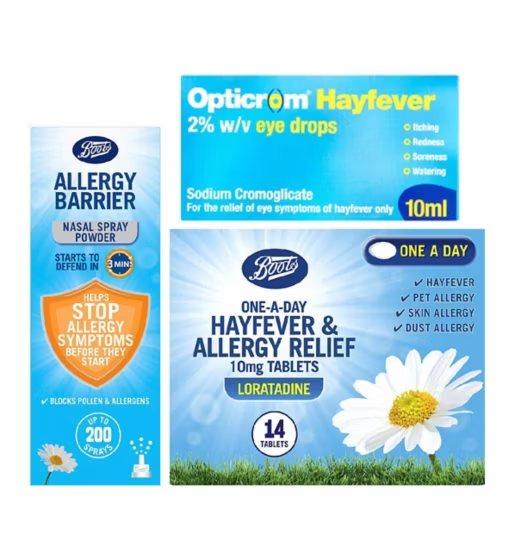
Allergy & Hayfever Bundle Loratadine
- ✔️ Relieves sneezing, itching, and runny nose from hayfever
- ✔️ Non-drowsy formula suitable for daytime use
- ✔️ Once-daily 10mg dose provides full 24-hour relief
- ✔️ Effective for both seasonal hayfever and allergic skin reactions
- ✔️ Value bundle ensures continuous cover throughout allergy season
Price Checker
Not approved? Full refund
Includes FREE private prescription
Couldn't load pickup availability
How Should You Use the Allergy & Hayfever Bundle Loratadine?
Using loratadine correctly is straightforward, but it is worth following these steps to make sure you get the most from your treatment. Always read the patient information leaflet supplied with your pack before you start.
If you are giving loratadine to a child, always confirm the appropriate formulation and dose for their age and weight before administering.
What Is the Correct Dose of the Allergy & Hayfever Bundle Loratadine?
The dose of loratadine depends on age and, in some cases, body weight. Never exceed the recommended dose. If you have kidney or liver problems, your pharmacist or GP may advise a reduced dosing frequency.
When Is the Best Time to Use the Allergy & Hayfever Bundle Loratadine?
Loratadine can be taken at any time of day, but consistency matters most. Many people find taking it in the morning works well, as pollen counts in the UK tend to peak during the morning and early evening hours. If you find the tablet causes any mild fatigue, switching to an evening dose is a reasonable alternative — it will still provide 24-hour coverage.
For best results during hayfever season, consider starting loratadine a few days before you expect your symptoms to begin, rather than waiting until you are already symptomatic. This allows antihistamine levels to build up in your system before pollen exposure occurs.
How Long Can You Use the Allergy & Hayfever Bundle Loratadine For?
Loratadine can be used for as long as your allergy symptoms persist. Most people use it throughout the hayfever season, which in the UK typically runs from late March to September depending on the pollen type. There is no evidence that tolerance develops with regular use at the recommended dose.
If you find you need antihistamine treatment year-round — for example, for perennial allergic rhinitis triggered by dust mites or pet dander — speak to your GP about a longer-term management plan. They may wish to review whether additional treatments, such as nasal corticosteroid sprays, would be beneficial alongside loratadine.
Do not exceed the recommended dose. If in doubt, speak to your pharmacist.
What Are the Most Common Side Effects of Loratadine?
Most people tolerate loratadine well, and side effects are generally mild when they do occur. The NHS notes that common side effects — those affecting up to 1 in 10 people — include the following:
- Headache
- Dry mouth
- Fatigue or tiredness
- Nervousness or excitability, particularly in children
Staying well hydrated and taking your tablet with food can help reduce the likelihood of a dry mouth or any mild stomach discomfort. These effects usually settle within a few days as your body adjusts.
What Are the Less Common Side Effects of Loratadine?
Less common side effects — affecting up to 1 in 100 people — are worth being aware of, even though they are unlikely. If you notice any of the following, mention them to your pharmacist at your next opportunity:
- Nausea or stomach upset
- Gastritis (inflammation of the stomach lining)
- Skin rash
- Dizziness
- Increased appetite
- Hair loss (alopecia) — rare
- Liver function abnormalities — very rare; relevant if you have pre-existing liver conditions
These effects are uncommon and do not necessarily mean you need to stop taking loratadine. However, if any symptom feels unusual or persistent, it is always sensible to seek advice.
What Are the Serious Side Effects of Loratadine?
Serious side effects are rare but require prompt attention. Stop taking loratadine and seek immediate medical help if you experience any of the following:
- Signs of a severe allergic reaction (anaphylaxis): swelling of the face, lips, tongue, or throat; difficulty breathing; a sudden drop in blood pressure
- Fast or irregular heartbeat (palpitations or tachycardia)
- Seizures
- Severe skin reactions such as blistering or peeling
Call 999 or go to your nearest A&E immediately if you suspect anaphylaxis. Do not drive yourself.
What Should You Do If You Experience Side Effects From Loratadine?
For mild side effects such as headache or dry mouth, no specific action is usually needed beyond staying hydrated and monitoring how you feel. If a side effect is bothering you or does not improve after a few days, speak to your pharmacist — they can advise whether to continue, adjust the timing of your dose, or consider an alternative antihistamine.
You can also report suspected side effects directly to the MHRA via the Yellow Card scheme at yellowcard.mhra.gov.uk. This helps regulators monitor the safety of medicines in real-world use.
Can Loratadine Interact With Other Medicines?
Yes, certain medicines can interact with loratadine and increase the amount of it in your bloodstream, which may raise the risk of side effects. Known interactions include cimetidine (used for indigestion), erythromycin (an antibiotic), and ketoconazole (an antifungal). Taking other antihistamines at the same time is not recommended, as this can increase the risk of side effects without improving symptom control. Alcohol may also enhance any sedative effect, even with a non-drowsy antihistamine.
Always inform your pharmacist or GP about all medicines, supplements, and herbal remedies you are taking before starting loratadine. If you are managing multiple conditions, a pharmacist can carry out a medicines review to check for potential interactions.
If you are concerned about any side effects, contact your pharmacist or GP immediately.
Written and reviewed by our qualified team
Reviewed by:
Tarun Kumar
Superintendent/ Clinical Lead
📖 Find out more about our team of medical content authors.
Content last reviewed: 11 November 2026
★ Other popular options
100% discreet packaging
Discreet, unbranded packaging for every order.
Need help?
Talk to our friendly experts now
How our service works
Service setup
Discreet packaging
Express delivery
Medically reviewed by
Tarun Kumar, Superintendent Pharmacist & Clinical Lead (GPhC 2233073)
Last updated on 11 November 2026.
Review History
Our experts continually monitor new findings in health and medicine, and we update our articles when new information becomes available.
Why this page was updated on 11 November 2026
Content checked and updated as part of our periodic review, to ensure accuracy and currentness.
Current version (11 November 2026)
Edited by: The Editorial Team
Medically reviewed by:
Tarun Kumar, GPhC No. 2233073, Superintendent Pharmacist & Clinical Lead
How we source info.
When we present you with stats, data, opinion or a consensus, we'll tell you where this came from.