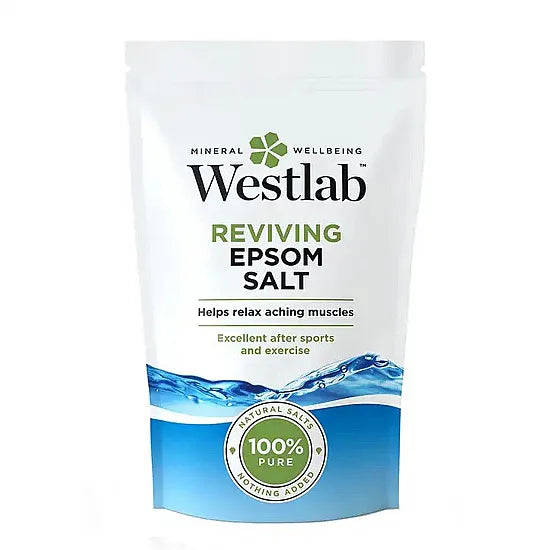
Westlab Epsom Salt 1kg
Westlab Epsom Salt 1kg
- ✔️ Pure magnesium sulphate crystals with no added fragrances or dyes
- ✔️ Helps ease post-exercise muscle soreness and tension
- ✔️ Softens and soothes dry or rough skin after soaking
- ✔️ Supports relaxation and may aid sleep onset
- ✔️ Suitable for both full baths and targeted foot soaks
Price Checker
 Lowest price guarantee
 Includes FREE private prescription


Couldn't load pickup availability
What Is an Epsom Salt Bath and How Can It Help You?
If you've ever stepped out of a warm bath feeling noticeably more relaxed, you'll understand why so many people reach for Epsom salt bath products as part of their self-care routine. Westlab Epsom Salt 1kg is a pure magnesium sulphate crystal soak, designed to dissolve easily in warm water and help ease the physical and mental tension that builds up over a busy week. At just £3.79 for a full kilogram, it's one of the most accessible ways to support muscle comfort and general wellbeing at home. If you're also exploring other ways to support your body, our skin care range includes a variety of products that complement a regular bathing routine.
Magnesium sulphate has been used for centuries in bathing traditions across Europe. While the science around transdermal magnesium absorption is still evolving, many people find that a regular soak helps them unwind, eases post-exercise muscle soreness, and leaves skin feeling softer. This product contains no added fragrances, dyes, or preservatives — just pure magnesium sulphate crystals.
How Does Westlab Epsom Salt Work in the Body?
Epsom salt is the common name for magnesium sulphate heptahydrate. When dissolved in warm bathwater, it breaks down into magnesium and sulphate ions. The theory is that these ions may be absorbed through the skin, though the extent of transdermal absorption remains a subject of ongoing research. What is well established is that warm water itself promotes muscle relaxation and improved circulation — and the ritual of a bath can meaningfully reduce perceived stress.
- Magnesium sulphate dissolves readily in warm water, releasing magnesium and sulphate ions
- Warm water dilates blood vessels, supporting circulation and easing muscle tension
- The osmotic effect of the salt solution may help draw out excess fluid from tired, swollen feet or legs
- The bathing ritual itself supports parasympathetic nervous system activity, promoting a sense of calm
Who Should Use Westlab Epsom Salt 1kg?
This product is suitable for most adults looking for a simple, affordable way to support muscle recovery, relaxation, or general skin comfort. It's particularly popular among people who exercise regularly, those who spend long hours on their feet, and anyone who finds a warm soak helpful for winding down before sleep. If you're looking for additional support for sleep, our sleep aid collection may also be worth exploring alongside your bathing routine.
- Adults with post-exercise muscle soreness or stiffness
- People looking for a natural, fragrance-free bath soak
- Those seeking a relaxation aid as part of a bedtime routine
- Individuals wanting to soften and soothe dry or rough skin
How Does Westlab Epsom Salt Compare to Other Bath Soaks?
| Feature | Westlab Epsom Salt 1kg | Magnesium Flakes |
|---|---|---|
| Active ingredient | Magnesium sulphate | Magnesium chloride |
| Typical price (1kg) | £3.79 | £6–£12 |
| Fragrance-free | Yes | Varies by brand |
| Suitable for foot soaks | Yes | Yes |
Is Westlab Epsom Salt Suitable for Sensitive Skin and How Should You Store It?
Because Westlab Epsom Salt contains no added fragrances, colourants, or preservatives, it is generally well tolerated by people with sensitive skin. That said, if you have a known skin condition such as eczema or psoriasis, it's worth doing a patch test first or speaking to your pharmacist before regular use. An Epsom salt bath should always be made with comfortably warm — not scalding — water to avoid further irritating sensitive skin.
Store this product in a cool, dry place, away from moisture and direct sunlight. Magnesium sulphate is hygroscopic, meaning it will absorb moisture from the air if left open, which can cause the crystals to clump. Keep the bag sealed between uses. This product is for external use only and should be kept out of reach of children.
This product is a medicine. Speak to your doctor or pharmacist before using if you have an underlying medical condition or are taking other medicines.
Westlab Epsom Salt 1kg specifications
| Treatment category | Bath soak / Muscle relaxation / Skin comfort |
| Active ingredient | Magnesium sulphate (Epsom salt) |
| Mechanism of action | Dissolves in water to release magnesium and sulphate ions; warm water promotes muscle relaxation and circulation |
| Suitable for | Adults; general use for muscle ease, relaxation, and skin softening |
| Pack size | 1kg |
| UK classification | General Sale (GSL) |
| Preparation | Crystalline salt |
| Route of administration | Topical (bath or foot soak) |
Specifications of Westlab Epsom Salt 1kg
What Is Westlab Epsom Salt and What Is It Used For?
Westlab Epsom Salt 1kg is a pure magnesium sulphate crystal product intended for use as a bath or foot soak. It is used to help relieve muscle aches and tension, support relaxation, and soften the skin. It is not a medicinal product in the licensed pharmaceutical sense, but magnesium sulphate has a long history of use in bathing for comfort and recovery. It is for external use only and should never be ingested.
What Do You Need to Know Before Using Westlab Epsom Salt?
Before using this product, please read the following carefully. While Epsom salt is generally considered safe for most adults when used as directed, there are some situations where caution is needed.
Do not use this product if you:
- Have open wounds, cuts, or broken skin in the area to be soaked
- Have an active skin infection, including infected eczema or cellulitis
- Are allergic to magnesium sulphate or any component of this product
- Have been advised by a healthcare professional to avoid warm baths (e.g. certain cardiovascular conditions)
Use with caution if you:
- Have chronic kidney disease — excess magnesium may not be adequately cleared
- Are pregnant, particularly in the third trimester — consult your midwife or GP first
- Have severe or widespread eczema, psoriasis, or other inflammatory skin conditions
- Are using topical medications on the skin — soaking may affect absorption
Known interactions:
- No clinically significant drug interactions are known for topical magnesium sulphate use
- If you are taking oral magnesium supplements, inform your GP — combined use is unlikely to cause issues at normal bath concentrations, but it is worth mentioning
How Should You Use Westlab Epsom Salt?
Using Epsom salt is straightforward, but getting the most from it does depend on a few simple steps. Always use comfortably warm water — not boiling hot — and allow enough time to soak properly. If you're also managing foot discomfort or skin concerns, you might find our foot care collection a useful complement to your routine.
- Fill your bath with comfortably warm water (not excessively hot)
- Add 250–500g of Westlab Epsom Salt directly to the running water
- Stir or swirl the water to help the crystals dissolve fully
- Soak for 15–20 minutes
- Rinse your body with clean water after soaking
- Pat skin dry gently and apply a moisturiser if needed
| Indication | Age Group | Dose | Frequency |
|---|---|---|---|
| Full bath soak (muscle ease, relaxation) | Adults | 250–500g per bath | Up to 3 times per week |
| Foot soak | Adults | 100g per basin | As needed |
| Children (under 12) | Children | Not recommended without GP advice | — |
What Are the Possible Side Effects of Westlab Epsom Salt?
Topical use of Epsom salt is generally well tolerated. However, as with any product applied to the skin, some people may notice unwanted effects. If you experience anything that concerns you, stop use and speak to your pharmacist or GP.
Common side effects:
- Mild skin dryness after soaking, particularly with frequent use
- Temporary skin redness in people with sensitive skin
Less common side effects:
- Skin irritation or itching, especially if used on compromised skin
- Worsening of pre-existing dry skin conditions if moisturiser is not applied after soaking
If you notice signs of an allergic reaction — such as hives, significant swelling, or difficulty breathing — stop use immediately and seek urgent medical attention. This is rare but possible.
How Should You Store Westlab Epsom Salt?
Proper storage keeps the crystals free-flowing and effective. Magnesium sulphate is hygroscopic, so exposure to moisture will cause clumping. If you're looking for other products to store safely at home, our pain relief collection also includes products with straightforward storage requirements.
- Store in a cool, dry place away from direct sunlight and humidity
- Keep the bag tightly sealed between uses
- Do not store in the bathroom if it is particularly steamy — a bedroom or cupboard is preferable
- Keep out of reach and sight of children
- Do not use after the expiry date printed on the packaging
- For external use only — do not ingest
References
Written and reviewed by our qualified team
Your safety and success are our highest priorities. Our medical team rigorously evaluates every product and piece of advice we provide, ensuring you receive only the most effective, science-backed solutions available.
Frequently Asked Questions
Where can I buy Westlab Epsom Salt 1kg online in the UK?
You can buy Westlab Epsom Salt 1kg directly from Cured Pharmacy online for just £3.79, with fast UK delivery. It is available without a prescription as a general sale product. Simply add it to your basket and check out — no consultation required for this product.
How does an Epsom salt bath work in the body?
Epsom salt is magnesium sulphate, which dissolves in warm water to release magnesium and sulphate ions. Some researchers suggest these ions may be absorbed transdermally, though the evidence is still developing. What is well established is that warm water itself promotes muscle relaxation, improved circulation, and a reduction in perceived stress — all of which contribute to the benefits people report from a regular soak.
How do I use Westlab Epsom Salt step by step?
Fill your bath with comfortably warm water, then add 250–500g of Epsom salt and stir to dissolve. Soak for 15–20 minutes, then rinse off with clean water and pat your skin dry. Applying a gentle moisturiser afterwards can help prevent any dryness, particularly if you have sensitive skin.
How much Epsom salt should I put in a bath?
For a standard adult bath, 250–500g is the typical amount — that's roughly one to two large mugfuls. For a foot soak, around 100g dissolved in a basin of warm water is usually enough. With a 1kg bag, you'll get at least two to four full baths, making it excellent value at £3.79.
What is the best time to use an Epsom salt bath?
Many people find an Epsom salt bath most beneficial in the evening, around an hour or two before bed, as the warmth and relaxation can support a better night's sleep. It's also popular immediately after exercise to help ease muscle soreness. There's no single "correct" time — it really depends on what you're using it for.
Can Epsom salt baths cause any side effects?
Topical use is generally well tolerated by most adults. The most commonly reported effects are mild skin dryness or temporary redness, particularly in people with sensitive skin. Applying a moisturiser after your bath can help. If you notice significant irritation, itching, or any signs of an allergic reaction, stop use and speak to your pharmacist.
Who should not use an Epsom salt bath?
People with open wounds, active skin infections, or severe inflammatory skin conditions should avoid Epsom salt baths until their skin has healed. Those with chronic kidney disease or serious cardiovascular conditions should speak to their GP before use. Children under 12 should only use this product under medical guidance.
Is Westlab Epsom Salt safe to use during pregnancy?
Pregnant women should consult their midwife or GP before using Epsom salt baths, especially in the third trimester. Warm baths are generally considered safe in pregnancy, but the water should be comfortably warm rather than hot, as overheating can be harmful. Always seek professional advice if you are unsure.
How long can you use Epsom salt baths for?
There is no strict time limit on how long you can incorporate Epsom salt baths into your routine, provided you are not experiencing any adverse skin reactions. Most people use them two to three times per week as part of an ongoing self-care routine. If you notice your skin becoming increasingly dry or irritated with regular use, reduce frequency and moisturise well after each soak.
What are the alternatives to Epsom salt baths?
Alternatives include magnesium chloride flakes, Dead Sea salt soaks, or plain sea salt baths. For muscle pain specifically, you might also consider topical pain relief products — browse our pain relief collection for options. Magnesium flakes are sometimes marketed as having higher bioavailability, though the evidence comparing the two is limited.
Can I use Epsom salt as a foot soak for tired or swollen feet?
Yes — a foot soak is one of the most popular uses for Epsom salt. Dissolve around 100g in a basin of warm water and soak your feet for 15–20 minutes. The warm water helps ease tension and the osmotic effect of the salt may help reduce mild puffiness. For persistent foot problems, visit our foot care collection for additional support.
Does Westlab Epsom Salt contain any added fragrances or chemicals?
No — Westlab Epsom Salt 1kg contains pure magnesium sulphate crystals with no added fragrances, dyes, or preservatives. This makes it a good choice for people with sensitive skin or fragrance sensitivities who want a clean, simple soak without unnecessary additives.
Can Epsom salt baths help with sleep?
A warm bath taken around 90 minutes before bed has been shown in research to support sleep onset by helping the body's core temperature drop afterwards, which signals to the brain that it's time to sleep. Adding Epsom salt to that bath may enhance the relaxation effect. If you're struggling with sleep more broadly, our sleep aid collection has further options to explore.
What are the latest studies on Epsom salt and magnesium absorption?
Research into transdermal magnesium absorption remains ongoing and results are mixed. A small study published in 2017 suggested that magnesium levels in blood and urine increased after Epsom salt baths, but the methodology has been questioned. The scientific consensus is that more robust clinical trials are needed before definitive claims about absorption can be made — but the relaxation and skin-softening benefits of a warm soak are well recognised.
Is Westlab Epsom Salt suitable for people with eczema?
This depends on the individual and the current state of their skin. Some people with eczema find that a dilute Epsom salt soak soothes their skin, while others find it drying or irritating. You should never use Epsom salt on broken, weeping, or infected eczema skin. Always speak to your GP or dermatologist before trying new bathing products if you have a diagnosed skin condition, and consider browsing our skin care range for products specifically formulated for sensitive or eczema-prone skin.
Written and reviewed by our qualified team

Reviewed by:
Tarun Kumar
Superintendent/ Clinical Lead
📖 Find out more about our team of medical content authors and how we ensure the accuracy of our content with our content guidelines.
Content last updated: 14 Sep 2026

We’re a safe and
regulated UK service

Lowest Price Guarantee

We're convinced you won't find your treatment cheaper, but if you do we'll refund the difference.
Find out more
100% discreet packaging

Discreet, unbranded packaging for every order.
Find out more

Need help?
Talk to our friendly experts now


How our service works

Service setup

Discreet packaging

Express delivery