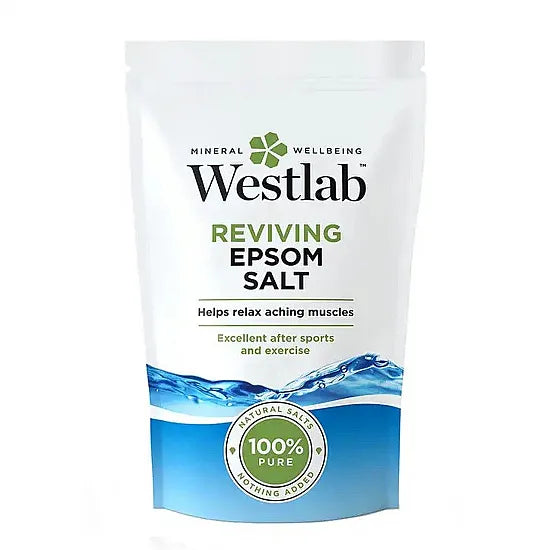
Westlab Epsom Salt 1kg
Westlab Epsom Salt 1kg
- ✔️ Pure magnesium sulphate — no additives or fragrances
- ✔️ Helps ease post-exercise muscle soreness and tension
- ✔️ Suitable for sensitive skin; unfragranced and dye-free
- ✔️ 1kg pack provides multiple full bath or foot soaks
- ✔️ Supports relaxation and wind-down before sleep
Price Checker
 Lowest price guarantee
 Includes FREE private prescription


Couldn't load pickup availability
What Is an Epsom Salt Bath and How Can It Help You?
If you've ever stepped out of a warm bath feeling noticeably less tense, you'll understand why so many people reach for Epsom salt bath products time and again. Westlab Epsom Salt 1kg is pure magnesium sulphate — a naturally occurring mineral compound that has been used for centuries to help soothe tired muscles, ease everyday aches, and support skin comfort. At just £4.89 for a full kilogram, it's one of the most accessible self-care options available without a prescription.
Magnesium is an essential mineral involved in hundreds of biochemical processes in the body, including muscle and nerve function. Many people in the UK don't get enough magnesium through diet alone, and a warm soak may offer a gentle, topical way to support your body's natural recovery. If you're also exploring other wellness options, our vitamins and supplements range includes a variety of magnesium and mineral products worth considering alongside your bath routine.
How Does Westlab Epsom Salt Work in the Body?
The active component is magnesium sulphate. When you dissolve Epsom salt in warm bathwater, the theory is that magnesium ions may be absorbed transdermally — that is, through the skin — potentially helping to relax muscle fibres and reduce tension. While the scientific evidence for transdermal magnesium absorption is still being explored, many users report meaningful relief from muscle soreness and stress after a soak.
- Magnesium sulphate dissolves readily in warm water, releasing magnesium and sulphate ions.
- Warm water itself promotes vasodilation, increasing blood flow to muscles and soft tissue.
- The combination of heat and mineral-rich water may help reduce perceived muscle stiffness.
- Sulphate ions are thought to support the body's natural detoxification pathways, though more research is needed.
Who Should Consider Using Westlab Epsom Salt?
This product is suitable for most healthy adults looking for a simple, non-medicated way to unwind and support muscle recovery. It's particularly popular with people who exercise regularly, those who spend long hours on their feet, and anyone dealing with everyday stress and tension. It is not a medicine and does not treat or cure any medical condition.
- Adults experiencing post-exercise muscle soreness or stiffness.
- People looking for a relaxing, mineral-rich bath soak as part of a self-care routine.
- Those with dry or dull-feeling skin who want a gentle, natural soak.
- Individuals seeking a non-medicated complement to their existing pain relief approach.
How Does Westlab Epsom Salt Compare to Other Bath Soaks?
| Feature | Westlab Epsom Salt 1kg | Standard Bath Salts |
|---|---|---|
| Active ingredient | Pure magnesium sulphate | Sodium chloride or blended minerals |
| Fragrance/additives | None (unfragranced) | Often fragranced or coloured |
| Suitable for sensitive skin | Generally yes | Depends on additives |
| Price per kg | £4.89 | Varies — often higher |
Is Westlab Epsom Salt Suitable for All Skin Types?
Westlab Epsom Salt is unfragranced and free from added dyes or preservatives, making it a good choice for people with sensitive or reactive skin. Because it contains no synthetic additives, it's less likely to trigger irritation compared to heavily fragranced bath products. That said, if you have a known skin condition such as eczema or psoriasis, it's worth speaking to your GP or pharmacist before use — particularly if your skin is currently broken or inflamed. You might also find our skin care collection helpful for managing dry or sensitive skin alongside your bath routine.
This product is a bath soak, not a medicine. Speak to your doctor or pharmacist before using if you have an underlying medical condition or are taking other medicines.
Westlab Epsom Salt 1kg specifications
| Treatment category | Bath soak / muscle relaxation / skin care |
| Active ingredient | Magnesium sulphate (Epsom salt) |
| Mechanism of action | Topical mineral soak; potential transdermal magnesium absorption |
| Suitable for | Adults; generally suitable for sensitive skin |
| Pack size | 1kg |
| UK classification | General sale (cosmetic/bath product) |
| Preparation | Crystalline granules |
| Route of administration | Topical (dissolved in bathwater) |
Specifications of Westlab Epsom Salt 1kg
What Is Westlab Epsom Salt and What Is It Used For?
Westlab Epsom Salt 1kg contains pure magnesium sulphate — a mineral compound that dissolves in warm water to create a relaxing bath soak. It is not classified as a medicine in the UK; it is a cosmetic/bath product used to help ease muscle tension, soothe tired limbs, and support skin softness. People commonly use it after exercise, during periods of stress, or simply as part of a regular self-care routine. It is available over the counter without a prescription.
What Do You Need to Know Before Using Westlab Epsom Salt?
Although Epsom salt is widely used and generally considered safe for topical bathing, there are some important things to be aware of before you start.
Do not use this product if:
- You have open wounds, broken skin, or active skin infections in the area to be soaked.
- You have severe kidney disease — excess magnesium can accumulate if kidney function is impaired.
- You are allergic to magnesium sulphate or any component of this product.
- You have been advised by a healthcare professional to avoid hot baths (e.g. certain cardiovascular conditions).
Warnings and precautions:
- Pregnant women should consult their GP or midwife before use, particularly regarding bath temperature.
- Do not use in very hot water — this can cause dizziness or faintness, especially in older adults.
- Keep out of reach of children. Do not allow young children to bathe unsupervised.
- Do not ingest. Oral ingestion of magnesium sulphate can act as a laxative and cause gastrointestinal upset — this product is for external use only.
Known interactions (topical use):
- No clinically significant drug interactions are known for topical bath use.
- If you are using topical prescription creams or ointments, allow skin to dry fully before applying them after a bath soak.
How Should You Use Westlab Epsom Salt Correctly?
Using Epsom salt is straightforward, but getting the water temperature and concentration right makes a real difference to your experience. Warm — not scalding — water is key. Aim for a comfortable temperature around 37–40°C.
- Fill your bath with warm water to a comfortable level.
- Add 250–500g of Westlab Epsom Salt directly under the running tap to help it dissolve evenly.
- Stir the water gently with your hand to ensure the salt is fully dissolved before getting in.
- Soak for 15–20 minutes. Avoid soaking for longer than 20 minutes in a single session.
- Rinse your body with clean water after the soak and pat skin dry gently.
- Apply a moisturiser if needed — particularly if you have dry skin.
| Indication | Age Group | Amount | Frequency |
|---|---|---|---|
| Muscle relaxation / general soak | Adults (18+) | 250–500g per full bath | Up to 3 times per week |
| Foot soak | Adults (18+) | 100g per foot basin | As needed |
| Children | Under 18 | Seek medical advice before use | — |
If you're managing ongoing muscle discomfort alongside your bath routine, our pain relief collection includes a range of topical and oral options that your pharmacist can advise on.
What Are the Possible Side Effects of Westlab Epsom Salt?
Topical use of Epsom salt is generally well tolerated. Most people complete a soak without any adverse effects. However, as with any product applied to the skin, reactions can occasionally occur.
Common side effects (topical bath use):
- Mild skin dryness after soaking — apply a gentle moisturiser to counteract this.
- Temporary skin redness, particularly in people with sensitive skin.
- Slight dizziness if the bath water is too hot — always use warm, not hot, water.
Less common side effects:
- Skin irritation or itching in individuals with very sensitive or reactive skin.
- Worsening of pre-existing skin conditions if used on broken or inflamed skin.
Stop using the product and speak to your pharmacist or GP if you notice any unusual skin reaction, persistent redness, or discomfort that doesn't resolve after stopping use. If you're looking for additional support for your skin, our creams and ointments range includes a variety of soothing topical options.
How Should You Store Westlab Epsom Salt?
- Store in a cool, dry place away from direct moisture and humidity.
- Keep the bag or container tightly sealed between uses to prevent clumping.
- Do not store in the bathroom if it is very humid — a bedroom cupboard or dry shelf is ideal.
- Keep out of reach and sight of children at all times.
- Do not use after any visible signs of contamination or unusual odour.
- No specific temperature requirements — room temperature storage is suitable.
References
Written and reviewed by our qualified team
Your safety and success are our highest priorities. Our medical team rigorously evaluates every product and piece of advice we provide, ensuring you receive only the most effective, science-backed solutions available.
Frequently Asked Questions
Where can I buy Westlab Epsom Salt 1kg online in the UK?
You can buy Westlab Epsom Salt 1kg directly from Cured Pharmacy online for just £4.89, with fast UK delivery. It is available without a prescription and dispatched quickly. No consultation is required for this over-the-counter bath product.
How does an Epsom salt bath work in the body?
Epsom salt is magnesium sulphate, and when dissolved in warm water it is thought to allow magnesium to be absorbed through the skin — a process known as transdermal absorption. The warm water also promotes blood flow to muscles, which may help reduce tension and stiffness. While research into transdermal magnesium is ongoing, many users report genuine relief from muscle soreness after soaking.
How do I use Westlab Epsom Salt step by step?
Fill your bath with warm water, then dissolve 250–500g of Westlab Epsom Salt under the running tap. Soak for 15–20 minutes, then rinse off with clean water and pat your skin dry. For a foot soak, use around 100g in a basin of warm water instead.
How much Epsom salt should I put in a bath?
The standard recommended amount for a full adult bath is 250–500g of Epsom salt dissolved in warm water. Using more than this is not recommended and won't necessarily increase the benefit. Always ensure the salt is fully dissolved before getting into the bath.
What is the best time to use an Epsom salt bath?
Many people find an Epsom salt bath most beneficial in the evening, as the warmth and relaxation can support a good night's sleep. It's also popular immediately after exercise to help ease post-workout muscle soreness. If you're looking for additional sleep support, our sleep aid collection may also be of interest.
Are there any side effects of using Epsom salt in a bath?
Topical use is generally well tolerated, but some people may experience mild skin dryness, temporary redness, or slight irritation — particularly those with sensitive skin. Dizziness can occur if the bath water is too hot, so always use warm rather than very hot water. Discontinue use and speak to your pharmacist if any skin reaction persists.
Can I use Westlab Epsom Salt if I have sensitive skin?
Yes, Westlab Epsom Salt is unfragranced and free from added dyes or preservatives, which makes it a reasonable choice for people with sensitive skin. Start with a lower concentration — around 250g per bath — and monitor your skin's response. Avoid use on broken, inflamed, or infected skin, and consult your GP if you have an active skin condition such as eczema.
Is Epsom salt safe to use during pregnancy?
Pregnant women should speak to their GP or midwife before using Epsom salt baths, as guidance on bath temperature and frequency during pregnancy is important for safety. Warm (not hot) baths are generally considered acceptable, but individual circumstances vary. Always seek personalised medical advice during pregnancy before starting any new bath or wellness routine.
Who is eligible to use Westlab Epsom Salt?
Westlab Epsom Salt is suitable for most healthy adults as a bath soak. It is not recommended for use on children under 18 without medical advice, and people with kidney disease, open skin wounds, or certain cardiovascular conditions should consult a healthcare professional first. It is not a medicine and is not intended to treat or diagnose any medical condition.
How long can I use Westlab Epsom Salt for?
There is no strict limit on how long you can incorporate Epsom salt baths into your routine, provided you are not experiencing any adverse skin reactions. Most people use it up to three times per week as part of a regular self-care routine. If you notice any ongoing skin irritation or discomfort, take a break and speak to your pharmacist.
What happens if I accidentally ingest Epsom salt?
Westlab Epsom Salt is for external use only and should not be ingested. Oral ingestion of magnesium sulphate can act as a laxative and cause nausea, diarrhoea, and gastrointestinal discomfort. If accidental ingestion occurs, contact NHS 111 or your nearest A&E for advice immediately.
Can I use Epsom salt as a foot soak?
Yes — a foot soak is one of the most popular uses for Epsom salt. Dissolve around 100g in a basin of warm water and soak your feet for 15–20 minutes. This can help ease tired, aching feet after a long day. If you're also dealing with foot skin concerns, our foot care collection has a range of relevant products.
What are the alternatives to Epsom salt baths?
Alternatives for muscle relaxation include topical magnesium sprays, heat packs, or over-the-counter pain relief products such as ibuprofen gel or paracetamol. Dead Sea salt is another popular bath mineral option with a different mineral profile. Speak to your pharmacist for personalised advice on the most suitable approach for your needs.
Does Westlab Epsom Salt help with sleep?
A warm bath in the evening — with or without Epsom salt — is known to support relaxation and may help you fall asleep more easily, as the drop in body temperature after leaving the bath signals to the body that it's time to sleep. Magnesium is also associated with supporting normal muscle and nerve function, which may contribute to a more restful feeling. For dedicated sleep support products, browse our sleep aid range.
What are the latest studies on Epsom salt and magnesium absorption?
Research into transdermal magnesium absorption from Epsom salt baths is still ongoing and results are mixed — some small studies suggest measurable increases in serum magnesium after bathing, while others have found limited evidence. The NHS notes that magnesium is important for bone health, muscle function, and energy production. Until larger clinical trials are completed, Epsom salt baths are best regarded as a complementary wellness practice rather than a medical treatment.
Written and reviewed by our qualified team

Reviewed by:
Tarun Kumar
Superintendent/ Clinical Lead
📖 Find out more about our team of medical content authors and how we ensure the accuracy of our content with our content guidelines.
Content last updated: 14 Sep 2026

We’re a safe and
regulated UK service

Lowest Price Guarantee

We're convinced you won't find your treatment cheaper, but if you do we'll refund the difference.
Find out more
100% discreet packaging

Discreet, unbranded packaging for every order.
Find out more

Need help?
Talk to our friendly experts now


How our service works

Service setup

Discreet packaging

Express delivery