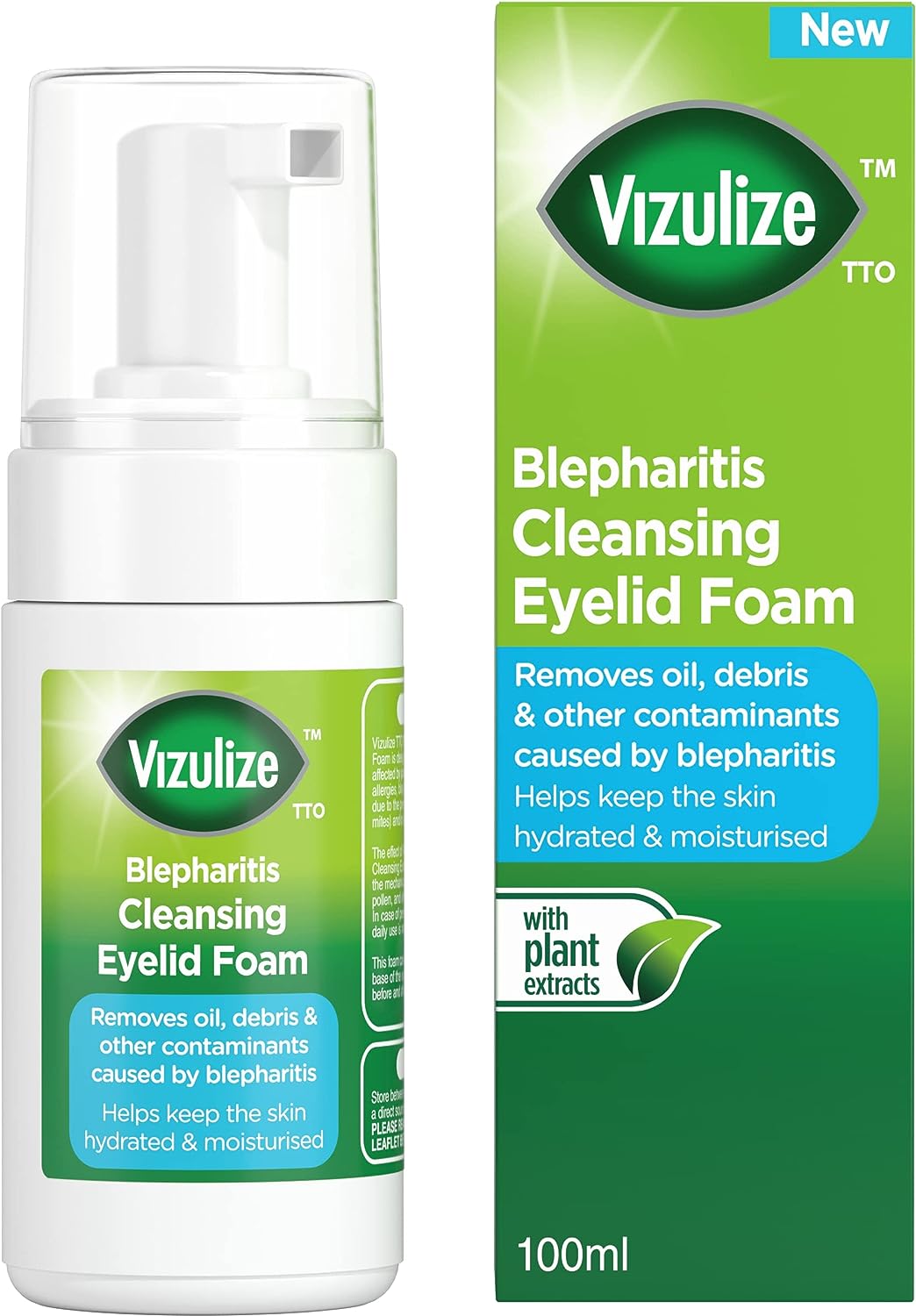
Vizulize Blepharitis Eye Lid Foam 100ml
Vizulize Blepharitis Eye Lid Foam 100ml
- ✔️ Gently cleanses eyelid margins to relieve blepharitis symptoms
- ✔️ Removes crusting, debris, and excess oils from lash line
- ✔️ Supports meibomian gland function with regular daily use
- ✔️ Suitable for adults with dry eye linked to lid inflammation
- ✔️ 100ml pump bottle provides multiple applications at low cost
Price Checker
 Lowest price guarantee
 Includes FREE private prescription


Couldn't load pickup availability
What Is Vizulize Blepharitis Eyelid Foam?
Blepharitis is one of the most common eye conditions seen in the UK. It causes the eyelids to become red, swollen, and irritated — often with crusty flakes forming at the base of the lashes. It is not usually serious, but it can be persistent and uncomfortable. If you have been dealing with sore, gritty, or sticky eyelids, you are far from alone. The NHS estimates that blepharitis affects a significant proportion of the population at some point in their lives. Managing it consistently is key, and that is exactly where a dedicated blepharitis eyelid foam comes in. You can explore our full range of products in our eye care collection if you are looking for additional support.
Vizulize Blepharitis Eye Lid Foam 100ml is a gentle, foaming cleanser formulated specifically for daily eyelid hygiene. It is designed to remove the debris, excess oils, and crusting that accumulate along the eyelid margins — the root cause of much of the discomfort associated with blepharitis. At just £12.00, it offers an accessible, straightforward way to keep your lids clean and comfortable.
How Does Vizulize Blepharitis Eye Lid Foam Work?
The foam works by using mild surfactant ingredients — including cocamidopropyl betaine and polysorbate 80 — to break down and lift away the oily deposits, dead skin cells, and bacterial debris that build up along the eyelid margins. This is important because blepharitis is closely linked to the overgrowth of naturally occurring bacteria on the skin, as well as dysfunction of the meibomian glands (the tiny oil-producing glands along the lid margin). Keeping the lids clean reduces the conditions that allow these problems to worsen.
- Surfactants loosen crusting and oily deposits from the lash line
- Gentle cleansing reduces bacterial load on the eyelid margin
- Regular use supports meibomian gland function by clearing blocked ducts
- The foam texture allows controlled, targeted application without excess product
Who Should Use Vizulize Blepharitis Eye Lid Foam?
This product is suitable for adults who experience the typical symptoms of blepharitis. It is particularly useful if you have been told by your GP or optician that regular eyelid hygiene is part of your management plan. It is also worth considering if you wear contact lenses and notice increased irritation, or if you suffer from dry eye syndrome alongside lid inflammation — the two conditions frequently occur together.
- Adults with anterior or posterior blepharitis
- People with recurring eyelid crusting or flaking
- Those with dry eye symptoms linked to meibomian gland dysfunction
- Contact lens wearers experiencing lid-related discomfort
How Does Vizulize Blepharitis Eye Lid Foam Compare to Other Lid Cleansers?
| Feature | Vizulize Blepharitis Eye Lid Foam | Lid Cleansing Wipes |
|---|---|---|
| Format | Pump foam — easy to dispense | Pre-soaked individual wipes |
| Volume / Uses | 100ml — multiple applications | Typically 20–30 wipes per pack |
| Cost per use | Lower — reusable bottle | Higher — single-use format |
| Suitable for daily use | Yes | Yes, but generates more waste |
Is Vizulize Blepharitis Eye Lid Foam Safe to Use Every Day?
Yes — this product is formulated for daily use as part of a regular eyelid hygiene routine. Because blepharitis is a chronic condition rather than a one-off infection, the NHS recommends ongoing lid hygiene as the cornerstone of management. Using a dedicated blepharitis eyelid foam twice daily — morning and evening — is consistent with this guidance. Store the product below 25°C, away from direct sunlight, and keep it out of reach of children. Do not use beyond the printed expiry date.
This product is a medicine. Speak to your doctor or pharmacist before using if you have an underlying medical condition or are taking other medicines.
Vizulize Blepharitis Eye Lid Foam 100ml specifications
| Treatment category | Eyelid hygiene / Blepharitis management |
| Mechanism of action | Surfactant-based cleansing to remove lid margin debris and reduce bacterial load |
| Effective for | Blepharitis, eyelid crusting, meibomian gland dysfunction |
| Suitable for | Adults |
| Active ingredient | Cocamidopropyl betaine, polysorbate 80 |
| Pack size | 100ml |
| UK classification | General Sale / Medical Device |
| Preparation | Foam |
| Route of administration | Topical (eyelid) |
Specifications of Vizulize Blepharitis Eye Lid Foam 100ml
What Is Vizulize Blepharitis Eye Lid Foam and What Is It Used For?
Vizulize Blepharitis Eye Lid Foam 100ml is a topical foaming cleanser used to maintain eyelid hygiene in people with blepharitis. Blepharitis is a common condition in which the edges of the eyelids become inflamed, often causing redness, itching, a burning sensation, and crusty deposits around the lashes. The NHS describes it as a long-term condition that requires consistent management rather than a short course of treatment. This foam helps by gently removing the debris and excess oils that accumulate along the lid margin, reducing the irritation and discomfort that blepharitis causes.
It is also used by people with dry eye syndrome linked to meibomian gland dysfunction, where blocked oil glands along the lid margin contribute to an unstable tear film. Regular cleansing with a blepharitis eyelid foam can help keep these glands functioning more effectively.
What Do You Need to Know Before Using Vizulize Blepharitis Eye Lid Foam?
Before using this product, read the following carefully. It is suitable for most adults, but there are some situations where you should seek advice first.
Do not use this product if:
- You are allergic to any of the ingredients, including cocamidopropyl betaine or polysorbate 80
- You have an active eye infection that has not been assessed by a healthcare professional
- You have had recent eye surgery — consult your surgeon before use
Speak to your pharmacist or GP before use if:
- You are pregnant or breastfeeding
- You are using prescription eye drops or ointments
- Your symptoms have not improved after four weeks of regular use
- You experience sudden changes in vision, eye pain, or significant worsening of symptoms
Known drug interactions:
- No significant drug interactions are currently known for this topical product
- If you use medicated eye drops, apply them at a different time to avoid dilution — allow at least 15 minutes between products
How Should You Use Vizulize Blepharitis Eye Lid Foam?
Using this product correctly is straightforward, but technique matters. Applying it properly ensures you get the most benefit while minimising any risk of irritation. If you wear contact lenses, always remove them before cleansing and wait at least 15 minutes before reinserting. You might also find it helpful to browse our eye care collection for complementary products such as lubricating eye drops.
- Wash your hands thoroughly with soap and water
- Remove contact lenses if worn
- Pump a small amount of foam onto a clean fingertip or cotton pad
- Close your eye and gently massage the foam along the eyelid margin and lash base using small circular motions
- Rinse thoroughly with clean, lukewarm water
- Pat dry gently with a clean tissue
- Repeat on the other eye using a fresh application of foam
| Indication | Age Group | Dose | Frequency |
|---|---|---|---|
| Blepharitis / eyelid hygiene | Adults | Small pump of foam per eye | Twice daily (morning and evening) |
| Maintenance (mild symptoms) | Adults | Small pump of foam per eye | Once daily |
What Are the Possible Side Effects of Vizulize Blepharitis Eye Lid Foam?
This product is generally well tolerated. Side effects are uncommon when used as directed. However, as with any topical product applied near the eye, some people may experience mild reactions.
Common side effects:
- Mild, transient stinging or tingling on application
- Temporary blurred vision if foam enters the eye (rinse immediately with water)
Less common side effects:
- Localised skin irritation or redness around the eyelid
- Allergic contact dermatitis (rare — stop use immediately if this occurs)
If you experience persistent irritation, worsening redness, or any signs of an allergic reaction such as swelling of the face or difficulty breathing, stop using the product and seek medical attention promptly. For general first aid guidance while waiting for medical advice, our first aid collection may be useful.
How Should You Store Vizulize Blepharitis Eye Lid Foam?
- Store below 25°C in a cool, dry place
- Keep away from direct sunlight and heat sources
- Keep the cap firmly closed when not in use
- Keep out of the reach and sight of children
- Do not use after the expiry date printed on the packaging
- Do not freeze
References
Written and reviewed by our qualified team
Your safety and success are our highest priorities. Our medical team rigorously evaluates every product and piece of advice we provide, ensuring you receive only the most effective, science-backed solutions available.
Frequently Asked Questions
Where can I buy Vizulize Blepharitis Eye Lid Foam online in the UK?
You can buy Vizulize Blepharitis Eye Lid Foam 100ml directly from Cured Pharmacy for £12.00 — no prescription required. It is available as an over-the-counter product and can be ordered online for convenient home delivery. Browse our full eye care collection for related products.
How does Vizulize Blepharitis Eye Lid Foam work in the body?
The foam contains mild surfactants that break down and lift away the oily deposits, dead skin cells, and bacterial debris that accumulate along the eyelid margins. This reduces the bacterial load and helps keep the meibomian glands — the tiny oil-producing glands in the lid — functioning properly. Over time, consistent use helps reduce the inflammation and discomfort that blepharitis causes.
How do I use Vizulize Blepharitis Eye Lid Foam step by step?
Wash your hands first, then pump a small amount of foam onto a clean fingertip or cotton pad. With your eye closed, gently massage the foam along the eyelid margin and lash base using small circular motions, then rinse thoroughly with lukewarm water. Repeat on the other eye using a fresh application, and use twice daily for best results.
How long does it take for Vizulize Blepharitis Eye Lid Foam to work?
Most people notice a reduction in crusting, stickiness, and eyelid irritation within one to two weeks of consistent twice-daily use. Because blepharitis is a chronic condition, ongoing use is usually needed to maintain symptom control. If you see no improvement after four weeks, speak to your GP or optician.
What is the correct dose of Vizulize Blepharitis Eye Lid Foam?
A small pump of foam per eye is sufficient for each application. Use twice daily — once in the morning and once in the evening — as part of your regular eyelid hygiene routine. Do not apply more than needed; a little foam goes a long way.
Can I use Vizulize Blepharitis Eye Lid Foam with contact lenses?
You should always remove contact lenses before applying the foam and wait at least 15 minutes before reinserting them. This prevents the surfactant ingredients from coming into contact with the lens material, which could cause irritation or lens damage. If you are unsure, check with your optician.
What are the side effects of Vizulize Blepharitis Eye Lid Foam?
Side effects are uncommon but may include mild transient stinging on application and temporary blurred vision if the foam accidentally enters the eye — rinse immediately with clean water if this happens. Rarely, some people may experience localised skin irritation or an allergic reaction around the eyelid. Stop use and seek medical advice if irritation persists or worsens.
Is Vizulize Blepharitis Eye Lid Foam suitable for children?
This product is formulated for use in adults. If you are considering using it for a child, consult a GP or pharmacist before doing so, as blepharitis in children may require a different management approach. Always keep the product out of the reach of children.
How long can you use Vizulize Blepharitis Eye Lid Foam for?
Because blepharitis is a long-term condition, this foam can be used indefinitely as part of a daily eyelid hygiene routine. The NHS recommends ongoing lid hygiene as the main management strategy for blepharitis. If your symptoms change significantly or do not respond to treatment, speak to your GP or optician for further assessment.
What happens if I miss a use of Vizulize Blepharitis Eye Lid Foam?
If you miss an application, simply continue with your next scheduled use — do not double up. Consistency matters more than perfection with blepharitis management, so try to build it into your morning and evening routine. Missing the occasional application is unlikely to cause a significant setback.
Can I use Vizulize Blepharitis Eye Lid Foam alongside eye drops?
Yes, but timing is important. Apply the foam first as part of your cleansing routine, rinse thoroughly, and then wait at least 15 minutes before instilling any eye drops. This prevents the foam from diluting or interfering with your eye drops. If you use prescription eye drops, check with your pharmacist for specific advice.
What are the alternatives to Vizulize Blepharitis Eye Lid Foam?
Alternatives include pre-soaked eyelid cleansing wipes, diluted baby shampoo (though this is less targeted), and other branded lid hygiene foams or sprays. Compared to single-use wipes, a 100ml foam bottle typically offers more applications at a lower cost per use. Explore our eye care collection to see what is available.
Is Vizulize Blepharitis Eye Lid Foam safe to use during pregnancy?
There is no specific evidence that this topical product is harmful during pregnancy, but as a precaution you should speak to your GP or pharmacist before using it if you are pregnant or breastfeeding. They can advise on the most appropriate eyelid hygiene approach for your situation.
What are the latest studies on eyelid hygiene foam for blepharitis?
Current clinical guidance, including NICE Clinical Knowledge Summaries on blepharitis, consistently supports regular eyelid hygiene as the first-line management strategy for both anterior and posterior blepharitis. Research indicates that surfactant-based cleansers can effectively reduce bacterial colonisation of the lid margin and improve meibomian gland function. Speak to your optician or GP for the most up-to-date personalised advice.
How should I store Vizulize Blepharitis Eye Lid Foam?
Store the product below 25°C in a cool, dry place away from direct sunlight. Keep the cap firmly closed between uses and do not freeze the product. Always check the expiry date before use and keep it out of the reach of children.
Written and reviewed by our qualified team

Reviewed by:
Tarun Kumar
Superintendent/ Clinical Lead
📖 Find out more about our team of medical content authors and how we ensure the accuracy of our content with our content guidelines.
Content last updated: 14 Sep 2026

We’re a safe and
regulated UK service

Lowest Price Guarantee

We're convinced you won't find your treatment cheaper, but if you do we'll refund the difference.
Find out more
100% discreet packaging

Discreet, unbranded packaging for every order.
Find out more

Need help?
Talk to our friendly experts now


How our service works

Service setup

Discreet packaging

Express delivery