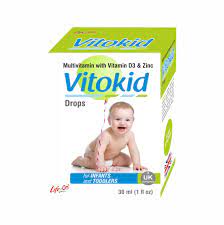
Vitokid Drops 30ml
Vitokid Drops 30ml
- ✔️ Supports healthy bone development with vitamin D
- ✔️ Boosts immune function with vitamins A and C
- ✔️ Liquid drops ideal for infants from 6 months
- ✔️ Helps fill nutritional gaps in fussy eaters
- ✔️ Easy-to-dose dropper for accurate daily supplementation
Price Checker
 Lowest price guarantee
 Includes FREE private prescription


Couldn't load pickup availability
What Are Vitamin Drops for Kids and Why Do They Matter?
Getting the right nutrients into young children can feel like a daily challenge. Fussy eating, limited food variety, and rapid growth all mean that some children simply don't get everything they need from food alone. That's where vitamin drops for kids come in. Vitokid Drops 30ml is an oral liquid supplement designed to help fill those nutritional gaps in a format that's easy to give — no tablets, no chewing, no fuss. At just £4.09, it's an accessible option for parents looking to support their child's development without breaking the bank. You can explore the full range of children's health products in our Baby and Toddler collection.
The NHS recommends that all children aged 6 months to 5 years take daily supplements containing vitamins A, C, and D, unless they are drinking 500ml or more of infant formula per day. This guidance reflects the fact that vitamin D deficiency in particular is common in the UK, especially during autumn and winter months when sunlight exposure is limited.
How Do Vitokid Drops Work in the Body?
Liquid vitamin supplements are absorbed efficiently in young children because they don't require the digestive breakdown that tablets or capsules need. Once swallowed, the vitamins enter the bloodstream and are transported to where they're needed most. Here's a simplified look at how the key nutrients work:
- Vitamin A — supports normal vision, immune function, and healthy skin cell turnover.
- Vitamin C — contributes to collagen formation, wound healing, and helps the body absorb iron from food.
- Vitamin D — essential for calcium absorption and bone mineralisation; also plays a role in immune regulation.
- Other micronutrients — depending on formulation, additional B vitamins may support energy metabolism and neurological development.
Because these vitamins work together synergistically, a combined drop formulation can be more practical than giving multiple separate supplements.
Who Should Use Vitokid Drops?
Vitokid Drops are suitable for infants and young children who may not be meeting their daily vitamin requirements through diet alone. The NHS specifically highlights children aged 6 months to 5 years as a group that benefits from routine supplementation. That said, it's always worth checking with your GP or pharmacist if you're unsure whether your child needs a supplement.
- Infants transitioning from breast milk or formula to solid foods
- Toddlers and young children with limited dietary variety
- Children with reduced sun exposure, particularly in winter months
- Children who are picky eaters and may be missing key food groups
How Do Vitokid Drops Compare to Other Children's Vitamin Supplements?
| Feature | Vitokid Drops 30ml | Typical Chewable Tablet |
|---|---|---|
| Suitable age | Infants and young children | Usually 3 years and over |
| Ease of administration | Liquid drops — easy to give | Requires chewing ability |
| Absorption | Rapid liquid absorption | Requires tablet breakdown |
| Price | £4.09 for 30ml | Varies by brand |
How Should You Store Vitokid Drops and Is It Clinically Suitable?
Vitokid Drops should be stored below 25°C, away from direct sunlight, and with the cap tightly closed after each use. Do not refrigerate unless the label specifically instructs you to. Once opened, check the product label for the in-use shelf life — most liquid vitamin supplements should be used within a set number of weeks of opening. If you're also looking for broader nutritional support for the whole family, browse our Vitamins and Supplements collection.
From a clinical standpoint, vitamin drops for kids are generally well tolerated. However, fat-soluble vitamins — particularly vitamins A and D — can accumulate in the body if given in excess. Always stick to the recommended dose and do not give additional vitamin A or D supplements alongside this product without professional advice.
This product is a medicine. Speak to your doctor or pharmacist before using if you have an underlying medical condition or are taking other medicines.
Vitokid Drops 30ml specifications
| Treatment category | Vitamins and nutritional supplements |
| Mechanism of action | Provides essential vitamins to supplement dietary intake |
| Effective for | Supporting growth, immune function, and bone development in children |
| Suitable for | Infants and young children (6 months to 5 years) |
| Active ingredient | Vitamins A, C, D and associated micronutrients |
| Pack size | 30ml |
| UK classification | General Sale / Food Supplement |
| Preparation | Oral liquid drops |
| Route of administration | Oral |
Specifications of Vitokid Drops 30ml
What Is Vitokid Drops and What Is It Used For?
Vitokid Drops 30ml is an oral liquid vitamin supplement formulated for infants and young children. It is used to help ensure children receive adequate levels of key vitamins — particularly vitamins A, C, and D — that may be lacking in their diet. The NHS recommends routine vitamin supplementation for children aged 6 months to 5 years, making a product like this a practical everyday addition to a child's routine. It is not a medicine for treating illness, but rather a nutritional supplement to support healthy development.
What Do You Need to Know Before Using Vitokid Drops?
Before giving Vitokid Drops to your child, read the following carefully. Some children may not be suitable for this supplement, and certain situations require extra caution.
Do not use Vitokid Drops if your child:
- Has a known allergy or hypersensitivity to any ingredient in the formulation
- Is already taking another supplement containing vitamins A or D — combining these can lead to excessive intake
- Is drinking 500ml or more of infant formula daily (formula is already fortified with vitamins A, C, and D)
- Has a condition affecting fat-soluble vitamin metabolism, such as certain liver disorders
Drug and supplement interactions to be aware of:
- Avoid giving alongside other multivitamin preparations without pharmacist advice
- High-dose vitamin A may interact with retinoid-based medicines — consult your GP if relevant
- Vitamin D supplements may interact with certain heart medications (e.g. digoxin) — seek advice if the child's carer is also managing medications in the household
How Should You Use Vitokid Drops?
Using Vitokid Drops correctly ensures your child gets the right amount of vitamins without risk of over-supplementation. Follow these steps each time:
- Shake the bottle gently before each use to ensure the contents are evenly mixed.
- Remove the cap and attach or use the dropper provided.
- Draw up the correct dose as indicated on the label for your child's age.
- Administer directly into the child's mouth, or mix into a small amount of food, milk, or juice.
- Replace the cap securely after use and store as directed.
| Indication | Age Group | Dose | Frequency |
|---|---|---|---|
| Vitamin supplementation | 6 months – 1 year | As per label | Once daily |
| Vitamin supplementation | 1 year – 5 years | As per label | Once daily |
Always follow the dosage instructions on the product label. If you are unsure about the correct dose for your child, speak to your pharmacist or GP before use. You may also find it helpful to browse our Eye Care collection if your child's healthcare provider has mentioned eye health as part of their nutritional assessment.
What Are the Possible Side Effects of Vitokid Drops?
At recommended doses, Vitokid Drops are generally well tolerated. Side effects are uncommon, but it's important to know what to look out for.
Common side effects (may affect a small number of children):
- Mild stomach discomfort or nausea, particularly if given on an empty stomach
- Loose stools if the dose is slightly exceeded
Less common side effects (seek medical advice if these occur):
- Signs of vitamin A toxicity with prolonged excessive use: headache, irritability, dry skin, or vomiting
- Signs of vitamin D toxicity: excessive thirst, frequent urination, or constipation
- Allergic reaction: rash, swelling, or difficulty breathing — stop use immediately and seek emergency help
If you notice any unexpected changes in your child's behaviour or health after starting this supplement, stop use and consult your GP or pharmacist promptly.
How Should You Store Vitokid Drops?
- Store below 25°C in a cool, dry place
- Keep away from direct sunlight and heat sources
- Keep the cap tightly closed after each use
- Do not refrigerate unless the label specifically states to do so
- Keep out of the sight and reach of children
- Do not use after the expiry date printed on the label
- Once opened, use within the timeframe stated on the packaging
Proper storage helps maintain the potency and safety of the vitamins. If the liquid changes colour, becomes cloudy, or develops an unusual smell, do not use it — dispose of it safely and obtain a new bottle. For more health essentials for your little one, visit our Baby and Toddler collection.
References
- https://www.nhs.uk/conditions/vitamins-and-minerals/vitamin-a/
- https://www.nhs.uk/conditions/vitamins-and-minerals/vitamin-d/
- https://www.nhs.uk/conditions/vitamins-and-minerals/vitamin-c/
- https://www.nhs.uk/conditions/baby/weaning-and-feeding/vitamins-for-children/
- https://www.nhs.uk/live-well/eat-well/food-types/vitamins-and-minerals-others/
- https://bnf.nice.org.uk/drugs/colecalciferol/
Written and reviewed by our qualified team
Your safety and success are our highest priorities. Our medical team rigorously evaluates every product and piece of advice we provide, ensuring you receive only the most effective, science-backed solutions available.
Frequently Asked Questions
Where can I buy Vitokid Drops 30ml online in the UK?
You can buy Vitokid Drops 30ml directly from Cured Pharmacy, a GPhC-registered online pharmacy. Simply add the product to your basket and complete checkout for fast UK delivery. It's one of the most convenient ways to keep your child's vitamin routine topped up without visiting a shop.
How do Vitokid Drops work in the body?
Vitokid Drops deliver essential vitamins in a liquid form that young children can absorb quickly and easily. Vitamins A, C, and D each play distinct roles — from supporting vision and immunity to helping the body build strong bones. Because the drops are liquid, they don't require the digestive breakdown that solid supplements need, making absorption more straightforward for small children.
How do I use Vitokid Drops step by step?
Shake the bottle gently before each use, then use the dropper to measure the correct dose for your child's age. You can give the drops directly into your child's mouth or mix them into a small amount of food, milk, or juice. Always replace the cap tightly after use and store the bottle as directed on the label.
What is the correct dose of Vitokid Drops for my child?
The correct dose depends on your child's age and is clearly stated on the product label — always follow those instructions. As a general guide, the NHS recommends that children aged 6 months to 5 years receive daily vitamins A, C, and D. If you're unsure about the right amount for your child, speak to your pharmacist or GP before starting.
What is the best time of day to give Vitokid Drops?
There is no strict requirement for a specific time of day, but giving the drops at the same time each day — such as with breakfast — helps build a consistent routine. Giving them with food can also reduce the chance of any mild stomach discomfort. Consistency matters more than timing when it comes to nutritional supplementation.
What are the possible side effects of Vitokid Drops?
At the recommended dose, side effects are uncommon and usually mild — the most likely being slight stomach discomfort if given on an empty stomach. Exceeding the recommended dose, particularly of fat-soluble vitamins A and D, can cause more serious effects including nausea, headache, or signs of toxicity. Always stick to the stated dose and contact your GP if you have any concerns.
How do I manage side effects of Vitokid Drops?
If your child experiences mild stomach discomfort, try giving the drops with food or milk rather than on an empty stomach. If symptoms persist or you notice anything more concerning — such as a rash, vomiting, or unusual behaviour — stop use and consult your pharmacist or GP. Never increase the dose to compensate for a missed one.
Who is eligible to use Vitokid Drops?
Vitokid Drops are intended for infants and young children aged 6 months to 5 years who may not be getting sufficient vitamins from their diet. They are not suitable for children who are already drinking 500ml or more of fortified infant formula daily, as formula already contains added vitamins. Children with known allergies to any ingredient should not use this product — check the label carefully or ask your pharmacist.
What happens if I accidentally give my child too much Vitokid Drops?
Giving more than the recommended dose — especially of fat-soluble vitamins like A and D — can lead to vitamin toxicity over time. If you think your child has had a significantly larger dose than recommended, contact NHS 111 or your GP straight away. Do not wait for symptoms to appear before seeking advice.
What should I do if I miss a dose of Vitokid Drops?
If you forget to give a dose, simply give it as soon as you remember — unless it's nearly time for the next dose, in which case skip the missed one entirely. Never give a double dose to make up for a missed one. Missing the occasional dose is unlikely to cause any harm, as these drops are a supplement rather than a treatment for illness.
Are Vitokid Drops suitable for children with allergies?
Always check the full ingredient list on the product label before use if your child has known food allergies or sensitivities. If you are unsure whether any ingredient is safe for your child, speak to your pharmacist or GP before giving the drops. Do not use if your child has a known hypersensitivity to any component of the formulation.
How long can my child use Vitokid Drops?
The NHS recommends vitamin supplementation for children from 6 months up to 5 years of age, so Vitokid Drops can be used throughout this period as part of a daily routine. Once a child is eating a well-balanced, varied diet and is over 5 years old, routine supplementation may no longer be necessary. Speak to your GP or health visitor if you're unsure when to stop.
What are the alternatives to Vitokid Drops?
Other children's vitamin supplements are available in formats including chewable tablets, gummies, and syrups — though most chewable options are only suitable for children aged 3 and over. Vitokid Drops in liquid form are particularly practical for younger infants who cannot chew. You can explore a wider range of options in our Vitamins and Supplements collection.
Can I give Vitokid Drops alongside other children's medicines?
In most cases, vitamin drops can be given alongside common children's medicines such as paracetamol or ibuprofen without issue. However, you should avoid giving Vitokid Drops at the same time as other vitamin A or D supplements, as this can lead to excessive intake. Always check with your pharmacist if your child is taking any prescribed medicines.
What does the latest research say about vitamin drops for kids?
Current NHS and NICE guidance consistently supports routine vitamin D supplementation for young children in the UK, particularly given the limited sunlight exposure in northern climates. Research continues to reinforce the importance of vitamins A and D in early childhood immune development and bone health. The NHS Healthy Start scheme also provides free vitamin drops to eligible families, reflecting the strength of evidence behind childhood supplementation.
Written and reviewed by our qualified team

Reviewed by:
Tarun Kumar
Superintendent/ Clinical Lead
📖 Find out more about our team of medical content authors and how we ensure the accuracy of our content with our content guidelines.
Content last updated: 14 Sep 2026

We’re a safe and
regulated UK service

Lowest Price Guarantee

We're convinced you won't find your treatment cheaper, but if you do we'll refund the difference.
Find out more
100% discreet packaging

Discreet, unbranded packaging for every order.
Find out more

Need help?
Talk to our friendly experts now


How our service works

Service setup

Discreet packaging

Express delivery